
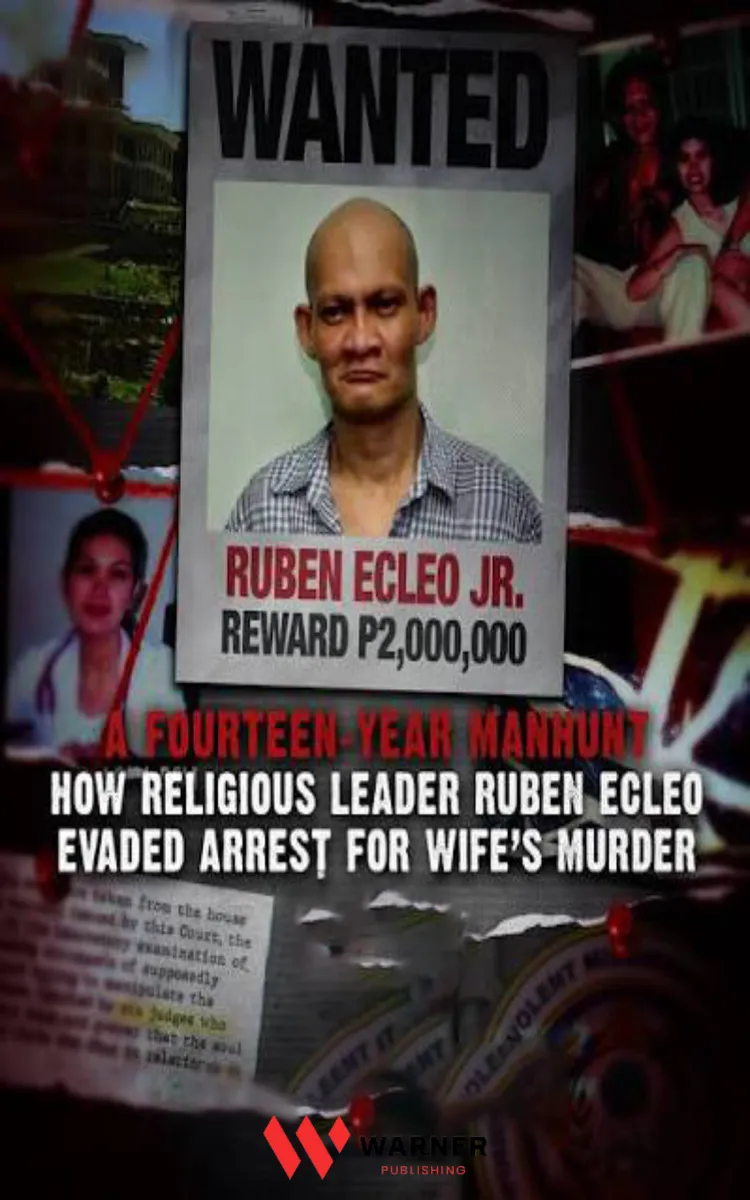

A wedding on the waterfront. A marriage that turns into a cage. And a death that does not stay private. Alona Bacolod is twenty-one, bright with plans, when her white dress begins to feel heavier than any uniform. Ruben Ecleo Jr. is all public promise and private control, and the home they share grows quieter in the wrong ways. Then a bitter chemical stench, a sudden midnight struggle, and the final removal of her body in a taped garbage bag shatter whatever safety remained. As the influence of the Ecleo name and a powerful religious empire crowds in, the case becomes more than violence. It becomes a test of loyalty, fear, and justice, and the distance between reverence and terror. Read now, because silence is part of the crime.
Table of Contents
- 1. The Golden Cage Wedding
- 2. Crystal Meth Cracks the Home
- 3. The Taped Bag Midnight
- 4. Ravine Discovery and Staged Grief
- 5. Dinagat Fortress and Lawless Power
- 6. Three-Hour Siege of the Hilltop
- 7. Mandaue Home Invaded for Revenge
- 8. Bail, Assassination, and the Witness Cage
- 9. Branch 10 Verdict, Ruben Still Gone
- 10. Elder Ruben’s Final Capture
Preview: The Golden Cage Wedding
A short excerpt from “The Golden Cage Wedding”. The full book contains 10 chapters and 20,387 words.
The veil kept lifting in the sea wind, revealing Alona Bacolod’s face to the waterfront before the ceremony had even begun.
Salt hung in the air above Surigao City, mixed with perfume, hot fabric, and the diesel breath of boats easing against the harbor. Beyond the rows of guests, the water flashed white beneath the afternoon sun. Somewhere past it, beyond the channels and green distances, the Dinagat Islands rose in steep, guarded silhouettes.
Alona pressed two fingers against the edge of her veil. They were trembling.
“Leave it,” someone told her. “They are waiting.”
She lowered her hand.
At twenty-one, she had learned to steady herself before examinations, before difficult patients, before the long hours demanded by medical school. This was different. Her white dress felt heavier than any coat she had worn in a hospital corridor. Under the lace, her skin was damp. Her shoes pinched. Her future, which had once seemed to stretch cleanly ahead - medicine, a home, a marriage built on tenderness - had narrowed to the strip of carpet leading toward Ruben Ecleo Jr.
The ceremony had the scale of a public event rather than a private promise. People watched from the waterfront. Officials, religious followers, family allies, and curious onlookers filled the arranged space beneath canopies bright enough to fight the sun. The name Ecleo moved through the gathering like a current. It carried the authority of the Philippine Benevolent Missionaries Association, the PBMA, a religious organization whose influence reached beyond worship into politics, land, patronage, and the daily loyalties of its followers.
Ruben was thirty-six. He was the heir of that world.
Alona knew the difference in their ages. She knew the difference in their families, their resources, and the number of people who would stand behind him if anything went wrong. What she did not yet understand was that these differences were not merely social. They were architecture.
The applause began before she reached him.
Ruben turned. His suit was immaculate, his expression composed beneath the glare. Behind him, the ceremony’s symbols and banners rose against the blue sky, polished and deliberate. The crowd responded to his appearance with a warmth that seemed larger than affection. It was recognition. It was obedience made visible.
Alona smiled because everyone was looking.
“Are you all right?” Ruben asked quietly.
“Yes.”
“You look frightened.”
“I’m not frightened.”
His eyes stayed on her for a moment. “Then don’t look that way.”
The words were mild. The correction was not.
She moved beside him.
From the waterfront, the route toward the wedding grounds led through a city accustomed to the Ecleo presence. The PBMA was not simply a congregation whose members gathered on a designated day. In the Dinagat Islands, its spiritual authority had long been bound to political power, and political power to the family that embodied it. Ruben’s father, Ruben Ecleo, stood at the center of that inheritance. His reach was felt in the people who came forward, the people who stepped aside, and the people who lowered their voices when the family name entered a room.
By the time Alona arrived at the hilltop grounds, the sea had fallen behind them. The air was hotter there, the wind thinner. The compound had the theatrical solidity of a fortress: high walls, broad steps, pale stone, and structures set above the coastline like a private citadel. From the hill, the islands appeared beautiful enough to conceal anything. Green slopes dropped toward bright water. Boats looked small and harmless below.
Alona looked out and imagined a different life. She would finish her studies. Perhaps she would work in a clinic near the coast. She imagined children, books, a house where no one needed to ask permission before speaking. She imagined Ruben beside her as a husband rather than an heir, a man who might understand the long hours and quiet discipline of medicine.
The thought steadied her until the vows began.
The officiating voice carried across the grounds. Guests stood. Fabric rustled. Cameras clicked. The sound of the sea struck the rocks far below, repeating itself with the patience of a warning.
When the ceremony reached the language of submission and obedience, Alona’s attention sharpened.
She glanced at Ruben.
He was watching the officiant.
“Obedience,” she repeated under her breath.
Ruben heard her. “It is part of the vow.”
“I know. But marriage should be between two people.”
His mouth tightened, almost imperceptibly. “It is.”
“Then why is only one of us being told to obey?”
The ceremony continued. No one around them reacted. The guests listened with the stillness of people who already knew the answer, or who understood that the question itself had no place there.
Ruben leaned toward her without turning his head. “Not now.”
The phrase landed harder than it should have. Alona looked toward the crowd. Faces shone in the heat....
About this book
"The Golden Cage" is a true crime book by Dawn Cinco with 10 chapters and approximately 20,387 words. A wedding on the waterfront. A marriage that turns into a cage.
This book was created using Inkfluence AI, an AI-powered book generation platform that helps authors write, design, and publish complete books. It was made with the AI True Crime Book Writer.
Frequently Asked Questions
What is "The Golden Cage" about?
A wedding on the waterfront. A marriage that turns into a cage. And a death that does not stay private. Alona Bacolod is twenty-one, bright with plans, when her white dress begins to feel heavier than any uniform. Ruben Ecleo Jr. is all public promise and private control, and the home they share grows quieter in the wrong ways. Then a bitter chemical stench, a sudden midnight struggle, and the final removal of her body in a taped garbage bag shatter whatever safety remained. As the influence of the Ecleo name and a powerful religious empire crowds in, the case becomes more than violence. It becomes a test of loyalty, fear, and justice, and the distance between reverence and terror. Read now, because silence is part of the crime.
How many chapters are in "The Golden Cage"?
The book contains 10 chapters and approximately 20,387 words. Topics covered include The Golden Cage Wedding, Crystal Meth Cracks the Home, The Taped Bag Midnight, Ravine Discovery and Staged Grief, and more.
Who wrote "The Golden Cage"?
This book was written by Dawn Cinco and created using Inkfluence AI, an AI book generation platform that helps authors write, design, and publish books.
How can I create a similar true crime book?
You can create your own true crime book using Inkfluence AI. Describe your idea, choose your style, and the AI writes the full book for you. It's free to start.
Write your own true crime book with AI
Describe your idea and Inkfluence writes the whole thing. Free to start.
Start writingCreated with Inkfluence AI


