
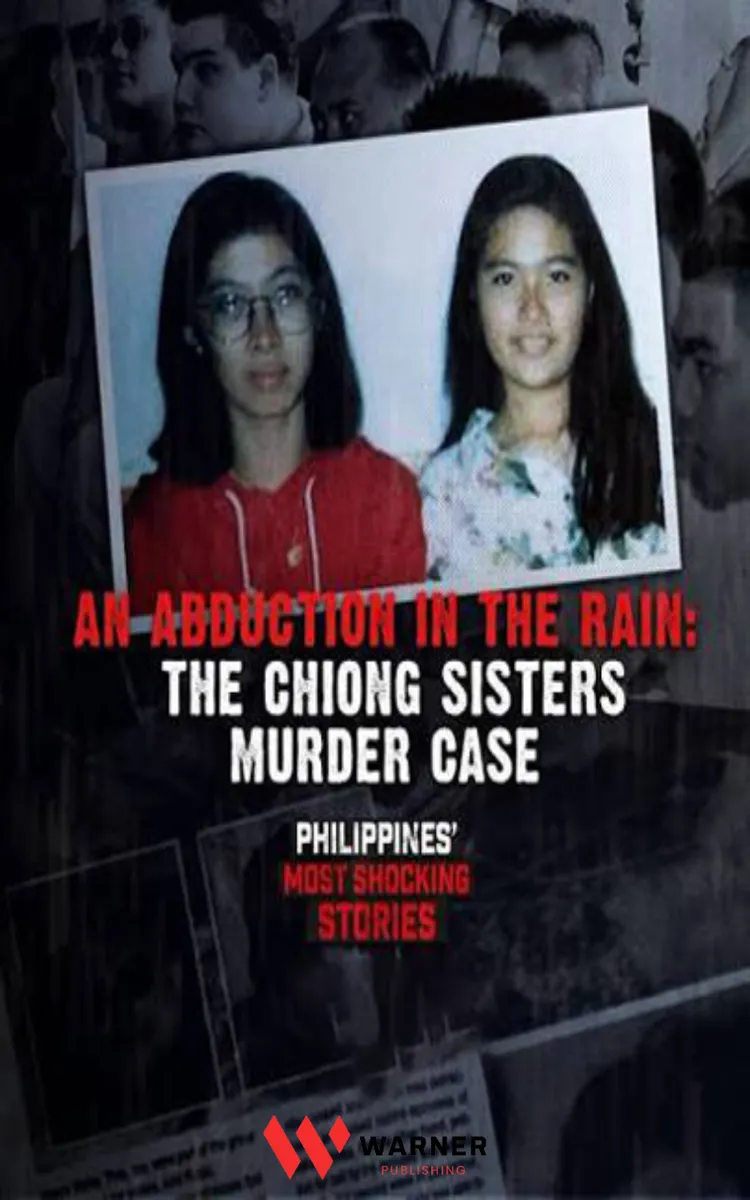

Read the first chapter
The whole of chapter one, free. About 8 min. Turn the pages with the arrows, your keyboard, or a swipe.
Chapter 1
Neon-Shed Disappearance at Ayala
Rain ran in bright threads down the glass and metal of the waiting shed outside Ayala Center Cebu, turning the shopping center’s neon signs into broken strips of red, blue, and green. Thelma Chiong stood beneath the narrow roof and watched the traffic smear past, searching between headlights for the car that was supposed to bring her husband and take Mary Joy and Jacqueline home.
The sisters had been waiting there for their father. Then, in the confusion of rain, engines, umbrellas, and people pressing toward the curb, they were gone.
Case Summary: On the evening of June 16, 1997, Mary Joy and Jacqueline Chiong disappeared from the waiting shed outside Ayala Center Cebu in Cebu City, beginning a kidnapping case that would lead to a national trial and enduring controversy.
What made the disappearance significant was not only the identity of the missing women or the crowded public place where they were last seen. It was the suddenness of it. The shed stood beside one of Cebu’s busiest shopping centers, under electric light and within the movement of ordinary evening traffic. Yet the rain had blurred faces, washed away footprints, and turned every passing vehicle into a possible answer.
For Thelma, the first hours offered no clear boundary between delay and danger. Her daughters might have gone inside. They might have found another ride. They might have been separated from their father by a simple misunderstanding. But each explanation weakened as the minutes passed. The waiting shed became the last fixed point in a case that would soon stretch from Cebu City to Carcar and from a family’s private anguish into a courtroom battle.
• Date: June 16, 1997 - Location: Waiting shed outside Ayala Center Cebu, Cebu City - Victims: Mary Joy and Jacqueline Chiong - Status: Solved in the legal sense, but disputed and marked by unresolved questions
Mary Joy and Jacqueline Chiong - The sisters were last known to be waiting outside Ayala Center Cebu for their father. Their disappearance established the central fact around which the investigation turned: two young women had vanished from a specific place during a specific period on a rain-darkened evening.
Thelma Chiong - Their mother became the family’s first relentless searcher. She moved through uncertainty that night, trying to identify what had happened while confronting the possibility that officials might treat the absence as an ordinary failure to come home. Her task was immediate and painfully narrow: find her daughters, and make others understand that this was not a routine delay.
Paco Larrañaga - Paco later became one of the accused. His defense maintained that he was in Manila taking culinary examinations when the kidnapping occurred, a claim supported by school records and airline documents presented during the trial.
David Valente Rusia - Rusia would later reemerge after six months in hiding and become a state witness. His confession implicated other accused persons and became one of the prosecution’s most important accounts of the crime.
James Andrew Uy and James Anthony Uy - The brothers were arrested as suspects and later stood among those whose alleged involvement was examined in court. They were the sons of Mrs. Uy, whose family would remain tied to the case long after the first night’s rain had dried.
June 16, 1997, evening - Thelma was outside Ayala Center Cebu as Mary Joy and Jacqueline waited for their father. The pavement shone beneath the neon signs, and rain struck the shed’s roof hard enough to swallow ordinary conversation.
June 16, 1997, shortly afterward - The sisters disappeared from the waiting area. The exact moment was not captured as a neat, witnessed event; it emerged through the narrowing of time between their last known presence and the family’s realization that they could not be found.
June 16, 1997, later that evening - Thelma searched the immediate area, looking toward the entrances, the curb, and the traffic lanes. She asked whether anyone had seen the sisters, but the answers were uncertain and the rain made every account incomplete.
“Were they still here?” she asked.
One answer pointed toward the shopping center. Another suggested that the sisters had already left. Neither gave her a name, a vehicle, or a direction she could trust.
June 16, 1997, night - The family’s concern hardened into alarm. Thelma reported the disappearance and tried to establish the waiting shed as the last reliable location, even as the night’s confusion threatened to scatter the details.
June 17, 1997, morning - The search widened beyond Ayala Center Cebu. Family members and authorities began working from the limited information available: two missing sisters, a rainy evening, and a public waiting place where no clear witness could explain what had happened.
June 17, 1997, later - The absence was treated as a missing-person matter while confirmation of a crime remained incomplete. For Thelma, that distinction carried a punishing cost. She knew her daughters were not simply late, but the official response had to move through procedures that did not yet reflect the danger she feared.
June 18, 1997 - Authorities discovered the severely bruised and handcuffed body of a young woman discarded in a deep ravine at Sitio Tanawan in Carcar, Cebu. The discovery transformed the family’s fear into grief and connected the disappearance to a far more serious crime.
June 18, 1997, after the discovery - The investigation turned toward the possibility that Mary Joy and Jacqueline had been abducted, held at a boarding house in Guadalupe, and transported by rental van toward Carcar. The waiting shed was no longer merely the place where two women had last been seen; it was the opening point of a kidnapping investigation.
[TURNING POINT] June 18, 1997, following the ravine discovery - The recovered body, with its bruising and handcuffs, forced authorities to treat the case as potentially fatal rather than an unconfirmed disappearance. The search now carried the weight of a death investigation, even as the fate of the other sister remained uncertain.
The rain left little that could be held.
Physical Evidence:
• The waiting shed outside Ayala Center Cebu established the last known location of Mary Joy and Jacqueline. - The recovered body in Sitio Tanawan ravine was severely bruised and handcuffed, indicating violence and restraint. - The ravine location in Carcar connected the investigation to the later account that the sisters had been transported away from Cebu City. - Records and other documentary evidence would later become central to competing accounts of the accused’s whereabouts, including Paco’s claimed presence in Manila.
Witness Accounts:
• Thelma reported that Mary Joy and Jacqueline had been waiting for their father outside Ayala Center Cebu. - Accounts from the area were limited and affected by darkness, rain, traffic, and the movement of shoppers. - Later testimony, including David Valente Rusia’s confession, supplied a prosecution narrative concerning the abduction, the Guadalupe boarding house, and the journey toward Carcar. - The defense challenged the reliability and sufficiency of the testimony used against the accused.
Investigative Leads:
1. The waiting shed - Investigators focused on the sisters’ last known location and attempted to determine when they had disappeared and who might have seen them. 2. The family search - Thelma’s efforts helped preserve the basic chronology: the sisters were expected to meet their father, remained unaccounted for, and did not return. 3. The Carcar ravine - The discovery at Sitio Tanawan shifted the case from a missing-person inquiry toward a homicide investigation. 4. The Guadalupe boarding house - Investigators pursued the account that the sisters had been held there before being taken south. 5. The rental van - The reported vehicle became part of the effort to trace how the victims were moved from the city toward Carcar. 6. The accused men - Authorities eventually arrested James Andrew Uy and James Anthony Uy, while Paco Larrañaga’s alleged whereabouts became a central issue in the defense. 7. The state witness - After six months in hiding, David Valente Rusia emerged and gave a confession that implicated other accused persons.
What Changed: The discovery at Sitio Tanawan ended the possibility that the family could continue treating the disappearance as a temporary absence. A young woman had been found in a ravine, severely bruised and handcuffed. The identity and full circumstances surrounding the discovery would be examined through the investigation and trial, but the physical condition of the body made one fact unavoidable: violence had entered the case.
Why It Mattered: Until then, Thelma had been fighting to have the disappearance recognized. After the ravine discovery, authorities had a crime scene, a body, and a location far from the waiting shed where the sisters had last been seen. The investigation acquired direction, but not certainty. One daughter’s fate appeared to be reflected in the ravine, while the other remained unaccounted for.
• The search expanded from Ayala Center Cebu to Guadalupe and Carcar. - The case was treated as a kidnapping and homicide investigation. - Public pressure for answers intensified as the family confronted the possibility of death.
Legal Outcome: The case eventually proceeded to trial, where the prosecution relied heavily on testimony, including David Valente Rusia’s confession, while the defense disputed the identification of the accused and presented Paco Larrañaga’s claimed Manila alibi. James Andrew Uy, James Anthony Uy, and other accused persons faced the court’s judgment. The proceedings produced convictions, but the case remained deeply contested, particularly over the reliability of witness testimony and the treatment of physical evidence.
Impact:
• The disappearance and ravine discovery became one of the most closely followed criminal cases in the Philippines. - The case intensified public debate over police investigation, witness testimony, forensic handling, and the reliability of convictions. - The Chiong family’s grief continued long after the trial, while the families of the accused maintained their own demands for justice.
Unresolved Questions:
1. What precisely happened during the interval between the sisters’ last confirmed presence at the Ayala waiting shed and their reported arrival at the Guadalupe boarding house? 2. What physical evidence could have independently confirmed or contradicted the competing accounts? 3. What became of the missing sister, and which parts of the later testimony accurately described her fate? 4. How much weight should a court place on a confession from a witness who emerged after six months in hiding?
That night, Thelma wanted only to find her daughters before the rain stopped and the city resumed its ordinary rhythm. Instead, the waiting shed became a fixed point on a map of fear. Officials had acknowledged that Mary Joy and Jacqueline were missing, but not yet what that disappearance meant. For Thelma, the answer was already moving beyond the bright signs of Ayala, carried south through the wet darkness toward Carcar.
End of chapter one. 9 more chapters in the full book.
Swipe or use the arrows to turn the page


What's inside: 10 chapters
- 1. Neon-Shed Disappearance at Ayala
- 2. Guadalupe Boarding House Survival
- 3. Sitio Tanawan Ravine Body Discovery
- 4. Culinary Exam Alibi in Manila
- 5. NBI Interrogation of David Rusia
- 6. Uy Brothers Arrest at Home
- 7. Branch 7 Double Life Sentences
- 8. Judge Ocampo’s Final Night
- 9. DNA-Backed Evidence Challenges
- 10. Two Mothers, One Unfinished Grief
About this book
"The Chiong Case" is a true crime book by Dawn Cinco with 10 chapters and approximately 20,209 words. Rain, a crowded waiting shed, and two sisters who were supposed to be picked up. Then the confusion hit, and Mary Joy and Jacqueline Chiong were simply gone.
This book was created using Inkfluence AI, an AI-powered book generation platform that helps authors write, design, and publish complete books. It was made with the AI True Crime Book Writer.
Frequently Asked Questions
What is "The Chiong Case" about?
Rain, a crowded waiting shed, and two sisters who were supposed to be picked up. Then the confusion hit, and Mary Joy and Jacqueline Chiong were simply gone. What follows is a case built on gaps: the moment witnesses lost them, the places where they were said to be held, the clues that surfaced as investigators pushed from Cebu City toward Carcar. A bruised, handcuffed body found in a ravine turns a disappearance into a homicide investigation and forces the story into the courtroom. If you want the details, the investigative steps, and the outcomes that shaped one of the Philippines’ most closely watched trials, read The Chiong Case now.
How many chapters are in "The Chiong Case"?
The book contains 10 chapters and approximately 20,209 words. Topics covered include Neon-Shed Disappearance at Ayala, Guadalupe Boarding House Survival, Sitio Tanawan Ravine Body Discovery, Culinary Exam Alibi in Manila, and more.
Who wrote "The Chiong Case"?
This book was written by Dawn Cinco and created using Inkfluence AI, an AI book generation platform that helps authors write, design, and publish books.
How can I create a similar true crime book?
You can create your own true crime book using Inkfluence AI. Describe your idea, choose your style, and the AI writes the full book for you. It's free to start.
Write your own true crime book with AI
Describe your idea and Inkfluence writes the whole thing. Free to start.
Start writingCreated with Inkfluence AI


