

Read the first chapter
The whole of chapter one, free. About 8 min. Turn the pages with the arrows, your keyboard, or a swipe.
Chapter 1
Ramos Restores RA 7659 Ultimate Sanctions
The brass clock outside the Senate chamber had stopped at 4:17, but Miguel Santos knew the building had not. Behind the carved doors, clerks hurried over papers stamped with the seal of the Republic, their shoes striking the marble in uneven bursts. Manila’s afternoon rain pressed against the tall windows, turning the city beyond them into a gray blur of roofs, wires, and headlights.
Miguel held the final draft of the bill against his palm. The paper was warm from the copying machine. Its title was restrained. Its consequence was not.
He needed the votes before the chamber adjourned.
Not merely enough votes to pass. Enough to keep the coalition from splitting across the lines already opening beneath it: public safety against civil liberty, punishment against restraint, the fear of crime against the fear of what the state might do once given the power to end a life by statute.
A secretary emerged from the chamber and nearly collided with him.
“Senator Villanueva is asking for the amendment,” she said.
“Which amendment?”
“The one removing the limitation on the offenses covered.”
Miguel looked toward the closed doors. “And who is backing it?”
She lowered her voice. “Three of ours.”
The rain ticked against the window. Somewhere in the corridor, a telephone rang and rang.
“Tell Villanueva I’ll speak to him.”
“He says he won’t speak to you.”
“Then tell him I’ll speak where he can hear me.”
She hesitated. “The President’s office called again.”
That was the pressure beneath every conversation. Fidel V. Ramos wanted the measure restored. The administration had decided that the ultimate statutory penalty, removed in 1987 under Corazon Aquino, had to return to the country’s legal machinery. The argument had been repeated in committee rooms, press briefings, private dinners, and the guarded offices of the old government buildings: the streets had become too dangerous, the courts too slow, the public too frightened to accept another decade of restraint.
Miguel had helped carry that argument from one room to the next. He had assured wavering legislators that the law would be narrow, controlled, and reserved for the gravest offenses. He had promised that due process would remain untouched.
Now Villanueva wanted the ceiling raised.
Miguel entered the corridor outside the chamber. The walls were lined with portraits of presidents, each face fixed in an expression of authority that had outlived the decisions made beneath it. A guard opened the side door, and the noise struck him at once: overlapping voices, microphones popping, chairs scraping the floor.
Villanueva stood near the rostrum with two senators and a folder tucked under his arm. He was broad-shouldered, silver-haired, and visibly pleased by the disorder.
“You asked for me,” Villanueva said.
“I asked about your amendment.”
“You heard about it.”
“I heard you want to remove the limitation.”
“The limitation is political decoration,” Villanueva replied. “Criminals do not read decorations.”
A few heads turned. Miguel kept his voice low.
“The President needs a bill that can survive constitutional scrutiny.”
“The Constitution did not stop the crimes.”
“That isn’t the question.”
“It is exactly the question.” Villanueva tapped the folder. “Corazon Aquino removed the penalty in 1987. The country watched the violence continue. Now Ramos is willing to restore it, but only after we wrap it in exceptions and procedural language. The public wants certainty.”
“The public also wants justice.”
“Justice without fear is a speech.”
The words traveled farther than Villanueva intended. A reporter near the press table lifted his pen.
Miguel felt the coalition shifting under his feet. He had spent weeks persuading moderates that restoration did not mean surrendering judgment to anger. He had told the administration that the chamber could be brought along if the measure remained precise. The amendment threatened all of it.
“Keep your language,” Miguel said. “Withdraw the amendment.”
Villanueva smiled. “And if I don’t?”
“Then the bill may fail.”
“Or it may pass honestly.”
Before Miguel could answer, the presiding officer called the chamber to order. The gavel struck once, then again. Conversations collapsed into mutters.
Miguel took his seat. The draft lay before him, its pages clipped at the corner. Across the aisle, an opposition senator raised a constitutional volume and held it in the air.
“Four years ago,” the senator said, “this nation chose not to give the state irreversible power. That choice was not weakness. It was a boundary.”
A murmur moved through the chamber.
Miguel watched Villanueva lean toward one of the undecided members. The senator nodded, though whether in agreement or fatigue Miguel could not tell.
The opposition senator continued. “What happens when an innocent person is convicted? What remedy survives the execution of the sentence?”
No one answered immediately. The question remained suspended over the chamber, more difficult than the slogans outside.
Miguel rose when his name was called.
He carried no prepared speech to the lectern. The microphones smelled faintly of dust and hot metal. Beyond the windows, rainwater ran in silver lines down the glass.
“We are not here to pretend that the state can make no mistakes,” he said. “We are here because the state has a duty to protect people who cannot protect themselves. That duty does not erase caution. It demands it.”
A senator called from his seat, “And who protects the accused from the state?”
“The law,” Miguel answered.
“Which law? The one you are restoring?”
The chamber broke into overlapping objections. The presiding officer struck the gavel. Miguel waited until the sound subsided.
“The measure before us does not make conviction automatic. It does not abolish trial. It does not silence appeal. It establishes the highest statutory penalty for the highest category of offenses, under the procedures already required by law.”
He knew the sentence was carefully built. He also knew what it concealed. Once the penalty returned, prosecutors could seek it, judges could impose it, and prison officials could eventually be instructed to carry it out. The bill was not an isolated declaration. It was a door.
Villanueva rose from his seat.
“Then let us stop pretending the door is not there,” he said. “The country is asking whether the law has teeth.”
Miguel looked at him. “Teeth can bite the wrong person.”
For the first time, Villanueva’s expression changed. Not doubt. Irritation.
The vote came after sunset. The chamber lights whitened every face and deepened the shadows beneath the desks. Miguel moved between rows during the brief recess, speaking to legislators in clipped phrases. One demanded assurances from the President. Another wanted the amendment restored. A third asked whether the administration would tolerate a constitutional challenge.
“No one can promise that,” Miguel said.
“Then what can you promise?”
“That the bill will be defended.”
“By whom?”
Miguel glanced toward the gallery, where reporters watched the chamber with notebooks open.
“By everyone who votes for it.”
The senator studied him, then turned away.
At the count, the amendment failed by a margin narrow enough to leave no one satisfied. The main measure passed.
The gavel fell. Applause rose from one side of the chamber and died quickly beneath the restlessness of the room.
Miguel remained standing while clerks gathered the papers. He had wanted passage. He had secured it. Yet the victory felt less like a wall completed than a mechanism set in motion.
A messenger reached him with a handwritten note.
The President wants you at Malacañang.
The administrative offices were quieter than the legislature, but not calmer. Old wood absorbed the noise of the rain. Brass lamps cast pools of yellow light across polished tables. Framed decrees and official portraits watched from the walls, their glass reflecting the movement of aides who carried folders from one office to another.
Fidel V. Ramos stood near a window when Miguel entered. He had removed his jacket but not his tie. A security aide waited by the door.
“Did we get it?” Ramos asked.
“Yes.”
“Cleanly?”
Miguel placed the draft on the desk. “The measure passed. The amendment failed.”
Ramos read the first page without sitting. “Villanueva?”
“Unhappy.”
“He’ll survive.”
“He may not stay with us.”
Ramos looked up. “Coalitions are not built from happiness.”
Miguel heard the rain strike the roof above them. “The opposition will challenge the law.”
“They were going to challenge anything.”
“This is different.”
“Because it carries the ultimate penalty?”
“Because it restores it after Corazon Aquino removed it.”
Ramos set the paper down. “Aquino made her decision. I am making mine.”
The words were calm. That made them heavier.
Miguel stepped closer to the desk. “The machinery is not ready.”
“Then prepare it.”
“Courts will have to interpret the statute. Prosecutors will seek it. Prison officials will need rules. Every stage will generate a new challenge.”
“That is what laws do.”
“This one does not end at enforcement.”
Ramos’s eyes narrowed slightly. “No law ends where it is signed.”
For a moment neither man spoke. The office seemed to contract around the desk, the rain, and the pages carrying the government’s decision.
Miguel had expected confidence from the President. He had not expected impatience with the consequences.
An aide entered with a telephone message and handed it to Ramos. The President read it, folded it once, and placed it beside the bill.
“Public reaction is already forming,” Ramos said.
“Forming?”
“Some groups are calling it justice. Others are calling it state killing.”
“And what do we call it?”
Ramos looked again at the statute.
“Authority.”
The word settled between them.
Miguel left the office near midnight. In the corridor, a clerk was feeding copies of the approved measure into a tray. The machine clattered, stopped, then began again. Each page emerged with the same seal, the same language, the same finality.
At the end of the hall, a television showed the evening news without sound. Reporters stood before the legislature. Behind them, protesters held signs for and against the restored penalty. The camera moved across their faces: grieving relatives, church workers, police supporters, lawyers, students. No side looked persuaded.
Miguel paused before the screen.
He had pushed the bill through. The coalition remained intact, but only because its fractures had been covered with signatures. The law would now travel beyond speeches and votes, into courtrooms, prison offices, and the private lives of people whose names were not yet known to him.
One name, years later, would become inseparable from the statute: Leo Echegaray.
Miguel did not know that yet. He knew only that the state had reclaimed a power Corazon Aquino had taken away in 1987, and that no vote could make such power harmless.
Behind him, the copying machine began another run.
The first pages of the restored law moved down the corridor toward the offices that would enforce it.
End of chapter one. 9 more chapters in the full book.
Swipe or use the arrows to turn the page


What's inside: 10 chapters
- 1. Ramos Restores RA 7659 Ultimate Sanctions
- 2. Baby’s Welfare Case Targets Leo Echegaray
- 3. Quezon City RTC Branch 104 Issues Ultimate Sanction
- 4. RA 8177 Moves Execution to Clinical Procedure
- 5. FLAG Argues Clinical Procedure’s Constitutionality
- 6. Galera’s Dismissal Gives Leo a False Lift
- 7. Zenaida Javier Marries Leo Inside Penitentiary
- 8. January 4 TRO Halts the Administrative Action
- 9. February 5 Final Sanction Ends Leo’s Case
- 10. 2006 Repeal and Panganiban’s Oversight Question
About this book
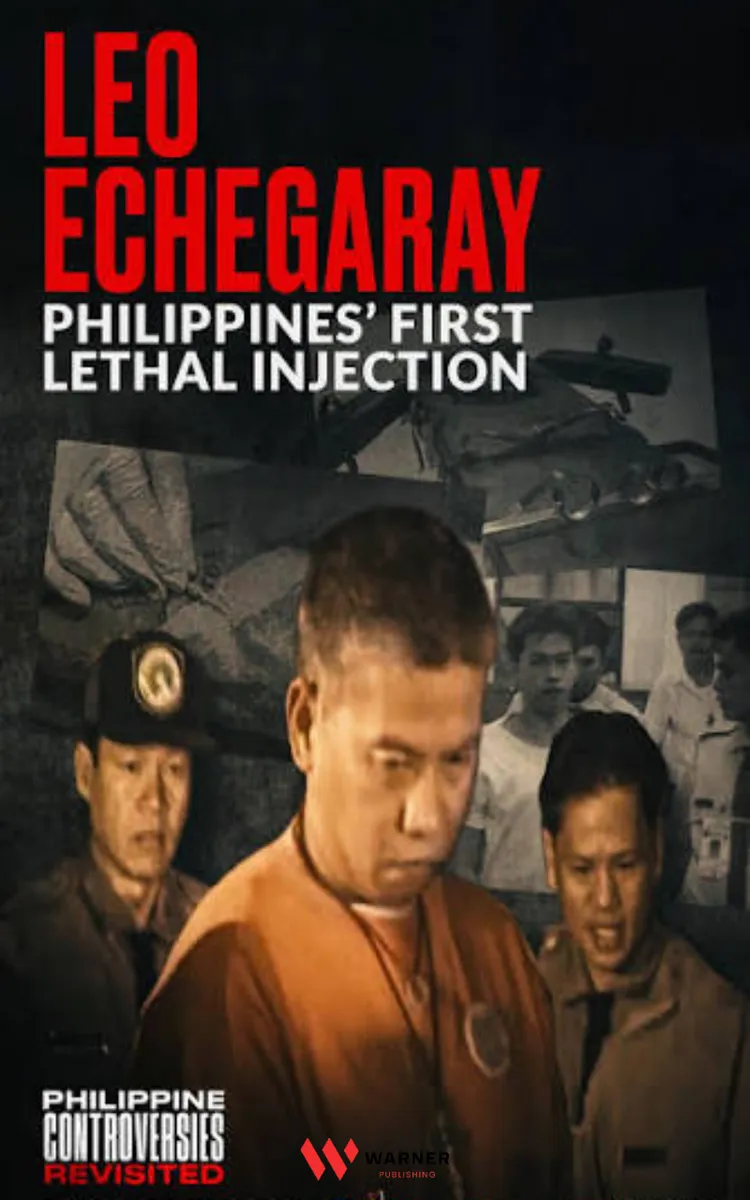
"Leo Echegaray" is a true crime book by Dawn Cinco with 10 chapters and approximately 19,239 words. The law is supposed to protect, until it becomes a weapon. In the Philippines, a push for “ultimate sanctions” moves from Senate corridors to courtroom files, and every amendment tightens the noose around the people least able to fight back.
This book was created using Inkfluence AI, an AI-powered book generation platform that helps authors write, design, and publish complete books. It was made with the AI True Crime Book Writer.
Frequently Asked Questions
What is "Leo Echegaray" about?
The law is supposed to protect, until it becomes a weapon. In the Philippines, a push for “ultimate sanctions” moves from Senate corridors to courtroom files, and every amendment tightens the noose around the people least able to fight back. Miguel Santos races to secure votes before the chamber adjourns, while behind closed doors, someone is already trying to control the story. In a cramped Manila home, a child’s fear and a caregiver’s silence collide with paperwork that keeps changing. By the time the case reaches Quezon City RTC Branch 104, the question is no longer what happened, but what the record will be allowed to say. Read now and find out how far the system will go, and who pays when truth is treated like an obstacle.
How many chapters are in "Leo Echegaray"?
The book contains 10 chapters and approximately 19,239 words. Topics covered include Ramos Restores RA 7659 Ultimate Sanctions, Baby’s Welfare Case Targets Leo Echegaray, Quezon City RTC Branch 104 Issues Ultimate Sanction, RA 8177 Moves Execution to Clinical Procedure, and more.
Who wrote "Leo Echegaray"?
This book was written by Dawn Cinco and created using Inkfluence AI, an AI book generation platform that helps authors write, design, and publish books.
How can I create a similar true crime book?
You can create your own true crime book using Inkfluence AI. Describe your idea, choose your style, and the AI writes the full book for you. It's free to start.
Write your own true crime book with AI
Describe your idea and Inkfluence writes the whole thing. Free to start.
Start writingCreated with Inkfluence AI


