

Read the first chapter
The whole of chapter one, free. About 11 min. Turn the pages with the arrows, your keyboard, or a swipe.
Chapter 1
Chapter 1: Running on Fumes
The dash lights in Marcus’s truck were dimming, but he kept his eyes locked on the white lines of I-96, pushing sixty-five in a fifty-five just to make the front door before his kids were asleep. His right shoulder was tight—a hard knot raised under his work shirt from twelve hours of diagnostic troubleshooting on a hydraulic line that wouldn't hold pressure.
He had a Bible sitting on his passenger seat. It had been sitting there since Sunday.
He didn't open it. He didn't turn on a worship song or a podcast. He just listened to the rhythmic hum of his tires hitting the expansion joints, his mind spinning through a mental grid of open tasks: the late invoice for the siding repair, the youth group devotion he’d promised to lead next weekend, the lawn that needed cutting, and the subtle, lingering coldness in his wife’s voice when he’d texted her at six to say he’d be late again.
Marcus didn't feel far from God because he wanted to sin. He felt far from God because he was flat-out exhausted.
And as the fuel light on his dashboard clicked red with a faint, persistent chime, Marcus realized he hadn't spoken an unhurried sentence to his Maker in nearly three weeks. He was out of fuel, out of patience, and running strictly on the fumes of an ancient commitment he was too proud to break.
The Illusion of Holy Exhaustion
The warning light almost always turns on before the engine seizes.
For the Christian man, it rarely looks like a dramatic moral crash. It shows up as an edge in your voice when your nine-year-old drops a glass of milk. It looks like staring at your phone in the garage for seven minutes after you kill the engine, just to delay the moment you have to step inside and be needed by somebody else. It looks like going to church on Sunday, sitting in the third row, singing the chorus, and feeling like you are reading a menu in a language you used to speak fluently.
We have built an unwritten theology in the modern church that equates spiritual strength with physical, mental, and emotional burnout. We convince ourselves that if we are tired, it must be because we are giving our lives away for the Kingdom. We tell ourselves that rest is something we’ll earn once the project is finished, the kids are grown, or the church building fund is met.
But a man running on fumes isn't showing high spiritual endurance—he is simply violating his design.
[ THE PERFORMANCE CYCLE ] Attempt Unlimited Capacity │ ▼ Systemic Exhaustion (Fumes) │ ▼ Short Temper / Irritability │ ▼ Guilt & Religious Effort │ └───(Repeat)───► [BREAKDOWN] God made man out of dust. Dust has inherent, divine limits. Dust needs eight hours of sleep, a hot meal, a quiet moment, and a steady connection to the Breath that gave it life in the first place. When you live as though limits are a spiritual failure, you end up treating God not as a loving Father who sustains you, but as an demanding site foreman who measures your value by your hourly output.
The Juniper Tree Doctrine
When Elijah reached his wall, it wasn't after a season of backsliding. It was immediately following his greatest spiritual victory on Mount Carmel. He had faced down hundreds of false prophets, prayed down fire from heaven, and outran a chariot in the rain.
Yet, one threat from Jezebel sent him running into the wilderness of Beersheba. He sat down under a juniper tree, threw his hands up, and prayed a raw, desperate prayer:
“It is enough; now, O Lord, take away my life; for I am not better than my fathers.” (1 Kings 19:4, KJV)
Notice how God responded to a man experiencing total spiritual and systemic collapse.
God did not send a lightning bolt. He didn't preach a three-point sermon on Elijah’s lack of faith. He didn't hand Elijah a daily devotional checklist and tell him to get back into his spiritual disciplines.
ELIJAH'S BURNOUT GOD'S RESTORATION ┌──────────────────────┐ ┌──────────────────────┐ │ • Total Despair │ │ • Physical Sleep │ │ • Isolation │ ──► │ • Hot Bread & Water │ │ • Desire to Quit │ │ • Gentle Whisper │ └──────────────────────┘ └──────────────────────┘ God gave him hot food cooked over coals, a jar of fresh water, and a long period of uninterrupted sleep. Then, when Elijah woke up, the angel touched him a second time and said: “Arise and eat; because the journey is too great for thee” (1 Kings 19:7, KJV).
God acknowledged Elijah's physical limits before He addressed his spiritual assignment. He met a broken man with rest, not a performance review.
If you are reading this right now with a heavy chest, a dry soul, and a temper that sits on a hair-trigger, hear this clearly: your exhaustion is not a mystery to God, and it is not an insult to Him. It is simply the natural consequence of trying to run a machine on an empty tank.
The Trap of Performance Worship
Why do we do it? Why do Christian men keep grinding until the bearings melt?
Because performance feels safer than grace.
Performance gives us a metric we can track. If I read three chapters today, prayed for fifteen minutes, didn't lose my temper on the highway, and put $200 in the offering plate, I feel like I have earned my standing on God’s team. But if I wake up late, snap at my wife, scroll through my phone for forty minutes, and miss my quiet time, I avoid God for the rest of the day out of a quiet, burning sense of shame.
When effort becomes your primary identity, grace becomes nothing more than a theological concept you agree with on paper while living like an orphan in practice.
┌──────────────────────────────────────────────────────────┐ │ PERFORMANCE VS. GRACE │ ├──────────────────────────────┬───────────────────────────┤ │ PERFORMANCE │ GRACE │ ├──────────────────────────────┼───────────────────────────┤ │ • "I work to earn access." │ • "I work from access." │ │ • Rest feels irresponsible. │ • Rest is an act of trust.│ │ • Mistakes produce shame. │ • Mistakes produce return.│ │ • God is a supervisor. │ • God is a Father. │ └──────────────────────────────┴───────────────────────────┘ Jesus saw this trap plain as day among the religious leaders of His time. They had turned the life of faith into an unbending, high-stakes endurance test. That is why His invitation in Matthew 11 was so radical:
“Come unto me, all ye that labour and are heavy laden, and I will give you rest. Take my yoke upon you, and learn of me; for I am meek and lowly in heart: and ye shall find rest unto your souls.” (Matthew 11:28–29, KJV)
Jesus didn't say, “Come to me once you have your temper under control.” He didn't say, “Come to me after you clear your inbox and fix your marriage.” He invited the tired man while he was still standing under the weight of the load.
Taking an Honest Inventory
You cannot fix what you refuse to put on the table. Renewal doesn't begin with a high-energy resolution to be a better man; it begins with the cold, clear courage to admit where you actually are.
An honest inventory is not an exercise in self-flagellation. It isn't sitting down to write out a list of all the ways you are failing as a husband, father, or Christian. It is simply bringing the reality of your day into the clear light of God’s presence, without religious sugar-coating or defensive excuses.
Set aside fifteen minutes tonight. Put your phone in another room. Grab a legal pad and a pen, sit down, and answer these four questions with blunt, unvarnished honesty:
┌─────────────────────────────────────────────────────────────┐ │ THE EXHAUSTION DIAGNOSTIC │ ├─────────────────────────────────────────────────────────────┤ │ 1. What am I currently carrying that God never clearly │ │ asked me to pick up? │ │ │ │ 2. Where am I using business or productivity to avoid an │ │ uncomfortable truth in my home or heart? │ │ │ │ 3. What is the very first thing I reach for when I feel │ │ overwhelmed—Scripture, or a screen, a drink, or silence? │ │ │ │ 4. What am I afraid will happen if I simply stop, sit still,│ │ and say "no" to the next demand? │ └─────────────────────────────────────────────────────────────┘ Write your answers plainly. “I am tired of pretending I like my job.” “I am angry that my wife doesn't notice how hard I'm working.” “I haven't felt God's presence in six months.”
God does not recoil from your bluntness. David filled the Psalms with language that would make a modern church committee uncomfortable: “Lord, why castest thou off my soul? why hidest thou thy face from me?” (Psalm 88:14, KJV).
God can handle your honesty. What He will not do is heal a fake version of you.
Small Practices That Protect the Tank
If you want to live differently over the next ninety days, you don't need a massive, heroic overhaul of your lifestyle. Massive overhauls usually collapse by Thursday afternoon under the weight of real life.
You need small, non-negotiable tactical anchors that keep you tethered to grace when the day gets loud.
1. The Ten-Minute Threshold
Don't start your morning by letting the world invade your mind through your phone screen. Before you check your email, look at the news, or open a group chat, give God the first ten minutes.
Sit in a chair with one short passage of Scripture—a Psalm or a few verses from the Gospels. Read it slowly. You aren't studying for a degree; you are receiving daily bread. Ask one question: Lord, what does this tell me about who You are today?
2. The Driveway Reset
When you pull your truck into the driveway after work, do not instantly turn off the ignition, grab your bag, and rush inside.
Sit in the quiet cab for ninety seconds. Put your hands flat on the steering wheel. Take three slow, deep breaths. Name the friction of the workday, and consciously leave it in the truck. Pray a simple prayer: Father, I am entering my home now. Help me walk through that door as a husband and a father, not as a tired employee bringing anger to the dinner table.
3. The Grace “No”
You are a creature of limited capacity. That means every time you say “yes” to a non-essential request—an extra project, an unnecessary social obligation, or a ministry commitment driven by guilt—you are automatically saying “no” to the peace of your soul and the presence your family needs.
A respectful, clear “no” is often a deeply spiritual act. It is an admission that you are not God, and that you trust Him to run the world without you burning yourself out to keep it spinning.
┌──────────────────────────────────────────────────────────┐ │ THE DAILY TACTICAL RESET │ ├──────────────────────────────────────────────────────────┤ │ • Morning: 10 minutes in Scripture before any screen. │ │ • Midday: 60-second pause to clear mental noise. │ │ • Evening: Driveway transition prayer before entering home│ │ • Night: Confess failure, receive grace, go to sleep. │ └──────────────────────────────────────────────────────────┘ Receiving Strength Instead of Manufacturing It
The difference between a religious grinder and a Jesus-centered leader comes down to where the power originates.
A religious man spends his week trying to manufacture enough patience, enough purity, and enough endurance to survive. He wakes up every morning, grits his teeth, pulls hard on his own bootstraps, and tries to be better.
A grace-anchored man realizes he has nothing to manufacture. He simply positions himself to receive what Christ has already secured for him.
Paul discovered this truth in the middle of an agonizing, unyielding hardship that he begged God to remove:
“And he said unto me, My grace is sufficient for thee: for my strength is made perfect in weakness. Most gladly therefore will I rather glory in my infirmities, that the power of Christ may rest upon me.” (2 Corinthians 12:9, KJV)
Your weakness is not an obstacle to God’s work in your life; it is the exact location where His power becomes visible. When you reach the end of your natural rope, you aren't at a dead end—you are finally standing at the starting line of genuine spiritual growth.
Marcus turned off the ignition. The engine gave a quiet, metallic ping as it cooled down in the dark of his driveway.
He looked at the front porch light shining through the front window. Inside, his family was waiting. He could hear the faint sound of his daughter’s dog barking in the kitchen.
He didn't have his week figured out. The hydraulic line at the shop was still going to be waiting for him at seven tomorrow morning. The siding bill still needed to be paid. But as he sat there in the dark cab, Marcus took his hands off the wheel, rested his head against the headrest, and let out a long, heavy breath he felt like he’d been holding since Monday.
“Lord,” he whispered quietly into the silence of the truck. “I'm out of gas. I'm stopping right here. You carry it.”
He didn't feel a sudden surge of lightning through his veins. He didn't hear an audible voice. But as he opened the truck door and stepped out into the crisp Michigan night air, his chest felt lighter than it had in months.
He was still a tired man, but he was no longer a man trying to play God.
Key Takeaways
• Exhaustion Is Not Faithfulness: Living past your physical, mental, and emotional limits is not spiritual endurance; it is a denial of your human design.
• God Meets You in Weakness: Just as God met Elijah with sleep and food under the juniper tree, He addresses our human limitations with real grace, not endless performance requirements.
• Grace Replaces Performance: True spiritual authority grows from abiding in Christ’s finished work, not from grinding to maintain an impressive spiritual record.
• Honest Inventory Brings Freedom: Renewal requires you to name your fatigue, your fears, and your heavy burdens clearly before God without using polished religious excuses.
• Small Rhythms Beat Big Overhauls: Sustained change comes from practical daily choices—protecting your morning focus, creating transitions between work and home, and learning to say a clear, grace-filled “no.”
Reflection Questions
• What are the earliest physical and emotional warning signs that tell you your spiritual engine is running on fumes?
• In what area of your life have you been substituting religious performance or constant activity for an honest, resting relationship with Jesus?
• What is one practical boundary you need to set this week to protect your attention, your home, or your rest from unnecessary noise?
The fuel tank might feel empty tonight, but the God who made you from the dust has not run out of mercy. Stop trying to manufacture strength you don't have, drop the heavy burden on the ground, and step into the unearned rest that Christ has already prepared for you.
End of chapter one. 6 more chapters in the full book.
Swipe or use the arrows to turn the page

Christian Faith Healing And The Power Of Miracles

The Overthinker’s 90-Day Prayer Journal

The Empty Nester's Next-Chapter Devotional
What's inside: 7 chapters
- 1. Chapter 1: Running on Fumes
- 2. Chapter 2: Grace Before Grind
- 3. Chapter 3: Renewing the Mind
- 4. Chapter 4: Mastering the Temper
- 5. Chapter 5: Leading at Home
- 6. Chapter 6: Standing Firm in the World
- 7. Chapter 7: Passing on the Legacy
About this book
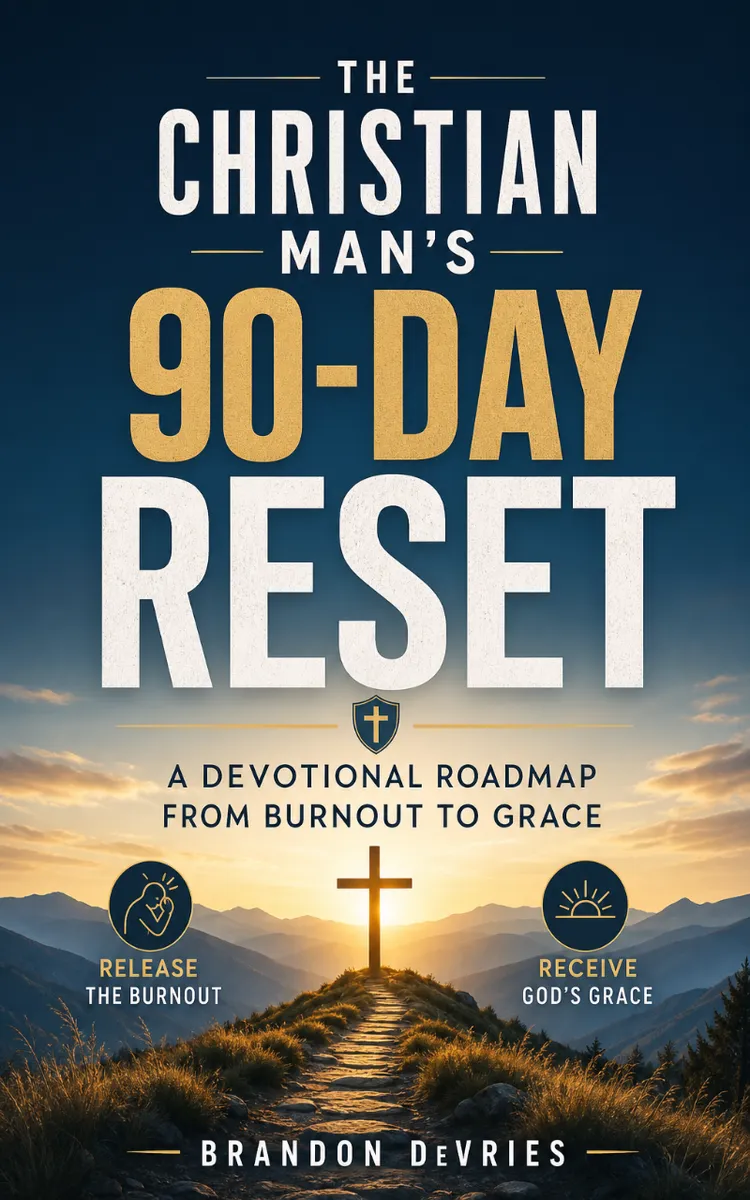
"The Christian Man's 90-Day Reset" is a religious devotional book by Brandon DeVries with 7 chapters and approximately 26,883 words. Christian men’s 90-day devotional for mindset reset.
This book was created using Inkfluence AI, an AI-powered book generation platform that helps authors write, design, and publish complete books.
Frequently Asked Questions
What is "The Christian Man's 90-Day Reset" about?
Christian men’s 90-day devotional for mindset reset
How many chapters are in "The Christian Man's 90-Day Reset"?
The book contains 7 chapters and approximately 26,883 words. Topics covered include Chapter 1: Running on Fumes, Chapter 2: Grace Before Grind, Chapter 3: Renewing the Mind, Chapter 4: Mastering the Temper, and more.
Who wrote "The Christian Man's 90-Day Reset"?
This book was written by Brandon DeVries and created using Inkfluence AI, an AI book generation platform that helps authors write, design, and publish books.
Write your own religious devotional book with AI
Describe your idea and Inkfluence writes the whole thing. Free to start.
Start writingCreated with Inkfluence AI


