

Read the first chapter
The whole of chapter one, free. About 8 min. Turn the pages with the arrows, your keyboard, or a swipe.
Chapter 1
Circadian Rhythms and the City Clock
The Clockwork Rhythm Map
At 6:30 a.m., the city clock may insist that morning has arrived, while your body still feels as though the furnaces are banked and the streets are empty. Then, late at night, the opposite can happen: the clock says bedtime, but your mind is bright with unfinished thoughts. This mismatch is not a character flaw. It is a timing problem between two clocks - the one on the wall and the one quietly ticking inside you.
Your internal clock helps coordinate sleepiness, alertness, body temperature, hormone release, digestion, and many other daily changes. It does not simply count hours. It keeps time in relation to light, darkness, meals, movement, and routine. The aim here is to help you read that timing system and make small, steady adjustments so sleep arrives with less wrestling and waking feels less like being hauled from a furnace room.
Who this is for: anyone who wakes at different times across the week, feels alert late at night, struggles with early mornings, or wants a clearer way to understand why light and routine affect sleep. The likely benefits are practical rather than magical: a more predictable sleep window, better morning alertness, and a stronger sense of when your body is ready for work, rest, and recovery.
A useful tool is the Clockwork Rhythm Map. It has three landmarks: your usual wake time, your strongest evening sleepiness, and the light and activity that surround both. Track those landmarks for seven days before trying to change them. Ask yourself: When does the city inside me begin winding down, and what signals am I sending it?
The Sunlit Furnace and the Inner Clock
The body’s main timekeeper is a small region in the brain called the suprachiasmatic nucleus, or SCN. It receives information from the eyes, especially about brightness, and helps set a roughly 24-hour pattern called a circadian rhythm. “Circadian” means “about a day.” This rhythm is not a perfect mechanical gear; it is more like a clock that needs regular winding by the world around it.
Light is the strongest winding key. Bright light entering the eyes during the day tells the SCN that the city is open for business. As evening darkness arrives, the brain begins increasing melatonin, a hormone that helps signal biological night. Melatonin is not a knockout switch, and it does not guarantee sleep. It is closer to a dusk bell: a message that the furnaces should lower their flame and the streets should become quieter.
The internal clock also influences body temperature. Temperature tends to rise as the body prepares for daytime activity and fall as night approaches. Alertness follows a related pattern, though not always smoothly. A person may feel a natural dip in the afternoon, a second wind in the evening, or heavy sleepiness soon after waking. These shifts reflect the interaction between the circadian rhythm and sleep pressure, the growing need for sleep that builds the longer you stay awake.
Think of sleep pressure as ash accumulating on the cobblestones. The longer the waking day, the more there is to clear. The circadian clock, meanwhile, decides when the night sweepers are scheduled to appear. If you stay awake late, sleep pressure may be high, but a strong evening clock signal can still keep you alert. If you wake early after too little sleep, the clock may push you toward wakefulness even while sleep pressure remains.
Several influences can move this timing system:
• Light timing: Bright light soon after waking tends to strengthen an earlier daytime signal, while bright light late at night can delay the body’s sense of biological night.
• Irregular schedules: Large differences between weekday and weekend sleep times can create a shifting rhythm, sometimes called social jet lag.
• Evening activity: Late exercise, work, conversation, or stimulating entertainment may keep the furnaces roaring, even when the clock has begun its descent.
• Meals and movement: Eating and activity at changing hours can provide extra time cues to the body, though light usually remains the strongest signal.
• Age and life stage: Sleep timing often changes across life. Some people naturally become earlier risers; others remain evening types.
Risk does not mean certainty. A changing schedule may simply produce a few rough mornings, but persistent misalignment can make it harder to fall asleep, wake refreshed, or think clearly during the day. The important distinction is between a clock that occasionally loses time and one that remains out of step for weeks.
A simple check: compare your sleep on free days with your sleep on workdays. If you sleep much later when obligations disappear, your schedule may be carrying a timing debt, not merely a shortage of willpower. The practical takeaway is that sleep is governed by both duration and timing; the wall clock is only one witness.
Setting the City Clock
Begin with the morning, because morning light is one of the clearest signals available to your internal clock. For seven consecutive days, wake within the same 30-minute window, including weekends when possible. Within the first hour, spend 10 to 30 minutes outdoors in ordinary daylight. Overcast light still counts. Do not stare at the sun; simply let daylight reach your eyes while walking, drinking coffee, or standing near an open doorway.
If your current schedule is far from the one you want, move gradually. Shift wake time and bedtime by 15 to 30 minutes every three days rather than attempting a sudden two-hour jump. Keep the wake time as the anchor. Bedtime often follows more naturally once the morning signal and sleep pressure are consistent.
Use the Clockwork Rhythm Map each evening. Record four details: the time you first felt clearly sleepy, the time you went to bed, the time you woke, and your brightest light exposure. After seven days, look for patterns rather than judging individual nights. If sleepiness regularly arrives at 11:30 p.m., forcing yourself into bed at 9:30 p.m. may create an hour of frustrated wakefulness. A better plan may be to dim lights and begin quiet activities around 10:30 p.m., then let the body approach its own gate.
During the final two hours before bed, reduce strong indoor light where practical. Use lamps instead of bright overhead lighting, lower screen brightness, and keep stimulating work out of the last 30 to 60 minutes if you can. The goal is not perfect darkness or a life without screens. It is a repeated message: the furnaces are closing. If you work nights, travel across time zones, or must use bright light late, ask a licensed clinician or qualified sleep professional for individualized guidance rather than experimenting with light devices or melatonin products on your own.
Keep meals and exercise reasonably regular for the same seven-day trial. Finish vigorous exercise at least one hour before bed if it leaves you alert; gentle movement may fit later. Avoid using alcohol as a sleep-timing tool. It can make a person drowsy at first while disturbing sleep later. Caffeine timing also matters: for a two-week experiment, avoid caffeine during the eight hours before your intended bedtime, then adjust only if needed.
A compact plan looks like this:
• Choose a wake time you can keep within 30 minutes for seven days.
• Get 10 to 30 minutes of outdoor light within the first hour after waking.
• Dim evening light during the last two hours before bed.
• Shift the schedule by no more than 15 to 30 minutes every three days.
• Review the Clockwork Rhythm Map after one week and continue the smallest change that is helping.
Seek professional help if difficulty falling asleep or waking continues for several weeks despite a steady schedule, if daytime sleepiness makes driving or operating equipment unsafe, or if loud snoring, gasping, unusual movements, or repeated awakenings are present. Also seek guidance for major schedule changes, persistent mood changes, or sleep problems connected with medication or a health condition. These signs do not identify a single cause, but they deserve careful attention.
The practical takeaway is modest and powerful: give the clock the same clues often enough that it no longer has to guess.
When the Clock Loses Its Bearings
Treating bedtime as the only important time
Why it happens: Bedtime feels like the obvious control panel. When sleep is difficult, people often move it earlier and earlier, hoping extra time in bed will force sleep to appear.
What to do instead: Anchor the wake time first. Keep it within 30 minutes for seven days, add morning daylight, and allow bedtime to move gradually. A quiet wind-down beginning 30 to 60 minutes before bed is more useful than lying awake for hours under the command of an arbitrary number.
Using weekends as a different season
Why it happens: After a demanding week, sleeping several hours later feels like repayment. Yet a late weekend wake time can shift the internal clock, making Sunday night feel like a city where the streetlights refuse to turn on.
What to do instead: Keep weekend wake time within about one hour of weekday wake time for two weeks. If you need recovery sleep, move bedtime earlier when possible or take a brief early-afternoon nap of about 20 minutes, rather than sleeping far into the day.
Blaming screens while ignoring the whole light pattern
Why it happens: Screens are visible and easy to blame, but the body reads all surrounding light. A bright kitchen, overhead workshop lights, or a late trip through a brightly lit store can also tell the brain that night has not fully arrived.
What to do instead: Look at the complete evening map. Lower household lighting during the last two hours, keep the final 30 to 60 minutes calmer, and protect strong morning light. If screens are necessary, reduce brightness and increase distance, but do not treat a filter as permission to keep every other late-night signal unchanged.
The city clock does not demand perfection. It asks for repeated evidence: daylight belongs to waking, darkness belongs to winding down, and the same gates will open at nearly the same hours. Once those signals grow steady, the body’s timing system has a better chance to coordinate sleep and wakefulness without constant negotiation. Beneath the visible bustle, the furnaces quiet, the clockwork sun turns, and the first Night Sweepers begin their silent rounds.
End of chapter one. 7 more chapters in the full book.
Swipe or use the arrows to turn the page


What's inside: 8 chapters
- 1. Circadian Rhythms and the City Clock
- 2. Melatonin and the Dimming Signal
- 3. Sleep Stages and Nightly Repair
- 4. The Glymphatic System at Work
- 5. Light Exposure for Better Sleep
- 6. Building a Consistent Sleep Schedule
- 7. Managing Shift Work and Jet Lag
- 8. Recognizing Sleep Disorders and Seeking Care
About this book
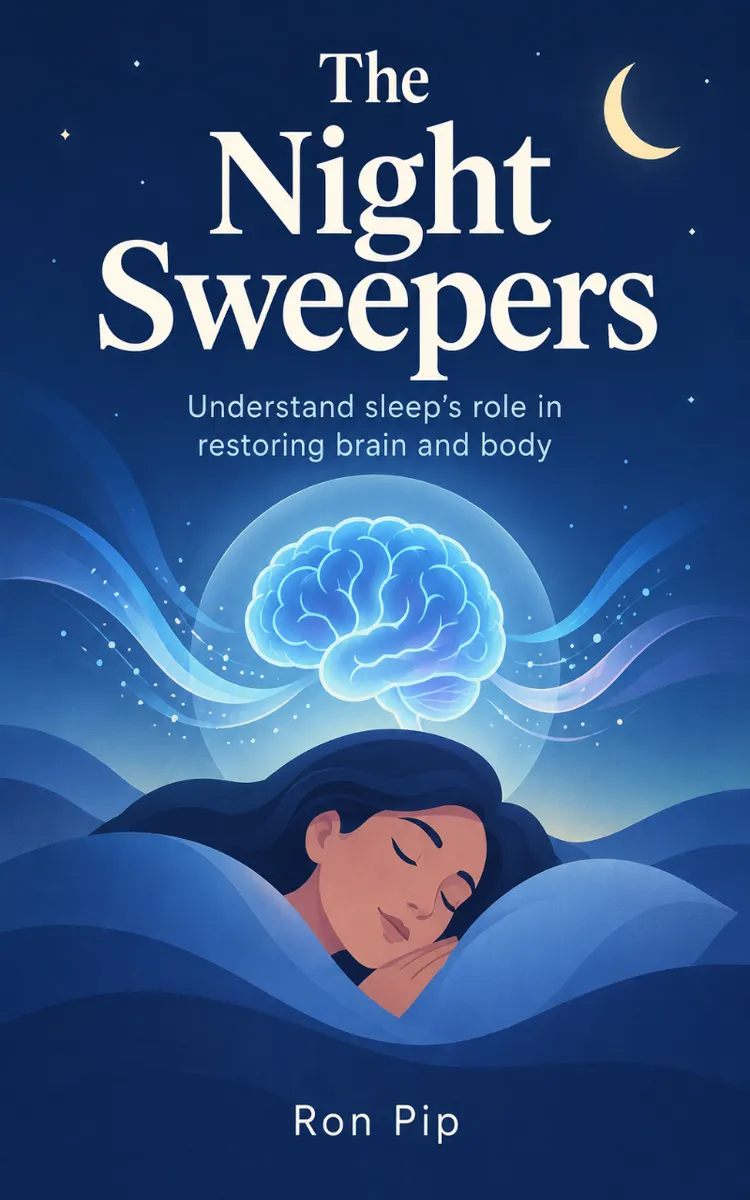
"The Night Sweepers" is a health & wellness book by Ron Pip with 8 chapters and approximately 13,646 words. Sleep, glymphatic brain clearance, melatonin, and circadian rhythms.
This book was created using Inkfluence AI, an AI-powered book generation platform that helps authors write, design, and publish complete books. It was made with the AI Health Book Generator.
Frequently Asked Questions
What is "The Night Sweepers" about?
Sleep, glymphatic brain clearance, melatonin, and circadian rhythms
How many chapters are in "The Night Sweepers"?
The book contains 8 chapters and approximately 13,646 words. Topics covered include Circadian Rhythms and the City Clock, Melatonin and the Dimming Signal, Sleep Stages and Nightly Repair, The Glymphatic System at Work, and more.
Who wrote "The Night Sweepers"?
This book was written by Ron Pip and created using Inkfluence AI, an AI book generation platform that helps authors write, design, and publish books.
How can I create a similar health & wellness book?
You can create your own health & wellness book using Inkfluence AI. Describe your idea, choose your style, and the AI writes the full book for you. It's free to start.
Write your own health & wellness book with AI
Describe your idea and Inkfluence writes the whole thing. Free to start.
Start writingCreated with Inkfluence AI


