
Read the first chapter
The whole of chapter one, free. About 8 min. Turn the pages with the arrows, your keyboard, or a swipe.
Chapter 1
How Shift Work Disrupts Sleep
The Two Forces Behind a Difficult Sleep
What happens when your body says “stay awake” at the exact time you need to sleep? That is the daily problem behind many rough post-shift mornings. After an overnight shift, you may feel worn out, yet become more alert as daylight enters the room. Before an early shift, you may lie in bed for hours while your body still expects to be awake.
This does not mean you are failing at sleep. Two built-in systems are pulling in different directions: your circadian rhythm, the body’s roughly 24-hour timing system, and sleep pressure, the need for sleep that builds the longer you stay awake. The Clock-and-Drive Map helps you see both forces at once instead of judging sleep by the clock alone.
Who this is for: anyone working nights, rotating shifts, early starts, split shifts, or schedules that change from week to week. Understanding these forces can help you:
• predict when sleep will be easiest or hardest; - plan light, caffeine, meals, and naps around your actual shift; - recognize why rotating schedules often feel worse than steady ones; - set realistic goals for improving sleep quality and alertness.
The practical outcome is not a promise of perfect sleep. It is a clearer map of what your body is doing, so your next choices fit the timing problem rather than fight it. Ask yourself: when sleep goes badly, is the main issue that you have not built enough sleep pressure, or that your circadian rhythm is pushing you toward wakefulness?
Why Night and Rotating Work Confuse the Body
Your circadian rhythm coordinates daily changes in alertness, body temperature, digestion, hormone release, and sleep readiness. Light is its strongest time cue. Morning and daytime light generally tell the brain that it is time to be active. Darkness, especially during the usual nighttime hours, supports the body’s move toward sleep.
Shift work changes the meaning of those cues. A night worker may finish work at 7 a.m., when the body is naturally moving toward daytime alertness. The worker may be exhausted from the shift but still receive bright outdoor light, traffic noise, household activity, and messages from people who are starting their day. The result can be a shorter or lighter sleep period, even when the need for sleep is strong.
Sleep pressure works differently. It builds during waking hours and decreases during sleep. Staying awake for 16 hours usually creates more pressure than staying awake for 8 hours. A nap, however, lowers some of that pressure. This is why a long nap after a night shift can make it harder to sleep later, while a brief, well-timed nap before work may improve alertness without using up as much nighttime sleep drive.
The Clock-and-Drive Map has two lines:
1. Clock: Where is your circadian rhythm pushing you - toward sleep or toward wakefulness? 2. Drive: How much sleep pressure have you built, and how much did your last sleep or nap reduce it?
A rotating schedule creates extra difficulty because the clock does not move as quickly as the work roster. Suppose you work two day shifts, then two night shifts, then return to days. Your work hours may change by 8 or 12 hours within a few days, but your circadian rhythm may still be anchored to the previous pattern. You can feel sleepy during a night shift, alert at the start of a daytime sleep period, and then groggy when the schedule changes again.
Several factors can add to the mismatch:
• Bright light at the wrong time: sunlight after a night shift can encourage wakefulness when you need to sleep. - Noise and social demands: daytime activity can interrupt sleep or shorten the available sleep window. - Caffeine timing: caffeine taken late in a shift may still be active when you try to sleep. - Irregular meals: heavy food close to bedtime may feel uncomfortable, while going too long without eating can also disturb rest. - Short turnaround times: finishing late and starting early leaves little time for both sleep and the transition home. - Naps that are too long or too late: these can reduce sleep pressure before the main sleep period. - Frequent schedule changes: each change asks the body to adjust its timing again.
“Restorative sleep” is not one special type of sleep that night workers can simply switch on. It means getting enough uninterrupted sleep across the night or day to support normal recovery. Daytime sleep can still be useful, but it is often more vulnerable to light, noise, temperature, and the circadian push toward wakefulness.
A useful check is to compare your last 24 hours with your planned sleep. If you slept for two hours after a night shift and then took a three-hour evening nap, your sleep pressure may be lower than expected at bedtime. If you slept only four hours and still feel alert at 10 a.m., your circadian rhythm may be the stronger force. The distinction matters because the next helpful action will differ.
The practical takeaway: tiredness and sleepiness are related but not identical. Your body can be tired while its internal clock is still promoting wakefulness.
Build Your Clock-and-Drive Map
Begin with seven days of simple observations. Record when you tried to sleep, when you believe you slept, when you woke, any naps, your caffeine times, and whether you were working days or nights. You do not need a wearable device; a notes app or paper beside the bed is enough. Add a quick rating from 0 to 10 for sleepiness before bed and alertness during work.
Next, mark the strongest time cues. Note when you received bright outdoor light, when the work area was brightly lit, and when you were in a dim environment. Also record meals and caffeine. After a week, look for patterns rather than perfect numbers. For example, you may discover that caffeine at 3 a.m. does not stop you falling asleep at 9 a.m., but it causes more waking later. Or you may see that a 90-minute nap before a night shift leaves you less sleepy at work but unable to sleep after the shift.
Use the map in this sequence:
1. Mark the sleep-pressure line. Count the time awake before your planned sleep. If you napped, note how long and when. A brief nap of about 10 to 20 minutes often provides a short alertness boost with less effect on later sleep pressure than a longer nap. If you wake from a longer nap feeling heavy or confused, allow time to clear that grogginess before driving or doing safety-sensitive work. 2. Mark the clock line. Identify whether your planned sleep falls during your usual daytime alert period. After a night shift, this is often the main obstacle. Treat daylight, bright indoor light, and household noise as signals that may work against sleep. 3. Protect the first sleep opportunity. After a night shift, go home, keep light exposure modest, and begin your sleep routine promptly if you are sleepy. Avoid adding errands that can wait. Use blackout curtains or an eye mask, reduce noise with earplugs or steady background sound if safe for your setting, and keep the room comfortably cool. 4. Set a caffeine boundary. Choose a cutoff at least 6 hours before your planned sleep for one week, then adjust based on your response. If you sleep at 9 a.m., a cautious starting cutoff is 3 a.m. Caffeine sensitivity varies, so some workers may need an earlier cutoff. 5. Test one change at a time. Keep the plan for at least three to four shifts before judging it, unless it creates a safety problem. Track sleep length, awakenings, and alertness rather than relying on one difficult morning.
For a steady night schedule, consistent sleep and wake times can make the clock easier to predict. For rotating schedules, complete adjustment may not be realistic. Instead, protect the most important sleep block and reduce abrupt changes where you can. A 20-minute nap before a night shift may help one worker; another may do better with a 90-minute nap, provided there is enough time to wake fully before driving or starting safety-sensitive tasks. Test these options on noncritical days when possible.
Seek professional help if sleep problems continue for several weeks despite a consistent plan, if you regularly fall asleep while driving or working, or if loud snoring, gasping, witnessed breathing pauses, unusual leg sensations, or severe daytime sleepiness are present. Also speak with a licensed clinician before using sleep medicines or supplements, especially if you take other medicines, have a chronic condition, are pregnant, or operate machinery. Do not drive or perform hazardous work when you are struggling to stay awake.
The practical takeaway: map the clock and the drive separately, then make one small timing change and observe it for several shifts.
Common Map Errors
Treating exhaustion as proof that sleep will come easily
• Why it happens: After a demanding shift, physical and mental fatigue can be intense. It is natural to expect immediate sleep, even when morning light and the circadian rhythm are promoting wakefulness. - What to do instead: Protect the first sleep opportunity. Reduce bright light on the trip home, keep the bedroom dark and quiet, and begin your wind-down without unnecessary errands. If sleep does not come, review the clock line rather than blaming yourself.
Using a long, late nap without checking the drive
• Why it happens: A long nap can feel like the only way to survive the next shift. But it may lower sleep pressure enough to make the planned sleep period harder. - What to do instead: Start with a 10- to 20-minute nap for a brief alertness lift, or test a longer nap only when you have enough time to wake fully. Keep a three- to four-shift record of nap timing and later sleep before deciding whether it helps.
Changing every variable at once
• Why it happens: Poor sleep creates urgency. Workers may simultaneously change caffeine, light, meal timing, naps, exercise, and bedtime, then have no way to know what helped. - What to do instead: Choose one main adjustment for three to four shifts. A sensible first test is a caffeine cutoff 6 hours before planned sleep or stronger darkness during daytime sleep. Keep the rest of your routine as steady as your roster allows.
The goal is not to force your body into a perfect schedule. It is to recognize which force is strongest today: the clock or the drive. Once you can see that difference, irregular work becomes a timing problem you can work with - not a personal failure you have to endure.
End of chapter one. 24 more chapters in the full book.
Swipe or use the arrows to turn the page
What's inside: 25 chapters
- 1. How Shift Work Disrupts Sleep
- 2. Tracking Your Sleep Patterns
- 3. Building a Shift-Ready Sleep Schedule
- 4. Managing Light Exposure
- 5. Creating a Daytime Sleep Sanctuary
- 6. Wind-Down Routines After Work
- 7. Strategic Napping for Shift Workers
- 8. Caffeine Timing and Limits
- 9. Meals That Support Sleep
- 10. Hydration Without Sleep Disruption
- 11. Exercise Around Irregular Shifts
- 12. Stress Relief for Better Sleep
- 13. Insomnia and Cognitive Behavioral Therapy
- 14. Shift Work Sleep Disorder
- 15. Sleep Apnea Warning Signs
- 16. Restless Legs and Nighttime Movement
- 17. Melatonin: Timing and Safety
- 18. Medication Review for Sleepiness
- 19. Alcohol, Nicotine, and Sleep
- 20. Fatigue-Proof Commuting
- 21. Staying Alert During Night Shifts
- 22. Rotating Shifts and Schedule Changes
- 23. Family Boundaries Around Sleep
- 24. Workplace Fatigue Risk Management
- 25. Personalizing Your Sleep Protocol
About this book
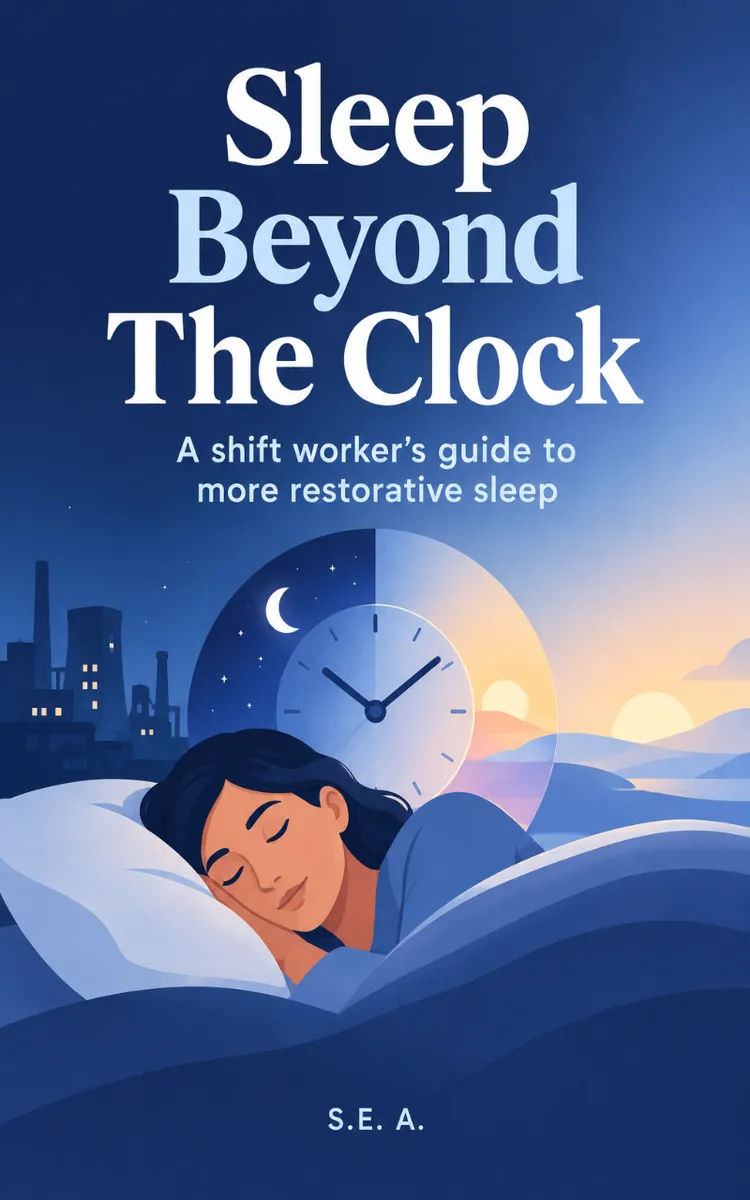
"Sleep Beyond The Clock" is a health & wellness book by S.E. A. with 25 chapters and approximately 43,868 words. Sleep strategies for workers with rotating or overnight schedules.
This book was created using Inkfluence AI, an AI-powered book generation platform that helps authors write, design, and publish complete books. It was made with the AI Health Book Generator.
Frequently Asked Questions
What is "Sleep Beyond The Clock" about?
Sleep strategies for workers with rotating or overnight schedules
How many chapters are in "Sleep Beyond The Clock"?
The book contains 25 chapters and approximately 43,868 words. Topics covered include How Shift Work Disrupts Sleep, Tracking Your Sleep Patterns, Building a Shift-Ready Sleep Schedule, Managing Light Exposure, and more.
Who wrote "Sleep Beyond The Clock"?
This book was written by S.E. A. and created using Inkfluence AI, an AI book generation platform that helps authors write, design, and publish books.
How can I create a similar health & wellness book?
You can create your own health & wellness book using Inkfluence AI. Describe your idea, choose your style, and the AI writes the full book for you. It's free to start.
Write your own health & wellness book with AI
Describe your idea and Inkfluence writes the whole thing. Free to start.
Start writingCreated with Inkfluence AI


