

Read the first chapter
The whole of chapter one, free. About 7 min. Turn the pages with the arrows, your keyboard, or a swipe.
Chapter 1
Finding Your Window of Tolerance
When the Fire Reaches the Fork in the Road
The message lands while you’re standing behind the counter, halfway through a busy morning: We need to talk about your performance. Your chest tightens. Heat climbs your neck. One part of you wants to fire back immediately. Another wants to disappear into the stockroom and pretend the message never arrived.
You read it again. Then again. The words haven’t changed, but your body has. Your hands move faster. Your thoughts narrow. The decision isn’t only what to say. It’s whether you can stay present long enough to choose instead of freezing or flaring.
The real skill isn’t keeping the fire from changing; it’s learning where you can hold the flame.
Three Ways the Inner Fire Loses Its Range
The Flare at the Gym. Marcus is coaching a client who keeps ignoring safety instructions. On the third careless rep, anger surges. His jaw locks, his voice gets sharp, and he threatens to end the session. The boundary matters. The heat makes the delivery harsher than he intended.
The Freeze at the Workshop. Priya owns a small plumbing business. A customer calls about a mistake on an expensive job. Priya knows she needs to respond, but her mind goes blank. She stares at the phone, postpones the call, and spends the afternoon feeling heavy and detached.
The Steady Response at the Shop. Devon receives an unfair complaint from a regular customer. His stomach drops, but he notices it. He puts both feet on the floor, takes one slower breath, and says, “I want to understand what went wrong. Give me a minute to look at the order.” He doesn’t feel calm exactly. He stays available enough to think.
What all these have in common:
• Each person faces a real pressure point.
• Each body shifts before the mind can explain why.
• The difference is not whether emotion appears, but whether enough choice remains.
• Your usable range lies between freezing and flaring,.
That usable range is your window of tolerance: the inner space where emotion can be felt without taking over, and where your thinking brain can still help steer. Use the Hearth-Window Map to notice that space,. At one edge, the fire burns too high: anxiety, rage, urgency, restless action. At the other, it burns too low: numbness, shutdown, avoidance, fog.
Neither edge makes you weak. Both are protective responses. A high fire tries to mobilize you for danger. A low fire tries to conserve you when the situation feels too much. The trouble begins when the response outlasts the moment - or appears when a steadier response would serve you better.
Your task isn’t to become emotionless. It’s to widen the stretch of time in which you can feel the heat, recognize the cold, and still decide what happens next.
How to Read Your Hearth-Window
Your nervous system is always scanning for safety, demand, and threat. It does this quickly, often before your conscious mind has formed a sentence. A critical email may register as danger. A difficult conversation may make your body prepare for battle. A familiar kind of disappointment may send you straight into withdrawal.
That’s why “just calm down” rarely works. The body needs evidence that it can come down safely. In a flare, thinking may return through slowing the body first. In a freeze, thinking may return through gentle movement, warmth, sound, or contact with something immediate and real. Your route back looks different depending on which edge you’re near,.
The Hearth-Window Map starts with three questions: What is my body doing? What story is my mind telling? What choice is still available? You don’t need to solve your whole life in the moment. You need enough information to locate yourself on the map.
Signs you need to study your window more closely:
• You send messages while angry and regret the wording within ten minutes.
• You avoid a necessary conversation until the problem becomes more expensive or painful.
• You feel responsible for staying calm, then judge yourself when your body reacts.
• You can explain what happened later, but cannot access that clarity while it’s happening.
Regulation isn’t no heat or cold, it’s enough inner range to choose your next move,.
Try a quick body scan when you notice a shift. Rate your activation from 0 to 10. A 2 might feel sleepy and distant. A 5 might feel alert but workable. An 8 might feel like you must act now. The number isn’t a diagnosis. It’s a location marker. If you’re at an 8, don’t demand a perfect decision. First, help the fire lower. If you’re at a 2, don’t force a dramatic breakthrough. First, invite a little warmth and contact.
Questions for Charting Your Range
• Think of a recent moment when you flared. What happened in your body during the first thirty seconds?
Be specific: “My shoulders rose, my speech sped up, and I started interrupting” tells you more than “I got stressed.” Those early signs are often the first border markers on your map.
• Think of a recent moment when you froze or went numb. What did you stop doing?
Maybe you stopped replying to customers, eating lunch, making decisions, or asking for help. Honest reflection might sound like, “I told myself I was being patient, but I was actually avoiding the call.”
• What situations reliably push you above your window?
Look for patterns such as being corrected in front of others, working without a break, dealing with unclear expectations, or feeling trapped in a conversation. The goal isn’t to blame the situation. It’s to learn your pressure points.
• What situations pull you below your window?
Notice whether silence, exhaustion, conflict, disappointment, or too many choices bring on the cold. You might discover that your shutdown arrives after the danger has passed, when your body finally stops holding itself together.
• At what activation level can you still respond with skill?
Choose a number from 0 to 10 and describe what “skill” looks like there. Perhaps at a 6 you can still ask one clear question, while at an 8 you need ten minutes before speaking. This gives your future self a usable boundary instead of a vague promise to “do better.”
Keep your answers somewhere easy to reach. A note on your phone titled Hearth-Window Map is enough. Over time, you’re building a personal field guide: your signs, your edges, and the small actions that help you return.
The Seven-Day Hearth-Window Scan
Challenge name: The Seven-Day Hearth-Window Scan
For seven days, you’ll practice locating yourself before trying to change yourself. This matters because you can’t tend a fire you haven’t noticed. The exercise takes about two minutes at a time.
Difficulty level: Gentle but revealing - 3 out of 5.
• Day 1: Three times today, rate your activation from 0 to 10. Write one body signal beside each number.
• Day 2: Notice one flare. Before responding, wait for three slower exhales. Record what you wanted to do and what you chose instead.
• Day 3: Notice one cold or numb moment. Add a small signal of warmth or movement: step outside, hold a warm drink, stretch your hands, or name five things you see.
• Day 4: Identify one repeated trigger. Write the situation, your first body signal, and the story your mind created.
• Day 5: Tell one trusted person your early warning sign. For example, “When I go quiet and stare at the floor, I’m probably leaving my window.”
• Day 6: Use a planned pause in a real conversation. Say, “I want to answer this properly. Give me five minutes.”
• Day 7: Review your notes. Mark your most common flare sign, your most common freeze sign, and the action that helped you return even slightly.
Celebrate when...
• You notice activation before sending the angry message.
• You name a freeze response without calling yourself lazy or broken.
• You take a pause that protects the conversation instead of abandoning it.
• You can describe your personal window in clear, ordinary language.
The aim isn’t a flawless week. You may miss a day, forget the scan, or recognize the pattern only afterward. That still counts. Recognition after the fact becomes recognition during the fact with practice.
Carrying the Map Forward
Your power grows when you can locate yourself inside the heat or cold, then choose a response from within your Hearth-Window.
• You mapped the difference between flaring, freezing, and staying available.
• You learned why the body reacts before clear thinking arrives.
• You identified physical and mental signs that mark the edges of your window.
• You practiced a seven-day scan to turn those signs into usable information.
The hearth doesn’t need to burn at one perfect temperature all day. It needs tending. As you learn your own signals, emotional regulation becomes less like wrestling yourself into silence and more like keeping enough warmth for thought, connection, and choice. From here, the work moves toward the tools that help you lower a raging flame or rekindle one that has gone cold.
End of chapter one. 7 more chapters in the full book.
Swipe or use the arrows to turn the page


What's inside: 8 chapters
- 1. Finding Your Window of Tolerance
- 2. Recognizing Heat Before It Spreads
- 3. Warming the Frozen Keep
- 4. Opening the Flues with Breath
- 5. Adding Logs Without Overloading
- 6. Cooling Conflict Before It Burns
- 7. Returning After a Nervous-System Storm
- 8. Tending the Fire Through Change
About this book
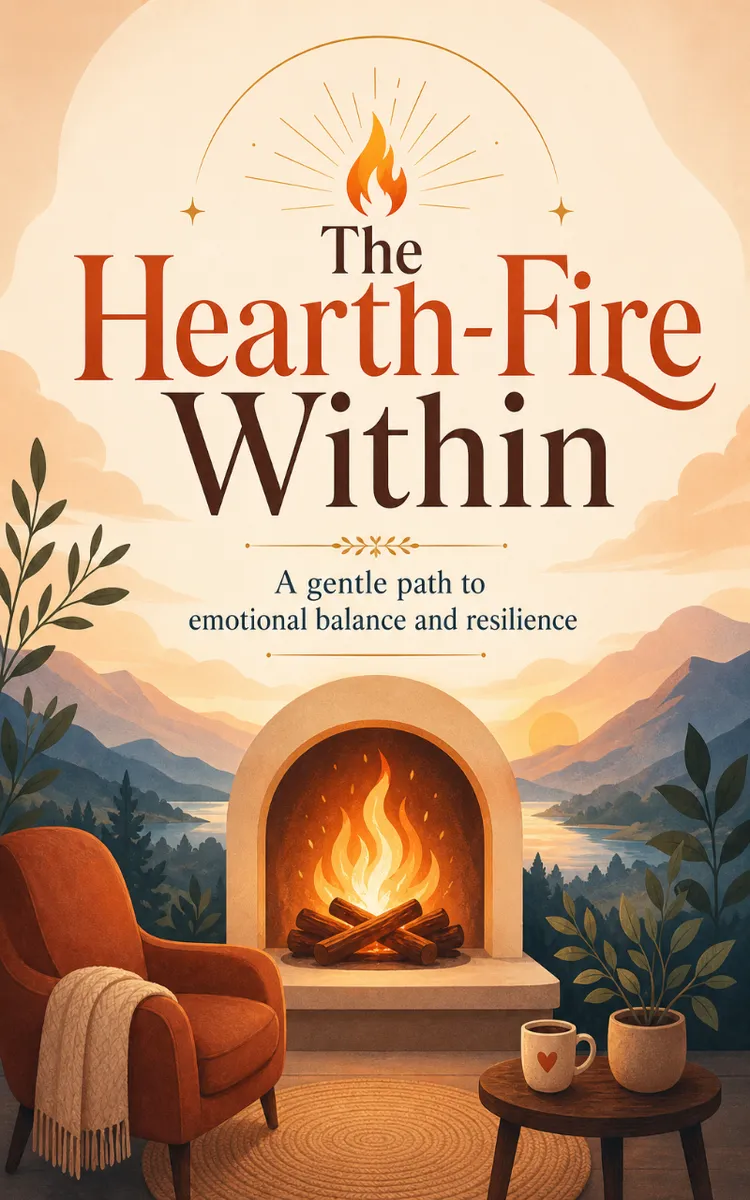
"The Hearth-Fire Within" is a self-help book by Ron Pip with 8 chapters and approximately 11,602 words. Emotional regulation, nervous system balance, and the window of tolerance.
This book was created using Inkfluence AI, an AI-powered book generation platform that helps authors write, design, and publish complete books. It was made with the AI Self-Help Book Writer.
Frequently Asked Questions
What is "The Hearth-Fire Within" about?
Emotional regulation, nervous system balance, and the window of tolerance
How many chapters are in "The Hearth-Fire Within"?
The book contains 8 chapters and approximately 11,602 words. Topics covered include Finding Your Window of Tolerance, Recognizing Heat Before It Spreads, Warming the Frozen Keep, Opening the Flues with Breath, and more.
Who wrote "The Hearth-Fire Within"?
This book was written by Ron Pip and created using Inkfluence AI, an AI book generation platform that helps authors write, design, and publish books.
How can I create a similar self-help book?
You can create your own self-help book using Inkfluence AI. Describe your idea, choose your style, and the AI writes the full book for you. It's free to start.
Write your own self-help book with AI
Describe your idea and Inkfluence writes the whole thing. Free to start.
Start writingCreated with Inkfluence AI


