
Read the first chapter
The whole of chapter one, free. About 10 min. Turn the pages with the arrows, your keyboard, or a swipe.
Chapter 1
Chapter 1: The Martyrdom Trap
The Martyrdom Trap: When “Sacrifice” Becomes a Slow Leak
If you’ve ever caught yourself thinking, “I can’t rest - I’m needed,” you’ve already met the Martyrdom Trap. It doesn’t usually show up as obvious self-destruction. It shows up as competence. As spiritual seriousness. As a quiet, convincing logic: If I’m tired, it must mean I’m faithful. And if you’re the kind of person who serves - educating, nursing, playing gigs, showing up for people - this trap feels almost holy. Until your body starts filing complaints you can’t ignore.
I’ve watched it happen in real places. In a church classroom where the teacher gets snappy and then feels guilty for being snappy. In a hospital break room where someone finishes a shift with shaking hands and says, “I’m fine,” like it’s a prayer. In a musician’s studio where the setlist is tighter than ever, but the heart behind it feels gone. The pattern is the same: sacrifice morphs from offering into addiction. You don’t just give your time - you give your health, your attention, and eventually your joy. Then you call it commitment.
The hard truth is this: burnout isn’t proof you’re called. Sometimes it’s proof you’ve been running a system that eats people. And there’s data to back up what your body already knows. In a meta-analysis of health and human service workers, burnout prevalence was reported around 23%, and in another large study of U.S. workers, 28% reported at least one burnout symptom. Those numbers aren’t meant to shame you; they’re meant to name the reality. You’re not “weak.” You’re not uniquely broken. You’re human - and you’ve been asked to live inside high-demand settings longer than your design allows.
So how do you tell the difference between holy endurance and the martyrdom illusion? That’s where diagnosis comes in. Not a vague “I feel bad,” but a clear, three-step framework that helps you see what’s actually happening under the noise.
The Martyrdom Illusion: Sacrificing Health Without Knowing It
The Martyrdom Trap works because it borrows language that sounds like faith. It takes words like service, calling, endurance, dedication and uses them to justify a pattern your nervous system doesn’t support. It’s not that you don’t want to honor God. It’s that you’ve started using suffering as a measuring stick.
Here’s the tell: in the trap, your “yes” to your calling starts costing you in the same categories over and over - energy, sleep, emotional steadiness, creativity, patience, and the ability to enjoy what you do. You might still function. You might even perform well. But internally, something keeps getting thinner. Like you’re paying for ministry, teaching, care, or music with an invisible debit card - and the bill always comes due.
The most confusing part is that the trap often feels productive at first. You get through the week. You answer emails. You cover shifts. You play the gig. You teach the lesson. You show up again. But then the cost starts showing up as irritability, numbness, forgetfulness, dread, and a “can’t turn it off” feeling that follows you home. You’re not just tired - you’re disconnected.
And when you finally try to slow down, guilt hits like a second shift. You wonder if rest is disloyal. You wonder if boundaries are selfish. You wonder if you’re letting people down. That guilt is one of the trap’s best tools, because it keeps you from noticing the real problem: your life has become a resource stream for other people’s needs, and you’ve stopped being able to refill.
Biblically, the issue isn’t service. The issue is misusing what’s supposed to sustain you. Scripture doesn’t ask you to turn your body into an altar where you burn down your own life. It teaches rhythms - rest, renewal, attention to the soul - and it warns against trading peace for frantic activity. The trap isn’t “God’s will.” It’s a counterfeit pattern that keeps you busy while your inner life evaporates.
If you want a simple diagnostic question, ask it like this: Is this sacrifice producing love, clarity, and resilience - or is it producing depletion, resentment, and numb performance? Your answer won’t be perfect. But your body will recognize the difference fast.
A 3-Step Burnout Diagnosis Framework: Know What You’re Treating
Let’s get concrete. Not “be mindful” and not “try harder.” You need a diagnosis framework you can actually use on a Tuesday morning when you’re already behind.
This is your three-step burnout diagnosis:
Step 1: Track the Cost (Energy, Mood, and Function)
Burnout shows up as a pattern, not a single bad day. Start by noticing the cost you’re paying in three areas:
• Energy: You can’t recover after normal rest. Sleep doesn’t “reset” you. - Mood: You’re more irritable, more easily overwhelmed, or more emotionally flat. - Function: You’re still doing the work, but it’s getting harder to care, focus, and connect.
If you’re a teacher, it might look like you can deliver the lesson but you don’t have empathy left for the student who’s struggling. If you’re in healthcare, it might look like you respond faster but feel less. If you’re a musician, it might look like you can nail the notes but you can’t access the joy. The details vary, but the shape stays the same: cost rises while recovery falls.
Step 2: Name the Trigger (What Keeps You “On”?)
Next, figure out what’s keeping you in “always ready” mode. Burnout isn’t just exhaustion; it’s sustained pressure. Ask:
• Are you constantly interrupted? - Are you responsible for outcomes you can’t control? - Are you carrying emotional labor you never get to put down? - Are you saying yes because you’re afraid of what happens if you don’t?
Here’s why this matters: the Martyrdom Trap convinces you the problem is your devotion. But in reality, the trigger is usually a system - expectations, staffing realities, unspoken rules, or a personal pattern of over-responsibility - that keeps your stress response activated.
Step 3: Check the Meaning (Why You’re Tolerating It)
Now the uncomfortable part: what belief is keeping you trapped? Not what you say you believe - what you actually live by when no one’s watching.
Common meaning-stories sound like:
• “If I rest, I’ll fall behind spiritually.” - “If I set a boundary, I’ll be seen as unfaithful.” - “If I’m not needed, I’m not valuable.” - “If I slow down, people will suffer.”
When these meanings run the show, burnout becomes less like a warning light and more like a lifestyle. You start tolerating depletion because it feels like righteousness. That’s the Martyrdom Trap: the belief that sacrifice equals obedience, even when obedience without wisdom becomes harm.
And yes, you can be deeply faithful and still be wrong about what your body is telling you. Faith doesn’t require self-erasure. It requires truth.
The goal of diagnosis isn’t to label yourself with a dramatic identity. It’s to get accurate. Because once you know what’s happening, you can stop treating burnout like a personality flaw and start treating it like a condition with a path forward.
Real-World Burnout Statistics: Why Your Body Isn’t Overreacting
If you’ve been burned out for a while, numbers can feel weird. Like, “Great, thanks, but my life is on fire.” Still, data matters here - not as a substitute for your experience, but as a mirror. It helps you stop blaming yourself for being human.
In the meta-analysis I mentioned earlier, burnout prevalence among health and human service workers was reported around 23%. In a large study of U.S. workers, 28% reported at least one burnout symptom. That second figure especially hits the “but I’m fine” mindset. Because many people don’t feel like they’re burning out in a dramatic way. They’re functioning. They’re just… shrinking.
Now, I want to connect those secular realities to a biblical solution without turning your faith into a coping mechanism. Scripture never tells you to deny your limits and call it spiritual maturity. It teaches you to recognize wisdom, to practice restraint, to seek renewal, and to honor your body and soul. When burnout is widespread, it means the issue isn’t just individual weakness - it’s the environment we keep asking people to survive.
So when you feel guilty for needing rest, you’re not being “holy.” You’re being trained by a culture that confuses output with worth. Your calling deserves protection. Not just from failure, but from depletion.
This is where your diagnosis step matters. If you know the cost, the trigger, and the meaning, you can stop making promises to yourself that your nervous system can’t keep. You can also stop interpreting every discomfort as spiritual failure.
Case Study: The Nurse Who Tried to Out-Pray Exhaustion
Let me ground this in a story I’ve seen in different forms, even if the details change. Picture a healthcare worker who’s known for being steady. She’s dependable, competent, and the kind of person coworkers trust. Over time, her shifts get heavier - not necessarily in paperwork, but in emotional load. Families are anxious. Decisions land on her. She’s the one who remembers to check on the patient no one else notices.
At first, she keeps praying. She keeps serving. She tells herself her fatigue is just the “price” of caring. Then her body starts doing things she can’t ignore: headaches that don’t leave, a short fuse, a sense that she’s watching herself work instead of being present. She still does the job. She just doesn’t feel like herself in it.
When she finally tries to talk about it, she hears versions of the Martyrdom Trap in other people’s voices: “We all feel tired.” “Keep pushing.” “Don’t be dramatic.” Or the spiritual version: “If you’re exhausted, maybe you’re not trusting enough.”
But her diagnosis looked different when she named it. The cost was obvious: she couldn’t recover. The trigger wasn’t just the workload; it was the constant emotional demand with no decompression time. And the meaning-story? She believed that stepping back would mean she was abandoning people. She had turned her own depletion into a proof of love.
The breakthrough wasn’t a dramatic confession. It was a decision to stop treating burnout as evidence of devotion. She asked for a boundary that matched reality: protected decompression after certain shifts, a plan for when she needed coverage, and permission - yes, actual permission - to treat recovery like part of the work.
That’s biblical too. Not “rest when you can,” but rest as stewardship. Your body isn’t a disposable tool for your calling. It’s a vessel you’re accountable to.
If you’re reading this and thinking, “That’s me,” don’t panic. Panic keeps you stuck in the trap. Your next move is diagnosis, then a small boundary that interrupts the cycle.
Practical Growth Challenge: Interrupt the Martyrdom Pattern Today
If you want one concrete action you can do without reorganizing your whole life, try this today: do a ten-minute “cost, trigger, meaning” check and write it down where you can see it.
Set a timer. Then answer three prompts in plain language:
• Cost: What have I been losing - energy, mood, function? - Trigger: What keeps me “on” even after I’m home? - Meaning: What do I believe about rest that makes me resist it?
Don’t write an essay. Write what’s true. Ugly honesty is allowed here.
Then choose one interruption - small enough to actually happen this week. The interruption should target the trigger or the meaning, not just the mood. If the trigger is constant interruption, your interruption might be one protected block where you don’t respond to messages. If the meaning is “rest equals disloyalty,” your interruption might be a deliberate, brief rest that you don’t argue with in your head - something you practice like a vow.
Here’s the “why” underneath it: burnout isn’t only biochemical; it’s reinforced by beliefs and habits. When your brain learns that suffering leads to a sense of worth, it keeps pushing you into the same pattern. Your job now is to teach your system a new story: I can care without consuming myself.
And if guilt shows up? Let it. Don’t obey it. Guilt is often the emotional residue of a long-standing pattern. You don’t have to pretend it’s not there. You just don’t let it steer.
Closing: Called People Need Protection, Not Proof
The Martyrdom Trap thrives on the idea that your calling requires you to pay in the currency of your health. But the fruit of that bargain is rarely love. It’s often numbness, irritability, and a quiet resentment that surprises you when it finally speaks.
You’re not called to be a martyr. You’re called to be faithful. Those are not the same. Faithfulness includes wisdom, and wisdom includes recognizing when your body is waving a white flag - not because you’re failing God, but because you’re finally seeing the pattern clearly.
So take the framework with you. Cost. Trigger. Meaning. That’s your map out of the trap. Next, we’ll move from diagnosis to recovery practices that actually fit real schedules and real service demands - because rest isn’t a luxury for the spiritually successful. It’s a tool for the faithful who want to keep going without disappearing.
End of chapter one. 6 more chapters in the full book.
Swipe or use the arrows to turn the page


What's inside: 7 chapters
- 1. Chapter 1: The Martyrdom Trap
- 2. Chapter 2: Restoring the Teacher’s Soul
- 3. Chapter 3: Healing the Healer
- 4. Chapter 4: The Sound of Silence
- 5. Chapter 5: The Sabbath Strategy
- 6. Chapter 6: Holy Ambition vs. Human Hustle
- 7. Chapter 7: The 10-Minute Morning Routine
About this book
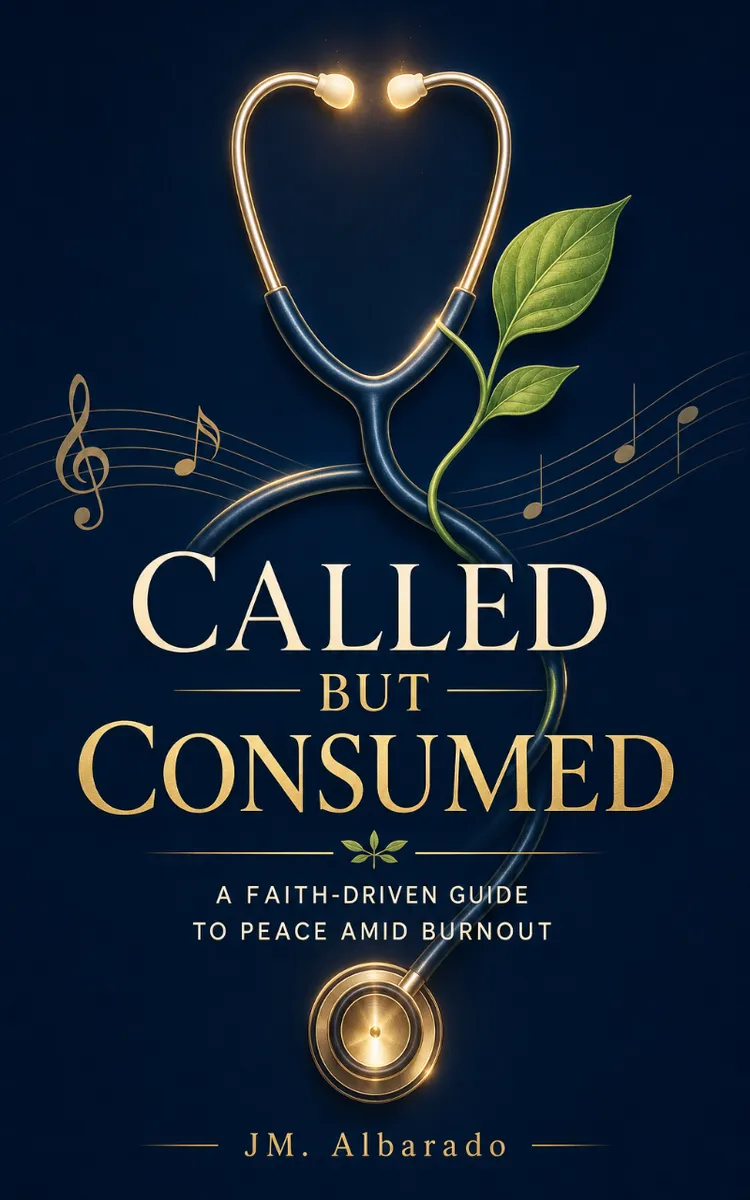
"Called But Consumed" is a self-help book by JM. Albarado with 7 chapters and approximately 15,195 words. Christian burnout recovery and boundary-setting for service professionals.
This book was created using Inkfluence AI, an AI-powered book generation platform that helps authors write, design, and publish complete books. It was made with the AI Self-Help Book Writer.
Frequently Asked Questions
What is "Called But Consumed" about?
Christian burnout recovery and boundary-setting for service professionals
How many chapters are in "Called But Consumed"?
The book contains 7 chapters and approximately 15,195 words. Topics covered include Chapter 1: The Martyrdom Trap, Chapter 2: Restoring the Teacher’s Soul, Chapter 3: Healing the Healer, Chapter 4: The Sound of Silence, and more.
Who wrote "Called But Consumed"?
This book was written by JM. Albarado and created using Inkfluence AI, an AI book generation platform that helps authors write, design, and publish books.
How can I create a similar self-help book?
You can create your own self-help book using Inkfluence AI. Describe your idea, choose your style, and the AI writes the full book for you. It's free to start.
Write your own self-help book with AI
Describe your idea and Inkfluence writes the whole thing. Free to start.
Start writingCreated with Inkfluence AI


