
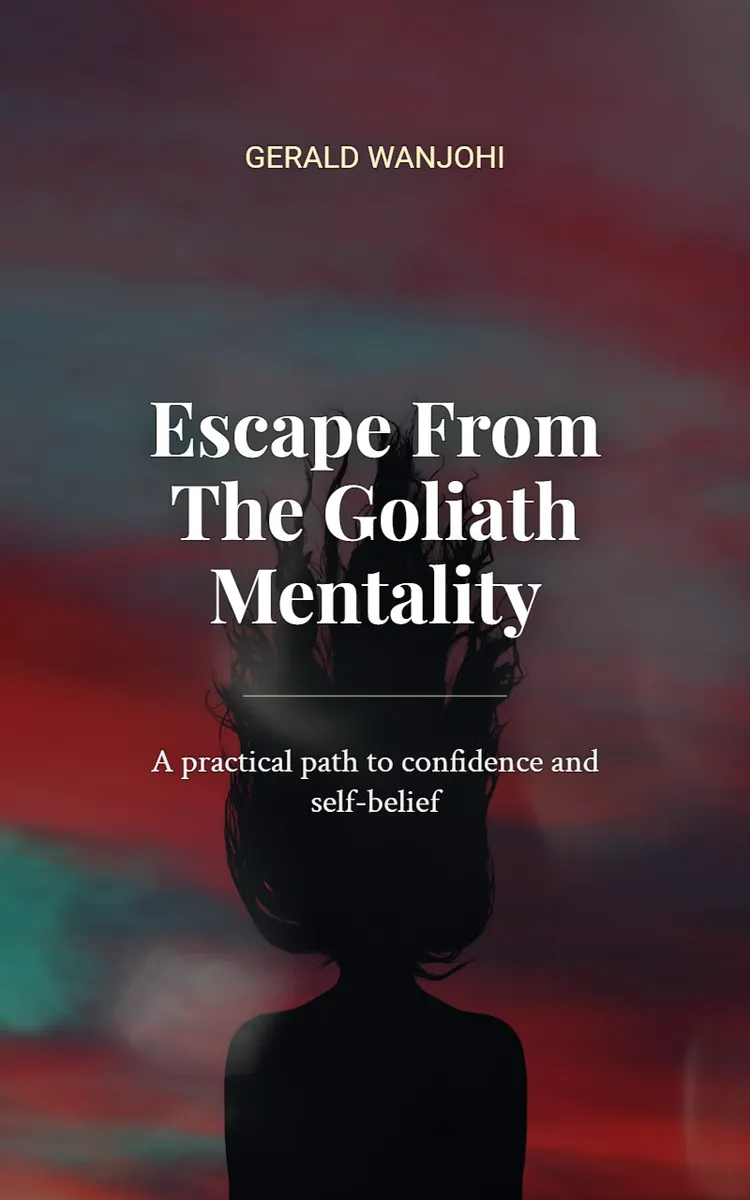
Overcoming fear, intimidation, and limiting beliefs
Table of Contents
- 1. Name Your Inner Goliath Belief
- 2. Rebuild Identity Beyond Approval
- 3. Defuse Fear With the 3-Second Pause
- 4. Break the Intimidation Loop With Exposure Steps
- 5. Speak Up Using the Brave-But-Clear Script
- 6. Set Boundaries Without Guilt
- 7. Turn Setbacks Into Proof of Growth
Preview: Name Your Inner Goliath Belief
A short excerpt from “Name Your Inner Goliath Belief”. The full book contains 7 chapters and 10,672 words.
Find the Sentence Behind the FearWhat exactly are you afraid will happen if you speak up, raise your price, apply for the job, or take the next step?
You may say, “I’m intimidated by my competitor,” or “I’m nervous about disappointing people.” Those answers feel true, but they’re often only the outer layer. Underneath them sits a short, powerful belief: I’m not good enough. They’ll find out I’m a fraud. If I fail once, I’ll lose everything. That sentence is the real Goliath.
Picture yourself standing outside a meeting where you need to present an idea you’ve worked on for weeks. Your notes are ready. You know the numbers. Still, your hand hovers over the door. Your mind starts producing evidence against you: someone else has more experience, your idea isn’t polished enough, and one awkward question could expose you. The fear feels like a fact.
But fear often isn’t reporting reality. It’s defending an old belief.
What if the thing intimidating you isn’t the situation - but the sentence you’ve attached to it?The Belief Is Not the TruthOld Belief: If I feel intimidated, it means I’m not ready or capable.
New Reality: Intimidation is often a signal that an untested belief is steering the wheel.
This shift matters because feelings arrive with impressive confidence. Fear doesn’t usually whisper, “Here’s one possible interpretation.” It says, “This is dangerous. Stop now.” Your body reacts before you’ve had time to question the message. Your chest tightens, your thoughts speed up, and suddenly avoiding the opportunity feels like common sense.
The goal isn’t to argue with every nervous feeling. That would be exhausting. The goal is to identify the belief underneath it, then test whether that belief deserves its authority.
Say you own a small plumbing business and a larger company opens nearby. You notice their trucks, polished website, and steady stream of reviews. Your first thought might be, “They’re going to take all my customers.” That thought creates pressure. You stop following up with leads because you assume people will choose the bigger company anyway. The business threat is real enough to notice, but the belief I can’t compete unless I’m bigger is the part quietly controlling your choices.
A truer statement might be: Customers don’t only choose size. They choose reliability, clear communication, and work they can trust. I can strengthen those things. That statement doesn’t pretend the competitor doesn’t exist. It gives you back a useful next move.
The difference is important. An empowering belief isn’t a shiny sentence you repeat while ignoring reality. It’s a more accurate interpretation - one that includes your ability to respond.
Use the Goliath Labeling LadderThe Goliath Labeling Ladder helps you move from a vague fear to the exact belief driving it. Start with the situation, then name the prediction, then uncover what that prediction seems to say about you. Finally, replace it with a statement that is both honest and stronger.
For example:
Situation: I need to quote a higher price.
Prediction: The customer will say no.
Meaning: If they say no, my work isn’t worth much.
Goliath belief: My value depends on other people approving my price.
Truer statement: I can explain my value clearly, and one person’s decision doesn’t define the worth of my work.
The ladder works because “I’m scared” is too broad to challenge. It’s like trying to repair a machine while calling the whole machine “broken.” Once you name the exact part, you can work with it.
Watch for these signs that an unnamed belief is running your life:
You keep calling a prediction a fact.
“They’ll laugh,” “I’ll lose the customer,” or “I’ll mess it up” may sound certain, but they’re forecasts. Your mind has skipped straight past evidence.
You avoid the same kind of moment repeatedly.
You don’t ask for the sale, share the idea, delegate the task, or make the call. The relief afterward teaches your brain that avoidance was protection.
Your reaction feels bigger than the event.
A normal question about your price feels like an attack. A small mistake feels like proof that your whole career is in danger. That extra intensity often points to a deeper belief.
You use identity words instead of situation words.
“I’m bad at business” is an identity verdict. “I need more practice explaining my offer” describes a problem you can actually address.
Name the belief precisely, and fear loses its ability to hide behind a fog of general worry.Ask What Your Goliath Is PromisingTake a quiet moment and think of one situation you’re avoiding right now. Choose something specific. Not “my confidence,” but “calling the lead who asked for a quote,” “speaking during Thursday’s meeting,” or “raising my service rate by $25.”
Then ask yourself:
What am I predicting will happen?
Write the prediction exactly as it appears in your mind....
About this book
"Escape From The Goliath Mentality" is a self-help book by Gerald Wanjohi with 7 chapters and approximately 10,672 words. Overcoming fear, intimidation, and limiting beliefs.
This book was created using Inkfluence AI, an AI-powered book generation platform that helps authors write, design, and publish complete books. It was made with the AI Self-Help Book Writer.
Frequently Asked Questions
What is "Escape From The Goliath Mentality" about?
Overcoming fear, intimidation, and limiting beliefs
How many chapters are in "Escape From The Goliath Mentality"?
The book contains 7 chapters and approximately 10,672 words. Topics covered include Name Your Inner Goliath Belief, Rebuild Identity Beyond Approval, Defuse Fear With the 3-Second Pause, Break the Intimidation Loop With Exposure Steps, and more.
Who wrote "Escape From The Goliath Mentality"?
This book was written by Gerald Wanjohi and created using Inkfluence AI, an AI book generation platform that helps authors write, design, and publish books.
How can I create a similar self-help book?
You can create your own self-help book using Inkfluence AI. Describe your idea, choose your style, and the AI writes the full book for you. It's free to start.
Write your own self-help book with AI
Describe your idea and Inkfluence writes the whole thing. Free to start.
Start writingCreated with Inkfluence AI


