
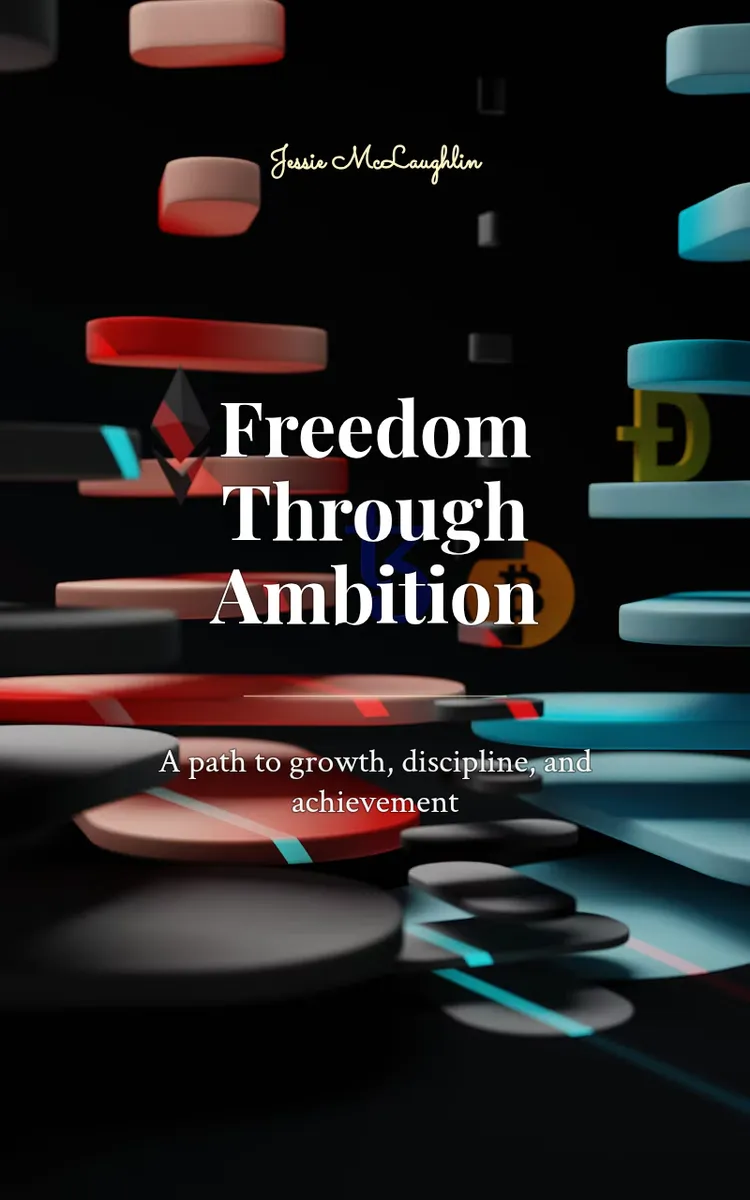
Read the first chapter
The whole of chapter one, free. About 6 min. Turn the pages with the arrows, your keyboard, or a swipe.
Chapter 1
Claiming Your Agency
The Moment the Choice Becomes Yours
At 6:40 on a Monday morning, a plumber sits in his van outside the first job of the day. The customer is waiting. His tools are ready. But his mind is somewhere else: the unpaid invoice, the slow month ahead, the habit of putting off paperwork until Friday, and the nagging sense that his business is running him instead of the other way around.
Nothing dramatic has happened. No one has locked him in that van. Still, the day feels decided before he turns the key. That feeling is familiar when your work, habits, or future seem controlled by customers, bosses, bills, bad timing, or yesterday’s mistakes.
Yet a small space remains between what happens and what you do next. That space is where agency lives. You may not control the whole job, the market, or another person’s behavior. You can choose the next call, the next hour, the next standard, and the next honest decision.
Your future is shaped in the space between circumstance and choice.
From Being Carried to Taking the Wheel
Old Belief: My options are limited, so there isn’t much I can do until conditions improve.
New Reality: My choices may be limited, but they still create direction - and repeated direction changes my work, habits, and future.
This shift matters because waiting for perfect conditions quietly hands your authority to circumstances. You wait for more money before learning a skill. You wait for more time before fixing your schedule. You wait for confidence before asking for better work. The waiting feels reasonable, but it also becomes a habit.
Agency doesn’t mean pretending every problem is your fault. A slow season is real. A difficult customer is real. A job loss, family responsibility, or health problem can narrow your choices. Agency means asking a more useful question: “Given what’s true today, what can I influence next?”
Consider the owner who finishes every workday exhausted and tells himself he needs a larger team before he can get organized. He could begin with one decision: spend the final twenty minutes of each day recording completed jobs, unpaid invoices, and tomorrow’s first task. That won’t solve every business problem. It will reduce confusion, reveal patterns, and make the next decision easier. A small act of initiative creates room for a larger one.
This is how personal freedom grows in practical life. You make a choice, observe the result, adjust, and choose again. You stop treating your future as something delivered to you. You begin treating it as something you help build.
Reading the Agency Compass
The Agency Compass has four directions: Notice, Choose, Act, and Adjust. First, notice what is actually happening instead of hiding behind vague frustration. Then choose the part within your reach. Act before you feel completely ready. Finally, adjust based on what the result teaches you.
The compass works because action becomes easier when the problem is specific. “My business is a mess” creates helplessness. “Three invoices are seven days overdue, and I haven’t followed up” gives you a clear next move. The mind can work with a fact. It struggles with a cloud.
Watch for these signs that the old pattern is running your life:
1. You explain the same problem repeatedly but haven’t changed one behavior connected to it. 2. You use other people’s choices as the main reason your plans remain unfinished. 3. You keep waiting for motivation, confidence, or free time before beginning. 4. You make decisions based on avoiding discomfort rather than moving toward a chosen result.
A business owner who notices these signs doesn’t need a lecture. He needs a direction. He might block thirty minutes on Tuesday and Thursday for invoices, even if the work feels dull. He might replace “I’m bad at sales” with “I haven’t made five follow-up calls this week.” The second statement is less dramatic, but it gives him something he can do.
Agency grows when you turn frustration into a choice you can repeat.
The important point is repetition. One brave decision can change a day. Repeated decisions change your operating habits. Those habits affect the quality of your work, the trust people place in you, and the opportunities you’re prepared to accept.
Questions That Put You Back in the Driver’s Seat
1. Where are you describing a result as if it happened without your participation? Be fair, not harsh. Perhaps you can’t control late-paying customers, but you can control when you send invoices, whether you confirm payment terms, and how quickly you follow up.
2. What choice have you postponed because you’re waiting to feel ready? Maybe you want to raise your prices, apply for a better position, or start training before work. Readiness often appears after the first few uncomfortable attempts, not before them.
3. Which part of your week is being shaped by default rather than decision? Look closely at the first hour of your workday. If it disappears into messages and minor tasks, choose one important action to complete before opening your inbox tomorrow.
4. What would a person taking full responsibility do next - not forever, just next? The answer might be simple: make the call, write the plan, cancel the distraction, or admit that a current method isn’t working. You don’t need a perfect five-year vision to take one honest step.
5. What evidence would show you that your initiative is working? Choose a visible measure. It could be three completed workouts, five sales follow-ups, seven days of starting work on time, or a shorter list of unfinished tasks. Evidence strengthens belief far more than self-talk alone.
The Seven-Day Agency Compass Challenge
Challenge: Choose One Area, Move It Forward
For the next seven days, use the Agency Compass on one area of your life: your work, finances, health, or daily routine. Keep the target narrow. “Improve my career” is too broad. “Send two job applications by Friday” is clear.
• Write down one situation that currently frustrates you. - Separate what you can influence from what you can’t control. - Choose one action that takes thirty minutes or less. - Schedule that action at a specific time each day, or on at least four days this week. - Record what you did, what happened, and what you’ll adjust next. - At the end of seven days, review the evidence instead of judging your personality.
Expected difficulty: Medium
You’ll know it’s working when:
• You can name the next action without a long explanation. - You stop using “nothing I can do” as your first conclusion. - At least one task moves from intention to completion. - You make an adjustment based on real results. - Your confidence comes from evidence, not from forcing yourself to feel confident.
Some days, the challenge will feel almost too small. That’s part of its strength. Sending one overdue invoice or preparing tomorrow’s tools may not feel like a transformation. But initiative is built through ordinary decisions made on purpose. Small actions teach your mind that your choices have consequences - and that you can create better ones.
Freedom Begins with a Chosen Next Move
The person who claims agency may not control the whole road, but chooses the direction, the pace, and the next step.
You’ve seen that:
• Personal choice creates room even when circumstances remain difficult. - The Agency Compass turns frustration into a repeatable process: Notice, Choose, Act, and Adjust. - Initiative becomes powerful through repeated behavior, not one dramatic burst of effort. - Clear evidence helps you build trust in your own ability to shape work, habits, and the future.
The goal isn’t to control everything. That would be exhausting - and impossible. The goal is to stop surrendering the things that are yours to influence. Each deliberate choice gives you more skill, clarity, and freedom to make the next one.
That is where ambition becomes practical. You don’t wait for your life to feel fully open before moving. You act, and the act opens a little more space.
End of chapter one. 39 more chapters and about 58,299 words in the full book.
Swipe or use the arrows to turn the page


What's inside: 40 chapters
- 1. Claiming Your Agency
- 2. Rewriting Limiting Beliefs
- 3. Taking Ownership of Outcomes
- 4. Choosing Ambition Without Apology
- 5. Seeing Effort as Investment
- 6. Replacing Excuses with Action
- 7. Building a Growth Identity
- 8. Defining Your Personal Scorecard
- 9. Setting Goals That Pull You Forward
- 10. Prioritizing High-Value Work
- 11. Designing Habits That Stick
- 12. Practicing Discipline on Ordinary Days
- 13. Defeating Procrastination at the Start
- 14. Protecting Focus from Distraction
- 15. Managing Energy for Consistency
- 16. Learning Skills with Deliberate Practice
- 17. Turning Feedback into Progress
- 18. Making Decisions with Imperfect Information
- 19. Taking Calculated Risks
- 20. Building Confidence Through Evidence
- 21. Communicating Your Value Clearly
- 22. Negotiating for Better Opportunities
- 23. Creating Value Others Will Choose
- 24. Managing Money as a Freedom Tool
- 25. Building a Reputation for Reliability
- 26. Creating Relationships That Expand Opportunity
- 27. Setting Boundaries Without Losing Momentum
- 28. Leading Yourself Through Change
- 29. Recovering from Failure Without Quitting
- 30. Building Resilience Under Pressure
- 31. Breaking the Perfectionism Trap
- 32. Avoiding Burnout While Staying Driven
- 33. Adapting When Plans Stop Working
- 34. Using Competition as a Learning Signal
- 35. Celebrating Progress Without Complacency
- 36. Aligning Success with Personal Values
- 37. Contributing Through Enterprise
- 38. Designing a Life of Greater Freedom
- 39. Turning Achievement into Lasting Purpose
- 40. Committing to Lifelong Self-Development
About this book
"Freedom Through Ambition" is a self-help book by Jessie McLaughlin with 40 chapters and approximately 58,299 words. Capitalism as a framework for personal freedom, discipline, growth, and accomplishment.
This book was created using Inkfluence AI, an AI-powered book generation platform that helps authors write, design, and publish complete books. It was made with the AI Self-Help Book Writer.
Frequently Asked Questions
What is "Freedom Through Ambition" about?
Capitalism as a framework for personal freedom, discipline, growth, and accomplishment
How many chapters are in "Freedom Through Ambition"?
The book contains 40 chapters and approximately 58,299 words. Topics covered include Claiming Your Agency, Rewriting Limiting Beliefs, Taking Ownership of Outcomes, Choosing Ambition Without Apology, and more.
Who wrote "Freedom Through Ambition"?
This book was written by Jessie McLaughlin and created using Inkfluence AI, an AI book generation platform that helps authors write, design, and publish books.
How can I create a similar self-help book?
You can create your own self-help book using Inkfluence AI. Describe your idea, choose your style, and the AI writes the full book for you. It's free to start.
Write your own self-help book with AI
Describe your idea and Inkfluence writes the whole thing. Free to start.
Start writingCreated with Inkfluence AI


