
Read the first chapter
The whole of chapter one, free. About 8 min. Turn the pages with the arrows, your keyboard, or a swipe.
Chapter 1
Reactive Hypoglycemia at 3 PM
Why 3 PM Feels Like a Wall
A 3 PM crash can turn a normal workday into a tug-of-war between brain fog and the nearest sweet snack. The pattern often starts earlier: a quick breakfast, a carb-heavy lunch, a sweet coffee, or several hours of sitting. Blood glucose rises quickly, then may fall quickly enough to leave you tired, distracted, irritable, and searching for something sugary.
This is the Glucose Rollercoaster Model: a rapid climb followed by a sharp drop in available energy. It does not mean every afternoon slump is caused by blood sugar, and it does not confirm a medical condition. Sleep, stress, hydration, medication, meal size, and individual health all matter. But noticing the timing and sequence can help you test simple workplace changes safely.
Who this is for: office workers who regularly experience post-lunch sleepiness, 3 PM brain fog, mood changes, or strong sugar cravings and want practical options without banning bread, rice, fruit, or dessert.
You can use this model to:
• Spot the meal or drink that may be starting the rollercoaster. - Pair carbohydrates with protein, fiber, and healthy fats. - Use a short movement break before the slump becomes severe. - Respond to cravings without turning the afternoon into a restriction battle. - Track patterns clearly enough to discuss them with a licensed health professional if needed.
The immediate goal is not perfect glucose readings. It is a steadier afternoon: fewer urgent cravings, clearer thinking, and enough energy to finish the workday. Ask yourself today: when does the first sign appear - sleepiness, irritability, scattered thinking, or a specific craving? That first signal is useful information.
How the Glucose Rollercoaster Creates the Afternoon Dip
Glucose is a simple sugar in your blood that your body uses for energy. After you eat carbohydrates - such as cereal, bread, rice, pasta, fruit, sweets, or sweetened drinks - your digestive system breaks much of them down into glucose. Your body releases insulin, a hormone that helps move glucose from the blood into cells.
The speed of the rise matters. A sweet drink, pastry, or large serving of refined carbohydrates can enter the bloodstream relatively quickly, especially when eaten alone. A meal containing protein, fiber, and fat usually takes longer to digest. These foods act like a “Carb Saver”: they slow the meal’s overall arrival and help make the energy curve less steep.
The Glucose Rollercoaster Model has three common phases:
1. The climb: Glucose rises after a meal or drink. You may feel fine at first, particularly if the food is rewarding or caffeinated. 2. The turn: Insulin helps move glucose into cells. If the rise was fast, the shift afterward may feel sudden. 3. The dip: You notice tiredness, difficulty concentrating, irritability, shakiness, hunger, or a strong desire for quick sugar.
A reactive dip, sometimes called reactive hypoglycemia, refers to low-blood-sugar symptoms occurring after eating, often within a few hours. Symptoms alone cannot prove that glucose is low, and similar feelings can come from too little sleep, anxiety, dehydration, excess caffeine, long meetings, or simply eating too little. The useful question is not “What is wrong with me?” but “What happened in the two to four hours before this feeling?”
Tanya, a 34-year-old operations manager, noticed that her 3 PM slump followed a familiar lunch: a large bowl of white rice, a sweetened iced coffee, and very little protein. At 1:30 PM she felt productive. By 3 PM, she reread the same email several times, became unusually impatient, and wanted cookies. The craving was not a character flaw. It was a fast, practical request for fast energy - made more likely by the meal pattern and the long stretch of sitting afterward.
Several factors can make the pattern more likely:
• Eating a large portion of fast-digesting carbohydrates without a protein or fiber partner. - Drinking calories, especially sweet coffee, soda, juice, or energy drinks, because liquids often require little chewing and may be consumed quickly. - Skipping breakfast or lunch, then eating a very large meal later. - Going four or more hours without food while working through meetings. - Sleeping poorly or relying on caffeine to push through fatigue. - Sitting for long periods after lunch, which removes a simple opportunity for gentle movement. - Taking medication or having a health condition that affects glucose regulation.
A reactive dip can feel dramatic, but it is not something to self-diagnose from a single afternoon. If you repeatedly experience fainting, confusion, severe weakness, trouble speaking, loss of coordination, seizure, or symptoms that do not improve promptly with food and rest, seek urgent medical help. For recurring episodes, arrange an appointment with a licensed clinician, especially if you have diabetes, are pregnant, take glucose-lowering medication, or have unexplained weight change.
The practical takeaway is simple: a 3 PM crash often reflects the whole morning-to-afternoon sequence, not one “bad” food. Look for the climb before trying to fix the dip.
The 3 PM Recovery and Prevention Protocol
Start by recording three workdays of simple observations. Note your lunch time, what you ate and drank, the first time symptoms appeared, your caffeine timing, and whether you moved afterward. Use a note on your phone or a small desk card. You do not need to measure every bite or judge the record. You are looking for repeatable timing.
When a crash begins, use this sequence:
1. Pause for two minutes and name the symptoms. Write “sleepy,” “shaky,” “irritable,” “foggy,” or “very hungry,” along with the time. If symptoms are severe, unusual, or worsening, prioritize medical help rather than experimenting at your desk. 2. Drink 8-12 ounces of water over several minutes. Thirst, dry office air, and caffeine can add to fatigue. Water is not a guaranteed fix for a glucose-related dip, but it is a reasonable first check. 3. If you have not eaten for four hours, or your symptoms include strong hunger, choose a small Carb Saver snack: one apple with 1-2 tablespoons of almond butter, plain yogurt with berries, whole-grain crackers with cheese, or a small handful of nuts with a piece of fruit. The pairing matters more than finding a “perfect” snack. 4. Walk for 5-10 minutes at an easy pace, such as one trip around the building or a hallway loop. If walking is not practical, stand and stretch for two minutes, then repeat once after 20-30 minutes. 5. Reassess after 20-30 minutes. If you are still unwell, avoid repeatedly adding sweets and caffeine while guessing. Contact a health professional for guidance, particularly if this happens often.
For prevention, begin with the meal that comes before the crash. At lunch, keep the carbohydrate you enjoy and add two stabilizers: a protein source and a fiber-rich food. For example, keep the rice but add chicken, tofu, beans, or eggs and a generous serving of vegetables. Keep the sandwich but choose whole-grain bread when available, add turkey or hummus, and include fruit or a side salad. The aim is clothing your carbs, not removing them.
Use a three-part timing test for one week:
• Eat lunch at a consistent time, ideally before you become intensely hungry. - Include a clear protein portion, such as eggs, tofu, chicken, fish, beans, Greek yogurt, or cottage cheese. - Take a 5-10-minute walk within 30 minutes after lunch, or complete two 2-minute movement breaks during the following hour.
If the afternoon remains difficult after seven days, adjust one variable at a time. Reduce the size of a sweet drink, add more fiber to lunch, move caffeine earlier, or add a planned snack around 2:30 PM. Keep each change for three workdays before judging it. Changing everything at once makes it hard to know what helped.
| Afternoon pattern | First experiment | Timing | |---|---|---| | Sleepy but not hungry | 5-10-minute easy walk and water | Within 30 minutes of lunch | | Hungry and distracted | Carb Saver snack | Around 2:30-3 PM | | Shaky or unusually weak | Sit down, eat if appropriate, and seek professional guidance if recurring | Immediately | | Irritable after sweet coffee | Order an unsweetened or lightly sweetened version and pair with food | At the next coffee break | | Crash after a very large lunch | Reduce the portion slightly and add protein or vegetables | At the next lunch |
Do not use this protocol to override prescribed treatment or to manage known diabetes without following your care plan. Seek prompt medical advice for repeated episodes, symptoms during fasting, symptoms that wake you at night, or any episode involving fainting, confusion, severe weakness, chest pain, trouble breathing, or seizure. If you are unsure whether symptoms are urgent, contact local emergency services.
Your practical checkpoint: after one week, can you identify the meal, drink, or schedule pattern that most often appears before the dip? That answer gives you a specific place to work - not a reason to fear food.
Common Mistakes That Keep the Rollercoaster Moving
Mistake: Treating the 3 PM craving as a willpower problem
Why it happens: A sudden desire for cookies or candy feels personal, especially when the rest of the day has been disciplined. But a fast rise followed by a dip can make quick energy unusually appealing. Stress and poor sleep can intensify the same urge.
What to do instead: Plan a 2:30-3 PM Carb Saver snack for five workdays. Keep one option at your desk and one in a shared refrigerator. Try fruit with nuts, yogurt with seeds, or whole-grain crackers with cheese. If you still want a sweet afterward, eat it alongside or after the paired snack rather than turning the afternoon into an all-or-nothing test.
Mistake: Fixing the dip with sugar and caffeine alone
Why it happens: A candy bar and large coffee are fast, available, and socially normal in an office. They may provide a short lift, but they do not address the missing protein, fiber, meal timing, or rest that helped create the pattern.
What to do instead: If you choose coffee, keep added sugar modest and drink it with food. Pair a sweet item with protein or fiber, then take a 5-10-minute walk. Avoid stacking another highly caffeinated drink within the next two hours while you are still trying to understand your symptoms.
Mistake: Making lunch too small in an effort to avoid a crash
Why it happens: After several uncomfortable afternoons, it is tempting to cut carbohydrates sharply or eat only salad. That can leave you genuinely under-fueled, making late-day cravings stronger and concentration worse.
What to do instead: Keep a satisfying carbohydrate portion and add a protein source, fiber-rich vegetables, and a little healthy fat. For the next three lunches, aim to finish feeling comfortably satisfied - not stuffed and not searching for food an hour later. If crashes continue despite regular, balanced meals, discuss the pattern with a licensed clinician.
A better 3 PM begins before 3 PM. Notice the climb, add a Carb Saver, move briefly, and treat recurring or severe symptoms as information worth professional attention. With that approach, the afternoon becomes less of a surprise and more of a pattern you can steadily reshape.
End of chapter one. 7 more chapters and about 14,645 words in the full book.
Swipe or use the arrows to turn the page

30-Day Anti-Inflammatory Meal Prep Guide

14-Day Somatic Reset

Homeschooling Made Simple For Working Parents
What's inside: 8 chapters
- 1. Reactive Hypoglycemia at 3 PM
- 2. Clothing Your Carbs Pairing Formula
- 3. Desk-Ready Breakfast and Lunch Assembly
- 4. Breakroom and Meeting Food Tactics
- 5. Post-Meal 2-to-5 Minute Glucose Reset
- 6. Stress-Induced Spike Management Routine
- 7. Coffee and Beverage Navigator
- 8. 3 PM Energy Emergency Protocol
About this book
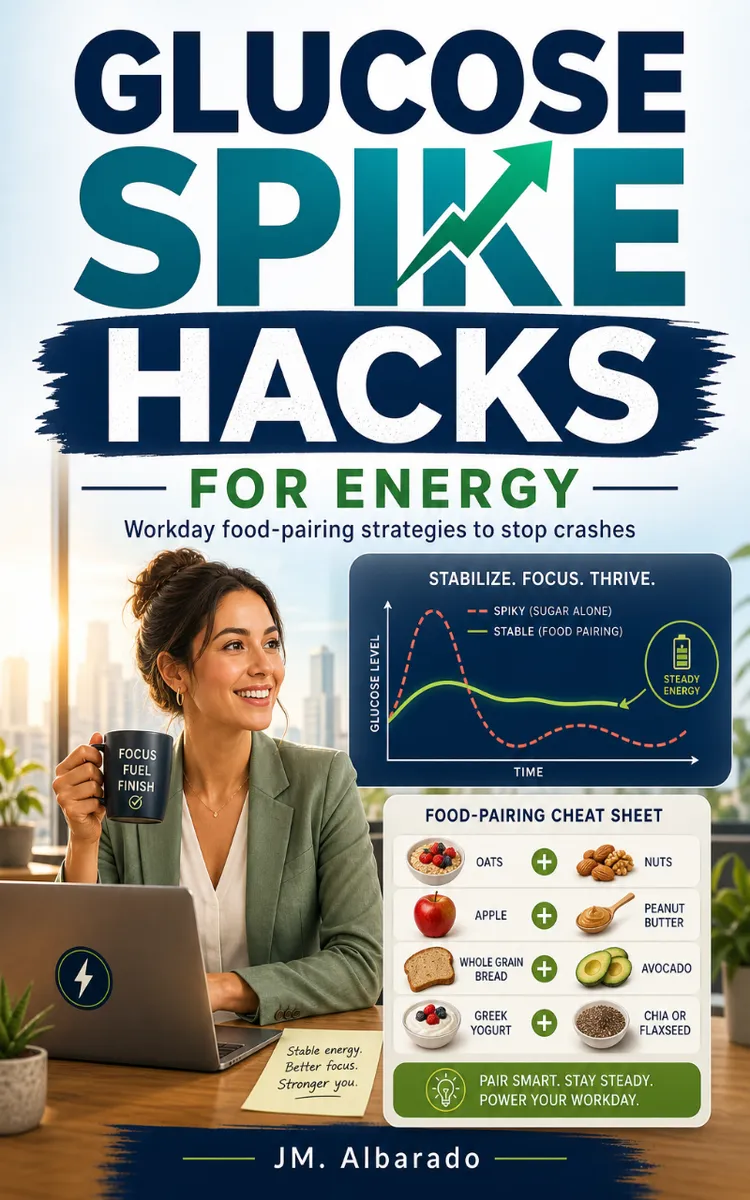
"Glucose Spike Hacks For Energy" is a health & wellness book by JM. Albarado with 8 chapters and approximately 14,645 words. Blood sugar stabilization using workplace food pairing and routines.
This book was created using Inkfluence AI, an AI-powered book generation platform that helps authors write, design, and publish complete books. It was made with the AI Health Book Generator.
Frequently Asked Questions
What is "Glucose Spike Hacks For Energy" about?
Blood sugar stabilization using workplace food pairing and routines
How many chapters are in "Glucose Spike Hacks For Energy"?
The book contains 8 chapters and approximately 14,645 words. Topics covered include Reactive Hypoglycemia at 3 PM, Clothing Your Carbs Pairing Formula, Desk-Ready Breakfast and Lunch Assembly, Breakroom and Meeting Food Tactics, and more.
Who wrote "Glucose Spike Hacks For Energy"?
This book was written by JM. Albarado and created using Inkfluence AI, an AI book generation platform that helps authors write, design, and publish books.
How can I create a similar health & wellness book?
You can create your own health & wellness book using Inkfluence AI. Describe your idea, choose your style, and the AI writes the full book for you. It's free to start.
Write your own health & wellness book with AI
Describe your idea and Inkfluence writes the whole thing. Free to start.
Start writingCreated with Inkfluence AI


