

Read the first chapter
The whole of chapter one, free. About 7 min. Turn the pages with the arrows, your keyboard, or a swipe.
Chapter 1
Espresso Rivalry Begins
When the First Sip Changes the Contest
At 7:02 on a rainy Tuesday, the line outside Bellwether Coffee reached the corner. Across the street, Mara Vale watched from behind the polished brass machine at her café, Northline. Her rival, Tomas Reed, had just changed the neighborhood’s espresso board from “best cream” to “best first sip.”
The rules were simple: each café would serve one espresso, and local customers would score it for flavor, warmth, and welcome. Yet by noon, Mara noticed something neither owner had planned. Customers were comparing more than shots. They were comparing who remembered their names, who made room for a stroller, who kept decaf separate, and who asked whether the drink was comfortable to finish. The contest had become a test of how two businesses cared for the people who filled their mornings.
The First-Sip Rivalry is for café owners, baristas, regular customers, and anyone curious about the human work behind a great espresso. It explores how a small competition can reveal larger issues: comfort, access, stress, pacing, and trust. The practical benefit is not a promise that espresso can prevent illness or fix a health problem. It is a clearer way to build a café experience that supports sensible choices and recognizes when a customer may need professional help rather than another cup.
Ask yourself: when a guest takes the first sip, what are they actually receiving - only coffee, or also noise, pressure, heat, and attention? That question gives the rivalry its real starting point.
What Sits Behind the First Sip
Espresso affects people differently because the drink is more than flavor. It contains caffeine, a naturally occurring stimulant that can increase alertness. The amount varies with the beans, dose, grind, extraction time, and serving size. A short shot may feel gentle to one customer and uncomfortable to another. Someone who slept poorly, has a low tolerance, or has been advised by a clinician to limit caffeine may notice effects sooner.
The café setting matters too. Bright lights, loud grinders, a crowded queue, and the pressure to order quickly can raise stress, the body’s response to demands. Stress is not automatically harmful, but it can make a person more aware of a racing heart, shaky hands, stomach discomfort, or difficulty settling down. These sensations may have many causes, and a café worker should not diagnose them.
Several factors shape the experience:
• Dose and timing: A double shot taken late in the day may interfere with sleep more than the same drink taken early. People who are sensitive to caffeine may need a smaller serving or a non-caffeinated option.
• Personal response: Pregnancy, certain medicines, heart conditions, anxiety symptoms, reflux, and sleep problems can affect how caffeine feels. Customers should follow advice from their licensed clinician.
• Food and hydration: Drinking espresso on an empty stomach may feel harsher for some people. A small food option and water can give customers more choice, without making claims about treatment.
• Environment: Heat, crowding, hurried service, and poor seating can turn an ordinary drink into an uncomfortable visit.
For Mara and Tomas, the risk was not simply serving a strong espresso. It was assuming every customer wanted the same experience. Their first-sip scorecard exposed that mistake. A customer who praised Northline’s bright, concentrated shot also praised Bellwether’s quieter corner. Another customer wanted a milk drink, a glass of water, and time to decide. Neither preference proved one café superior. Together, they showed that a responsible contest must measure hospitality as well as extraction.
A useful check is to ask: can a guest easily learn what they are ordering, choose a smaller serving, request decaf, and sit somewhere calm? If not, the café may be creating avoidable pressure around a simple drink. The practical takeaway is clear: understand both the beverage and the setting before judging the result.
Building a Safer First-Sip Rivalry
Mara and Tomas began with one shared tool: a plain-language menu card beside each espresso machine. It listed single and double shots, decaf availability, milk choices, approximate serving sizes, and the option of water. It did not promise that any drink was “healthy,” “safe for everyone,” or suitable for a medical condition. It simply gave customers useful information.
They then set a four-week plan. During week one, each café recorded the shot recipe, serving size, and time of day for every contest sample. Baristas checked the grinder at opening and again after the lunch rush. This protected flavor consistency and made the contest fair. During week two, they added a ten-second pause before serving: “Would you like a single or double?” That brief question prevented automatic upselling and gave customers control.
During week three, each café tested one quieter service period daily, from 2:00 to 3:00 p.m. Music was lowered, the queue was marked clearly, and a seat near the window was kept available. During week four, the owners reviewed comment cards with three questions: Did the drink taste as expected? Did you have enough information to choose? Did the café feel comfortable while you waited?
The First-Sip Rivalry works best when the steps stay practical:
• Set the serving clearly. Use the same cup size and recipe for the contest. If a double contains two shots, say so. Do not rely on vague terms such as “extra strong.”
• Offer choice without pressure. Ask whether the customer wants a single, double, decaf, milk drink, or water. Give them time to answer.
• Create a calm window. Protect one 60-minute period each day for lower noise and slower explanations. Keep the same arrangement for at least seven days before judging it.
• Train a simple boundary. Baristas can say, “I can explain the drink and offer decaf, but I can’t advise you about a medical condition. A licensed clinician can help with that.”
• Track patterns, not diagnoses. Note repeated requests such as “less caffeine,” “more time,” or “somewhere quieter.” Do not label customers with a condition or record private health details.
• Review at the end of each week. Compare comments, waste, wait times, and repeat requests. Change one feature at a time so you can tell what helped.
Warning signs require a different response from friendly café guidance. If a customer reports severe chest pain, trouble breathing, fainting, sudden confusion, or symptoms that feel urgent, staff should contact local emergency services and follow workplace policy. If someone repeatedly reports troubling reactions after coffee, encourage them to speak with a licensed healthcare professional rather than suggesting a diagnosis or treatment. A café can offer water, a seat, and calm assistance while help is arranged; it should not tell the person to “push through” or consume more caffeine.
A comparison makes the boundary easier to remember:
Café response
Helpful action
Avoid
Customer wants less caffeine
Offer decaf, a smaller serving, or a non-coffee drink
Claiming the option will treat a condition
Customer feels shaky or unwell
Stop service, offer a seat and water, follow emergency policy if symptoms are severe
Guessing the cause
Customer asks whether espresso is safe for them
Share menu details and suggest speaking with a licensed clinician
Giving personal medical advice
Customer dislikes the intensity
Explain the recipe and adjust the order
Calling the customer’s response abnormal
By the end of the fourth week, the winning score was no longer a single number. Northline won flavor votes. Bellwether won comfort votes. Both cafés improved their menus, their pacing, and their staff scripts. The practical takeaway is to make choice visible, keep health boundaries firm, and judge the whole first-sip experience rather than the crema alone.
Mistakes That Shrink the Rivalry
Treating the strongest shot as the healthiest choice
Why it happens: Competition rewards intensity. A darker roast, longer extraction, or double shot can look impressive, especially when customers praise bold flavor. Owners may confuse strength with quality and assume a more powerful drink offers a better experience.
What to do instead: Define the contest by consistency, clarity, and customer choice. Serve the agreed recipe, state whether it is single or double, and offer a smaller or decaffeinated option without embarrassment. A balanced espresso can win because it is enjoyable, not because it overwhelms the palate.
Why it happens: Staff want to be helpful, and customers often ask direct questions about caffeine, sleep, anxiety, or heart sensations. A confident answer can feel reassuring even when the barista lacks the information or training to give personal guidance.
What to do instead: Use a prepared boundary sentence: “I can tell you the serving size and caffeine option, but I can’t assess what is right for your health. Please ask a licensed clinician.” Keep the menu facts accurate and avoid promises. Kindness is not measured by how much advice a worker gives; it is measured by whether the worker stays within a safe role.
Why it happens: Owners may focus on extraction time, grinder settings, and sales while overlooking the room itself. A crowded counter can make customers rush, and a loud grinder can make simple questions hard to hear.
What to do instead: Test the visit from the customer’s side once each week. Stand in line for five minutes, read the menu from the back of the queue, and listen to whether a customer can request decaf without repeating themselves. Protect one quieter 60-minute period daily and review feedback after seven days. Small changes reveal whether the rivalry is improving the neighborhood or merely making louder claims.
The first-sip contest began with two owners trying to prove whose espresso was better. It ended with both asking a more useful question: what does this neighborhood need from its cafés? The answer was not one perfect shot. It was a place where flavor, choice, attention, and common sense could share the same counter.
End of chapter one. 20 more chapters in the full book.
Swipe or use the arrows to turn the page


What's inside: 21 chapters
- 1. Espresso Rivalry Begins
- 2. The Art of the Perfect Shot
- 3. Choosing Beans with Purpose
- 4. Milk, Foam, and First Impressions
- 5. The Neighborhood Coffee Crawl
- 6. Building a Signature Blend
- 7. Service Under Pressure
- 8. Reading the Regulars
- 9. A Menu Made for Everyone
- 10. The Cost of Competition
- 11. When Reviews Turn Sour
- 12. The Festival Espresso Showdown
- 13. A Recipe for Trust
- 14. The Secret Behind the Sign
- 15. A Storm Closes the Street
- 16. The Offer That Changes Everything
- 17. Learning to Share the Counter
- 18. The Last-Minute Bean Crisis
- 19. Choosing What Comes Next
- 20. Summarize the core insights in focused prose and reinforce what matters most.
- 21. One Last Cup Together
About this book
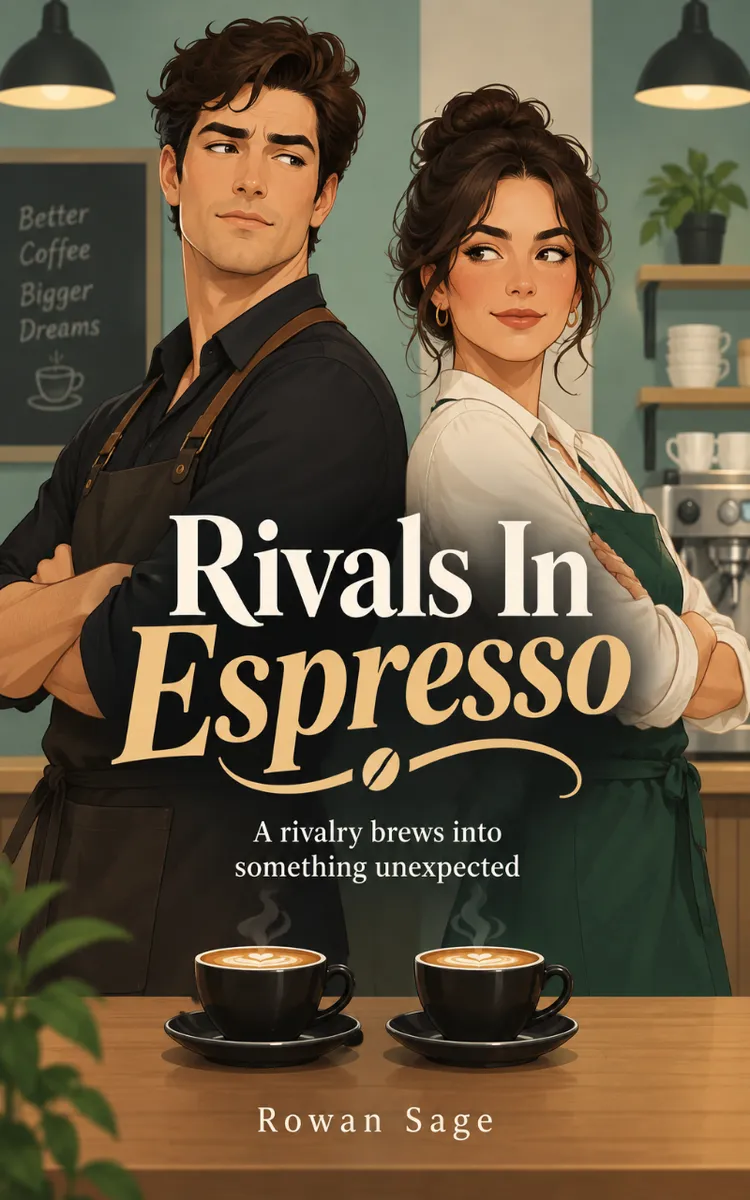
"Rivals In Espresso" is a health & wellness book by Rowan Sage with 21 chapters and approximately 35,104 words. A story centered on rivals and espresso.
This book was created using Inkfluence AI, an AI-powered book generation platform that helps authors write, design, and publish complete books. It was made with the AI Health Book Generator.
Frequently Asked Questions
What is "Rivals In Espresso" about?
A story centered on rivals and espresso
How many chapters are in "Rivals In Espresso"?
The book contains 21 chapters and approximately 35,104 words. Topics covered include Espresso Rivalry Begins, The Art of the Perfect Shot, Choosing Beans with Purpose, Milk, Foam, and First Impressions, and more.
Who wrote "Rivals In Espresso"?
This book was written by Rowan Sage and created using Inkfluence AI, an AI book generation platform that helps authors write, design, and publish books.
How can I create a similar health & wellness book?
You can create your own health & wellness book using Inkfluence AI. Describe your idea, choose your style, and the AI writes the full book for you. It's free to start.
Write your own health & wellness book with AI
Describe your idea and Inkfluence writes the whole thing. Free to start.
Start writingCreated with Inkfluence AI


