
Read the first chapter
The whole of chapter one, free. About 9 min. Turn the pages with the arrows, your keyboard, or a swipe.
Chapter 1
How desk work affects posture, pain, and energy; common patterns; what this 4-week foundation will change.
Chapter 1: How Desk Work Affects Posture, Pain, and Energy
A full day at a desk can leave your body feeling older than it is: chin pushed forward, shoulders tight, hips stiff, and lower back tired. The problem is rarely one “bad” position. It is usually the long, unbroken time spent in the same position.
Your body adapts to repeated demands. If most of your day involves sitting, looking down, reaching forward, and barely changing position, those actions become your body’s default. Muscles that should share the work may stop contributing as much. Other areas take over. The result can be discomfort, reduced movement, and less energy by the end of the day.
This does not mean your body is damaged or that perfect posture is required. It means your body needs more movement, more position changes, and enough strength to handle daily tasks comfortably. The four-week foundation in The Desk Body Reset is built around those simple changes.
Why Long Sitting Changes How You Move
Sitting is not automatically harmful. The issue is staying still for too long and repeating the same shape for hours. During desk work, your hips remain bent, your feet may stay planted, and your upper body reaches toward a keyboard or screen. Your eyes and attention stay fixed while the rest of your body becomes quiet.
Over time, this can reduce your movement options. Standing up may feel stiff. Walking may feel awkward for the first few minutes. Bending or turning can seem harder than it should. This is often called stiffness, but it is not always a sign that a joint is physically “stuck.” It may simply mean your nervous system has become used to a narrow range of movement.
Your muscles also respond to the work you ask them to do. The muscles at the front of your hips stay shortened while sitting. Your upper back may remain rounded as your arms reach forward. Your neck muscles work to hold your head while your eyes face the screen. None of these positions is automatically bad for a short period. The trouble comes from doing them for most of the day without interruption.
A useful question is: how often does your body get a different job? Standing, walking, reaching overhead, turning, carrying, and gently bending all give your body information that sitting does not. Regular changes help you keep more movement available.
The practical takeaway is simple: do not treat sitting as a posture problem you must solve once. Treat it as a position you need to interrupt.
The Forward-Head and Rounded-Shoulder Pattern
Neck and shoulder discomfort often begins with the position of the screen, keyboard, or phone. When the screen is low or far away, your head moves forward so your eyes can see clearly. Your shoulders may round, and your upper back may stay curved. This is commonly called forward-head posture.
Your head is not light, and your neck has to support it all day. Moving it forward increases the demand on the muscles at the back of your neck and upper shoulders. Those muscles may become tired, tight, or sensitive. You may notice discomfort at the base of your skull, across the tops of your shoulders, or between your shoulder blades.
The goal is not to pull your head backward hard or force your shoulders down. That can create more tension. A better goal is to keep your head balanced over your ribs more often and to give your neck regular breaks. Small changes matter: raising the screen, bringing the keyboard closer, and looking away from the screen can reduce the amount of time spent reaching forward.
Shoulder tension also has a breathing connection. When your upper chest and neck do most of the work during shallow breathing, your shoulders may stay slightly lifted. Stress can add to this pattern. A few slow breaths with relaxed shoulders will not fix a full day of desk work, but it can help you notice and reduce unnecessary tension.
Ask yourself: are your shoulders working because the task requires it, or because you have stayed in one position for too long? That answer points toward the next useful change - adjust the setup, change position, or move briefly.
The practical takeaway is to stop chasing a rigid “perfect” neck position. Build more time with your head supported over your body, and interrupt forward-reaching often.
Lower-Back Discomfort and Stiff Hips
Lower-back discomfort is common among desk workers, but it does not have one single cause. It can be influenced by long sitting, low activity, poor sleep, stress, previous injuries, and a lack of strength or control. A sore back does not automatically mean your spine is weak or damaged.
When you sit for hours, your hips stay bent and your lower back may remain in one position. Some people slump into a rounded shape. Others arch their lower back and hold themselves stiffly. Both can become tiring when maintained for a long time. The problem is less about choosing one perfect curve and more about having no other options.
Stiff hips can make the lower back work harder during standing, walking, bending, or climbing stairs. Your hips are designed to move through a useful range, while your trunk helps control the movement. If your hips do not contribute well, your back may move more than it needs to. This does not mean every back movement is dangerous. Your spine is built to move. It simply benefits from sharing the work with the hips and legs.
Strength also affects confidence. When your legs, hips, and trunk are not used regularly, ordinary tasks can feel demanding. Carrying groceries, lifting a box, or standing from a chair may create fatigue even when the load is modest. Gradual training helps your body practice these actions under control.
Keep the early goal modest: move more comfortably, not force your body into a dramatic stretch. If a movement produces sharp, spreading, or worsening pain, stop and seek professional guidance rather than pushing through it.
The practical takeaway is to give your hips and legs more regular work while allowing your back to move naturally and comfortably.
Why Desk Work Drains Energy
Desk work can be mentally demanding without using much muscle. You may finish a long day feeling exhausted, yet your body has spent hours doing very little physical movement. Mental fatigue and physical inactivity can exist at the same time.
Long periods of sitting may reduce the natural changes in breathing, circulation, and muscle activity that happen when you walk and shift positions. You may feel heavy when you stand, sleepy after lunch, or unmotivated to exercise later. Stress and screen exposure can add to that feeling, especially when work continues into the evening.
Energy is also affected by friction. If movement requires changing clothes, driving to a gym, or finding a full hour, it is easy to postpone. A useful foundation must fit into a workday, not compete with it. Short bouts of movement can make activity easier to start and can break up the mental load of continuous work.
This does not mean a few minutes of movement can replace sleep, balanced meals, or medical care. It means your body responds to regular input. Standing for a call, walking between tasks, or taking the long route to refill water all count as ways to reduce stillness.
Ask yourself what usually happens during your lowest-energy part of the day. Do you stay seated, reach for more caffeine, or take a short walk? The answer gives you a practical place to change the pattern.
The practical takeaway is that energy is not only something you wait to have. Regular movement can help create a better starting point for the next task.
The Common Desk-Work Patterns to Watch
Most desk-related discomfort falls into a few overlapping patterns rather than one exact posture. You may recognize several at once.
The first is the forward-head pattern: the chin reaches toward the screen, the neck feels tired, and the upper shoulders tighten. The second is rounded upper-body positioning: the shoulders drift forward, the upper back stays curved, and reaching overhead feels limited. The third is the low-back-and-hip pattern: sitting creates stiffness, standing feels uncomfortable, and the first steps after work are slow. The fourth is general deconditioning: ordinary lifting, walking, or climbing stairs feels harder because the body has had too little regular practice.
These patterns are not diagnoses. They are useful observations. They help you decide where to place your attention without labeling your body as broken.
Look for trends over several days rather than judging one moment. Notice when discomfort appears, what reduces it, and whether it improves after changing position. Also notice your energy, walking, sleep, and ability to complete normal tasks. Pain is important information, but it is not the only measure of progress.
A simple check is to rate discomfort and energy from zero to ten at the same time each day. You do not need perfect numbers. You need consistent observations. If discomfort is gradually becoming more intense, spreading, or limiting normal activity, that is a reason to get professional advice.
The practical takeaway is to observe patterns without panic. Clear observations lead to better decisions than constant posture checking.
What This Four-Week Foundation Will Change
This foundation is designed to change your daily inputs, not promise instant correction. You will practice interrupting long sitting, using more of your hips and legs, building basic strength, and becoming more aware of how work affects your body.
The first change is usually awareness. You begin noticing when your chin moves forward, when your shoulders rise, or when you have been seated for too long. Awareness gives you a chance to act before discomfort builds.
The second change is movement tolerance. Gentle, repeated practice can make standing, walking, bending, and reaching feel less restricted. The aim is not to chase extreme flexibility. It is to make ordinary movement feel more familiar and controlled.
The third change is capacity. Basic strength work teaches your legs, hips, trunk, upper back, and shoulders to share daily tasks. Stronger muscles do not guarantee a pain-free body, but they can improve confidence and make routine demands less tiring.
The fourth change is consistency. A plan that fits your schedule is more useful than a perfect plan you cannot repeat. The work ahead is intentionally practical: enough structure to guide you, enough flexibility to fit real days.
Progress may appear as less stiffness after sitting, fewer end-of-day aches, better energy during work, easier stairs, or more confidence carrying everyday loads. Fat loss, when it occurs, comes from the broader habits that support activity and food choices; it does not depend on fixing one posture.
Severe pain, pain after a significant injury, numbness, weakness, loss of coordination, or pain that persists or keeps worsening deserves professional assessment. Consult a qualified health professional for severe or persistent pain rather than trying to manage it alone.
Your body does not need a perfect position all day. It needs regular chances to move, recover, and become stronger. The reset begins by replacing long, unchanged hours with small, repeatable changes - and building from there.
End of chapter one. 3 more chapters in the full book.
Swipe or use the arrows to turn the page

The Sensitive Skin Reset

The Breastfeeding Mom's Weight Loss Guide

Breastfeeding Mom’s Weight Loss Guide II
What's inside: 4 chapters
- 1. How desk work affects posture, pain, and energy; common patterns; what this 4-week foundation will change.
- 2. The 20-Minute Movement Rule: daily mobility, activation, light conditioning; 3 sample routines; adjustments on busy days.
- 3. Strength basics that protect back/neck: squat/hinge/push/pull/carry patterns; spine-friendly cues; 4-week beginner strength plan (2 days/week, 20-30 min).
- 4. The 4-Week Desk Body Reset Plan: week-by-week progression; simple nutrition guidelines; what to track; when to scale back or get help.
About this book
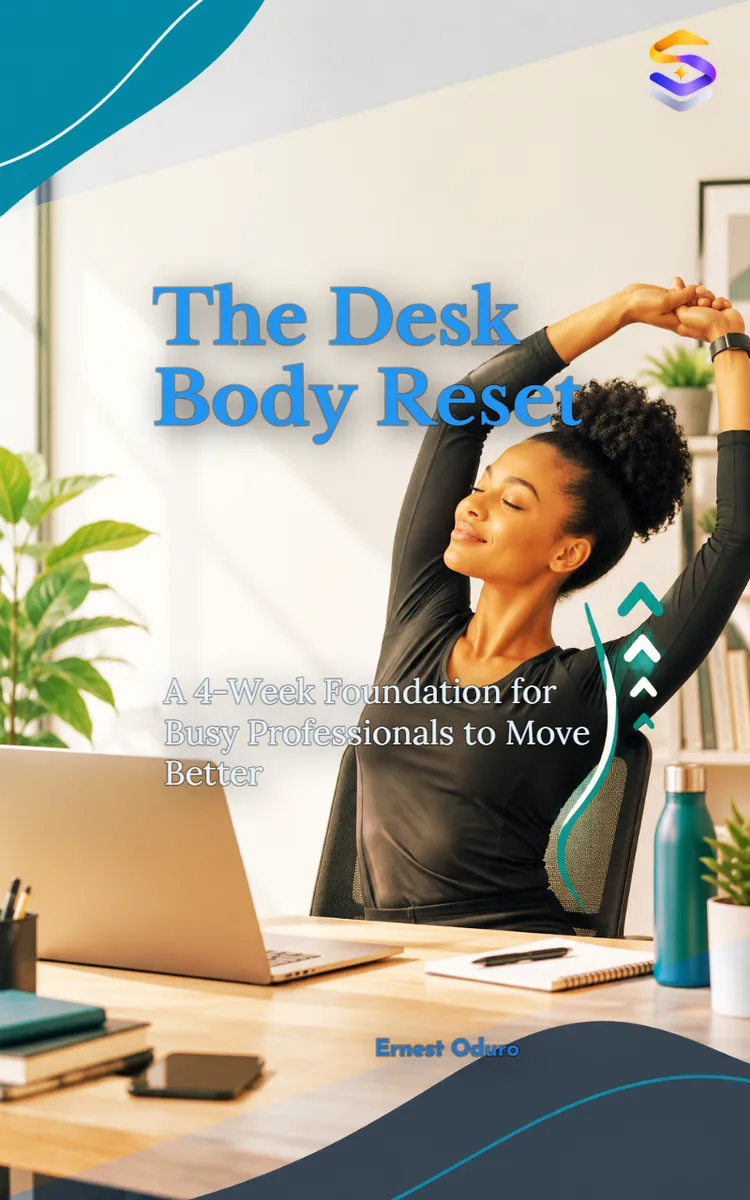
"The Desk Body Reset" is a fitness book by Ernest Oduro with 4 chapters and approximately 6,163 words. 4-week non-medical fitness plan for desk posture, pain, and fat loss.
This book was created using Inkfluence AI, an AI-powered book generation platform that helps authors write, design, and publish complete books. It was made with the AI Workout Plan Generator.
Frequently Asked Questions
What is "The Desk Body Reset" about?
4-week non-medical fitness plan for desk posture, pain, and fat loss
How many chapters are in "The Desk Body Reset"?
The book contains 4 chapters and approximately 6,163 words. Topics covered include How desk work affects posture, pain, and energy; common patterns; what this 4-week foundation will change., The 20-Minute Movement Rule: daily mobility, activation, light conditioning; 3 sample routines; adjustments on busy days., Strength basics that protect back/neck: squat/hinge/push/pull/carry patterns; spine-friendly cues; 4-week beginner strength plan (2 days/week, 20-30 min)., The 4-Week Desk Body Reset Plan: week-by-week progression; simple nutrition guidelines; what to track; when to scale back or get help..
Who wrote "The Desk Body Reset"?
This book was written by Ernest Oduro and created using Inkfluence AI, an AI book generation platform that helps authors write, design, and publish books.
How can I create a similar fitness book?
You can create your own fitness book using Inkfluence AI. Describe your idea, choose your style, and the AI writes the full book for you. It's free to start.
Write your own fitness book with AI
Describe your idea and Inkfluence writes the whole thing. Free to start.
Start writingCreated with Inkfluence AI


