
Read the first chapter
The whole of chapter one, free. About 8 min. Turn the pages with the arrows, your keyboard, or a swipe.
Chapter 1
Pregnancy Body Basics (Weeks 1-8)
Phase Overview
A woman may wake at five weeks pregnant and notice that her usual energy has changed overnight: her breasts feel tender, food smells stronger, and a short walk may suddenly feel like hard work. These early changes are common, and they do not mean your body is weak or that you must stop all movement.
Weeks 1-8 are about understanding these changes and finding a comfortable starting point. The training goal is not fitness progress or heavy exercise. It is to use the Gentle Baseline Method: notice how your body feels, practise calm breathing, and add small amounts of light mobility without strain. This baseline helps you learn what feels steady before you do more in later weeks.
Pregnancy begins from the first day of your last menstrual period, so the first two weeks counted by a healthcare provider may be before conception. By weeks 5-8, early pregnancy hormones are rising quickly. This can bring tiredness, nausea, mild cramping, bloating, constipation, headaches, breast tenderness, and more frequent urination. Some women feel many changes; others feel very few. Both can be normal.
Common fears also deserve gentle attention. You may worry that bending, stretching, walking, or moving in bed could harm the pregnancy. In an uncomplicated pregnancy, gentle everyday movement is generally safe, but pain, bleeding, faintness, or feeling seriously unwell is not something to push through. A healthcare provider should guide you if you have a medical condition, pregnancy complication, or any concern about exercise.
Ask yourself before moving: “Can I breathe comfortably, speak in full sentences, and stop easily?” If the answer is yes, you are ready to begin a very light baseline session. If not, rest and seek medical advice when needed.
Workouts
Use only a mat or a firm comfortable surface, a pillow if you need support, and a bottle of water. Keep the movements slow. There is no need to exercise on an empty stomach if nausea is troubling you. A small, familiar snack and a cool, well-ventilated room may feel more comfortable.
The table below gives one short baseline session. It can be done two or three times each week, or divided into smaller parts on days when fatigue is strong. The load is your body weight only. Do not add dumbbells, resistance bands, or household items during this early baseline unless your healthcare provider has advised you to do so.
| Exercise | Sets × Reps | Load | Rest | | --- | --- | --- | --- | | Calm belly-and-rib breathing | 1 × 6-8 breaths | Body weight | 30 seconds | | Seated shoulder rolls | 1 × 8 each direction | Body weight | 20 seconds | | Seated ankle pumps | 1 × 10 each foot | Body weight | 20 seconds | | Seated side reach | 1 × 5 each side | Body weight | 20 seconds | | Supported pelvic tilts | 1 × 8 | Body weight | 30 seconds | | Easy standing or seated march | 1 × 30-60 seconds | Body weight | 45 seconds | | Resting pause and body check | 1 × 1-2 minutes | Body weight | Finish |
Begin with calm belly-and-rib breathing. Sit upright on the front half of a chair or lie on your side with a pillow under your head. Place one hand on the upper chest and one hand around the lower ribs. Breathe in gently through your nose if comfortable, allowing the lower ribs to widen. Breathe out slowly without forcing your stomach inward. The aim is a quiet breath, not a deep breath that makes you dizzy.
For seated shoulder rolls, place both feet on the floor. Lift the shoulders slightly, move them back, and let them drop. Make small circles rather than large, fast movements. Keep your jaw loose. This can reduce the feeling of tightness that often comes with tiredness or breast tenderness.
Seated ankle pumps are useful after resting or sitting for a long time. Keep your heels on the floor and lift your toes, then place them down and lift your heels. Move smoothly. This is light circulation work, not a test of strength.
For the seated side reach, sit tall with one hand resting on the chair. Lift the other arm only as high as feels easy, then reach gently to the opposite side without collapsing forward. Return to the centre and change sides. You should feel a mild lengthening along the side of your body, never a sharp pull around the belly or back.
Supported pelvic tilts help you notice your lower back and pelvis. Stand with your back lightly supported by a wall, feet about hip-width apart, or stay seated if standing feels tiring. Gently soften your knees and draw the lower belly in only slightly as you bring your lower back closer to the wall or chair. Release to a neutral position. Do not squeeze hard or hold your breath. The movement is small; by weeks 5-8, your belly may not look different yet, but the purpose is still to build comfortable body awareness.
Finish with an easy march. You may stand beside a wall or sturdy chair, lifting one foot a little at a time. If standing brings nausea, weakness, or light-headedness, remain seated and lift one knee at a time instead. Keep the pace slow enough to speak normally. Stop before you feel worn out.
After the final movement, pause for one or two minutes. Notice your breathing, stomach, back, pelvis, and energy. A gentle session may leave you feeling the same or slightly more settled. It should not leave you shaking, breathless, painful, or exhausted.
On days when nausea or fatigue is strong, use the shorter version:
• Three calm breaths. - Four shoulder rolls in each direction. - Six ankle pumps on each foot. - One minute of comfortable sitting or side-lying rest.
This shorter practice still counts. The Gentle Baseline Method is based on consistency and comfort, not on completing every movement every time. If your body feels well after several sessions, increase only one part: add two breaths, two repetitions, or thirty seconds of easy marching. Do not increase everything at once.
A simple check can guide you. Before movement, rate your energy from 0 to 10, where 0 means completely drained and 10 means full of energy. If your energy is 0-3, choose rest or the shorter version. If it is 4-6, complete the full gentle session with extra pauses. If it is 7 or higher, still keep the session light; early pregnancy is not the time to prove how much you can do. The number is only a guide for listening to yourself, not a medical test.
Take water in small sips before and after movement, especially in hot or humid weather. Rest in a cool place and avoid exercising during the hottest part of the day. If vomiting, nausea, or poor appetite makes drinking difficult, speak with your healthcare provider about preventing dehydration.
The practical takeaway is simple: a few calm breaths and small movements are enough to begin. Your baseline should leave room for the rest of your day.
Training Notes
Keep your breathing easy throughout every exercise. Holding your breath, rushing, or tightening your stomach strongly can make a light movement feel harder than it needs to. Use a chair, wall, or pillow for support whenever balance or tiredness changes.
Mild stretching, gentle muscle awareness, and normal tiredness may occur. Stop immediately and contact your healthcare provider if you have vaginal bleeding, leaking fluid, severe or persistent abdominal pain, chest pain, fainting, severe shortness of breath, a severe headache, painful swelling, or any symptom that feels unusual or worrying. Do not exercise through symptoms simply because the session is short.
Nausea often changes during the day. Some women feel better after a small snack; others prefer movement later, when the stomach is settled. There is no best exercise time. Choose the part of the day when your body feels most stable. If smells trigger nausea, keep the room fresh and avoid strongly scented products.
Constipation and bloating can make the abdomen feel uncomfortable. Gentle walking or seated ankle movements may support general comfort, but they are not a treatment for ongoing pain. Speak with a healthcare provider about persistent constipation, severe vomiting, or pain.
Your body may feel different from one morning to the next. That is why the Gentle Baseline Method begins with observation rather than pressure. Ask yourself after each session: “Did I breathe comfortably? Did any movement cause pain? Do I feel steadier, the same, or worse?” Write a few words in a notebook if that helps you notice patterns.
A comfortable baseline is a quiet form of progress. It teaches you to respect tiredness, respond to early changes, and move without fear. As pregnancy develops, these simple skills will support the next stages of safe, steady movement.
FRONT COVER
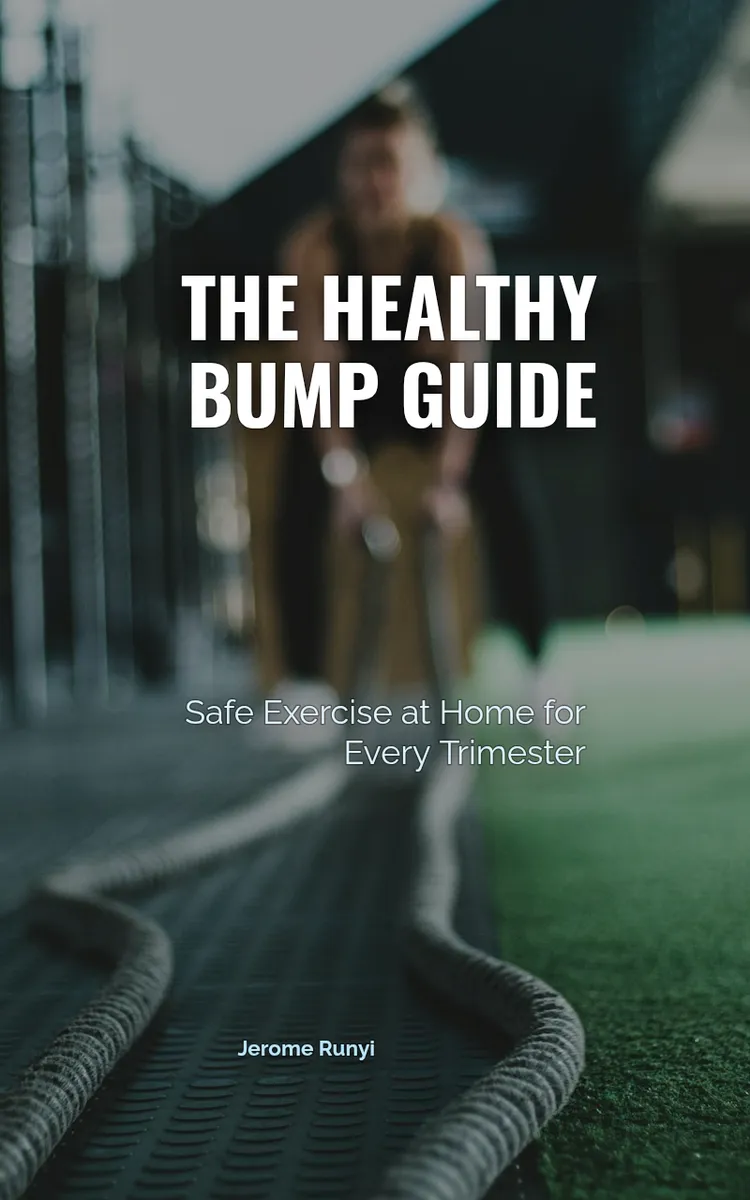
The Healthy Bump Guide Safe Exercise at Home for Every Trimester
You Can Move Gently and Safely Through Every Trimester - Short home exercises for strength, comfort, and peace of mind
BACK COVER
Gentle, trimester-safe home workouts made for every stage of pregnancy. Simple moves to ease discomfort, keep your body strong, and help you feel calm and confident throughout your journey.
Always check with your healthcare provider before beginning any new exercise routine.
PRODUCT PAGE SALES CAPTION
Feeling tired, uncomfortable, or unsure how to move safely during pregnancy? The Healthy Bump Guide gives you simple, gentle home exercises for every trimester, with clear instructions, rest guidance, breathing practices, and pregnancy-aware safety tips.
You will receive an easy-to-follow digital guide designed for real homes and busy days, using only simple items such as a mat, pillow, and water bottle. Move at your own pace, ease common discomforts, and feel more confident caring for your changing body.
Download The Healthy Bump Guide today and take one calm, supported step toward a healthier pregnancy.
End of chapter one. 4 more chapters and about 9,236 words in the full book.
Swipe or use the arrows to turn the page
What's inside: 5 chapters
- 1. Pregnancy Body Basics (Weeks 1-8)
- 2. First Trimester Gentle Movement (Weeks 9-16)
- 3. Second Trimester Strength and Mobility (Weeks 17-24)
- 4. Third Trimester Comfort and Mobility (Weeks 25-32)
- 5. Daily Self-Care and Movement (Weeks 33-40)
About this book
"The Healthy Bump Guide" is a fitness book by Jerome Runyi with 5 chapters and approximately 9,236 words. Gentle, trimester-aware home exercise and movement guidance during pregnancy.
This book was created using Inkfluence AI, an AI-powered book generation platform that helps authors write, design, and publish complete books. It was made with the AI Workout Plan Generator.
Frequently Asked Questions
What is "The Healthy Bump Guide" about?
Gentle, trimester-aware home exercise and movement guidance during pregnancy
How many chapters are in "The Healthy Bump Guide"?
The book contains 5 chapters and approximately 9,236 words. Topics covered include Pregnancy Body Basics (Weeks 1-8), First Trimester Gentle Movement (Weeks 9-16), Second Trimester Strength and Mobility (Weeks 17-24), Third Trimester Comfort and Mobility (Weeks 25-32), and more.
Who wrote "The Healthy Bump Guide"?
This book was written by Jerome Runyi and created using Inkfluence AI, an AI book generation platform that helps authors write, design, and publish books.
How can I create a similar fitness book?
You can create your own fitness book using Inkfluence AI. Describe your idea, choose your style, and the AI writes the full book for you. It's free to start.
Write your own fitness book with AI
Describe your idea and Inkfluence writes the whole thing. Free to start.
Start writingCreated with Inkfluence AI


