
Read the first chapter
The whole of chapter one, free. About 6 min. Turn the pages with the arrows, your keyboard, or a swipe.
Chapter 1
What sensitive skin is
Sensitive skin reacts more easily than expected to products, weather, friction, or other changes. You may notice stinging after cleansing, redness after applying a new cream, tightness in dry air, or warmth after rubbing your face. These reactions can happen even when a product works well for someone else.
This is not medical or dermatology advice. Use this chapter to understand common patterns and build a gentler approach, not to diagnose a skin condition. If your symptoms feel severe, keep returning, spread, become painful, or do not improve, consult a dermatologist. A dermatologist can check for conditions that need medical treatment, such as eczema, rosacea, contact dermatitis, or infection.
Triggers; Common Signs; Difference Between Sensitive
Sensitive skin often has a lower tolerance for change. The skin may react when you add a new product, use several strong products together, cleanse too often, or expose it to heat, cold, wind, or repeated rubbing. A trigger does not always cause the same reaction every time. Your skin may tolerate a product for weeks and then react when the barrier becomes dry or irritated.
The skin barrier is the outer protective layer of your skin. It helps hold water in and helps keep irritating substances out. When the barrier becomes strained or damaged, water escapes more easily and products can reach areas that feel uncomfortable. This can create a cycle: dryness makes the skin more reactive, and repeated reactions make the skin feel even more fragile.
Common signs include stinging, burning, itching, redness, warmth, tightness, flaking, rough patches, and small bumps. You might feel discomfort even when you cannot see much on the surface. A moisturizer may sting, water may feel unusually hot or cold, or your face may turn red after washing. These signs do not prove one specific cause, but they tell you to pay attention to what your skin is experiencing.
Ask yourself what happens and when it happens. Does the discomfort begin immediately after application, or several hours later? Does it affect the whole face or only one area? Does it improve when you stop a product? Write down the product, the timing, and the reaction in simple terms. This helps you notice patterns instead of guessing. The practical takeaway: treat stinging, burning, tightness, and repeated redness as useful warning signals, not as signs that a product is “working.”
Sensitive skin, allergic skin, and acne-prone skin can overlap, but they describe different patterns. Sensitive skin describes a tendency to react with discomfort or visible irritation. Allergic skin reacts to a particular substance because the immune system recognizes it as a threat. An allergic reaction may include intense itching, swelling, hives, or a rash that appears beyond the area where you applied the product. A reaction can also develop after previous uses caused no problem.
Acne-prone skin tends to form clogged pores, blackheads, whiteheads, pimples, or deeper breakouts. Acne-prone skin can also be sensitive, but acne and sensitivity are not the same issue. For example, a person may have frequent clogged pores without burning or redness, while another person may have very reactive skin without regular breakouts. Strong acne products can irritate sensitive skin, and irritation can make the overall picture harder to understand.
Do not try to prove that a swollen, blistered, or intensely itchy reaction is “just sensitivity.” Stop using the suspected product and seek medical advice, especially if swelling affects your eyes or lips, or if you have trouble breathing. For everyday reactions, keep your focus narrow: identify the trigger, reduce irritation, and give the skin a chance to settle.
Acne-prone; Common Irritants; Goal: Calm First
Acne-prone skin often tempts people to use more products and stronger treatments. That approach can backfire when the skin also reacts easily. Scrubbing, drying out the skin, or layering several acne-focused products may leave you with more redness and discomfort without solving the clogged pores. When the skin feels raw, it becomes harder to tell whether a new bump comes from acne, irritation, or both.
Look at the full reaction rather than focusing on one spot. A pimple usually develops as a blemish in a pore. Irritation may appear as widespread burning, redness, tightness, flaking, or many small rough bumps. These patterns can occur together, so avoid making a firm diagnosis from a single flare. If breakouts are painful, deep, scarring, or persistent, consult a dermatologist. You may need treatment that a non-medical routine cannot provide.
Several common irritants deserve extra attention. Fragrance can make a product smell pleasant, but it can also bother reactive skin. “Fragrance-free” and “unscented” do not always mean the same thing: an unscented product may use ingredients to cover the natural smell of other ingredients. Read the label, and if a scented product repeatedly causes stinging or redness, remove it from your routine.
Essential oils can also cause trouble. They come from concentrated plant materials and may contain fragrant components that irritate or sensitize the skin. Natural does not automatically mean gentle. If your skin reacts easily, avoid treating a plant-based ingredient as automatically safe simply because it comes from a plant.
Harsh cleansers can strip away oil and leave the skin tight, dry, or squeaky. That tight feeling does not prove that your face is cleaner; it may signal that the cleanser removed too much of the skin’s protective surface. Hot water, rough cloths, and vigorous rubbing can add more stress. Cleanse with gentle movements and stop before your skin feels stretched or uncomfortable.
Too many active ingredients create another common problem. Active ingredients are products designed to change a skin concern, such as breakouts, uneven tone, or fine lines. Using several at once makes it difficult to identify the cause of a reaction. It can also place several sources of irritation on the same area. When your skin reacts, pause the complicated routine rather than adding another product to correct the problem.
Calm first means reducing the sources of irritation before trying to correct every concern. During a reactive period, remove the products most likely to sting, especially fragranced products, essential oils, harsh cleansers, and multiple strong actives. Keep your routine familiar and simple while you observe your skin. This is not giving up on acne, discoloration, or aging concerns. It creates a steadier starting point so you can address them without constantly restarting.
Use this quick check when your skin feels unsettled:
• Did I add a new product? - Did I use more than one active ingredient? - Did I cleanse more often or scrub harder? - Did a fragranced product or essential oil touch the area? - Does the reaction look more like burning and redness, or like a usual breakout?
The purpose of these questions is not to blame yourself. It is to find the most likely source of stress and remove it. Your practical takeaway: when several concerns compete for attention, calm the skin before you try to clear, brighten, or smooth it.
Then Gently Address Tone and Aging
Once your skin reacts less often, you can think about uneven tone and signs of aging with more care. Uneven tone may include lingering marks after breakouts, areas that look darker than the surrounding skin, or redness that remains after irritation. Signs of aging may include fine lines, loss of firmness, or changes in texture. These concerns matter, but they do not require you to rush into a demanding routine.
A calm starting point helps you judge products more clearly. If your face already burns or flakes, a new tone- or aging-focused product may add confusion. You may not know whether a dark mark is changing, whether a fine line is simply dryness, or whether redness comes from the product itself. Settling the underlying reactivity gives you a clearer baseline.
Move slowly when you eventually address these concerns. Choose one change at a time, use it cautiously, and watch how your skin responds before making another change. If burning, persistent redness, swelling, or worsening flaking appears, stop the new product and return to the simpler routine that your skin tolerated. Do not push through a reaction because you expect a product to produce faster results.
Your skin does not need to tolerate discomfort to improve. The more useful goal is steady progress with fewer setbacks: recognize your triggers, protect the barrier, and respond early when your skin gives you a warning. Calm comes first. Tone and aging concerns can follow at a pace your skin can handle.
End of chapter one. 4 more chapters in the full book.
Swipe or use the arrows to turn the page

The Desk Body Reset

The Breastfeeding Mom's Weight Loss Guide

Breastfeeding Mom’s Weight Loss Guide II
What's inside: 5 chapters
- 1. What sensitive skin is
- 2. The Minimal Routine Framework
- 3. Calming, clearing, and gentle anti-aging
- 4. Lifestyle and triggers
- 5. The 8-12 Week Sensitive Skin Plan
About this book
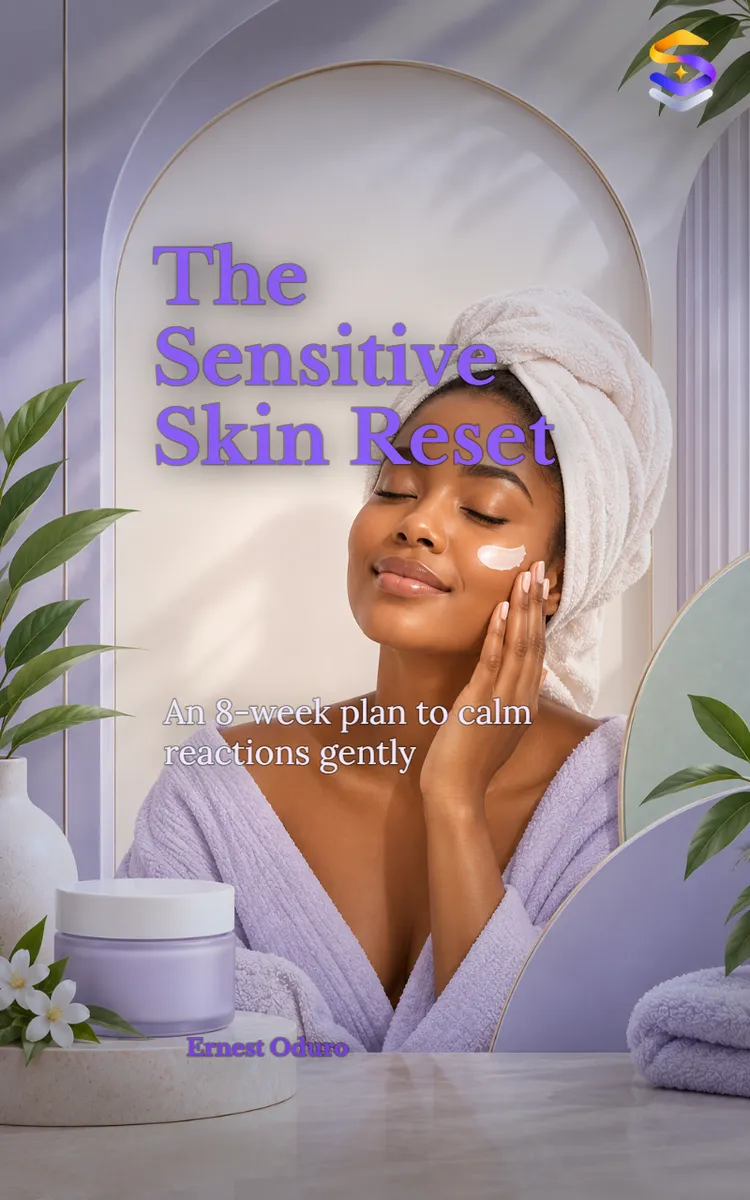
"The Sensitive Skin Reset" is a how-to guide book by Ernest Oduro with 5 chapters and approximately 9,144 words. Non-medical skincare routine for sensitive, reactive skin.
This book was created using Inkfluence AI, an AI-powered book generation platform that helps authors write, design, and publish complete books. It was made with the AI Ebook Generator.
Frequently Asked Questions
What is "The Sensitive Skin Reset" about?
Non-medical skincare routine for sensitive, reactive skin
How many chapters are in "The Sensitive Skin Reset"?
The book contains 5 chapters and approximately 9,144 words. Topics covered include What sensitive skin is, The Minimal Routine Framework, Calming, clearing, and gentle anti-aging, Lifestyle and triggers, and more.
Who wrote "The Sensitive Skin Reset"?
This book was written by Ernest Oduro and created using Inkfluence AI, an AI book generation platform that helps authors write, design, and publish books.
How can I create a similar how-to guide book?
You can create your own how-to guide book using Inkfluence AI. Describe your idea, choose your style, and the AI writes the full book for you. It's free to start.
Write your own how-to guide book with AI
Describe your idea and Inkfluence writes the whole thing. Free to start.
Start writingCreated with Inkfluence AI


