
Read the first chapter
The whole of chapter one, free. About 8 min. Turn the pages with the arrows, your keyboard, or a swipe.
Chapter 1
Breastfeeding-Friendly Calorie Awareness
A Calmer Way to Think About Calories While Breastfeeding
Could trying to lose weight too quickly leave you more tired, hungrier, and less confident about breastfeeding? The goal is not to eat as little as possible. It is to create a small, steady gap between the energy you use and the energy you eat - while giving your body enough food and fluids to support recovery and milk production.
The Milk-First Energy Budget puts feeding your baby and your own recovery before faster weight loss. You will learn how to estimate your personal calorie needs, recognize signs that you may be under-eating, and adjust food intake gently rather than making a sudden cut. Calorie estimates are starting points, not promises. Your appetite, activity, sleep, recovery, and milk-feeding pattern all matter.
Who this is for: breastfeeding mothers from birth through the first six months postpartum who want gradual weight loss without aggressive dieting. This approach can help you:
• choose a reasonable starting calorie range; - avoid long stretches without food; - create a modest deficit only when your recovery and milk supply feel stable; - monitor useful signs, including energy, hunger, milk output, and weight trends.
A practical takeaway: weight loss is only one measure. A plan is working when it supports your daily energy, your baby’s feeding, and your ability to recover.
Why Breastfeeding Changes the Calorie Conversation
Your body uses energy to keep you alive, move you through the day, heal after birth, and make milk. The energy used for basic body functions is called resting energy expenditure. Walking, carrying your baby, household tasks, and exercise add activity energy. Milk production adds another demand, although the exact amount varies with how often and how much your baby feeds, whether you pump, and how much milk your body makes.
This is why a generic calorie number can miss the mark. Two breastfeeding mothers may be the same height and weight but have different needs because one is sleeping in longer stretches, moving more, or producing more milk. Your needs can also change from week to week.
A simple estimate begins with your total daily energy expenditure, or TDEE - the approximate energy your body uses in one day. You do not need perfect math. A food-tracking app, a registered dietitian, or a trusted calculator can provide a starting estimate using your age, height, weight, and activity. Then add breastfeeding needs according to the guidance built into that resource. If the tool does not account for breastfeeding, do not treat its result as a complete target.
A useful way to apply the Milk-First Energy Budget is to think in three layers:
1. Recovery floor: enough food for healing, daily function, and regular meals. 2. Milk-support layer: enough energy and fluids to support your usual feeding or pumping pattern. 3. Gentle deficit: a small reduction only after the first two layers are steady.
The deficit should be modest rather than dramatic. A common cautious starting point is reducing your estimated maintenance intake by about 200-300 calories per day, then observing your response for two to three weeks. This is not a required number, and it is not appropriate if you are struggling to eat, recovering from complications, or noticing feeding concerns. Avoid making a large cut or using a very-low-calorie plan without individualized professional guidance.
Under-eating can happen quietly. You may skip breakfast because the baby wakes repeatedly, eat a small lunch with one hand, then decide to “be good” by having only a light dinner. One day like this is not a problem. Repeating it can leave you shaky, intensely hungry, irritable, constipated, or too tired to move. It may also make it harder to notice whether a change in milk output is related to normal feeding patterns, stress, illness, or inadequate intake.
Breastfeeding itself is not a guarantee of weight loss. Some mothers lose weight easily; others maintain or gain weight while nursing. Hormonal changes, sleep disruption, appetite, medication, thyroid problems, fluid shifts, and limited movement can all play a role. This is not a personal failure. It is information about your current situation.
Ask yourself: “Am I choosing a small, sustainable adjustment, or am I trying to erase postpartum weight as quickly as possible?” The first question supports the Milk-First Energy Budget. The second often leads to eating too little.
A Gentle Calorie Plan You Can Adjust
Begin only when you can eat regularly and your breastfeeding pattern feels reasonably established. For many mothers, that means starting with maintenance rather than a deficit during the earliest recovery period. If birth recovery has been difficult, you had heavy bleeding, significant anemia, surgery, illness, or concerns about milk production, speak with your licensed healthcare professional before intentionally reducing calories.
First, record your usual intake for three typical days, including one weekend day if your routine changes. Do not try to eat “perfectly” during this record. Note meals, snacks, drinks, breastfeeding or pumping patterns, sleep, and hunger. A simple notes app is enough. The purpose is to see patterns, such as going seven hours without a meal or relying on coffee until noon.
Next, estimate your maintenance needs with a breastfeeding-aware calculator or a registered dietitian. Treat the result as a range rather than a precise prescription. If your current intake is already low, do not cut it further just because an app displays a smaller number. Add food first until you can manage three meals and one or two snacks most days.
Once your intake and milk-feeding routine feel steady, make one small change. You might reduce a large evening portion slightly, replace a sweetened drink with water or milk, or add a 10-minute walk after one meal rather than removing an entire meal. Keep the change for 14 days before judging it, unless warning signs appear sooner.
Build meals around three parts: a protein food, a carbohydrate-rich food, and produce or another fiber-rich food. Add a source of fat when practical. For example, oatmeal with Greek yogurt, berries, and nut butter is more sustaining than plain toast. A turkey and avocado sandwich with fruit may be easier to manage than a salad eaten while standing. These combinations can help reduce the intense hunger that makes a calorie deficit feel impossible.
Keep an easy snack within reach during feeding sessions. Examples include yogurt and fruit, cheese and whole-grain crackers, peanut butter on toast, trail mix, or a bean-and-cheese tortilla. You do not need to eat at every nursing session, but having food available helps prevent accidental under-eating.
Drink to thirst and keep a bottle near your usual feeding spot. Pale-yellow urine, a comfortable mouth, and regular bathroom trips can offer general clues that you are drinking enough, but no beverage schedule can guarantee milk supply. You do not need special teas, cookies, or supplements to create a calorie deficit, and some products may add calories without solving hunger.
Monitor your plan twice each week, not every hour. Record:
• body weight, if weighing feels emotionally safe, using the same conditions each time; - hunger from 0 to 10; - energy from 0 to 10; - number of meals and snacks; - breastfeeding or pumping observations; - any noticeable change in milk output or your baby’s usual feeding behavior.
Look for trends over two to three weeks. Daily weight can shift because of fluids, bowel movements, sodium, and sleep. A small change in weight with steady energy and feeding is different from rapid loss paired with exhaustion and persistent hunger.
If you feel well and your feeding pattern remains steady after two to three weeks, keep the same plan rather than cutting again immediately. If there is no change after three to four weeks and you want to continue, adjust one small portion or add 10 minutes of gentle walking on three to five days per week. Progression is optional; stability is also a valid result.
Pause the deficit and contact a healthcare professional or lactation professional if you notice a clear, ongoing drop in milk output, your baby has fewer wet diapers than expected for their age, your baby seems persistently unsatisfied after feeds, or weight gain is a concern. Seek prompt medical care for heavy bleeding, fainting, chest pain, severe shortness of breath, severe headache, or thoughts of harming yourself or your baby. These symptoms need professional assessment rather than a calorie adjustment.
| If you notice… | Try this first | |---|---| | Strong hunger most days | Add a protein-and-carbohydrate snack and review whether meals are too small | | Falling energy or dizziness | Stop the deficit, eat a balanced meal, hydrate, and contact your healthcare professional if it continues | | Possible feeding or milk-output change | Return to your previous intake and contact a lactation professional or healthcare professional | | No weight change but good recovery and feeding | Keep the plan for another two weeks before making another adjustment |
Your practical takeaway is simple: estimate, observe, and adjust slowly. The Milk-First Energy Budget is not a race to the lowest number. It is a way to protect the basics before asking your body for gradual weight loss.
Common Calorie Mistakes to Avoid
Cutting calories sharply because breastfeeding “burns extra”
Why it happens: Weight-loss advice often treats breastfeeding calories as a bonus to spend. A mother may assume that if nursing uses extra energy, a very small intake will produce faster results.
What to do instead: Start with a breastfeeding-aware maintenance estimate. If recovery and feeding are stable, try a modest 200-300-calorie reduction for 14 days. Do not reduce again until you have reviewed hunger, energy, milk-feeding observations, and weight trends.
Skipping meals to save calories for dinner
Why it happens: Newborn care can make daytime eating inconvenient. Saving calories may also seem efficient when evenings are the only quiet time.
What to do instead: Set a basic rhythm of three meals and one or two snacks. Keep a no-cook option beside your feeding chair, such as yogurt, a banana with peanut butter, or cheese and crackers. If you miss a meal, eat a balanced snack as soon as practical rather than trying to “make up for it” by eating less later.
Treating the scale as the only sign of progress
Why it happens: Body weight is easy to record, while recovery and feeding are less visible. A flat scale can feel like proof that nothing is working.
What to do instead: Review the full two-week picture. Include energy, hunger, sleep when possible, meal consistency, movement, and breastfeeding or pumping observations. If the scale is stressful, use clothing comfort, waist measurements once every four weeks, or routine markers such as climbing stairs more comfortably. Do not use a lower weight to excuse worsening fatigue or feeding concerns.
The safest calorie plan is one you can follow without constantly thinking about food, one that leaves room for recovery, and one that can be paused when your body or baby’s feeding pattern asks for attention. Start with enough, reduce only a little, and let steady routines - not urgency - guide the next step.
End of chapter one. 4 more chapters in the full book.
Swipe or use the arrows to turn the page


What's inside: 5 chapters
- 1. Breastfeeding-Friendly Calorie Awareness
- 2. Anti-Inflammatory Postpartum Meal Templates
- 3. Gentle Movement for Diastasis and Pelvic Floor
- 4. Sleep, Stress, and Hormone-Friendly Routines
- 5. Tracking Weight Loss Without Milk-Supply Anxiety
About this book
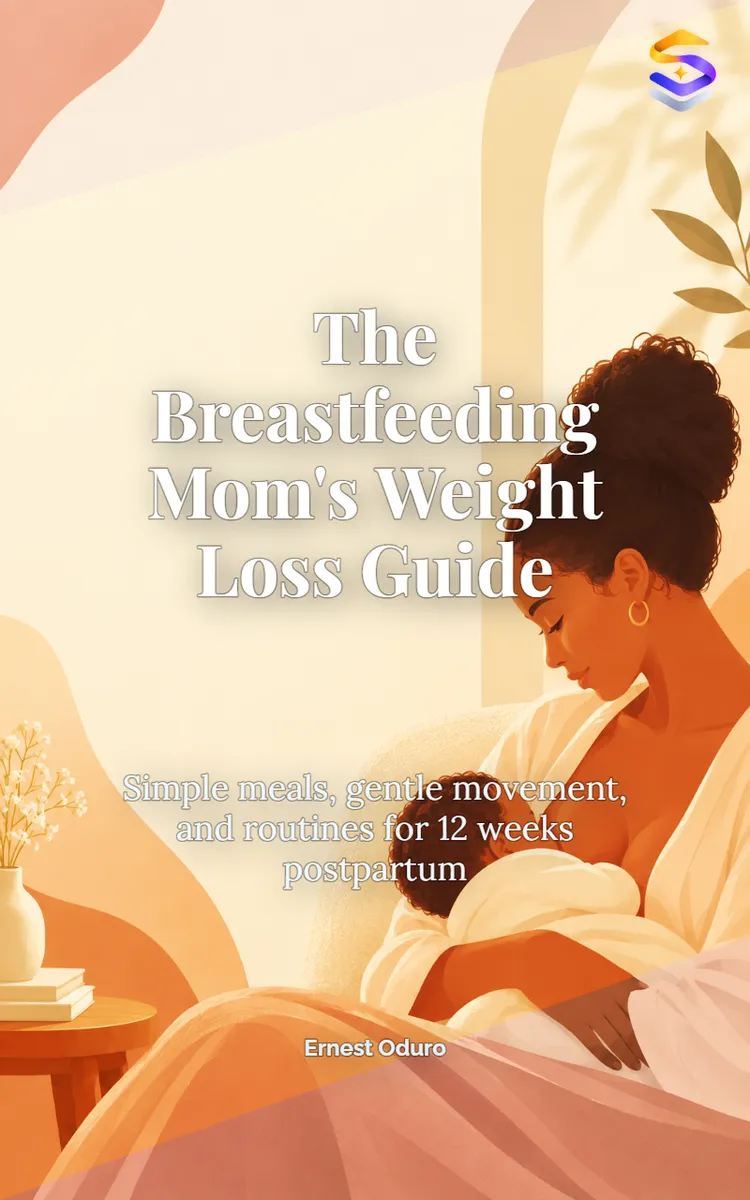
"The Breastfeeding Mom's Weight Loss Guide" is a health & wellness book by Ernest Oduro with 5 chapters and approximately 8,938 words. Postpartum weight loss guidance for breastfeeding moms.
This book was created using Inkfluence AI, an AI-powered book generation platform that helps authors write, design, and publish complete books. It was made with the AI Health Book Generator.
Frequently Asked Questions
What is "The Breastfeeding Mom's Weight Loss Guide" about?
Postpartum weight loss guidance for breastfeeding moms
How many chapters are in "The Breastfeeding Mom's Weight Loss Guide"?
The book contains 5 chapters and approximately 8,938 words. Topics covered include Breastfeeding-Friendly Calorie Awareness, Anti-Inflammatory Postpartum Meal Templates, Gentle Movement for Diastasis and Pelvic Floor, Sleep, Stress, and Hormone-Friendly Routines, and more.
Who wrote "The Breastfeeding Mom's Weight Loss Guide"?
This book was written by Ernest Oduro and created using Inkfluence AI, an AI book generation platform that helps authors write, design, and publish books.
How can I create a similar health & wellness book?
You can create your own health & wellness book using Inkfluence AI. Describe your idea, choose your style, and the AI writes the full book for you. It's free to start.
Write your own health & wellness book with AI
Describe your idea and Inkfluence writes the whole thing. Free to start.
Start writingCreated with Inkfluence AI


