

Read the first chapter
The whole of chapter one, free. About 7 min. Turn the pages with the arrows, your keyboard, or a swipe.
Chapter 1
Understanding Menopause Symptom Patterns
Reading the Timeline Compass
Could a symptom be easier to understand when you notice when it appears, not only what it feels like? A night of sweating after several regular cycles, a sudden change in bleeding, or a week of restless sleep may seem unrelated. Yet timing often offers useful clues about where you are in the menopause transition and what patterns deserve attention.
The Timeline Compass Model uses three landmarks: perimenopause, menopause, and postmenopause. It is not a diagnostic test and cannot predict exactly what your body will do. Instead, it helps you record changes, notice trends, and choose sensible next steps without treating every difficult day as a crisis.
Who this is for: anyone approaching, moving through, or living after the menopause transition who wants a clearer way to understand changing symptoms. The main benefits are practical:
• You can separate a single uncomfortable episode from a repeating pattern. - You can connect symptoms with cycle timing, sleep, stress, alcohol, heat, or medication changes. - You can prepare useful information for a licensed health professional. - You can plan lifestyle adjustments without expecting one routine to work forever.
Ask yourself: when you think about your symptoms, do you remember their timing, or mainly their intensity? For the next few weeks, timing will become your most useful piece of information.
How Hormone Shifts Create Changing Patterns
Menopause is a natural stage of reproductive aging, but the path toward it is not always smooth. The ovaries gradually become less predictable in releasing an egg and producing estrogen and progesterone, two hormones involved in the menstrual cycle. Estrogen also affects bone, vaginal and urinary tissues, temperature regulation, mood, and sleep. Progesterone tends to rise after ovulation and can influence sleepiness, breast tenderness, and mood for some people.
During perimenopause, hormone levels can rise and fall unevenly. One month may include ovulation and a familiar cycle; the next may bring delayed ovulation, heavier or lighter bleeding, or no ovulation. This variability helps explain why symptoms can arrive in clusters. A warm flush may occur during the day, while sleep disruption becomes more noticeable at night. Headaches, breast tenderness, irritability, or changes in concentration may appear before bleeding, after a poor night’s sleep, or during a longer gap between periods.
Menopause is defined by twelve consecutive months without a menstrual period, when there is no other clear explanation. It is a point identified after the fact, not a single day when hormones suddenly switch off. Postmenopause begins afterward. Symptoms may ease, continue, or change form. Some people have ongoing hot flashes or vaginal dryness; others notice that sleep, joint comfort, or urinary symptoms become more prominent. There is no required symptom sequence.
Several influences can shape the pattern:
1. Hormone variability: Uneven estrogen and progesterone changes can affect bleeding, temperature control, sleep, and mood. 2. Body and life factors: Thyroid conditions, some medicines, alcohol, nicotine, stress, illness, and disrupted routines can overlap with menopause symptoms. 3. Personal risk factors: A history of migraine, heavy bleeding, mood symptoms, sleep problems, or certain medical treatments may affect how the transition feels. 4. Timing of ovarian change: Surgery involving the ovaries, chemotherapy, or other treatments can bring an earlier or more abrupt change and deserves individualized care.
A symptom is not proof of its cause. For example, waking at 3 a.m. may relate to a night sweat, worry, sleep apnea, pain, alcohol, or a room that is too warm. The Timeline Compass keeps the question open: What changed, when did it begin, and what else was happening then?
A useful recap is simple: perimenopause often brings irregular timing, menopause marks twelve months without a period, and postmenopause can still include symptoms. The practical takeaway is to track patterns while leaving room for other explanations.
Using the Timeline Compass in Daily Life
Begin with a short record rather than trying to document every detail. For 28 days, note your bleeding, sleep, temperature symptoms, mood, pain, and any major changes in routine. Use a phone note, calendar, or paper chart. Rate each symptom from 0 to 3: 0 means absent, 1 mild, 2 moderate, and 3 severe enough to interrupt normal activity. Record the date and approximate time.
Include the details that can change interpretation. Note whether you had alcohol, nicotine, a late meal, intense exercise, unusual stress, illness, or a medication change. For bleeding, record spotting, light, moderate, or heavy flow and the number of days. Do not rely on memory alone; a brief entry made at the time is usually more useful than a detailed reconstruction weeks later.
After 28 days, look for repetition. Ask:
• Do hot flashes cluster after poor sleep or in warm rooms? - Do headaches or mood changes appear near bleeding? - Are symptoms becoming more frequent, lasting longer, or affecting work and relationships? - Has bleeding changed from your earlier pattern? - Did symptoms begin after a new medicine, illness, or major stress?
Continue for another 28 days if the pattern is unclear. Two months of notes can show whether a symptom is occasional or persistent. If periods are irregular, do not force the data into a monthly cycle. Mark the actual dates instead.
Use the three landmarks carefully. If you are still having periods, even irregular ones, you may be in perimenopause, but a health professional may need to assess other causes of cycle changes. If you have reached twelve months without bleeding, record that date as a reference point. Any later bleeding should be discussed with a licensed health professional rather than automatically labeled a menopause symptom.
Lifestyle changes are most useful when tested one at a time. For example, keep the bedroom comfortably cool for seven nights, use breathable sleepwear, and record night sweats and awakenings. If alcohol appears connected with symptoms, try avoiding it for two weeks while keeping other routines as steady as practical. If caffeine seems linked with sleep, avoid it after early afternoon for 14 days and compare your notes. These are observation periods, not guarantees.
Gentle regular movement can support sleep, mood, and general health, but it does not need to be used as a test of willpower. Start with 10 minutes of comfortable walking on five days each week. After two weeks, if you feel well and have no concerning symptoms, add five minutes to three of those walks. Stop and seek advice for chest pressure, fainting, severe breathlessness, or new neurological symptoms such as weakness on one side, trouble speaking, or sudden vision loss.
Arrange professional guidance for bleeding that is very heavy, prolonged, occurs after twelve months without periods, or is accompanied by dizziness, unusual weakness, severe pelvic pain, or shortness of breath. Seek prompt care for a new breast lump, severe or persistent depression, thoughts of self-harm, or symptoms that feel sudden and serious. These signs do not establish a cause, but they should not be explained away by menopause without assessment.
Take your two-to-eight-week record to a clinician, pharmacist, or other appropriately licensed professional. Include medicines and supplements, the date of your last period if known, and the effect on daily life. A clear timeline can make a short appointment more productive and can help you discuss whether further assessment is appropriate.
The practical takeaway is to use timing as a compass, not a verdict: record for 28 days, review for patterns, test one modest change at a time, and seek care when symptoms are new, severe, persistent, or outside your usual pattern.
Common Timing Mistakes
Assuming every symptom is caused by menopause
Why it happens: Menopause can affect many body systems, so it is tempting to place every new change under one label. That can hide the role of illness, medication effects, sleep disorders, or stress.
What to do instead: Write down the first date, frequency, severity, and related changes. If a symptom is severe, steadily worsening, or interfering with daily life, arrange a professional assessment. Keep the question open until the pattern is clearer.
Treating menopause as a single twelve-month event
Why it happens: The word “menopause” is often used for the whole transition. In everyday conversation, perimenopause, menopause, and postmenopause can blur together.
What to do instead: Use the Timeline Compass landmarks. Mark irregular cycles and changing symptoms during perimenopause; note the date that completes twelve months without a period; then continue tracking symptoms in postmenopause. This prevents you from assuming that symptoms must end at the twelve-month mark.
Changing several habits at once
Why it happens: When sleep or hot flashes are difficult, making many changes can feel efficient. But if caffeine, alcohol, exercise, supplements, and bedtime all change together, you cannot tell what helped or caused a problem.
What to do instead: Choose one low-risk adjustment, keep it steady for 7 to 14 days, and record the result. Add another change only after reviewing the first. Discuss supplements or major diet changes with a licensed professional, especially if you take medicines or have a long-term condition.
A pattern is more useful than a single difficult day, and a single difficult day still matters when it disrupts your life. Use your notes to notice change without judging your body for being unpredictable. As the wider guide develops, this steady awareness will support choices that are practical, personal, and responsive to the stage you are living through.
End of chapter one. 19 more chapters in the full book.
Swipe or use the arrows to turn the page


What's inside: 20 chapters
- 1. Understanding Menopause Symptom Patterns
- 2. Tracking Symptoms with a Simple Log
- 3. Sleep Hygiene for Hot Flash Relief
- 4. Cognitive Behavioral Tools for Insomnia
- 5. Stress Reset with Breath and Nervous-System Skills
- 6. Mindfulness for Mood and Anxiety Changes
- 7. Strength Training to Protect Bone and Muscle
- 8. Walking Workouts for Energy and Metabolism
- 9. Yoga and Mobility for Joint Comfort
- 10. Pelvic Floor Exercises for Urinary Health
- 11. Vaginal Dryness Relief with Moisturizers and Lubes
- 12. Heart-Healthy Eating for Lipid Changes
- 13. Anti-Inflammatory Nutrition for Symptom Support
- 14. Managing Weight with Protein and Fiber Targets
- 15. Blood Sugar Steadying for Energy Swings
- 16. Hydration and Electrolyte Strategies
- 17. Supplements: Evidence, Dosing, and Safety
- 18. Hormone Therapy Decision Guide
- 19. Managing Hot Flashes with Cooling Protocols
- 20. Building a Menopause-Positive Weekly Plan
About this book
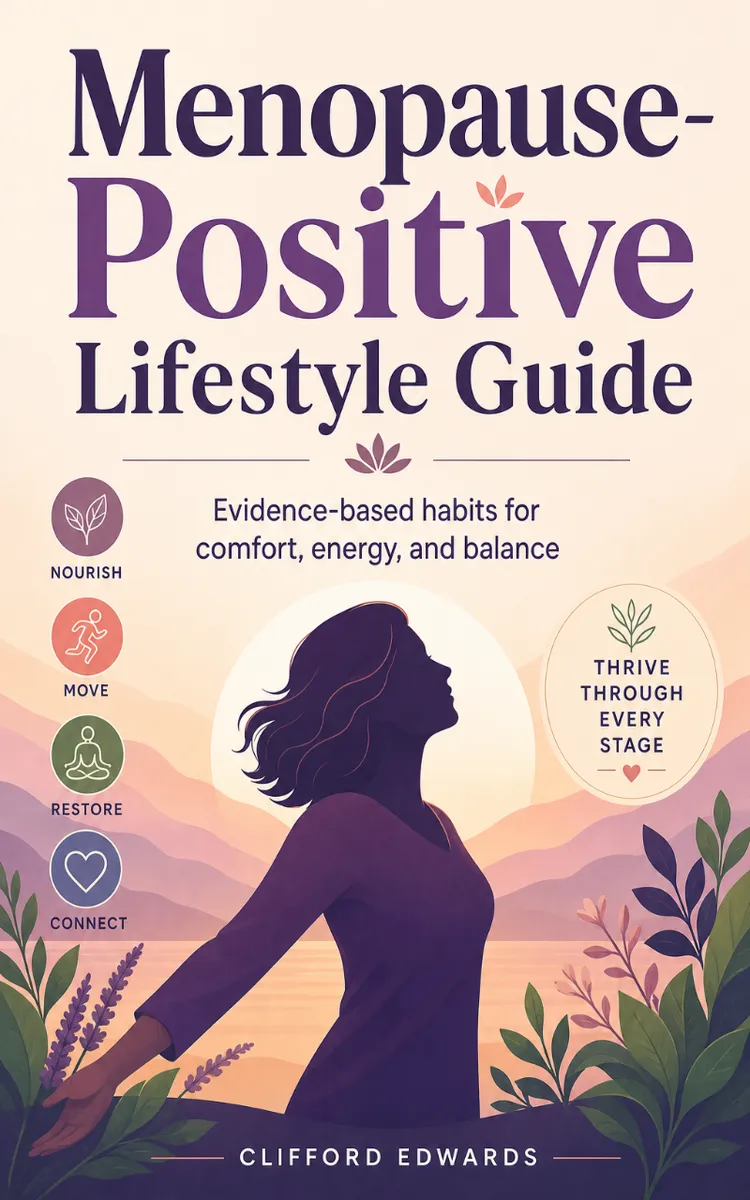
"Menopause-Positive Lifestyle Guide" is a health & wellness book by Clifford Edwards with 20 chapters and approximately 33,114 words. Lifestyle guidance for managing menopause symptoms and wellbeing.
This book was created using Inkfluence AI, an AI-powered book generation platform that helps authors write, design, and publish complete books. It was made with the AI Health Book Generator.
Frequently Asked Questions
What is "Menopause-Positive Lifestyle Guide" about?
Lifestyle guidance for managing menopause symptoms and wellbeing
How many chapters are in "Menopause-Positive Lifestyle Guide"?
The book contains 20 chapters and approximately 33,114 words. Topics covered include Understanding Menopause Symptom Patterns, Tracking Symptoms with a Simple Log, Sleep Hygiene for Hot Flash Relief, Cognitive Behavioral Tools for Insomnia, and more.
Who wrote "Menopause-Positive Lifestyle Guide"?
This book was written by Clifford Edwards and created using Inkfluence AI, an AI book generation platform that helps authors write, design, and publish books.
How can I create a similar health & wellness book?
You can create your own health & wellness book using Inkfluence AI. Describe your idea, choose your style, and the AI writes the full book for you. It's free to start.
Write your own health & wellness book with AI
Describe your idea and Inkfluence writes the whole thing. Free to start.
Start writingCreated with Inkfluence AI


