

Read the first chapter
The whole of chapter one, free. About 12 min. Turn the pages with the arrows, your keyboard, or a swipe.
Chapter 1
Front Matter: Quiet the Noise (How to Use + Faith Note)
CHAPTER 1
Front Matter: Quiet the Noise
How to Use + Faith Note
Your phone has a way of whispering, doesn’t it?
“One more thing.”
“One quick check.”
“You might miss something.”
And maybe it doesn’t even feel like a whisper anymore. Maybe it feels more like a tug in your chest — that little pull toward the screen when the room gets quiet, when your thoughts get loud, when you’re tired but not ready to stop being entertained.
This devotional is for that moment.
Not for the version of you who has perfect mornings, unlimited focus, and a color-coded spiritual routine. I mean, that would be nice, sure. But most of us are working with real life: busy days, late nights, anxious thoughts, half-finished prayers, and a phone that somehow ends up back in our hand before we even realize we reached for it.
So yes, this is a 30-day digital detox devotional.
But actually, it’s more than that.
The goal isn’t just to use your phone less. The deeper invitation is to turn your attention back toward God — slowly, honestly, one small moment at a time.
Because peace is not just what happens when the screen goes quiet.
Peace is what happens when your soul remembers who is near.
How to Use Quiet the Noise
5 Minutes Daily
Plan for five minutes a day.
That’s it.
Not because five minutes is magic, and not because your spiritual life should stay tiny. But because five honest minutes with God is better than a complicated plan you’ll quit by Wednesday.
Each day will give you three simple pieces:
• A short reflection to help you notice what’s happening inside you
• A practice you can do offline, usually in five minutes
• A prayer you can read as written or say in your own words
Some days may feel meaningful right away. Other days may feel awkward. That’s normal. Silence can feel strange when your brain is used to constant input.
And yes, you’ll probably miss a day.
Maybe two.
Maybe you’ll start strong, forget, feel guilty, and wonder if you should restart the whole thing. Please don’t turn this into another pressure machine. If you miss a day, just come back the next day. You don’t have to “make it up” like homework. Grace is part of the practice.
Consistency matters, but consistency doesn’t mean perfection. It means returning.
Again and again.
That’s the whole thing, really.
One Small Rule
There is one small rule that will carry you farther than you think:
Keep your phone away while you work through the daily entry.
Not face down beside you.
Not on silent within reach.
Away.
Across the room is good. Another room is even better.
I know — that may sound a little dramatic. But wait, let me reconsider that. Is it dramatic, or is it just honest? Most of us already know that if the phone is within reach, part of our attention is still attached to it. Even if it doesn’t buzz. Even if we tell ourselves we’re “not going to check.”
The point is not to punish yourself.
The point is to notice.
Notice the urge. Notice the discomfort. Notice how quickly your mind wants an escape hatch.
That tension is not failure. It’s training.
You are training your attention to stop obeying every interruption. You are practicing the ancient, deeply Christian skill of being present — with God, with yourself, with the actual moment you are in.
Faith Note
This Is Christ-Centered, Not a Replacement
This practice is centered on Jesus.
It is not meant to replace church, Christian community, Scripture, pastoral care, counseling, wise friendships, or real support from trusted people. Think of this devotional more like a small door you open each day so your soul can breathe again.
A door, not the whole house.
You are not earning God’s love by doing this devotional. You are not becoming “more acceptable” to Him because you put your phone in another room for five minutes.
Actually, that’s one of the first lies we need to quiet.
God is not waiting for your screen-time report before He decides how close He wants to be.
He is already near.
This devotional simply helps you notice where noise has been steering you — and then, gently, choose another direction.
Toward Jesus.
Toward peace.
Toward a life where your attention is not rented out to every ping, post, headline, and highlight reel.
Is / Is Not
How This Devotional Works
This devotional is:
• Built for a 30-day rhythm of peace
• Short on purpose — five minutes can still change the direction of your day
• About God-centered reconnection, not just screen reduction
• Designed for real life, including missed days
• A gentle tool for noticing what has your attention
• An invitation to return to Jesus without panic or guilt
This devotional is not:
• A replacement for church life or Christian community
• A “fix yourself fast” formula
• A guilt-based challenge
• A productivity contest
• A promise that you’ll never feel distracted again
• About chasing spiritual feelings
• About proving you are disciplined enough
It’s about turning back.
That sounds simple because it is simple.
Not easy, exactly. But simple.
Day 1: Notifications
The Little Loudmouths in Your Pocket
SCRIPTURE: “Be still, and know that I am God.” — Psalm 46:10, NIV
Reflection
Notifications seem small.
A buzz. A banner. A red dot. A little sound from the pocket or the nightstand.
But they don’t just interrupt your screen. They interrupt your spirit.
One notification can pull you into a tiny rush: check, react, respond, refresh. And before you even realize what happened, your attention is living on someone else’s schedule.
That’s how noise grows legs.
It follows you from room to room. It sits with you at the table. It shows up while you’re trying to pray. It tells you that your day does not really belong to you unless you’ve seen what everyone else has posted, sent, liked, or said.
And maybe that sounds intense. But if you’ve ever picked up your phone “for one second” and then looked up ten minutes later feeling more scattered than before, you know what I mean.
For today, don’t try to fix everything.
Just notice one thing:
What happens right before you check?
Is it boredom?
Anxiety?
FOMO?
Loneliness?
Anger?
Avoidance?
You don’t have to label it perfectly. Actually, you probably won’t. That’s fine. Just be honest enough to pause and say, “Something in me wants to reach.”
God already sees what’s underneath the reach. He sees the tiredness, the pressure, the need to feel connected, the fear that you are missing something important.
Psalm 46:10 says, “Be still, and know that I am God.”
That kind of stillness is not passive. It is not pretending the world is quiet when it isn’t. It is choosing, for one small moment, to stop feeding the cycle long enough to remember who holds your life.
Notifications can wait.
Your breath can come back to you.
God is not in a hurry.
Practice
5 Minutes
Put your phone in another room for five minutes.
During that time, sit quietly and read Psalm 46:10 once:
“Be still, and know that I am God.”
Then take one slow breath and pray:
“Jesus, I’m here.”
That’s enough for today.
Journal
Where do notifications pull me away from God most?
• Before work or school?
• At night?
• Between tasks?
• When I feel lonely?
• When I am trying to avoid something?
Prayer
Jesus, quiet the impulse in me that thinks I’ll miss something if I don’t check. Help me pause before I reach. Teach me to trust You with the timing of my life. When the noise gets loud, bring my attention back to You. Amen.
Day 2: Comparison Scroll
When Your Life Feels “Behind”
SCRIPTURE: “For we walk by faith, not by sight.” — 2 Corinthians 5:7, NIV
Reflection
Comparison can feel harmless at first.
You’re just keeping up. Just checking in. Just seeing what people are doing.
But the scroll has a way of turning other people’s highlights into a measuring stick for your worth.
You see someone’s relationship, body, job, house, confidence, vacation, ministry, family, progress — whatever it is — and suddenly your brain starts writing a story about what you lack.
And once that story starts, the feed is more than happy to keep providing evidence.
Here’s the tricky part: comparison does not always look like envy.
Sometimes it looks like motivation.
Sometimes it looks like research.
Sometimes it looks like “I’m just trying to improve myself.”
And maybe sometimes it really is healthy inspiration. I don’t want to overstate it. But if you walk away feeling smaller, heavier, restless, resentful, or quietly ashamed, then something is being stolen from you.
Not all at once.
Just little by little.
Your peace. Your gratitude. Your ability to receive your own life as a gift.
Today’s move is not, “Delete everything and never feel tempted again.”
Maybe that will be right for some people, but for most of us, the first step is simpler:
Catch the moment when faith gets crowded out by sight.
When you feel the comparison pull, pause and ask:
“What am I trying to get right now?”
Comfort?
Control?
Belonging?
Certainty?
Proof that I’m okay?
That question matters because comparison often points to a deeper hunger. And that hunger needs God’s care, not another scroll.
God meets you in truth, not in the highlight reel.
You can celebrate what is good in someone else’s life without turning it into a verdict on your own.
Let me say that again because I need it too:
Someone else’s blessing is not God’s rejection of you.
Practice
5 Minutes
Close one app that tends to pull you into comparison.
Then open a Notes app or use a piece of paper and write this sentence:
“I’m tempted to compare because I want ______.”
After that, write one short truth from Scripture. You can use today’s verse:
“For we walk by faith, not by sight.”
Journal
What does comparison try to replace in me?
• Trust?
• Rest?
• Love?
• Gratitude?
• Confidence in God’s timing?
Prayer
Lord, help me walk by faith instead of sight. When I scroll and start measuring myself, remind me that You see the whole picture. Teach me to receive Your love without earning it and to celebrate others without losing peace in my own life. Amen.
Day 3: FOMO
The Fear That Keeps You Watching
SCRIPTURE: “God has not given us a spirit of fear, but of power and love and self-control.” — 2 Timothy 1:7, NIV
Reflection
FOMO makes fear sound polite.
It rarely announces itself as panic. Usually it whispers something reasonable:
“Just check once.”
“You should probably know what’s going on.”
“What if they posted something important?”
“What if you’re being left out?”
Underneath that little urge is often a bigger fear — fear of being forgotten, left behind, excluded, irrelevant, or out of the loop.
At first, the fear feels tiny.
Then it starts steering.
It shapes what you watch, who you message, when you respond, what you ignore, and how long you stay awake.
If you’ve ever stayed up late because you didn’t want to miss something, you already know how loud fear can become. The frustrating thing is that the more you check, the less settled you often feel. The scroll promises relief, but it usually gives you another reason to keep scrolling.
But here is the good news:
Fear is not your shepherd.
Fear is not your boss.
Fear is not the voice you have to follow.
Paul tells Timothy that God has not given us a spirit of fear, but of power, love, and self-control.
Not shame.
Not panic.
Not frantic checking dressed up as responsibility.
Power. Love. Self-control.
Real help for real moments.
And maybe this is worth saying plainly: self-control is not just “try harder.” In the Christian life, self-control is fruit. It grows as we stay close to the Spirit of God. It is practiced, yes, but it is also received.
Today, when FOMO knocks, you don’t have to argue with it for an hour.
You can open the door to something better: prayer.
Not polished prayer.
Not impressive prayer.
Just honesty.
“Jesus, I’m scared I’ll miss something. Help me choose Your peace.”
That counts.
Practice
5 Minutes
Before opening any app, take two slow breaths.
Then pray silently:
“Jesus, I choose Your peace.”
After that, read 2 Timothy 1:7 out loud once:
“God has not given us a spirit of fear, but of power and love and self-control.”
Journal
What am I afraid would happen if I don’t check?
Be honest. Don’t edit the answer too quickly.
Prayer
God, loosen the grip of fear that drives my FOMO. Give me power to pause, love to respond kindly, and self-control to choose what is true. Remind me that I am not forgotten when I am offline. Help me rest in You. Amen.
Day 4: Sleep & Phone
When Your Brain Stays “On”
SCRIPTURE: “So whether you eat or drink or whatever you do, do it all for the glory of God.” — 1 Corinthians 10:31, NIV
Reflection
Your phone at night is sneaky.
It does not just keep you awake. It trains your mind to expect stimulation right up until the moment you try to sleep.
One more video. One more message. One more check. One more scroll because, well, you’re already there.
Then the lights go out, but your brain is still lit up.
You may be physically in bed, but inwardly you are still reacting, comparing, replaying, laughing, worrying, planning, or wondering why you watched something that did not even help you rest.
And morning comes too fast.
This is one of those places where spiritual formation gets very practical. We sometimes separate “spiritual life” from ordinary habits like sleep, food, exercise, and phone use. But Scripture does not divide life that neatly.
“So whether you eat or drink or whatever you do, do it all for the glory of God.”
Whatever you do.
That includes how you end the day.
Not in a legalistic way — please don’t turn bedtime into another religious scoreboard. But in a loving way. A human way. Your body matters to God. Your nervous system matters. Your sleep matters. Your mind is not a machine.
Maybe the most spiritual thing you can do tonight is not read a giant passage, pray for an hour, and finally become a different person.
Maybe it is simply this:
Put the phone away earlier than usual.
Let your brain land.
Let your body become tired without fighting it.
Let the day close in the presence of God instead of under the glow of a screen.
I’m not 100% sure what your specific boundary needs to be. Maybe your phone charges outside the bedroom. Maybe it goes across the room. Maybe you set a cutoff time. Maybe you start with just five phone-free minutes before sleep.
Start smaller than your pride wants.
That usually works better.
Practice
5 Minutes
Tonight, choose one small phone boundary before bed.
Pick one:
• Charge your phone outside the bedroom
• Put it across the room
• Set a screen cutoff time
• Turn on Do Not Disturb
• Spend the last five minutes before sleep without your phone
Then pray one simple sentence:
“God, help me rest with You.”
Journal
What do I usually reach for at night — comfort, distraction, escape, control, entertainment, or reassurance?
Prayer
Father, help me end my day with You instead of noise. Teach me to treat rest as a gift, not a reward I have to earn. When I want one more scroll, remind me that my body and mind need peace. Help me sleep without fear of missing out, and let my night belong to You. Amen.
End of chapter one. 6 more chapters in the full book.
Swipe or use the arrows to turn the page

Christian Faith Healing And The Power Of Miracles

The Overthinker’s 90-Day Prayer Journal

The Empty Nester's Next-Chapter Devotional
What's inside: 7 chapters
- 1. Front Matter: Quiet the Noise (How to Use + Faith Note)
- 2. Getting Started with Quiet The Noise
- 3. Essential Skills for Quiet The Noise
- 4. Building Your Quiet The Noise Practice
- 5. Overcoming Common Quiet The Noise Challenges
- 6. Developing Deeper Quiet The Noise Knowledge
- 7. Back Matter: Topic Index + Grace Note + About Author + CTA
About this book
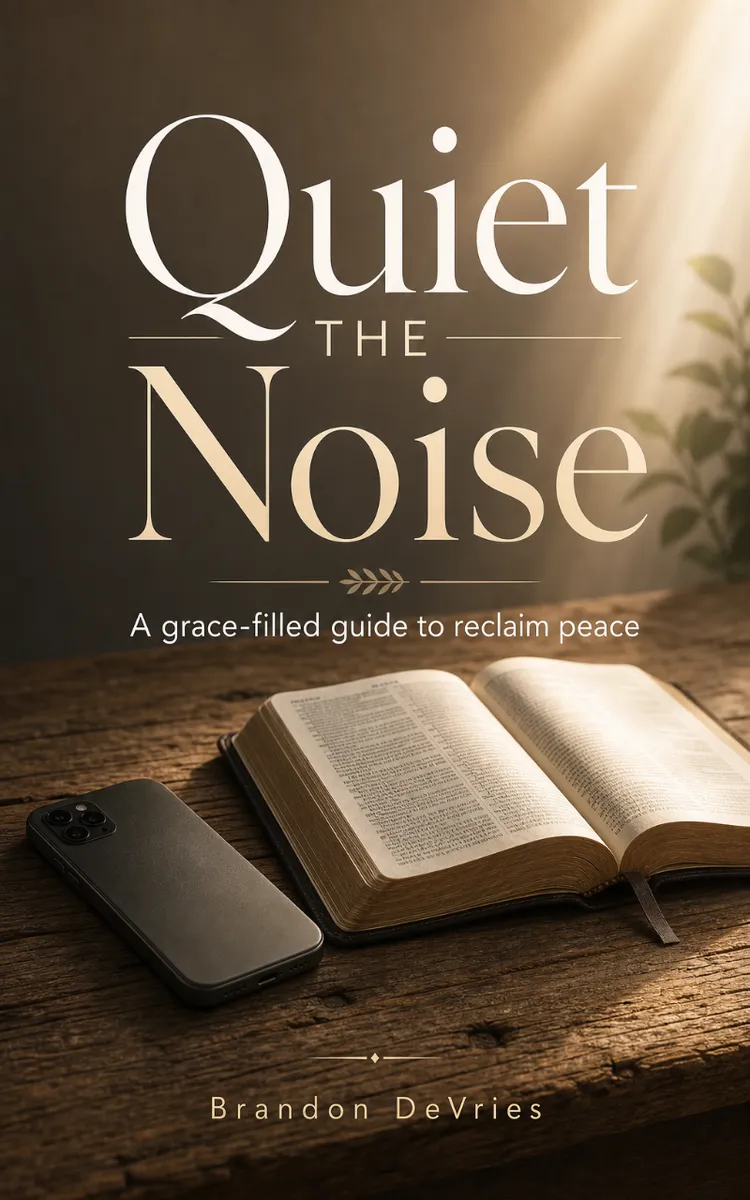
"Quiet The Noise" is a religious devotional book by Brandon DeVries with 7 chapters and approximately 18,211 words. 30-day Christian devotional and digital detox for peace.
This book was created using Inkfluence AI, an AI-powered book generation platform that helps authors write, design, and publish complete books.
Frequently Asked Questions
What is "Quiet The Noise" about?
30-day Christian devotional and digital detox for peace
How many chapters are in "Quiet The Noise"?
The book contains 7 chapters and approximately 18,211 words. Topics covered include Front Matter: Quiet the Noise (How to Use + Faith Note), Getting Started with Quiet The Noise, Essential Skills for Quiet The Noise, Building Your Quiet The Noise Practice, and more.
Who wrote "Quiet The Noise"?
This book was written by Brandon DeVries and created using Inkfluence AI, an AI book generation platform that helps authors write, design, and publish books.
Write your own religious devotional book with AI
Describe your idea and Inkfluence writes the whole thing. Free to start.
Start writingCreated with Inkfluence AI


