

Read the first chapter
The whole of chapter one, free. About 11 min. Turn the pages with the arrows, your keyboard, or a swipe.
Chapter 1
How My Parents Met
My mother was sitting in the outhouse when she met my father.
I want that on the first page, because everything else in this book is hard, and because it’s true, and because for the whole of my childhood it was the story our family told and it was a good one. The one that got brought out at parties.
It was the late 1950s. Mum was eighteen and working as a mail sorter at the Post Office, and back then going to the bathroom at work meant leaving the building altogether. There was no plumbing to speak of. What there was, out the back, was a long drop — a wooden hut with corrugated iron for walls and a bench inside with a hole cut in it, and I’ll leave the rest to your imagination. If you’ve seen Shrek, you’ve seen one. I used them plenty as a kid and I have never once missed them.
So there she is, minding her own business, when something hits the iron beside her head with an almighty crash. Then it happens again. And my mother works out, sitting there with her knickers round her ankles, that somebody outside is demolishing the building she is currently inside.
She did what any sensible New Zealand woman would do. She started yelling. She informed whoever was out there that there was a person still in here, and she suggested — in language I’d have got a hiding for — that he might like to bugger off.
The bloke outside was my father. And instead of apologising, he laughed. Stood there in the wreckage and laughed himself stupid at the Kiwi girl shouting at him from inside a half-demolished dunny.
My mother was a born and bred Kiwi with an accent you could have cut with a knife. My father was an Australian. If you know anything about the two countries you know that’s a fight before either of them has opened their mouth. And my mother, five foot one, absolutely furious, in the ruins of an outhouse, went several rounds with him.
They were married inside a year.
• * *
Let me tell you about the two of them properly, because I need to.
Mum was Joyce, and she came from a family of eight. Eight children, and every one of them sport-mad. Her people were from Eltham in Taranaki, a small hick town where everybody knew everybody’s business and her family were known for playing every game there was to be played. She had a twin brother she was close to all her life.
She had olive skin and black hair and big dark brown eyes, and she was five foot one, and it made no odds at all. When my mother walked into a room, you knew she was in it. I’ve spent sixty-odd years trying to describe how she did that and I’ve never managed it. She didn’t shout. She didn’t have to. She simply arrived somewhere and the room arranged itself around her.
She’d been a diver, and a good one — good enough that people talked about the Olympics — and then she got rheumatic fever and that was the end of it. She never got there. She never said much about it either, which I think now was the pattern rather than the exception.
My father was the opposite in almost every way. He was an only child, though we didn’t know the whole of that until after he’d gone, and he didn’t grow up in a crowd of brothers and sisters the way Mum did. He grew up on his own and he made himself out of nothing.
When he was fourteen, his own father packed him a bag, gave him a meal and a few bob, and told him to go and not to come back until he’d made something of himself.
Fourteen. Turn that over for a minute. These days we’ve got parents driving their thirty-year-olds to job interviews. My dad got a pushbike, a sandwich and a closed door, and he went off into the wild blue yonder and he never went back. Not once. Not ever.
He was from Tasmania and he came across to New Zealand by sea when he was twenty-one. He was a good-looking young fella — there was a bit of James Dean about him — and he was clever in a way that had nothing to do with school. He was a carpenter with an eye you couldn’t fault. He was a mechanic. He was a spray painter. He could wallpaper a room, paint a house, or build you one from the ground up. If a thing was broken he could fix it, and it didn’t much matter what the thing was — a car, a lawnmower, a washing machine. Somebody was forever turning up our drive with something that wouldn’t go.
He hardly had a free weekend in his life. And he never took money for any of it. Not from anybody.
After he died, I found out he’d been adopted. He never said so. I don’t know to this day whether he even knew.
• * *
They married when Mum fell pregnant with Warren, and they set about being the sort of couple that small Taranaki towns are full of. They played darts together at the pub in Toko and entered the couples’ competitions. They played pool. They went fishing, and my dad took me along, and I once pulled up a barracuda and nearly dropped it back in with fright — a mad-looking thing with teeth like a nightmare.
They kept an enormous vegetable garden wherever we lived, and we had fresh fruit and vegetables all year round, every year, without fail.
My dad was a yes-dear husband. Whatever my mother wanted got done, and he didn’t argue about it, and I don’t believe it ever once occurred to him to try.
Written down like that, it sounds like a good marriage in a good house, and in a lot of ways it was. But I’m not going to leave it there, because leaving it there is how you end up with a book that isn’t true.
• * *
Here’s the part I’ve never put down properly.
My mother drank.
Not both of them, the way I’ve told it before — her. She came out of a family of eight and most of them drank, her brothers especially, and when they got together it was my mother in the thick of it. They’d congregate at our place, out the back, and it would go on and on. Voices getting louder, the night getting later.
And my father would be inside, with us.
That’s the picture I want you to have of my parents, because it’s the truest one I own. Mum and her brothers out the back in the dark getting louder. Dad in the lounge with us kids. And at some point in the evening my father would get up, open the lounge room window, lean out and call to my mother to keep the noise down, because the kids had school in the morning.
That was him. He wasn’t out there and he wasn’t going to make her come in. He opened a window and asked.
Later on, my dad would drink in a way that nearly killed him. But that came after, and it came for a reason, and I’ll get to it.
I don’t say any of this to run my mother down. She was the best thing in my life and there is no version of me that survives childhood without her. But she was not present in the evenings, and there is a great deal that goes on in a house where the adults are out the back with a crate and the children are inside working out the world for themselves.
• * *
We moved about, the way families did. Five houses before I was sixteen, and I can walk through every one of them in my head.
Inglewood came first. I was five, and I started school there. A white weatherboard place with a back yard I thought was the size of a paddock, and in it an enormous old oak tree. Inside there was a coal range, and my mother cooked Sunday roasts in that thing that I can still taste. Everything in that house smelled of Sunday.
Inglewood is also where I got my first pet, which was not a cat or a dog but a piglet, and her name was Pinky. That piglet and I used to lie together under the oak tree, the pair of us flat out in the shade, and if you want to know who I was before any of the rest of it happened, that’s who. A little girl lying under a tree with a pig.
Eltham came next, when I was around nine — my mother’s own town, the place her family were known in. I can still see that house and that street as clearly as if I’d walked out of it this morning.
Toko, when I was ten. Toko wasn’t a town, it was a wee village — a petrol station, a pub, a dairy, and that was about the size of it. Everybody knew everybody. Our place backed onto a big paddock that sheep came and went in, and the pub sat on the far side of it, and I want you to remember that paddock, because my mother is going to be standing in it later.
Then Stratford, and Stratford is two houses, not one.
The first was an old rickety run-down place my parents bought as a doer-upper — the sort of house you take on because it’s cheap and you can see what it might be, and then you spend every weekend on it. My father, of course, could do the lot himself. We were there from when I was about ten until I was nearly thirteen.
Hold on to that house. Almost everything in the next few chapters happens while I’m living in it.
And then the last one, the blue house, from thirteen until I was sixteen. A short little cul-de-sac, a few metres from Stratford High School — which is a detail I’d like you to file away, because that school and I are going to have a great deal to do with one another, and none of it good.
• * *
There were four of us.
Warren was the eldest, eighteen months ahead of me. There’s a chapter coming about my brother and I’m not going to do it here, but you need to know two things now. He was born with celiac disease at a time when almost nobody had heard of it, and doctors did not know what to do with him. And he did not grow right — not his body, and not his mind either.
He was in and out of boys’ homes. He spent time in Lake Alice, which was a psychiatric hospital up in Rangitikei, and if you’re a New Zealander you’ll know what that name means and what came out about that place afterwards. I don’t know what happened to my brother there. I’ve never known.
I came along eighteen months after him. Then Celia, four years after me. Then Ryder, fourteen years after me, which meant I was a teenager with a baby brother and I can tell you honestly it was a pain in the neck at the time. My little sister had far more patience with him than I did.
Celia followed me everywhere. That’s my whole memory of her as a small girl — she was behind me. She wore my clothes and got into my makeup and did whatever I was doing and wanted to be wherever I was. I walked her to her first day of school, and then I walked her every day after that.
We spent our weekends at the pool. People got used to seeing the two of us there — swimming, lying in the sun, eating ice creams. One day we lay in it far too long and burned ourselves so badly our parents had to take us to hospital. That’s the kind of pair we were.
She was a beautiful sister to have, for the time I was lucky enough to have her.
• * *
There are two more things about that house you need to know.
The first is that nobody disobeyed my mother. Not my father, not us kids, and not other adults either. She never had to frighten anybody — she simply commanded respect and got it. When she went to the school to front a teacher or a principal, no one argued with her. Grown men who ran institutions did not argue with a five-foot-one woman from Eltham, and I watched it happen more than once.
The second is that my father was aloof with us. I’ve thought about it my whole life and I don’t believe he ever knew how to be a dad. He’d never had one to copy — his own put him out on the road at fourteen — and I think he did the best he could with nothing to go on. But he wasn’t a man who sat you down and asked how your day had been. He moved through the house fixing things.
When my mother told me off, which was often, the thing she’d say to me was:
You’re just like your father.
I have never known, from that day to this, whether she meant it as an insult or a compliment. I’ve had over fifty years to work it out and I’m no closer.
• * *
So that was us. A mother from a big sporting family who commanded any room she entered. A father who could build you a house and couldn’t talk to his own children. Four kids, one of them dangerous. An average house, a middle-class wage, a garden out the back, darts at the pub on a Saturday.
They were known in that district. They were liked. People brought their broken things up our drive and my father mended them for nothing, and my mother was the woman you went to if something needed sorting out.
And not one person outside that house knew a single thing about what went on inside it.
That was not an accident. My mother ran her family the way she ran everything else, and her rule was simple and it was never once spoken out loud, and I did not understand it for another forty years:
Whatever happens, we deal with it, and then we do not speak of it again.
She was about to have a great deal to deal with.
End of chapter one. 21 more chapters in the full book.
Swipe or use the arrows to turn the page

THE KILLER WHO TURNED CABIN 28 INTO A SLAUGHTERHOUSE

THE KILLER WHO WORE A WHITE MASK

Color My Little Pooch
What's inside: 22 chapters
- 1. How My Parents Met
- 2. My Brother Warren
- 3. The Park
- 4. The Paddock
- 5. Thirteen
- 6. The Farm
- 7. The Flat
- 8. The Party
- 9. Nate
- 10. Seven Days
- 11. What the Family Did
- 12. Knight in Shining Armour
- 13. Married
- 14. The Laundry Basket
- 15. Traffic Lights
- 16. The Suit
- 17. My Father
- 18. Two Men
- 19. Celia
- 20. Coming Apart
- 21. The Room
- 22. Still Here
About this book
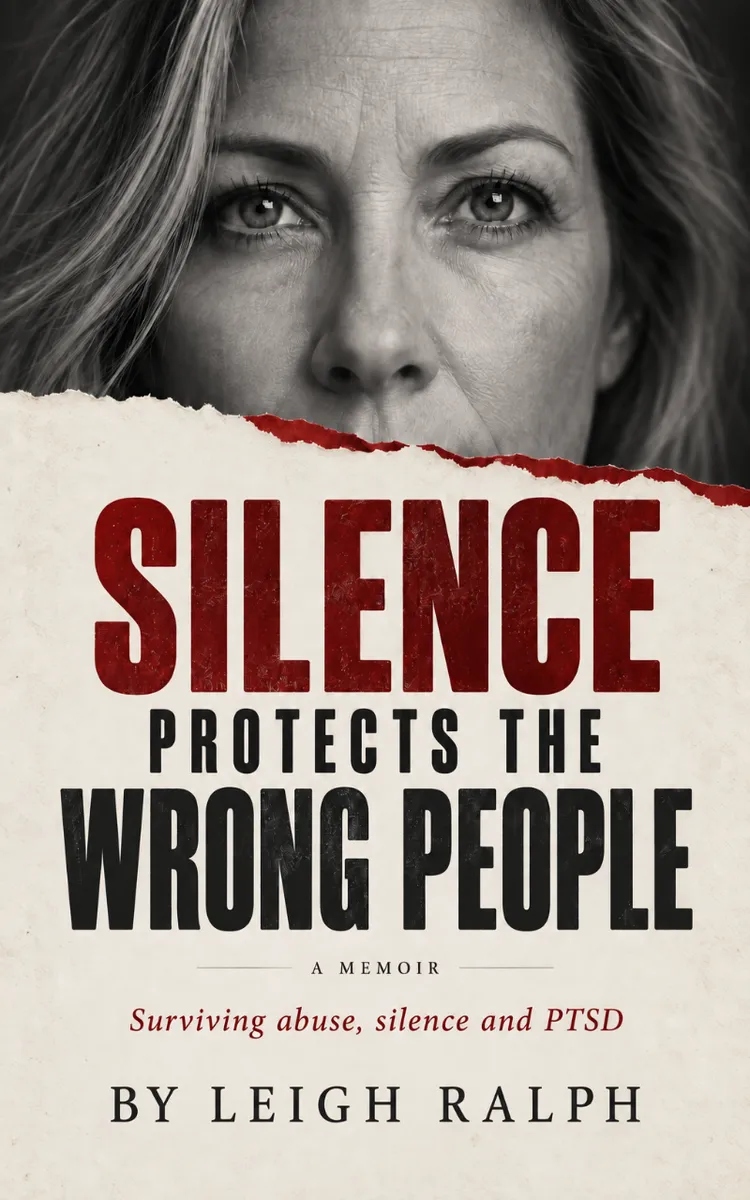
"Silence Protects the Wrong People" is a biography book by Leigh Ralph with 22 chapters and approximately 52,089 words. It covers key insights and practical takeaways on the topic.
This book was created using Inkfluence AI, an AI-powered book generation platform that helps authors write, design, and publish complete books. It was made with the AI Biography Writer.
Frequently Asked Questions
What is "Silence Protects the Wrong People" about?
"Silence Protects the Wrong People" is a biography book by Leigh Ralph covering key insights and practical takeaways on the topic.
How many chapters are in "Silence Protects the Wrong People"?
The book contains 22 chapters and approximately 52,089 words. Topics covered include How My Parents Met, My Brother Warren, The Park, The Paddock, and more.
Who wrote "Silence Protects the Wrong People"?
This book was written by Leigh Ralph and created using Inkfluence AI, an AI book generation platform that helps authors write, design, and publish books.
How can I create a similar biography book?
You can create your own biography book using Inkfluence AI. Describe your idea, choose your style, and the AI writes the full book for you. It's free to start.
Write your own biography book with AI
Describe your idea and Inkfluence writes the whole thing. Free to start.
Start writingCreated with Inkfluence AI


