
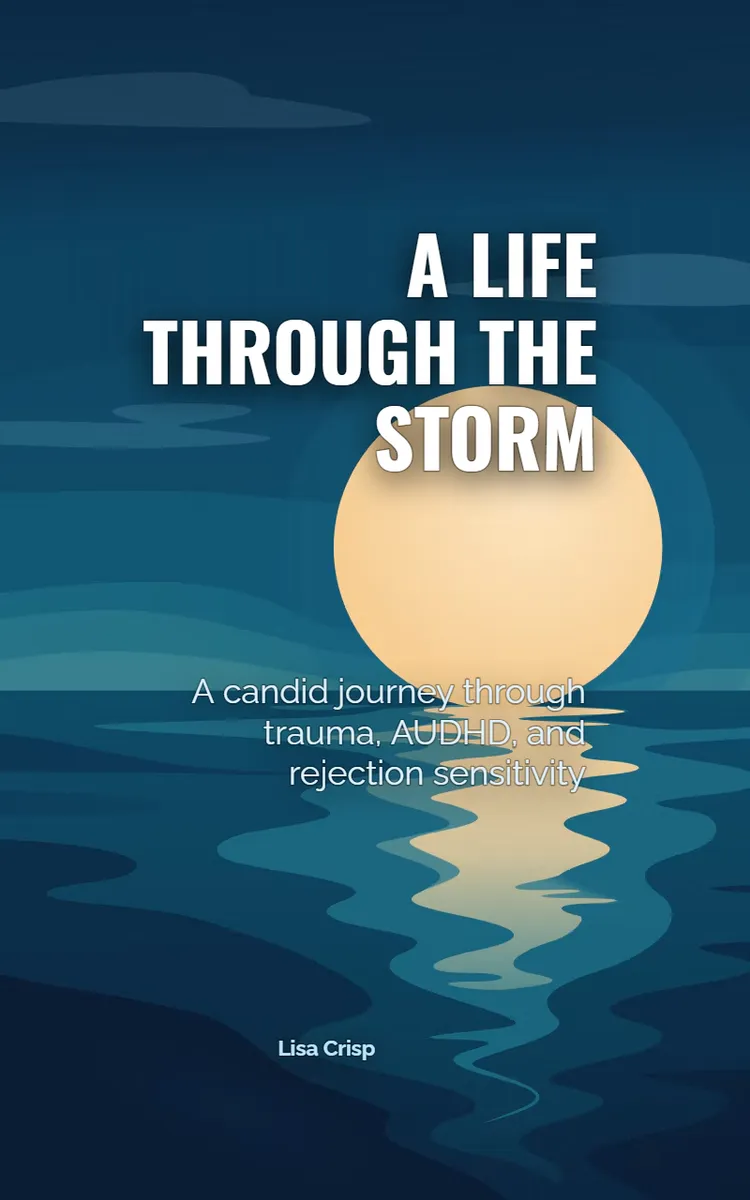
Read the first chapter
The whole of chapter one, free. About 8 min. Turn the pages with the arrows, your keyboard, or a swipe.
Chapter 1
Childhood Under Strain
The cupboard door slammed hard enough to rattle the plates, and I froze with one hand still inside the bread bag.
I was a child, old enough to understand that something was wrong but too young to know what to call it. The house had its own weather. Some days were quiet in a way that made every floorboard sound dangerous. Other days, voices moved through the rooms with a force that made me smaller. I learned to listen before I moved, to measure footsteps, doors, breathing, and the tone of a voice before deciding whether it was safe to ask for anything.
The kitchen smelled of toast and cold grease. The vinyl floor pressed its pattern into my bare feet. I stood there holding the bread, trying to solve the problem in front of me: whether I could make myself something to eat without becoming part of whatever had already begun.
“Put it back,” I was told.
I did not argue. I put the bread away and closed the cupboard carefully, using both hands so it would not make another sound.
That was how I began to understand home. It was not one place with one feeling. It was a place I had to navigate. Safety depended on timing, volume, facial expressions, and things I could not always see. I watched people closely because I had to. I noticed changes in the air before I understood the reason for them. A chair pushed back too sharply. A cup set down with more force than necessary. A silence that lasted too long.
I did not have words for the distress that gathered in me. I did not know that some children found noise, unpredictability, and conflict harder to process than others. I did not know that my attention could scatter while my body remained fixed on every detail around me. I only knew that I was often overwhelmed, often blamed for being difficult, and often unable to explain why ordinary things felt like too much.
When I tried to describe what was happening, the words came out wrong. I might say I was tired when I meant frightened. I might become angry when I meant confused. Sometimes I said nothing because I had already learned that an explanation could sound like an excuse.
The adults around me saw the outside of the problem. They saw a child who was slow to respond, too sensitive, distracted, stubborn, emotional, or unwilling to do what was expected. They did not see the effort it took to remain in the room. They did not see how much energy went into working out what everyone else seemed to understand without being told.
At school, I tried to become easier to manage. I watched other children for instructions I had missed. I copied the way they sat, spoke, and joined in. The classroom had rules, but even those rules could change depending on the teacher’s mood or the noise in the room. The scraping of chairs and the voices rising around me could make it difficult to think. I would stare at my work and feel the answer somewhere beyond reach.
“Why haven’t you finished?”
I remember the question more than any particular worksheet. It carried disappointment before I had a chance to speak.
“I don’t know,” I said.
That answer was true, but it never helped. I did not know why I could understand something one day and lose hold of it the next. I did not know why being corrected could make my face burn and my thoughts disappear. I did not know why a small sign of disapproval could stay with me for hours, sometimes days. I only knew that rejection hurt with a force that seemed out of proportion to the event, and I became skilled at hiding how much it hurt.
At home, there was nowhere to put that feeling down.
I looked for places where the rules seemed simpler. The nearby neighborhood gave me one of those places. It was not a perfect refuge, and it did not erase what happened at home. It was simply somewhere I could be outside the pressure of the rooms and their changing moods.
I walked there when I could. The pavement was uneven beneath my shoes, and the air smelled of damp earth, exhaust, and cut grass depending on the season. I knew which routes were quieter and which houses had dogs behind their fences. I knew where I could pause without being questioned. The distance was not far, but it felt like crossing into a different set of expectations.
There were children in the neighborhood, and I wanted to belong with them. I wanted the ease I saw in the way they called to one another, made plans, and moved through the afternoon without studying every face for warning. I stood near them at first, waiting for an invitation I did not know how to request.
“You coming?” someone asked.
I followed.
For a while, that was enough. I ran when they ran. I laughed when they laughed, sometimes because I understood the joke and sometimes because I did not want anyone to notice that I had missed it. The roughness of the pavement came through my shoes. My hands smelled of dust and metal from whatever we climbed or touched. Outside, my body had room to move, and movement helped quiet some of the noise inside me.
But belonging was fragile. I could misread a look or take a joke seriously. I could become too intense, too eager, or too withdrawn. If plans changed without warning, I might not know how to respond. If someone suddenly excluded me, I felt it as a judgment on my entire existence rather than a passing decision made by another child.
“Not you,” someone said once.
There was no explanation. There did not need to be one. I stepped back, pretending it did not matter.
“Fine,” I said.
Then I walked until I was far enough away that no one could see my face.
I carried those moments home with me. I carried them into the kitchen, into the bedroom, into school the next day. A small rejection could become evidence. It told me I was unwanted. It told me I had misjudged the situation again. It told me that safety could disappear without warning and that I was always one mistake away from being put outside the circle.
I did not know the term rejection sensitivity. I did not know that my nervous system might be reacting to more than the immediate moment. I did not know that trauma could train a child to expect danger in ordinary interactions, or that undiagnosed ADHD and autism could make social rules, transitions, sensory overload, and emotional regulation harder to manage. I knew only that I was failing at things other people appeared to do naturally.
At home, I became watchful. I tried to anticipate needs before they were spoken. I kept track of what might cause trouble. I learned to disappear when disappearing was safer than being noticed. At the same time, I could not always control the ways I stood out. My attention wandered. I became absorbed in things that interested me and lost track of time. I struggled with tasks that looked simple from the outside. I could be overwhelmed by noise, by anger, by too many demands arriving at once.
The contradiction confused everyone, including me. I could focus deeply on one thing and fail to begin another. I could remember small details and forget an instruction given minutes earlier. I could appear calm while feeling close to breaking, then react suddenly when I had run out of room inside myself.
The response was usually the same: try harder.
I did try harder. I tried to be quieter, quicker, less sensitive, less needy. I tried to make my face show the right expression and my voice carry the right amount of feeling. I tried to become the kind of child who did not require explanation.
None of it made the home stable. None of it made my mind easier to live in. It only taught me to distrust my own experience.
The neighborhood refuge gave me a temporary answer to a problem I could not name. Outside the house, I could breathe differently. I could walk without listening for every change behind a door. I could sit somewhere with the sun on my skin and let the day pass without trying to predict what would happen next. Even when I was not fully included, being away from home gave me a little distance from the role I had been forced to play there.
That distance mattered. It showed me that the tension was not the whole world, even though it often felt like it was. It showed me that I could experience moments of ease, however brief. It also showed me how quickly ease could be taken away.
I returned home each time.
The front door closed behind me. The familiar smells met me first, followed by the familiar uncertainty. I put my shoes where they belonged and listened. The refuge remained outside, separated from me by a short walk and a house I still had to enter. Whatever comfort I had found did not come with me in any reliable way.
Looking back, I understand that my first idea of belonging was built around endurance. I believed I belonged wherever I could avoid causing trouble, wherever I could copy the expected behavior, wherever I could remain useful or unnoticed. I did not yet believe I could belong simply because I was there.
I also understand that the child I was had been trying to solve an impossible problem. I was attempting to make sense of trauma without language for trauma, and of neurodivergence without anyone recognizing it. I was blamed for reactions that were rooted in fear, overload, confusion, and a desperate need for predictability. I mistook survival strategies for personality flaws.
The neighborhood offered shelter, but not certainty. It gave me somewhere to go, not somewhere to stay. I could find a few quiet minutes beyond the house, feel the pavement under my feet, and imagine that life might be less painful in another place. Then I had to turn back.
I was briefly sheltered, but I was not yet safe. The confusion came home with me, and so did the belief that belonging was something I had to earn.
End of chapter one. 4 more chapters and about 9,368 words in the full book.
Swipe or use the arrows to turn the page
What's inside: 5 chapters
- 1. Childhood Under Strain
- 2. Trying to Fit In
- 3. The Cost of Rejection
- 4. Recognizing AUDHD and Trauma
- 5. Building a Life After Recognition
About this book
"A Life Through The Storm" is a biography book by Lisa Crisp with 5 chapters and approximately 9,368 words. A personal life story shaped by trauma, undiagnosed AUDHD, and rejection sensitivity.
This book was created using Inkfluence AI, an AI-powered book generation platform that helps authors write, design, and publish complete books. It was made with the AI Biography Writer.
Frequently Asked Questions
What is "A Life Through The Storm" about?
A personal life story shaped by trauma, undiagnosed AUDHD, and rejection sensitivity
How many chapters are in "A Life Through The Storm"?
The book contains 5 chapters and approximately 9,368 words. Topics covered include Childhood Under Strain, Trying to Fit In, The Cost of Rejection, Recognizing AUDHD and Trauma, and more.
Who wrote "A Life Through The Storm"?
This book was written by Lisa Crisp and created using Inkfluence AI, an AI book generation platform that helps authors write, design, and publish books.
How can I create a similar biography book?
You can create your own biography book using Inkfluence AI. Describe your idea, choose your style, and the AI writes the full book for you. It's free to start.
Write your own biography book with AI
Describe your idea and Inkfluence writes the whole thing. Free to start.
Start writingCreated with Inkfluence AI


