

Read the first chapter
The whole of chapter one, free. About 3 min. Turn the pages with the arrows, your keyboard, or a swipe.
Chapter 1
Parāoa Rēwena (Māori bread)
Recipe Overview
Parāoa rēwena is a soft, lightly tangy potato bread with a tender crumb and a well-browned crust. This version uses a potato starter, known as a bug, to ferment the dough. Allow time for the starter and dough to develop; the flavour comes from that slow fermentation.
Prep: 30 min | Cook: 45 min | Starter: 24-48 hrs | Total: 2-3 days | Serves: 8 | Difficulty: Medium.
The bug needs to be active before you begin. It should show bubbles and have a fresh, slightly sour smell. If it smells unpleasant or shows mould, discard it and start again. Keep the starter covered loosely rather than sealed tightly, as fermentation produces gas.
Ingredients
250 g peeled potato, cut into small pieces 500 ml water, divided 2 tablespoons plain flour, plus extra for feeding 1 teaspoon sugar 500 g high-grade flour 1 teaspoon salt 2 tablespoons vegetable oil Extra flour for shaping
Making the Potato Bug
Place the potato in a saucepan with 250 ml of the water. Bring to the boil and cook until very soft, about 15 minutes.
Mash the potato with its cooking water until smooth. Cool to lukewarm.
Stir in the plain flour and sugar. Transfer the mixture to a clean bowl or jar and cover loosely.
Leave in a warm place for 24-48 hours, stirring once or twice a day. When bubbles appear and the mixture smells pleasantly sour, the bug is ready.
Feed the bug with 1 tablespoon flour and 1 tablespoon water, then leave it for another 2-4 hours if it needs more activity.
The bug is the foundation of the bread, so check its condition before mixing the dough. A bubbly surface and a gentle sourness are useful signs; a completely flat mixture may need more time.
Mixing, Rising and Baking
Combine the active bug with the remaining 250 ml water, high-grade flour, salt and vegetable oil.
Mix until a rough dough forms. Turn it on to a lightly floured bench and knead for 8-10 minutes, until smooth and elastic.
Place the dough in a lightly oiled bowl. Cover and leave in a warm place for 45-60 minutes, or until noticeably risen.
Knock back the dough gently, shape it into a round loaf and place it on a lined baking tray. Cover and leave for a further 30-45 minutes.
Heat the oven to 200°C.
Bake for 40-45 minutes, until the loaf is deeply golden and sounds hollow when tapped underneath.
Cool on a wire rack for at least 20 minutes before slicing.
Note: If the dough feels sticky, oil your hands rather than adding a large amount of flour. Extra flour can make the loaf heavy and reduce its softness.
Chef Notes and Serving
A warm kitchen will speed fermentation, while a cool kitchen will slow it. Watch the dough rather than relying only on the clock. It should rise visibly, but it does not need to double exactly. If the top browns too quickly, cover it loosely with foil for the final part of baking.
Slice parāoa rēwena once it has cooled enough to hold its shape. Serve it fresh with butter, or use it for toast the next day. For the best crust, cool the loaf uncovered on a wire rack; covering it while hot can soften the surface.
Pro Tip: Keep a small portion of the bug after feeding and refresh it with flour and water for your next loaf. Label it with the date and store it in the refrigerator once active, bringing it back to room temperature before baking.
Quick Version
Cook and mash the potato, mix it with flour and sugar, and ferment it for 24-48 hours. Combine the active bug with flour, water, salt and oil; knead, rise, shape, rise again and bake at 200°C for 40-45 minutes.
End of chapter one. 19 more chapters in the full book.
Swipe or use the arrows to turn the page
What's inside: 20 chapters
- 1. Parāoa Rēwena (Māori bread)
- 2. Parāoa Parai (fried bread)
- 3. Doughboys (Māori dumplings)
- 4. Māori Stuffing
- 5. Traditional in the Ground Hāngī
- 6. Oven and Stovetop Hāngī
- 7. Classic Māori boil-up
- 8. Watercress and potato soup
- 9. Fish Head Vegetable Soup
- 10. Fish Head and Watercress Soup
- 11. Creamy pāua soup
- 12. Pāua fritters
- 13. Whitebait fritters
- 14. Simple baked fish heads
- 15. Boiled Fish Heads in Coconut Cream and Lemon
- 16. Smoked eel on rēwena toast
- 17. Kina (sea egg), served fresh
- 18. Corned beef with pūhā and kūmara
- 19. Wild pork and kūmara stew
- 20. Rēwena bread pudding with golden syrup
About this book
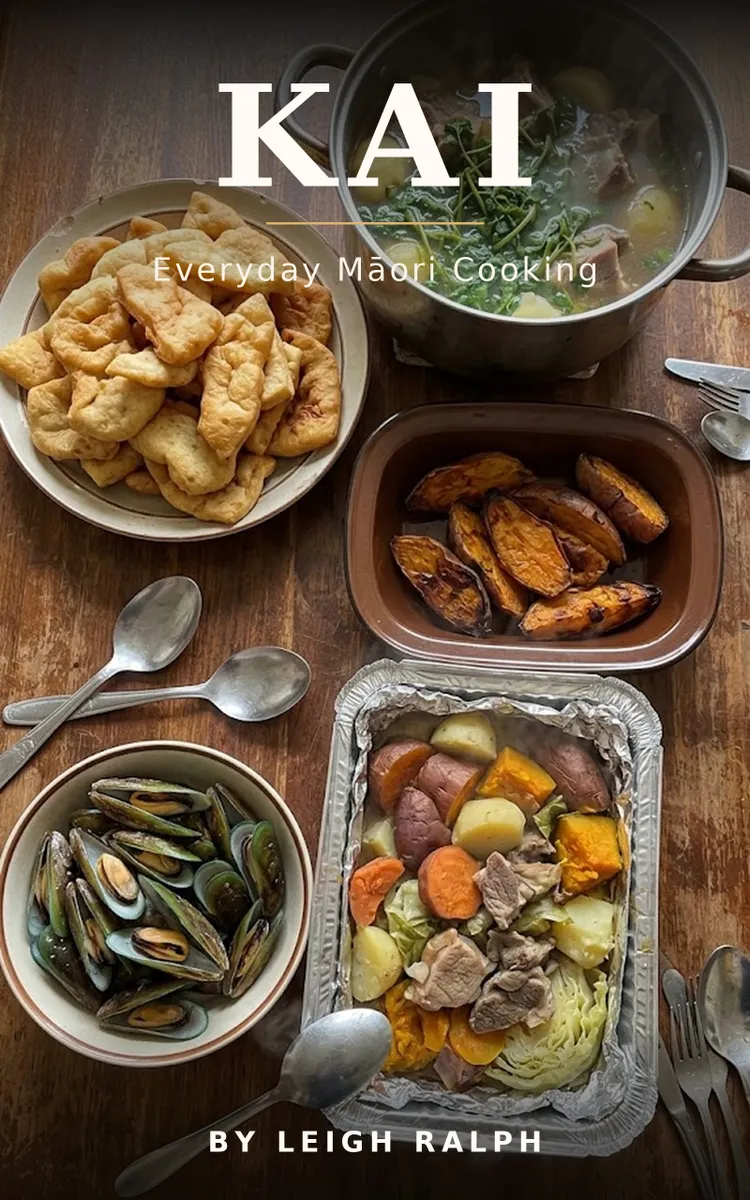
"Kai" is a cookbook by Leigh Ralph with 20 chapters and approximately 18,784 words. Kai is a collection of twenty everyday Māori recipes, written for New Zealand home cooks. Inside you'll find the food that actually turns up on Kiwi tables — rēwena bread and fried bread, doughboys, boil-up with pūhā and pork bones, hāngī done both in the ground and in the oven, pāua and whitebait fritters, fish head soup, kina, and rēwena bread pudding to finish.
This book was created using Inkfluence AI, an AI-powered book generation platform that helps authors write, design, and publish complete books. It was made with the AI Cookbook Generator.
Frequently Asked Questions
What is "Kai" about?
Kai is a collection of twenty everyday Māori recipes, written for New Zealand home cooks. Inside you'll find the food that actually turns up on Kiwi tables — rēwena bread and fried bread, doughboys, boil-up with pūhā and pork bones, hāngī done both in the ground and in the oven, pāua and whitebait fritters, fish head soup, kina, and rēwena bread pudding to finish. Every recipe uses metric measurements, ingredients you can buy locally, and correct te reo Māori names with macrons. No fuss, no restaurant styling — just good kai, written down properly.
How many chapters are in "Kai"?
The book contains 20 chapters and approximately 18,784 words. Topics covered include Parāoa Rēwena (Māori bread), Parāoa Parai (fried bread), Doughboys (Māori dumplings), Māori Stuffing, and more.
Who wrote "Kai"?
This book was written by Leigh Ralph and created using Inkfluence AI, an AI book generation platform that helps authors write, design, and publish books.
How can I create a similar cookbook?
You can create your own cookbook using Inkfluence AI. Describe your idea, choose your style, and the AI writes the full book for you. It's free to start.
Write your own cookbook with AI
Describe your idea and Inkfluence writes the whole thing. Free to start.
Start writingCreated with Inkfluence AI


