
Read the first chapter
The whole of chapter one, free. About 4 min. Turn the pages with the arrows, your keyboard, or a swipe.
Chapter 1
Spaghetti alla Carbonara Off-Heat Toss
At a Glance
Prep: 10 min | Cook: 15 min | Total: 25 min | Serves: 2 | Difficulty: Medium.
Introduction
Spaghetti alla carbonara should taste deeply savory, peppery, and rich, with a sauce that clings to every strand without becoming scrambled egg. The Roman method depends on four main ingredients - guanciale, egg yolks, Pecorino Romano, and black pepper - plus the starchy water released by the pasta.
The key technique is an off-heat toss. The hot spaghetti gently warms the egg-and-cheese mixture while pasta water loosens it into a smooth emulsion. Cooked correctly, the guanciale is crisp at the edges, the sauce is glossy, and the Pecorino gives a clean, salty bite. There is no cream in this Rome-style preparation; the silkiness comes from temperature control and starch.
Ingredients
• 200 grams spaghetti, preferably bronze-die pasta - 100 grams guanciale, cut into small batons - 3 large egg yolks - 50 grams finely grated real Pecorino Romano, plus extra for serving - 1 teaspoon freshly ground black pepper, divided - 2 liters water - 20 grams salt for the pasta water
Instructions
1. Cut the guanciale into batons about 5 millimeters thick. Finely grate the Pecorino Romano and separate the egg yolks. Bring 2 liters of water to a boil in a large pot. The preparation takes about 10 minutes, and having everything ready matters because the final toss moves quickly.
2. Add the salt to the boiling water, then add the spaghetti. Stir during the first minute so the strands do not stick. Cook the pasta for 1 minute under the package’s al dente time. For a 9-minute spaghetti, begin checking at 8 minutes. The center should still offer a firm, noticeable bite.
3. While the pasta cooks, place the guanciale in a cold skillet. Set the pan over medium-low heat and cook for 7 to 9 minutes, turning occasionally, until the fat has rendered and the edges are golden and crisp. Keep the rendered fat in the pan. Remove the skillet from the heat if the guanciale browns before the pasta is ready.
4. In a bowl, whisk the egg yolks, grated Pecorino, and half of the black pepper until a thick paste forms. Add 2 tablespoons of hot pasta water and whisk again. This small amount of water starts loosening the cheese before it meets the spaghetti.
Pro Tip: Egg yolks can seize when exposed to intense heat. Keep the egg-and-cheese bowl away from the stove, and never pour the mixture into a screaming-hot pan.
5. Reserve at least 250 milliliters of pasta water, then drain the spaghetti. Do not rinse it. Add the hot pasta directly to the skillet with the guanciale and rendered fat. Toss over low heat for about 30 seconds so the strands are coated, then remove the skillet completely from the burner.
6. Wait 20 to 30 seconds, then add the egg-and-Pecorino mixture to the off-heat spaghetti. Toss continuously with tongs for 1 minute. Add reserved pasta water 1 tablespoon at a time until the sauce becomes glossy and fluid. The strands should be coated, not swimming, and the guanciale should remain distributed throughout.
7. Taste immediately. Add the remaining black pepper and, if needed, a small pinch of Pecorino. If the sauce looks thick or clumpy, toss in another tablespoon of hot pasta water. If it looks too loose, keep tossing for 15 to 20 seconds; the cheese and starch will tighten it.
8. Divide the carbonara between warm bowls and finish with extra Pecorino and black pepper. Serve at once, while the sauce is still silky. The entire cooking stage takes about 15 minutes, but the final texture is best within the first few minutes after plating.
Chef Notes & Variations
Carbonara is best served immediately and does not reheat well. As it cools, the egg and cheese sauce firms up, and reheating can turn it grainy. For clean plating, use tongs to lift and twist each portion into a nest, then spoon the crisp guanciale over the top. The rendered guanciale fat is part of the sauce, so do not discard it unless an unusually large amount has collected.
Use real Pecorino Romano rather than pre-grated cheese, which may contain anti-caking agents and melt poorly. Bronze-die pasta has a slightly rough surface that holds the sauce better than very smooth pasta. If guanciale is unavailable, pancetta is the closest practical substitute, though its flavor is milder and usually less peppery. Bacon can be used in a pinch, but it gives the dish a smoky character that is not traditional.
Swap It: Replace guanciale with pancetta in the same quantity, and reduce added salt only if the pancetta is especially salty. Keep the off-heat method unchanged.
For further regional background and full detailed recipes, consult GialloZafferano or TasteAtlas. The essential Roman lesson remains simple: cook the pasta just under al dente, finish it with starchy water, and let gentle residual heat - not direct flame - make the sauce.
Quick Version
Render 100 grams guanciale from a cold skillet; cook 200 grams bronze-die spaghetti 1 minute under al dente and reserve pasta water. Whisk 3 yolks with 50 grams Pecorino and pepper, toss the drained pasta with guanciale, remove from heat, add the yolk mixture, and loosen with starchy water until glossy. Serve immediately with more Pecorino and pepper.
End of chapter one. 9 more chapters and about 10,519 words in the full book.
Swipe or use the arrows to turn the page


What's inside: 10 chapters
- 1. Spaghetti alla Carbonara Off-Heat Toss
- 2. Bucatini all’Amatriciana with Chili Heat
- 3. Gricia Without Tomato, All Pepper
- 4. Cacio e Pepe Creamy Pepper Sauce
- 5. Penne all’Arrabbiata with Garlic Chili
- 6. Tagliatelle al Ragù with Slow Simmer
- 7. Lasagne alla Bolognese Layered Perfection
- 8. Tortellini in Brodo with Clear Broth
- 9. Gramigna alla Salsiccia Sausage Ragù
- 10. Trofie al Pesto with Potatoes & Beans
About this book
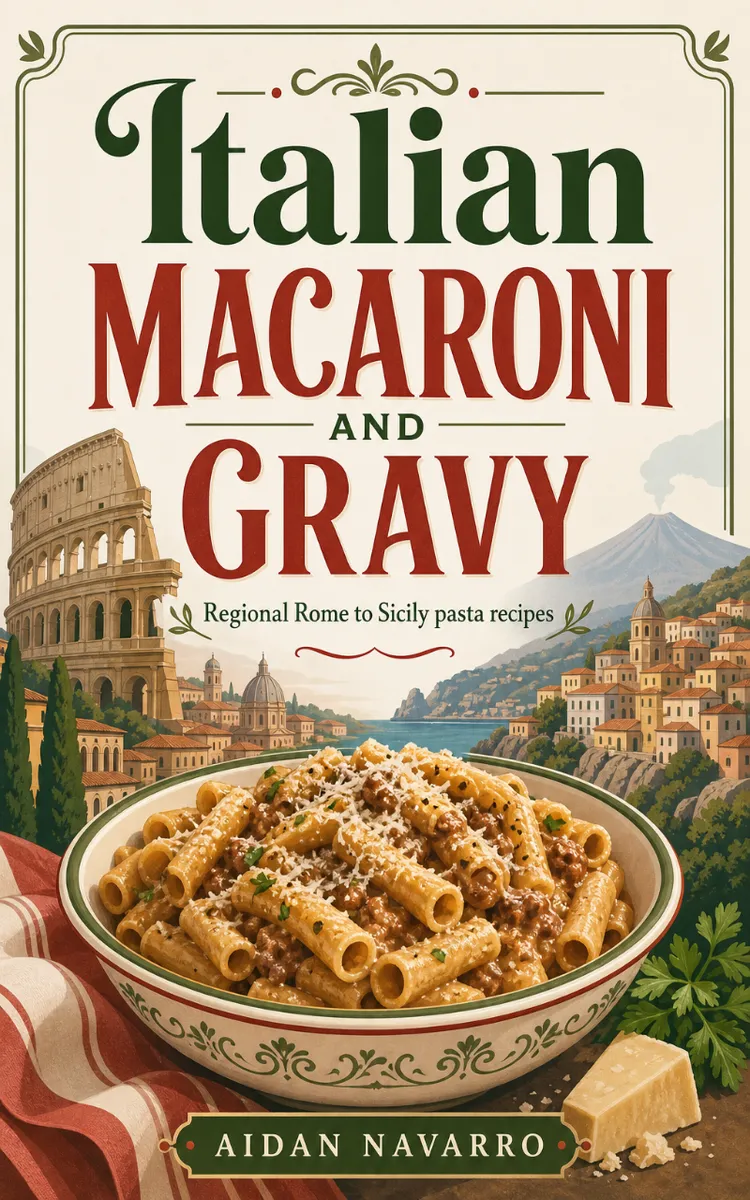
"Italian Macaroni And Gravy" is a cookbook by Aidan Navarro with 10 chapters and approximately 10,519 words. Regional Italian pasta recipes with guanciale, ragù, pesto.
This book was created using Inkfluence AI, an AI-powered book generation platform that helps authors write, design, and publish complete books. It was made with the AI Cookbook Generator.
Frequently Asked Questions
What is "Italian Macaroni And Gravy" about?
Regional Italian pasta recipes with guanciale, ragù, pesto
How many chapters are in "Italian Macaroni And Gravy"?
The book contains 10 chapters and approximately 10,519 words. Topics covered include Spaghetti alla Carbonara Off-Heat Toss, Bucatini all’Amatriciana with Chili Heat, Gricia Without Tomato, All Pepper, Cacio e Pepe Creamy Pepper Sauce, and more.
Who wrote "Italian Macaroni And Gravy"?
This book was written by Aidan Navarro and created using Inkfluence AI, an AI book generation platform that helps authors write, design, and publish books.
How can I create a similar cookbook?
You can create your own cookbook using Inkfluence AI. Describe your idea, choose your style, and the AI writes the full book for you. It's free to start.
Write your own cookbook with AI
Describe your idea and Inkfluence writes the whole thing. Free to start.
Start writingCreated with Inkfluence AI


