
Read chapter 5
The whole of chapter five, free. About 3 min. Turn the pages with the arrows, your keyboard, or a swipe.
Chapter 5
God’s Rottweiler Was a Cat Man
The most famous cat lover in modern Church history was also its most feared doctrinal enforcer.
For nearly a quarter century, Cardinal Joseph Ratzinger led the Congregation for the Doctrine of the Faith, the office charged with guarding Catholic teaching. The press called him God’s Rottweiler. Those who knew him tell a different story, and a good part of it involves cats.
As a young theology professor in Tübingen in the late 1960s, according to his brother Georg, he was visited daily by a local cat that accompanied him to lectures and to Mass so faithfully that neighbors assumed he had trained it. In Rome, as a cardinal, he was known for greeting and feeding the strays near his residence. Cardinal Tarcisio Bertone, later his Secretary of State, recalled that Ratzinger would stop and talk to every cat he met, sometimes at length. On one occasion, Bertone said, around ten cats followed him all the way into the Vatican, and a Swiss Guard remarked that the cats were invading the Holy See. Bertone admitted he never worked out what language the cardinal used with them. He guessed it might be a Bavarian dialect.
The cat most associated with him, Chico, was not technically his. Chico was a large red tabby belonging to the neighbors who looked after the Ratzinger family home in Pentling, Bavaria, the house where he had hoped to retire. Whenever the cardinal came home on holiday, Chico would come in and settle on his lap while he played the piano. In 2008 the Italian author Jeanne Perego made Chico the narrator of an illustrated children’s book, Joseph and Chico: The Life of Pope Benedict XVI as Told by a Cat. Its introduction, by the pope’s secretary Georg Gänswein, explained simply that the pope loved cats and all animals because they are creatures of God.
After his resignation in 2013, Benedict spent his last years in the Mater Ecclesiae monastery in the Vatican Gardens, where the resident cats came calling. Two in particular, a black and white female called Contessina and a gray and white cat called Zorro, were photographed with him and visited often.
There is something quietly instructive here. The man whose job was to say, with precision, what the Church believes, and to say no when necessary, was by every account most at ease among animals that recognize no authority but their own. He apparently felt no tension between the two. Perhaps he understood that doctrine and tenderness are not opposites, and that a mind trained on the order of creation might be especially delighted by its most independent members.
The Church’s art had understood this long before. Federico Barocci painted his Madonna del Gatto, the Madonna of the Cat, around 1575: the Holy Family in a humble domestic scene, while the young John the Baptist holds a goldfinch, a bird that in Christian art foreshadows the Passion, just out of reach of a cat nursing her kittens. Leonardo da Vinci filled sheets with studies of the Christ Child wrestling with a cat. An old Italian folk tale holds that on the night Christ was born, a cat in the same stable gave birth to her own litter. None of this is doctrine. All of it is evidence that the Catholic imagination has long been comfortable letting a cat wander into the holiest of scenes.
End of chapter five. 9 more chapters and about 8,193 words in the full book.
Swipe or use the arrows to turn the page


What's inside: 14 chapters
- 1. Before the Cathedral: When Cats Were Gods
- 2. A Pope, a Toad, and a Statue of a Cat
- 3. Pangur Bán and the Cloister
- 4. The Saint the People Chose
- 5. God’s Rottweiler Was a Cat Man
- 6. What the Church Teaches About Creatures
- 7. Grace Runs the Other Way
- 8. The Liturgy of the Food Bowl
- 9. Non Serviam
- 10. The Unknowable Companion
- 11. The Little Way and the Litter Box
- 12. The Last Things
- 13. A Blessing for the House
- 14. A Note on Sources
About this book
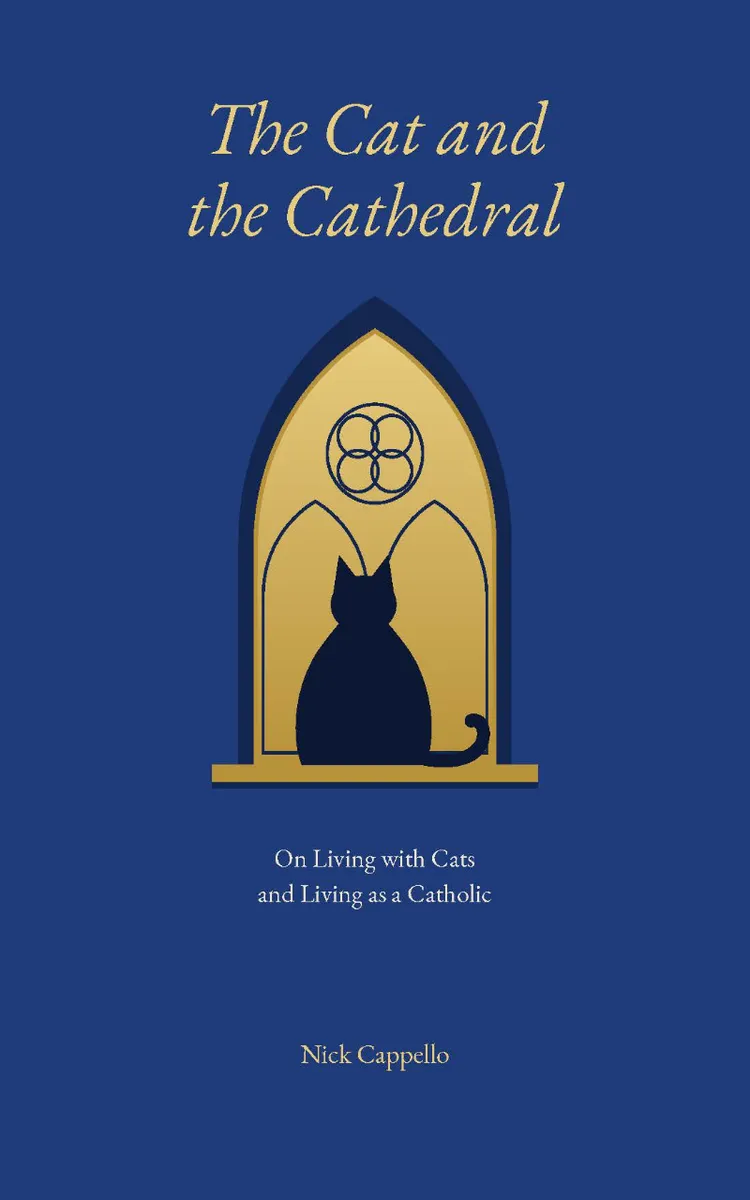
"The Cat and the Cathedral" is a inspirational book by Nick Cappello with 14 chapters and approximately 8,193 words. It covers key insights and practical takeaways on the topic.
This book was created using Inkfluence AI, an AI-powered book generation platform that helps authors write, design, and publish complete books. It was made with the AI Inspirational Book Writer.
Frequently Asked Questions
What is "The Cat and the Cathedral" about?
"The Cat and the Cathedral" is a inspirational book by Nick Cappello covering key insights and practical takeaways on the topic.
How many chapters are in "The Cat and the Cathedral"?
The book contains 14 chapters and approximately 8,193 words. Topics covered include Before the Cathedral: When Cats Were Gods, A Pope, a Toad, and a Statue of a Cat, Pangur Bán and the Cloister, The Saint the People Chose, and more.
Who wrote "The Cat and the Cathedral"?
This book was written by Nick Cappello and created using Inkfluence AI, an AI book generation platform that helps authors write, design, and publish books.
How can I create a similar inspirational book?
You can create your own inspirational book using Inkfluence AI. Describe your idea, choose your style, and the AI writes the full book for you. It's free to start.
Write your own inspirational book with AI
Describe your idea and Inkfluence writes the whole thing. Free to start.
Start writingCreated with Inkfluence AI


