

Read the first chapter
The whole of chapter one, free. About 7 min. Turn the pages with the arrows, your keyboard, or a swipe.
Chapter 1
Receiving Grace Without Hiding
The Shame That Keeps the Door Closed
A man in recovery once described his first honest confession as feeling like setting a heavy bag on the floor after carrying it for years. He had rehearsed explanations, softened details, and blamed circumstances. Then he finally said, “I chose it. I hurt people. I need help.” Nothing magical happened in the room. But something real changed: he stopped hiding.
That is the first struggle this chapter addresses - believing your sin, addiction, or relapse makes you unacceptable to God and unsafe with people. Shame says, “Hide until you can look respectable.” Grace says, “Come into the light so healing can begin.” Scripture gives us both truth and welcome: “If we confess our sins, he is faithful and just to forgive us our sins, and to cleanse us from all unrighteousness” (1 John 1:9).
Jesus shows this welcome through the prodigal son. The son “came to himself,” admitted, “I have sinned against heaven, and before thee,” and started home (Luke 15:17-20). He didn’t return with a polished record. He returned with the truth. The father saw him “a great way off,” ran to him, embraced him, and restored him (Luke 15:20-24). The father’s mercy was not payment for improved behavior. It was unearned love meeting honest repentance.
• You’re Ready for This If... - You’re tired of explaining away what happened. - You can name one truth you’ve been avoiding. - You want forgiveness more than you want to protect your image. - You’re willing to tell one safe, mature person where you need help. - You’ve confused feeling ashamed with being beyond grace.
Stop Rehearsing Your Defense
Most People Do This: When someone asks how recovery is going, they give a technically true answer that hides the important part. “I’m doing fine.” “It was just a rough week.” “I’m not using, so everything’s okay.” The words may not be completely false, but they keep the door closed.
Try This Instead: Use a short, honest confession that includes the behavior, the impact, and the next needed step. “I lied to my spouse about money. It damaged trust. I need to tell my accountability partner and make a plan for the debt.” That kind of honesty is not self-destruction. It is a doorway.
The prodigal son did not present a case for why he deserved another chance. He said, “I am no more worthy to be called thy son” (Luke 15:19). Notice what he did not say: “My friends pressured me,” “I was stressed,” or “At least I’m better than some people.” His confession was clear. Yet the father’s response was not a lecture at the gate. It was compassion, clothing, a ring, and a feast.
Grace does not pretend the damage never happened. The father didn’t call the son’s choices harmless. Biblical mercy tells the truth and still offers a way home. “There is therefore now no condemnation to them which are in Christ Jesus” (Romans 8:1). Conviction points to a specific sin and leads us toward God. Shame attacks our whole identity and tells us to disappear. When you confess, you stop letting shame speak for you.
The Open Door Return: A Daily Practice
The Open Door Return is a simple rhythm: come to God honestly, bring the truth into safe community, and take the next obedient step. It does not require a dramatic speech. It requires repeated returns. “Draw nigh to God, and he will draw nigh to you” (James 4:8).
| Time | Micro-action | Time estimate | |---|---|---:| | Morning | Read Luke 15:17-24 slowly. Write one sentence beginning, “Father, today I need to stop hiding…” Then pray Psalm 51:10: “Create in me a clean heart, O God.” | 7 minutes | | Midday | Pause before lunch or during a work break. Ask, “What am I minimizing, defending, or keeping secret today?” Send one honest text to your accountability person if needed. | 3-5 minutes | | Evening | Review the day without excuses or insults. Name one honest confession, one evidence of grace, and one repair step for tomorrow. End with Romans 8:1. | 8-10 minutes |
Morning confession is not a demand to feel terrible before God will listen. It is an invitation to begin in reality. Midday honesty catches the small evasions before they grow. A hidden purchase, a resentful message, or a fantasy you keep feeding may seem minor, but bringing it into the light early is wise. “He that covereth his sins shall not prosper: but whoso confesseth and forsaketh them shall have mercy” (Proverbs 28:13).
Evening review should be specific. Don’t write, “I was bad today.” Write, “I avoided my spouse’s question about the bank account,” or, “I wanted to use after the argument, but I called my sponsor instead.” Then receive God’s mercy. Lamentations 3:22-23 says His mercies “are new every morning.” You are not earning tomorrow’s mercy by having a perfect evening. You are learning to return through the Open Door.
When Honesty Changes the Whole House
Before: A person in early recovery misses a meeting and then avoids the people who may ask about it. At home, a loved one notices the distance and asks a simple question. The person answers, “Nothing’s wrong,” while privately feeling exposed and afraid. The missed meeting becomes a secret. The secret creates tension. The tension creates more isolation.
The Change: Before the day ends, the person prays Psalm 139:23-24 - “Search me, O God, and know my heart” - and names the truth: “I skipped because I was angry and wanted to prove I could manage alone.” Then comes a direct message to a trusted recovery leader: “I missed tonight. I’m not in danger right now, but I’m pulling away. Can we talk tomorrow?” At home, the person says, “I wasn’t honest earlier. I’m struggling, and I need support.”
After: The missed meeting still happened. Grace did not erase the choice. But hiding stopped at one day instead of becoming a week. The recovery leader helps make a concrete plan. The loved one no longer has to guess what is happening. Trust begins to grow - not because promises were made, but because truth became visible and action followed.
This is what confession can do. It reconnects you to God and to people who can help you walk wisely. James 5:16 says, “Confess your faults one to another, and pray one for another, that ye may be healed.” Confession is not telling every detail to every person. It is choosing safe, trustworthy people and refusing to let secrecy run the house.
The father in Luke 15 restored his son to relationship, but the son still had to live differently once he came home. Grace gave him belonging. Belonging gave him a place from which to change.
Questions for the Return
1. What specific truth am I currently hiding, minimizing, or explaining away? Be concrete. “I’m struggling” may become, “I have been checking the old contact’s social media every night and fantasizing about using.”
2. What has my secrecy cost me or someone I love? Honest reflection may include lost trust, unpaid bills, missed work, emotional distance, or the exhaustion of keeping two stories alive.
3. What do I believe God will do if I tell Him the whole truth? Write the fear first, then compare it with Scripture. Psalm 103:12 says God removes our transgressions “as far as the east is from the west.”
4. Who is one safe person who needs to know what is really happening? Choose someone mature, trustworthy, and able to respond wisely - not someone who will help you hide or explode in anger. Consider a pastor, sponsor, recovery leader, or trusted family member.
5. What repair step belongs with my confession? Repentance turns toward a changed direction. That step might be returning money, correcting a lie, attending the next meeting, blocking a contact, or asking for help before the craving becomes urgent.
These questions are not a test you pass. They are a way to keep returning. David prayed, “Wash me throughly from mine iniquity, and cleanse me from my sin” (Psalm 51:2). He did not ask God to make the record look better. He asked God to make him clean.
Take the First Step Through the Open Door
Right now, set a timer for 10 minutes. This is Easy, though it may feel emotionally uncomfortable. Read Luke 15:17-24. Then write one sentence: “The truth I need to bring into the light is…” Finish it without defending yourself. Pray, “Lord Jesus, I am coming home with the truth. Have mercy on me and show me my next faithful step.”
You’ll know it’s working when your sentence becomes specific, when your prayer sounds less like a performance, and when you can identify one safe person to contact. Send that person a message before the timer ends: “I need to be honest about something, and I’d like to talk today.”
The road to freedom does not begin with pretending you have never wandered. It begins when you turn toward the Father, leave the rehearsed defense behind, and walk through the open door of grace.
End of chapter one. 7 more chapters and about 12,907 words in the full book.
Swipe or use the arrows to turn the page


What's inside: 8 chapters
- 1. Receiving Grace Without Hiding
- 2. Practicing Daily Dependence
- 3. Telling the Truth in Community
- 4. Renewing the Mind Under Pressure
- 5. Repairing What Can Be Restored
- 6. Meeting Setbacks With Courage
- 7. Discovering Purpose Beyond Survival
- 8. Finishing the Course Faithfully
About this book
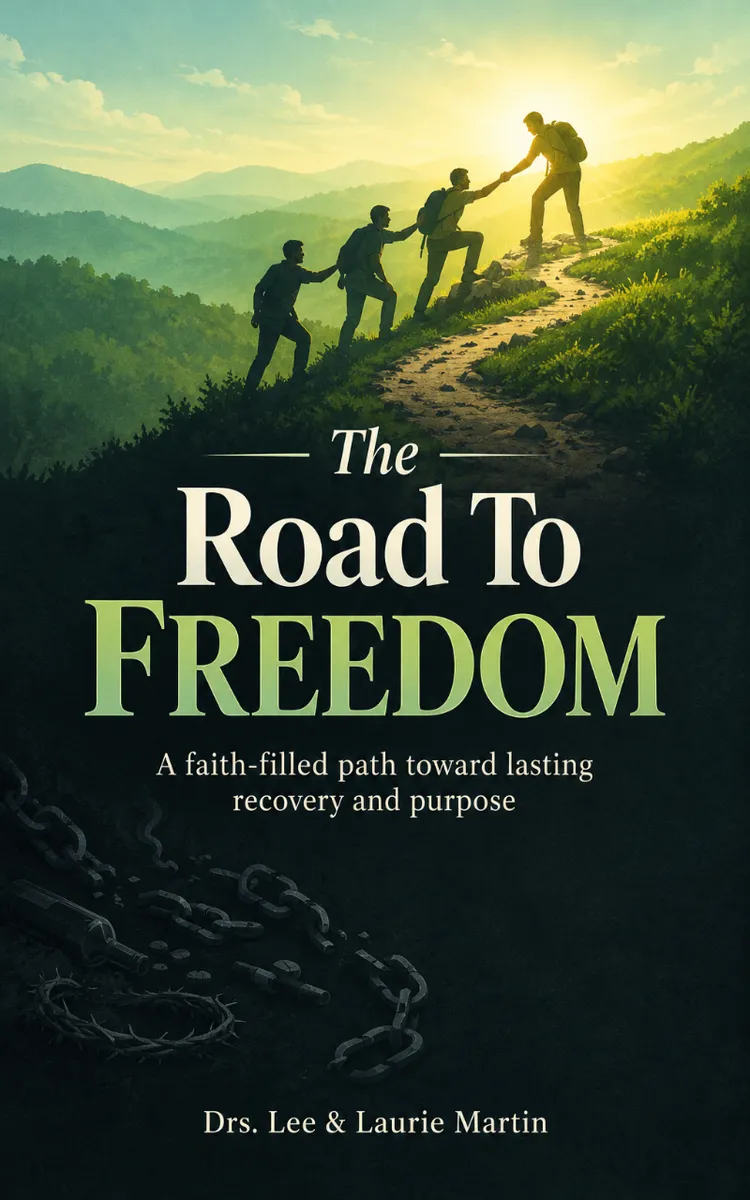
"The Road To Freedom" is a inspirational book by Drs. Lee & Laurie Martin with 8 chapters and approximately 12,907 words. Biblical encouragement for people pursuing freedom and faithfulness in addiction recovery.
This book was created using Inkfluence AI, an AI-powered book generation platform that helps authors write, design, and publish complete books. It was made with the AI Inspirational Book Writer.
Frequently Asked Questions
What is "The Road To Freedom" about?
Biblical encouragement for people pursuing freedom and faithfulness in addiction recovery
How many chapters are in "The Road To Freedom"?
The book contains 8 chapters and approximately 12,907 words. Topics covered include Receiving Grace Without Hiding, Practicing Daily Dependence, Telling the Truth in Community, Renewing the Mind Under Pressure, and more.
Who wrote "The Road To Freedom"?
This book was written by Drs. Lee & Laurie Martin and created using Inkfluence AI, an AI book generation platform that helps authors write, design, and publish books.
How can I create a similar inspirational book?
You can create your own inspirational book using Inkfluence AI. Describe your idea, choose your style, and the AI writes the full book for you. It's free to start.
Write your own inspirational book with AI
Describe your idea and Inkfluence writes the whole thing. Free to start.
Start writingCreated with Inkfluence AI


