

Read the first chapter
The whole of chapter one, free. About 10 min. Turn the pages with the arrows, your keyboard, or a swipe.
Chapter 1
Spirit in Israel’s Scriptures
The Breath of God: Meaning, Scope, and Purpose
When Genesis says that “the Spirit of God was hovering over the face of the waters” (Genesis 1:2), it introduces more than a force or religious feeling. The Hebrew word is ruach, a word that can mean wind, breath, or spirit. Its meaning depends on context, but its central image is movement: air that cannot be held, breath that sustains life, and God’s active presence accomplishing his purpose.
The earlier biblical story of God’s work must therefore be read with attention to the Spirit. Israel’s Scriptures do not present the Spirit as a late addition to Christian theology. They show the Spirit active in creation, empowering prophets, equipping kings, and sustaining hope for a renewed covenant people. These roles are distinct, but they belong together. The Spirit brings order to creation, truth to God’s people, faithful leadership to Israel, and life to those who cannot restore themselves.
This matters for the early Church because the apostles interpreted Jesus’ ministry and the Church’s spiritual gifts through these Scriptures. Pentecost was not an isolated religious event. It was presented as the fulfillment of prophetic hope (Acts 2:16-21; Joel 2:28-32). Learning how ruach functions in Israel’s Scriptures helps us distinguish biblical continuity from careless claims that every spiritual experience has the same meaning.
Learning Objectives
• Define ruach and distinguish its meanings by context. - Trace the Spirit’s work in creation, prophecy, kingship, and covenant hope. - Read key passages according to their historical and literary purposes.
A useful starting definition is ruach - “wind,” “breath,” or “spirit,” especially God’s life-giving and empowering presence when the context is theological. The word does not always mean the Holy Spirit. In Exodus 10:13, ruach refers to a wind sent by God to bring locusts. In Genesis 45:27, Jacob’s spirit revives when he hears that Joseph is alive. In other passages, ruach refers directly to God’s Spirit, as in Psalm 51:11: “Take not your Holy Spirit from me.”
The immediate context decides the meaning. Ask three questions: What is the noun describing? Who sends or controls it? What result does it produce? If the answer involves physical movement, ruach may mean wind. If it describes human vitality or inner disposition, it may mean spirit. If it comes from God and equips, reveals, renews, or gives life, it points to God’s Spirit.
The biblical text also uses related language. Breath - the life-giving capacity by which living creatures live - appears in Genesis 2:7, where God breathes into Adam’s nostrils “the breath of life.” Spirit - God’s active presence and power at work in creation and redemption - is not merely an impersonal energy. The Spirit acts according to God’s will, searches, speaks, gives wisdom, and can be grieved (Isaiah 63:10; Ezekiel 36:27; 1 Corinthians 2:10-11; Ephesians 4:30).
Creation: The Spirit Brings Order and Life
Genesis 1:2 places the Spirit at the beginning of the creation account: “The Spirit of God was hovering over the face of the waters.” The Hebrew phrase can also be translated “a wind from God” or “the divine wind,” but the larger biblical witness supports seeing God’s personal, life-giving presence here. The verse presents an unformed and empty world, darkness over the deep, and God’s Spirit moving over the waters. God then speaks, separates, names, blesses, and fills.
The literary purpose is important. Genesis 1 does not offer a scientific sequence in modern terms; it declares that the world is ordered by the one true God rather than by rival deities or chaotic powers. The Spirit’s hovering signals readiness for God’s creative command. The same Spirit appears in Psalm 104:30: “When you send forth your Spirit, they are created, and you renew the face of the ground.” Creation is not only an event in the distant past. God continues to sustain and renew life.
Job 33:4 makes the connection personal: “The Spirit of God has made me, and the breath of the Almighty gives me life.” Creation and human existence are therefore linked. The Spirit who orders the waters also gives life to human beings. This becomes a foundation for later biblical teaching: salvation is not escape from God’s created world but its renewal.
Prophecy: The Spirit Makes God’s Word Known
Prophecy - Spirit-enabled speech that communicates God’s message to a particular people in a particular situation - is more than prediction. Prophets confronted sin, interpreted events, announced judgment, and proclaimed future restoration. Numbers 11:25 describes the Spirit resting on the seventy elders, and they prophesied. Moses then expressed the hope, “Would that all the Lord’s people were prophets, that the Lord would put his Spirit on them!” (Numbers 11:29).
The prophetic books show that the Spirit gives both message and courage. Micah says, “I am filled with power, with the Spirit of the Lord, and with justice and might, to declare to Jacob his transgression” (Micah 3:8). The Spirit’s presence does not make the prophet agreeable; it makes him faithful. Ezekiel repeatedly says that “the Spirit entered into me” and set him on his feet (Ezekiel 2:2; 3:24). The Spirit enables a human messenger to stand before a resistant people.
The literary setting of Ezekiel is Israel’s exile. The nation has lost land, temple, and political independence because of covenant rebellion. The Spirit’s movement in Ezekiel therefore carries a double message: judgment is real, but God has not abandoned his purpose. The prophet is carried, shown, and instructed by the Spirit (Ezekiel 8:3; 11:1, 24). Prophecy is not private inspiration detached from Scripture’s covenant story. It is God’s word addressing Israel’s concrete disobedience and future restoration.
Kingship: The Spirit Equips Leaders for God’s Rule
The Spirit’s role in kingship appears most clearly in the anointing of David. Samuel anoints him, and “the Spirit of the Lord rushed upon David from that day forward” (1 Samuel 16:13). The contrast with Saul is deliberate: “the Spirit of the Lord departed from Saul” (1 Samuel 16:14). These verses do not teach that God’s Spirit is fickle. They show that royal authority is a stewardship under God’s judgment. The king is not autonomous; he must rule as God’s servant.
David’s kingship also reveals the danger of separating public leadership from moral obedience. After his sin with Bathsheba, David prays, “Cast me not away from your presence, and take not your Holy Spirit from me” (Psalm 51:11). Whether the psalm is read directly as David’s prayer or as a later liturgical use of David’s story, its concern is clear: sin threatens the king’s fitness to represent God’s people.
Isaiah 11:1-5 develops the royal hope further. The Spirit of the Lord will rest upon the coming shoot from Jesse, giving him wisdom, understanding, counsel, might, knowledge, and the fear of the Lord. This king will judge not by appearance but with righteousness. The Spirit’s work is therefore ethical and judicial, not merely spectacular. Spirit-filled kingship means wise rule, protection of the vulnerable, and faithfulness to God.
Covenant Hope: The Spirit Will Renew the People
Israel’s deepest crisis was not simply military defeat. It was a broken covenant expressed through idolatry, injustice, and hardened hearts. The prophets therefore promised not only a return from exile but inward renewal. Jeremiah announces a new covenant in which God will write his law on the heart (Jeremiah 31:31-34). Ezekiel makes the Spirit explicit: “I will put my Spirit within you, and you shall live” (Ezekiel 37:14).
The vision of the dry bones in Ezekiel 37 is a powerful worked image of covenant restoration. The bones represent “the whole house of Israel” (37:11), a people who believe their hope is lost. God commands the prophet to speak, the bones come together, breath enters them, and they live. The Hebrew wordplay among breath, wind, and spirit is central. The same divine power that gives life in Genesis now restores a dead nation.
Joel 2:28-29 expands the promise across social boundaries: sons and daughters will prophesy, old men will dream dreams, young men will see visions, and God will pour out his Spirit on servants, both male and female. The promise concerns age, gender, and social status. When Peter quotes this passage at Pentecost, he identifies the Spirit’s outpouring as the beginning of the promised last-days renewal (Acts 2:17-18).
The progression is now visible: the Spirit creates life, speaks God’s truth, equips faithful rule, and renews the covenant people. These are not four unrelated uses of ruach. They describe one divine purpose: God brings his world and people into life-giving order under his righteous rule.
A Worked Reading: Ezekiel 37 and the Spirit of Covenant Renewal
Ezekiel 37 is an especially useful passage because it gathers creation imagery, prophetic speech, and covenant hope into one vision. Its historical setting is the Babylonian exile, probably in the sixth century BC. Its literary setting follows Ezekiel’s promises of restoration, cleansing, a new heart, and a new spirit (Ezekiel 36:24-28). The vision should therefore be read as a message about Israel’s restoration, while also recognizing how later Scripture applies its life-giving imagery more broadly.
1. Identify the problem stated in the passage. The bones say, “Our bones are dried up, and our hope is lost” (Ezekiel 37:11). The problem is not merely physical death. It is national collapse and covenant despair. Israel has been judged, scattered, and stripped of visible signs of security.
2. Observe the prophet’s assigned role. God asks, “Can these bones live?” Ezekiel answers cautiously, “O Lord God, you know” (37:3). He is then commanded to prophesy to the bones (37:4). The prophet does not create life by personal power. He speaks because God commands him to speak.
3. Track the first stage of restoration. The bones come together, and sinews, flesh, and skin appear (37:7-8). Yet there is still no breath. This detail prevents a shallow reading. External reconstruction is not the same as living restoration. A nation may regain structure and still lack spiritual life.
4. **Examine the wordplay around ruach.** God commands Ezekiel to prophesy to the breath and say, “Come from the four winds, O breath, and breathe upon these slain” (37:9). The same Hebrew term can evoke wind, breath, and Spirit. The text moves from scattered wind to life-giving breath and then explicitly says, “I will put my Spirit within you, and you shall live” (37:14).
5. Connect the vision to covenant promise. God’s purpose is not simply to make dead bodies stand. He says, “You shall know that I am the Lord” (37:13-14). Restoration leads to recognition of God, and recognition of God belongs to covenant relationship. The Spirit produces a people who live under God’s claim.
6. Compare the passage with the New Testament use of prophetic hope. Peter quotes Joel 2 at Pentecost, not Ezekiel 37, but both passages describe eschatological renewal through the Spirit. In Acts 2, the Spirit gives speech to a gathered community. In Ezekiel, the Spirit gives life to a dead people. Both texts show that the Spirit’s work is God-centered, communal, and tied to fulfilled promise.
7. State the interpretive result carefully. The immediate meaning concerns Israel’s restoration from exile. The larger canonical pattern reaches toward the Spirit-filled people seen in Acts. The passage should not be reduced to a promise that every individual circumstance will be revived on demand. Its central claim is that God can restore his covenant people and give life where judgment has produced death.
Final result: Ezekiel 37 presents the Spirit as God’s life-giving power who restores a judged people, fulfills covenant hope, and creates a community capable of knowing and serving the Lord.
Ask yourself why the bones receive structure before breath. The sequence teaches that visible reconstruction, institutional strength, or national recovery cannot substitute for the Spirit’s life. For Christian educators, this distinction is essential when teaching renewal movements: activity and organization may be present without the deep renewal promised by Scripture.
Guided Practice and Answer Key
1. In Genesis 1:2, should ruach be translated “wind,” “breath,” or “Spirit”? What contextual clues support your answer? Hint: Consider the phrase “of God,” the Spirit’s position before God’s creative speech, and Psalm 104:30.
2. Compare Numbers 11:29 with Joel 2:28-29. How does Joel’s promise extend Moses’ desire? Hint: Look at who receives the Spirit and the resulting prophetic activity.
3. Why does Isaiah 11:1-5 connect the Spirit with wisdom, justice, and the fear of the Lord rather than only with signs? Hint: Read the passage as a description of the king’s rule and judgment.
4. In Ezekiel 37, what is the difference between the bones receiving form and receiving breath? Hint: Identify the point at which the restored bodies become a living people.
5. How does Acts 2 help interpret Joel 2 without erasing Joel’s original historical setting? Hint: Distinguish the prophet’s promise to Israel from Peter’s claim that the promise has begun to be fulfilled through Jesus’ exaltation.
Answer Key: In Genesis 1:2, “Spirit” best fits the theological context, though the imagery retains the movement of wind. Numbers 11 expresses Moses’ broad hope, while Joel promises its future fulfillment across age, gender, and social status. Isaiah presents Spirit-filled kingship as righteous and wise government. Ezekiel distinguishes bodily reconstruction from life supplied by the Spirit. Acts 2 treats Pentecost as the beginning of Joel’s last-days outpouring while preserving the promise’s covenant and communal character.
The Hebrew ruach teaches careful reading. God’s Spirit is not a vague religious force but the divine presence who creates, speaks, equips, judges, restores, and gives life. Israel’s Scriptures establish the pattern that the early Church proclaimed: where God renews his people, the Spirit is not peripheral. He is the breath of the new creation and the power by which covenant hope becomes living reality.
End of chapter one. 7 more chapters and about 16,594 words in the full book.
Swipe or use the arrows to turn the page


What's inside: 8 chapters
- 1. Spirit in Israel’s Scriptures
- 2. Jesus and the Promised Spirit
- 3. Pentecost and Apostolic Mission
- 4. Pauline Gifts and Church Order
- 5. Early Christian Spirit Theology
- 6. Discernment, Character, and Experience
- 7. Pentecostal and Charismatic Renewal
- 8. Spirit-Empowered Church Today
About this book
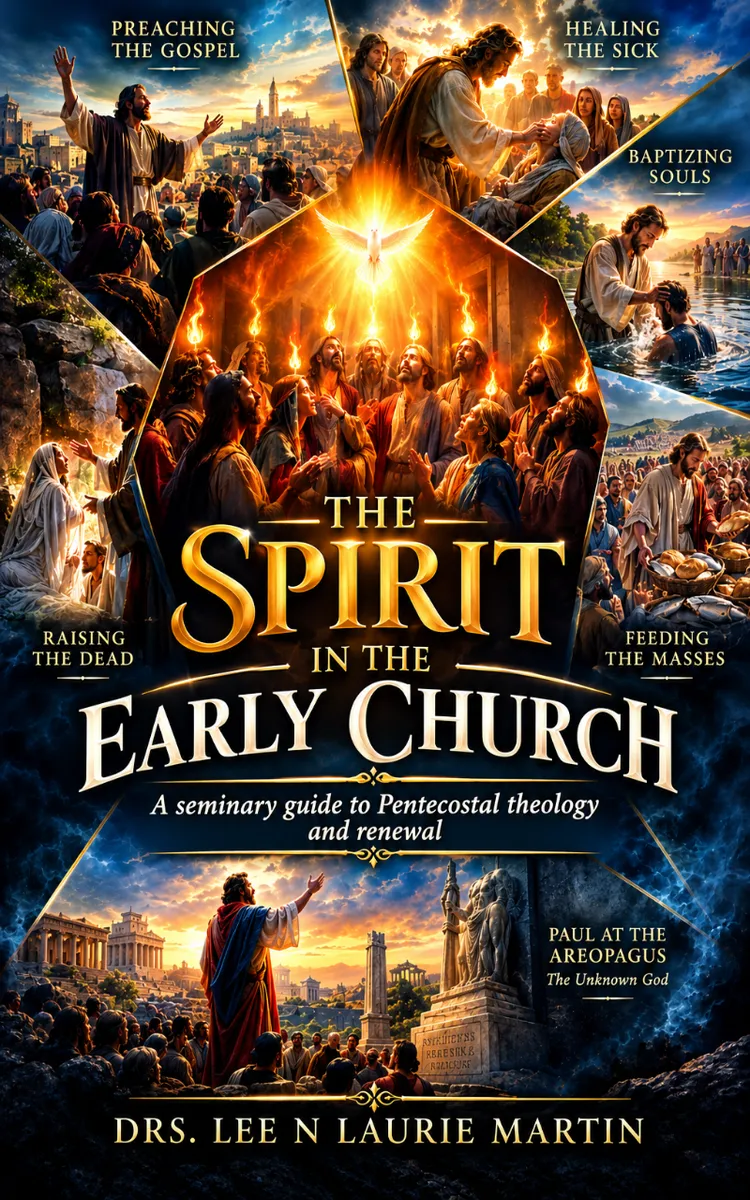
"The Spirit In The Early Church" is a education book by Drs. Lee & Laurie Martin with 8 chapters and approximately 16,594 words. Early Church pneumatology and the development of Pentecostal and Charismatic theology.
This book was created using Inkfluence AI, an AI-powered book generation platform that helps authors write, design, and publish complete books. It was made with the AI Lesson Plan Generator.
Frequently Asked Questions
What is "The Spirit In The Early Church" about?
Early Church pneumatology and the development of Pentecostal and Charismatic theology
How many chapters are in "The Spirit In The Early Church"?
The book contains 8 chapters and approximately 16,594 words. Topics covered include Spirit in Israel’s Scriptures, Jesus and the Promised Spirit, Pentecost and Apostolic Mission, Pauline Gifts and Church Order, and more.
Who wrote "The Spirit In The Early Church"?
This book was written by Drs. Lee & Laurie Martin and created using Inkfluence AI, an AI book generation platform that helps authors write, design, and publish books.
How can I create a similar education book?
You can create your own education book using Inkfluence AI. Describe your idea, choose your style, and the AI writes the full book for you. It's free to start.
Write your own education book with AI
Describe your idea and Inkfluence writes the whole thing. Free to start.
Start writingCreated with Inkfluence AI


