

Read the first chapter
The whole of chapter one, free. About 5 min. Turn the pages with the arrows, your keyboard, or a swipe.
Chapter 1
Day 1: The Battle You Cannot Always See
Scripture Focus
Ephesians 6:12 (KJV)
> For we wrestle not against flesh and blood, but against principalities, against powers, against the rulers of the darkness of this world, against spiritual wickedness in high places.
Spiritual warfare is real, but biblical discernment keeps us from blaming Satan for every hardship or excusing our own choices.
A tense conversation, an unexpected bill, or a difficult diagnosis can feel overwhelming. Yet not every painful event is a direct attack from the devil. Sometimes life is hard because we live in a broken world. Sometimes a problem comes from another person’s poor decision, our own lack of wisdom, or ordinary consequences. Scripture gives us a steady way to think: recognize spiritual opposition without becoming suspicious of everything around us.
Paul’s words in Ephesians 6:12 remind us that the deepest battle isn’t always visible. Evil can work through lies, temptation, hatred, pride, and division. Still, this verse doesn’t tell us to see a demon behind every inconvenience. It calls us to understand that our struggle has a spiritual dimension while remaining honest about human responsibility. Discernment holds two truths together: the enemy may tempt us, and we are still accountable for how we respond.
Reflection
The enemy often works through distortion rather than spectacle. A thought may sound reasonable while quietly pulling you away from truth: “You have to protect yourself by lying.” “That person hurt you, so revenge is justified.” “God won’t forgive you again.” “This temptation proves you aren’t really a Christian.” These messages can enter ordinary moments - during a disagreement, while scrolling online, or when you’re tired and discouraged. They don’t always announce themselves as spiritual danger.
At the same time, we need care before labeling every struggle an attack. If you overspend, the result may be poor planning rather than Satan personally causing your bank account to suffer. If you lose your temper, you may need repentance, better boundaries, or help managing stress - not a dramatic explanation that removes your responsibility. James 1:14 (KJV) says, “But every man is tempted, when he is drawn away of his own lust, and enticed.” Scripture takes temptation seriously, but it also asks us to examine what is happening within us.
That balance protects you from two mistakes. One is denying spiritual opposition altogether. The other is blaming the devil for every choice, conflict, or consequence. When a destructive pattern appears, ask careful questions: What is true? What part of this situation is my responsibility? What fruit is this producing? Does this response move me toward honesty, love, self-control, and obedience to God - or toward fear, secrecy, resentment, and division? The goal isn’t to become afraid of the unseen; it’s to become wise about what is shaping your visible choices.
A practical example may help. Suppose a disagreement with your spouse leaves you angry. Spiritual discernment doesn’t mean declaring, “Satan caused this argument,” and refusing to examine your words. It means noticing whether temptation is urging you to exaggerate, withdraw affection, punish with silence, or recruit others into the conflict. You can acknowledge spiritual pressure while still saying, “I spoke harshly, and I need to apologize.” That kind of honesty closes the door to deception more effectively than dramatic accusations.
The same principle applies to hardship. A job loss may bring fear, but fear itself doesn’t prove that the event came from Satan. You can pray against discouragement while updating your résumé, seeking wise counsel, and making a careful budget. Prayer and practical responsibility belong together. God’s Word helps you interpret the struggle; it doesn’t invite you to ignore ordinary steps of wisdom.
Practice for Today
1. Use a three-question discernment check. Set aside ten quiet minutes with your Bible and write about one current struggle. Answer these questions plainly: - What facts do I actually know? - What temptation or lie may be influencing my response? - What part of this situation must I take responsibility for?
For example, if you’re in conflict with a family member, write the exact words that were spoken instead of building a case from assumptions. Then name your response honestly: “I felt rejected, assumed the worst, and sent a cutting message.” This exercise helps separate facts, spiritual pressure, emotions, and personal choices.
2. Compare the message with Scripture. Choose one thought that has been troubling you and test it against God’s Word. If the thought says, “I am beyond forgiveness,” read 1 John 1:9. If it says, “I must repay this person,” read Romans 12:19. If it says, “I can hide this because no one will know,” read Luke 12:2. Don’t use a verse as a slogan detached from its meaning. Read the surrounding passage and ask what obedience looks like today.
3. Take one responsible step while you pray. Ask God for wisdom about the situation, then do the next honest thing He has placed within reach. Make the phone call you’ve avoided. Admit the part you handled poorly. Cancel the purchase you can’t afford. Ask a mature believer for counsel. If the struggle involves persistent anxiety, depression, addiction, or danger, seek qualified professional or pastoral help. Spiritual discernment doesn’t reject practical support; it recognizes that God can provide help through trustworthy people and wise resources.
As you finish, journal this sentence and complete it: “I may not understand everything happening around me, but I can faithfully choose to ______.” Keep the answer specific. “Tell the truth to my spouse,” “refuse to answer in anger,” or “pray before making this decision” gives your faith a direction. You don’t have to solve the entire battle today. You do need to bring today’s choice into the light.
Closing Prayer
Father, help me recognize spiritual opposition without becoming fearful or careless. Give me wisdom to separate truth from accusation, temptation from circumstance, and my responsibility from what belongs to others. Keep me from blaming Satan for my choices, and keep me from ignoring the ways evil seeks to deceive and divide. Teach me to respond with honesty, prayer, Scripture, and wise action. In Jesus’ name, amen.
End of chapter one. 29 more chapters in the full book.
Swipe or use the arrows to turn the page


What's inside: 30 chapters
- 1. Day 1: The Battle You Cannot Always See
- 2. Day 2: The First Weapon-Deception
- 3. Day 3: Test the Fruit and the Message
- 4. Day 4: The War Against the Mind
- 5. Day 5: When Accusation Becomes a Trap
- 6. Day 6: Temptation and the Choice Before You
- 7. Day 7: Guarding the Heart Without Fear
- 8. Day 8: The Battle for Men-Identity and Integrity
- 9. Day 9: Strength Through Humility
- 10. Day 10: The Battle for Women-Worth and Discernment
- 11. Day 11: Courage, Boundaries, and Wise Support
- 12. Day 12: The Battle for the Family
- 13. Day 13: Protecting Trust in Marriage and Friendship
- 14. Day 14: The Armor of God-Truth and Righteousness
- 15. Day 15: The Gospel of Peace and the Shield of Faith
- 16. Day 16: Salvation, Scripture, and the Sword of the Spirit
- 17. Day 17: Prayer That Sustains the Fight
- 18. Day 18: Repentance Without Despair
- 19. Day 19: Forgiveness, Wisdom, and Safety
- 20. Day 20: Breaking the Cycle of Division
- 21. Day 21: Discernment in a Confusing World
- 22. Day 22: When You Fall, Get Back Up
- 23. Day 23: Hope in the Middle of Hardship
- 24. Day 24: Surrender and the Freedom of Trust
- 25. Day 25: Building Habits That Guard Your Peace
- 26. Day 26: Community, Counsel, and Accountability
- 27. Day 27: Serving Others Without Losing Your Ground
- 28. Day 28: A Daily Plan for Spiritual Warfare
- 29. Day 29: Your Personal Rule of Life
- 30. Day 30: The Enemy Does Not Get the Last Word
About this book
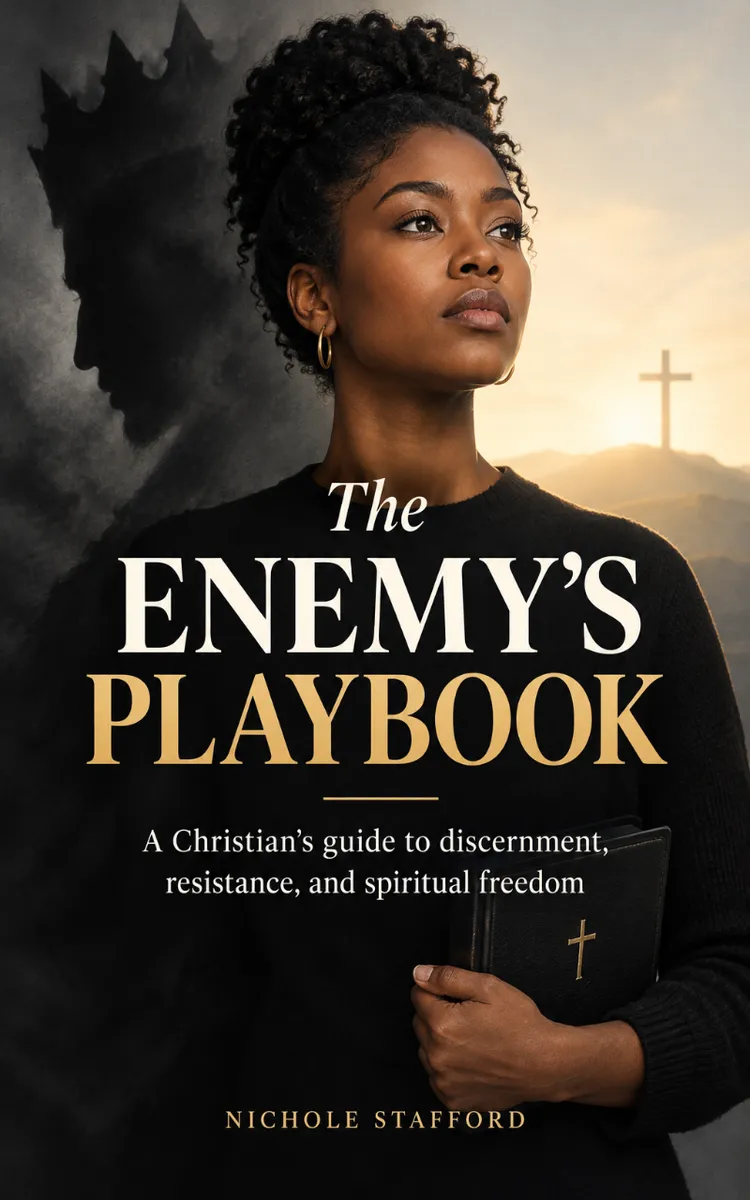
"The Enemy’s Playbook" is a religious devotional book by Nichole Stafford with 30 chapters and approximately 29,559 words. Biblical spiritual warfare, temptation, discernment, and resisting destructive patterns.
This book was created using Inkfluence AI, an AI-powered book generation platform that helps authors write, design, and publish complete books.
Frequently Asked Questions
What is "The Enemy’s Playbook" about?
Biblical spiritual warfare, temptation, discernment, and resisting destructive patterns
How many chapters are in "The Enemy’s Playbook"?
The book contains 30 chapters and approximately 29,559 words. Topics covered include Day 1: The Battle You Cannot Always See, Day 2: The First Weapon-Deception, Day 3: Test the Fruit and the Message, Day 4: The War Against the Mind, and more.
Who wrote "The Enemy’s Playbook"?
This book was written by Nichole Stafford and created using Inkfluence AI, an AI book generation platform that helps authors write, design, and publish books.
Write your own religious devotional book with AI
Describe your idea and Inkfluence writes the whole thing. Free to start.
Start writingCreated with Inkfluence AI


