
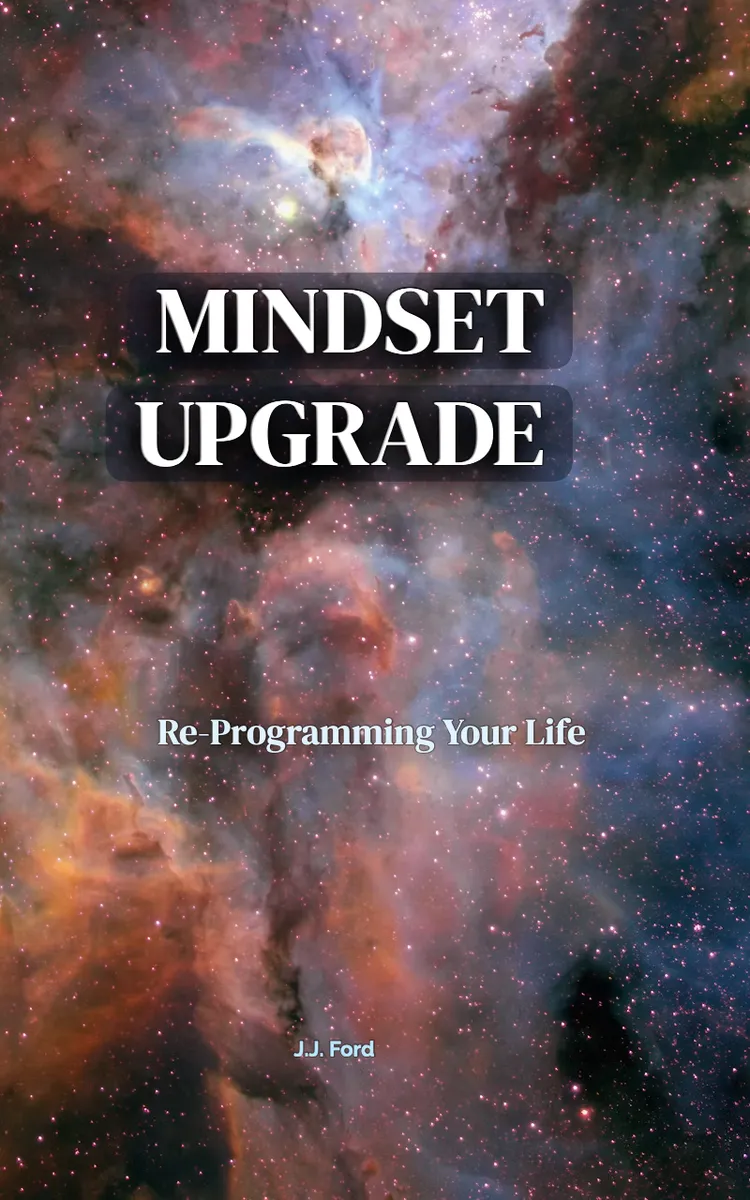
Read the first chapter
The whole of chapter one, free. About 4 min. Turn the pages with the arrows, your keyboard, or a swipe.
Chapter 1
Day 1: A Fresh Start - Breaking Limited Beliefs and Victim Thinking
Scripture Focus
2 Corinthians 5:17 (NIV)
> Therefore, if anyone is in Christ, the new creation has come: The old has gone, the new is here!
God doesn’t ask you to build a better life from the prison of an old identity; He invites you to live from the new identity He gives you in Christ.
Sometimes a limiting belief sounds like a fact because you’ve repeated it for years. “I can’t change.” “I always mess things up.” “People like me never get ahead.” “My past decides my future.” These statements may feel familiar, but familiarity doesn’t make them true.
A victim mindset can work the same way. It keeps your attention fixed on what happened, who failed you, or what you can’t control. Those things may be real, and some wounds may run deep. Still, God meets you in that truth without leaving you trapped there. In Christ, your history matters, but it doesn’t have the final word.
Reflection
A fresh start begins with noticing the thoughts that quietly run your day. Before you avoid a difficult conversation, delay an important task, lose your temper, or quit before trying, a sentence often appears in your mind: “There’s no point,” “They’ll never listen,” or “I’m just an angry person.” That sentence can feel like an explanation, but it may actually be a belief keeping you stuck.
God-centered thinking doesn’t pretend that challenges are easy. It refuses to treat them as proof that change is impossible. When you say, “I can’t,” pause and ask, “Can I not, or can I not yet?” Then bring the answer under God’s truth. You may not be able to control another person, erase yesterday, or solve everything today. But with God’s help, you can choose your response, tell the truth, take one responsible step, and ask for wisdom.
Victim thinking often hands all your power to circumstances. It says, “Because they did this, I have no choice but to do that.” Faith gives responsibility back to you without blaming you for everything that happened. You can acknowledge unfair treatment and still choose forgiveness over revenge. You can admit fear and still take one faithful action. You can recognize anger and still refuse to let it drive the conversation. Your circumstances may explain your struggle, but they don’t have to define your next choice.
This doesn’t mean forcing positive words over real pain. It means replacing a false conclusion with a God-centered truth. “I’ll never change” becomes, “God is teaching me to grow through daily obedience.” “I’m alone” becomes, “God is with me, and I can seek wise support.” “I always fail” becomes, “I have made mistakes, but failure is not my identity.” That shift may seem small, but repeated truth changes the direction of a life.
Think of your mind like a room where old statements have been hanging on the walls for years. Today, you’re not required to repaint the whole room at once. You’re simply taking down one message that doesn’t agree with God’s Word and replacing it with truth. That’s a real beginning.
Practice for Today
1. Name the belief that has been limiting you. Set aside ten quiet minutes. Write one sentence that often appears when you feel stuck. Be specific. Instead of writing “I have a bad mindset,” write, “I believe I can’t follow through,” or “I believe speaking up will always create conflict.”
Under it, answer these questions in your journal: What situation usually triggers this thought? What emotion follows it? What do I tend to do next? For example: “When I need to start a difficult work task, I think, ‘I’ll probably fail.’ I feel anxious, then I check my phone and delay the task for an hour.”
2. Replace the statement with God-centered truth. Write a new sentence that is honest, practical, and connected to faith. Don’t make it a fantasy or a promise that everything will be easy. Try: “I may feel unsure, but God can give me wisdom for the next step.” Or, “My past influenced me, but through Christ I’m becoming new.” Read your replacement statement slowly three times.
If the old belief returns today, don’t argue with yourself for twenty minutes. Notice it, name it, and answer it. Say, “That is the old belief. It isn’t the truth I’m choosing.” Then take one small action that agrees with your new statement, such as sending the message, beginning the task for five minutes, or calmly asking for help.
3. Practice a one-minute responsibility prayer. When you catch yourself saying, “This is all their fault,” pause for one minute. Breathe slowly and ask God three direct questions: “What part of this is outside my control? What part is mine to handle? What would a faithful next step look like?” Write down the answer to the second and third questions.
Your step might be apologizing for harsh words, setting a healthy boundary, making a phone call, or stopping an excuse before it becomes a habit. Responsibility isn’t self-condemnation. It’s an opportunity to respond with God’s help.
Keep your journal page where you’ll see it tonight. Put it beside your Bible, on your desk, or near your coffee cup - somewhere your usual routine will find it. At the end of the day, record one moment when you challenged “I can’t” with truth. It may be as simple as getting started instead of postponing again. Small obedience still counts.
Closing Prayer
Father, I bring You the beliefs that have kept me stuck and the excuses I’ve used to avoid change. Show me where I’m thinking from fear, anger, or defeat. Help me separate what I cannot control from what You are asking me to handle. Teach me to replace “I can’t” with Your truth and to take one faithful step today. Thank You that my past is not my identity and that, in Christ, You are making me new. Amen.
End of chapter one. 4 more chapters in the full book.
Swipe or use the arrows to turn the page


What's inside: 5 chapters
- 1. Day 1: A Fresh Start - Breaking Limited Beliefs and Victim Thinking
- 2. Days 8-14: Deepening Trust - Replacing Fear With Prayer and Hope
- 3. Days 15-21: Healing Anger - Forgiveness, Empathy, and Letting Go
- 4. Days 22-26: Installing Love and Compassion - New Identity and New Habits
- 5. Days 27-30: Surrender and Momentum - Living With God at the Center
About this book
"Mindset Upgrade" is a religious devotional book by J.J. Ford with 5 chapters and approximately 4,823 words. Replacing limited beliefs and bad habits with faith and virtue.
This book was created using Inkfluence AI, an AI-powered book generation platform that helps authors write, design, and publish complete books.
Frequently Asked Questions
What is "Mindset Upgrade" about?
Replacing limited beliefs and bad habits with faith and virtue
How many chapters are in "Mindset Upgrade"?
The book contains 5 chapters and approximately 4,823 words. Topics covered include Day 1: A Fresh Start - Breaking Limited Beliefs and Victim Thinking, Days 8-14: Deepening Trust - Replacing Fear With Prayer and Hope, Days 15-21: Healing Anger - Forgiveness, Empathy, and Letting Go, Days 22-26: Installing Love and Compassion - New Identity and New Habits, and more.
Who wrote "Mindset Upgrade"?
This book was written by J.J. Ford and created using Inkfluence AI, an AI book generation platform that helps authors write, design, and publish books.
Write your own religious devotional book with AI
Describe your idea and Inkfluence writes the whole thing. Free to start.
Start writingCreated with Inkfluence AI


