
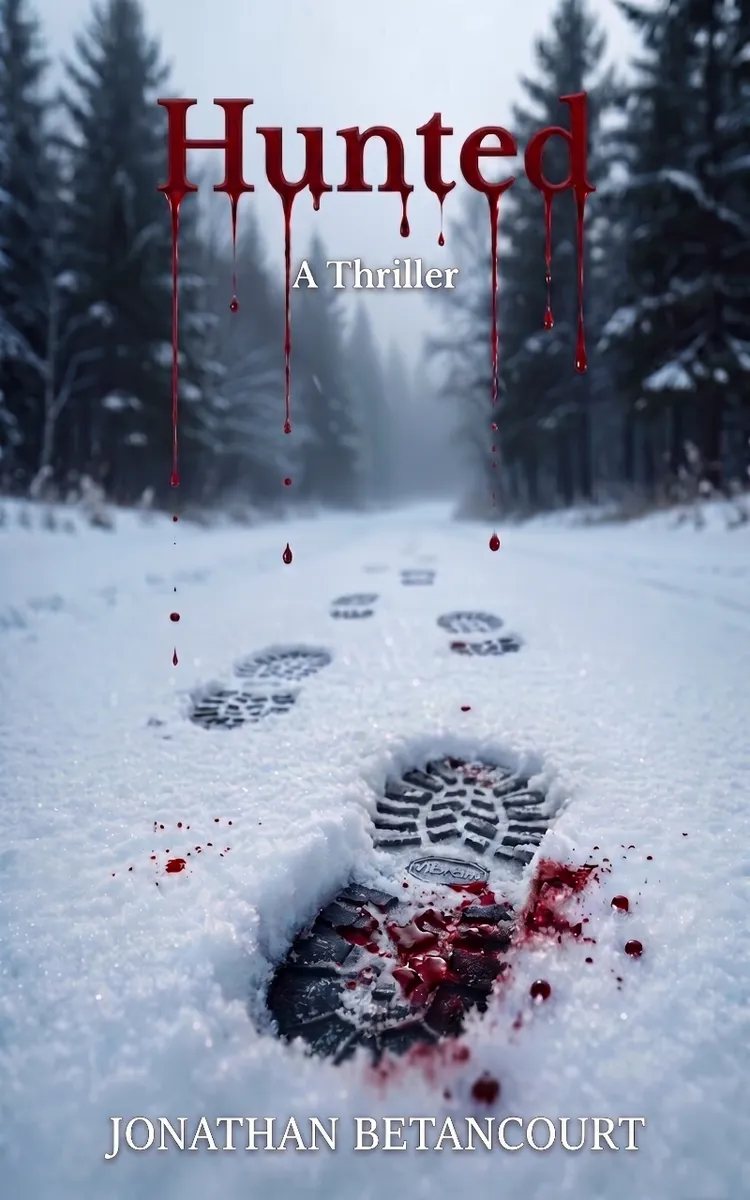

Read the first chapter
The whole of chapter one, free. About 7 min. Turn the pages with the arrows, your keyboard, or a swipe.
Chapter 1
The Cow That Vanished
The heifer’s hind leg twitched when Elena stepped through the yellow tape.
It was only wind moving the torn hide, but the motion carried across the pasture with the same abruptness as a living animal. Beyond the carcass, the treeline north of town stood black and wet beneath a low ceiling of cloud. Pruitt Ranch’s fence posts leaned toward the woods, their tops silvered by last night’s rain.
“Stay behind the tape,” Sheriff Braddock called.
Elena glanced back. Braddock stood beside the county cruiser with one hand on his belt, his hat darkened by drizzle. Walt Pruitt was arguing with him near the gate, boots sunk in mud, his face red above the collar of a canvas coat.
“I need ten minutes,” Elena said.
“You need to look at what’s left.”
“I need the approach and exit.”
Braddock’s mouth tightened. “It’s wolves.”
“That’s what I’m here to determine.”
Walt broke away from the gate. “They hit the herd twice this month. You going to determine that while my cattle keep disappearing?”
Elena looked past him to the scattered herd. The surviving cattle had pressed themselves against the far fence, heads raised, ears angled toward the trees. None grazed. A black cow gave a low, uneasy bawl.
“Where were they when you found this?” Elena asked.
“East side of the pasture. Near the water trough.”
“Who found it?”
“I did.”
“When?”
“Before sunrise.”
“Did you drive through here?”
Walt pointed at the tire tracks cutting from the gate toward the carcass. “Had to get close.”
The rain had softened the ground into a dark paste. Tire tread crossed hoofprints, boot marks, and the narrow depressions Elena wanted most. Scavenger birds lifted from the fence when she approached, beating wet wings against the gray morning.
She crouched beside the heifer.
The throat had been opened, but not cleanly. The hide was peeled back along the neck, and the muscle beneath showed parallel punctures. The abdomen was torn. One rear quarter had been opened and fed on, though less than Elena expected from a kill this size.
She set her field case in the grass and pulled on gloves.
“Don’t touch anything else,” she said.
Walt gave a bitter laugh. “The crows already touched it.”
“They’re not the only ones.”
A raven hopped three steps away, black eyes fixed on her. It clicked its beak and tugged at a strip of tissue.
Elena moved around the carcass, careful to place her boots in the existing tire ruts. The first tracks appeared near the trough: four toes, a broad heel pad, claws faintly visible in the wet soil. The print was blurred at the edges, but the stride was long and direct.
She followed it toward the trees.
The trail broke apart almost immediately. Cattle had milled through the mud after the attack, trampling the impressions into overlapping crescents. Rain had filled the deeper marks. Wind had dragged needles and dead grass across the ground.
“See?” Braddock said behind her. “Nothing useful.”
Elena turned. “You’re standing on one.”
He looked down and shifted back.
She photographed the print, then another near the fence. The wolves had entered from the treeline in a shallow arc, not from the open ground. Three sets of tracks converged on the heifer’s position. A fourth ran wider, parallel to the fence.
The pattern was wrong for a blind rush.
She rose and studied the pasture. The heifer had been separated from the herd. Its hoof marks angled toward the trough, then stopped in churned earth. The wolves had driven it along the fence, using the cattle’s own panic to close the gap.
“They worked her,” Elena said.
Walt stared at her. “They killed a cow.”
“They made her move.”
“That’s what predators do.”
“Not always this close to the ranch.”
The trough stood less than a hundred yards from Walt’s house. Its metal sides were dented, the water surface stippled by rain. Between it and the carcass, Elena found tufts of pale hair snagged on a strand of wire. Beneath the wire, a wolf had crossed the fence without disturbing the top strand.
She crouched again.
The print faced away from the woods.
A second one lay beside it, toes pointed toward the ranch buildings.
Elena felt the small muscles in her jaw tighten. Wolves usually avoided structures, vehicles, voices, and the concentrated scent of people. They might pass through a ranch at night if food rewarded the risk. But these tracks had brought the animals to the trough, then along the fence, within sight of the house.
Braddock came closer. “What?”
She pointed.
He bent, hands on his knees. “Could be from when they left.”
“No. Look at the pressure. The mud pushed forward here.” She touched the edge of the print without touching the impression itself. “This wolf was moving toward the house.”
Walt’s face lost some of its color. “They came into the yard?”
“Not necessarily.”
“But they were headed that way.”
Elena looked toward the house. A porch light burned above the front door despite the daylight. On the porch, a child’s red boot lay on its side beneath a chair.
“How many people were here overnight?” she asked.
“Me and my wife.”
“Any dogs?”
“Inside. They barked around two.”
“Did you hear cattle?”
Walt hesitated. “The herd was bawling. Thought they’d broken the fence.”
“Did you go out?”
“No.”
“Good.”
His eyes hardened. “You saying I should be scared to check my own pasture?”
“I’m saying the wolves were active while you were awake.”
Braddock stepped between them. “We’ve got the facts we need. Livestock killed, tracks consistent with wolves. I’ll have the carcass hauled off and the area cleaned.”
“Elena hasn’t finished,” Walt said.
“She’s finished enough for my report.”
Elena looked at the carcass again. The wolves had fed at the ribs and hindquarter, but the stomach cavity was mostly untouched. The kill had been made quickly. There were no signs of prolonged feeding, no bedded tracks nearby, no drag marks leading into cover.
The pack had spent time here, but not to eat.
She walked the fence line, following the faintest disturbance toward the treeline. Braddock called after her, but she kept moving. Wet branches slapped her sleeves. The ground rose slightly beneath the pines, where rain had not reached as hard.
Here the tracks sharpened.
Four wolves had approached in staggered positions. One had crossed the fence first. Two had remained outside. Another had looped wide through the trees and come in behind the heifer’s path.
Elena stopped beside a low branch.
The bark held a smear of blood at shoulder height.
Not cattle blood. Too high, too narrow.
She leaned closer. The smear had been rubbed into the bark by fur, and beneath it lay several coarse gray hairs. A wolf had brushed past after feeding. The animal had not fled directly into cover. It had paused at the edge of the pasture, looking back.
A sound moved through the trees.
Elena froze.
Not a howl. A soft crack, followed by the scrape of something against wet needles.
She turned toward the pasture. Between two trunks, she saw a shape slip behind the fence. Gray-brown, lean, low to the ground.
“Sheriff,” she called.
Braddock’s voice came sharp from behind her. “What is it?”
The shape was gone. Elena searched the treeline, but the rain flattened every detail. A raven lifted from the carcass. The cattle shifted as one body.
She returned to the kill.
Near the heifer’s front legs, half sunk in mud, lay a strip of dark fabric. It might have been nylon once. Rain had faded it to brown. One edge was torn, and a metal snap showed through the grit.
Elena knelt and used forceps to lift it free.
The fabric carried a smell beneath the rot and wet earth: detergent, skin, and something faintly floral. Human contact, recent enough to survive the rain.
Her pulse gave one hard beat.
“What is that?” Braddock asked.
“I don’t know yet.”
“Then leave it.”
“It’s evidence.”
“Evidence of what?”
She sealed the scrap in a paper bag and wrote the time on the label. The fabric was too degraded to identify. No logo, no clear stitching, nothing but the snap and the smell of someone who had touched it.
Walt came toward them, boots dragging through the mud. “That from my wife?”
“No.”
“Then whose?”
Elena looked at the treeline. The gray shape had been lean, ribs faint beneath its coat. It had watched the pasture from inside the trees while people stood around the kill.
“I can’t say.”
Braddock extended his hand. “Give me the bag.”
Elena held it against her chest. “I’m taking it with me.”
His expression turned flat. “This is a county crime scene.”
“It’s a predator investigation.”
“And I’m telling you the scene is closed.”
For a moment, only the rain spoke. It ticked against the metal trough and tapped the heifer’s exposed ribs.
Elena slid the evidence bag into her case.
Braddock’s gaze followed the movement. “You don’t get to make your own rules out here.”
“No,” she said. “But I do get to recognize when a pack has changed its risk.”
Walt looked toward the house. “What does that mean?”
Elena faced the trees. “It means they weren’t just feeding.”
A distant howl rose from somewhere beyond the pasture, low and brief. Another answered from farther north. Then a third sounded close enough that the cattle surged against the fence.
The pack had positioned itself around the ranch.
Elena closed her case and stood. She had come to determine how the wolves reached the cattle and whether people were at risk. She had the answer now, but it carried the weight of the muddy fabric in her case.
Someone had been close enough to the kill to leave a piece of clothing behind.
And the wolves had been watching.
End of chapter one. 27 more chapters in the full book.
Swipe or use the arrows to turn the page


What's inside: 28 chapters
- 1. The Cow That Vanished
- 2. Sheriff Braddock’s Cold Welcome
- 3. Scat With the Wrong Timing
- 4. The Fence Line That Lied
- 5. Mayor Kessler’s Missing Hiker
- 6. SAR Finds No Body
- 7. A Wolf’s Contact Pattern
- 8. Grant Whitfield Orders Stand-Down
- 9. The Drought That Broke Prey
- 10. CWD Culling Paper Trail
- 11. Trail Cameras Don’t Blink
- 12. The Alpha’s New Kind of Eyes
- 13. A Hiker’s Item in the Brush
- 14. The Phone Call That Tightened Chains
- 15. One Last Collar Trip
- 16. Radio Static After the First Snap
- 17. The Pack Isn’t Fleeing
- 18. Diane’s Trail Goes Cold
- 19. Snow Starts to Lie
- 20. The First Bite of Winter
- 21. Terrain as a Weapon
- 22. Night Eyes in Falling Snow
- 23. The Knife That Still Fits
- 24. Alpha Testing, Not Retreat
- 25. The Rifle Gone, the Alpha Close
- 26. Pack Dispersal at Dawn
- 27. Nate Calloway’s Doorway
- 28. Vindication in the Snowmelt
About this book
"Hunted" is a fiction book by Jonathan Betancourt with 28 chapters and approximately 50,312 words. A cow vanishes, then the evidence turns cold, and the real hunt begins. Wildlife biologist Elena Reyes arrives at the Pruitt Ranch expecting wolves and answers, but what she finds does not behave like a simple predator story.
This book was created using Inkfluence AI, an AI-powered book generation platform that helps authors write, design, and publish complete books. It was made with the AI Novel Writer.
Frequently Asked Questions
What is "Hunted" about?
A cow vanishes, then the evidence turns cold, and the real hunt begins. Wildlife biologist Elena Reyes arrives at the Pruitt Ranch expecting wolves and answers, but what she finds does not behave like a simple predator story. Human scent clings to a piece of fabric snapped to a carcass scene, and the ranchers are sure the wolves are to blame. Sheriff Braddock wants results before the details disappear. Elena needs the approach routes, the timing, the animal behavior that can separate instinct from interference. In a wet, fenced wilderness where tracks fade fast, one wrong assumption could cost more than credibility. It could cost lives.
How many chapters are in "Hunted"?
The book contains 28 chapters and approximately 50,312 words. Topics covered include The Cow That Vanished, Sheriff Braddock’s Cold Welcome, Scat With the Wrong Timing, The Fence Line That Lied, and more.
Who wrote "Hunted"?
This book was written by Jonathan Betancourt and created using Inkfluence AI, an AI book generation platform that helps authors write, design, and publish books.
How can I create a similar fiction book?
You can create your own fiction book using Inkfluence AI. Describe your idea, choose your style, and the AI writes the full book for you. It's free to start.
Write your own fiction book with AI
Describe your idea and Inkfluence writes the whole thing. Free to start.
Start writingCreated with Inkfluence AI


