

Read the first chapter
The whole of chapter one, free. About 8 min. Turn the pages with the arrows, your keyboard, or a swipe.
Chapter 1
Meet the Gut Microbiome
The Valley Beneath Every Meal
You finish a meal, place the plate in the sink, and carry on with your day. Far below that ordinary moment, a living valley begins sorting, breaking down, and transforming what you ate. Its gardeners are microbes: bacteria, fungi, and other tiny organisms that live mainly in the large intestine. They do not work alone, microbes interact with each other and with host cells, immune signals, and nerve pathways. They form a shifting community, fed by what passes through the digestive tract and influenced by sleep, stress, movement, medicines, and daily routines.
This hidden ecosystem helps process parts of food that human enzymes cannot fully handle. It also supports the gut’s protective lining, communicates with immune cells, and produces chemical messengers that can influence the nervous system. These effects do not determine mood or health by themselves, but they can meaningfully influence digestion, energy, and wellbeing. They do show why everyday food choices can matter beyond calories and fullness.
Who this is for: anyone curious about the connection between meals, digestion, mood, and overall wellbeing. The practical benefits are a clearer picture of how the gut community works, a safer way to increase fiber, better judgment about probiotic products, and a simple method for noticing how your own body responds.
The guiding image is the Valley Census Model. Instead of asking whether your microbiome is simply “good” or “bad,” take a census: What materials are arriving? Which areas seem well supplied? Where are signs of strain? Your first task is not to control every gardener. It is to learn what helps the whole valley function. Ask yourself: after a meal rich in beans, oats, vegetables, or whole grains, what changes do you notice over the next day or two? That observation is the beginning of useful knowledge.
How the Tiny Gardeners Do Their Work
The gut microbiome is the community of microorganisms living in and on the body, especially in the intestines. The microbiota refers to the organisms themselves; “microbiome” often includes both the organisms and their genetic material. Each person’s community is shaped by many influences, including early life, geography, food patterns, illness, medicines, and ordinary contact with the world.
Digestion begins with chewing and continues through the stomach and small intestine, where much of the usable energy from food is absorbed. Some material then reaches the colon, or large intestine, only partly digested. This is where many of the valley’s gardeners get to work. They ferment certain types of dietary fiber, the plant material that resists digestion in the upper gut.
During fermentation, microbes produce short-chain fatty acids, small compounds that can serve as fuel for cells lining the colon and help maintain the local environment. The gut lining is not a passive wall. It is a living boundary that controls what moves between the intestine and the rest of the body. A well-supported lining helps keep digestion orderly, while irritation or disruption may contribute to symptoms in some people.
The microbiome also interacts with the immune system, the body’s network for recognizing and responding to threats. Much of the immune system is associated with the gut because the intestine must constantly sort harmless food and resident microbes from genuine dangers. Microbial signals help train and adjust that response. This is one reason the microbiome is linked with everyday resilience, although it is not a substitute for medical care or a shield against every infection.
Communication also travels along the gut-brain axis, the two-way connection among the digestive tract, the nervous system, immune signals, and microbial products. The vagus nerve, a major communication pathway between the brain and several organs, is one part of this network. Hormones, immune messengers, and changes in gut activity are others. This connection helps explain two things: stress can change bowel habits, and gut signals can influence concentration and mood. It does not mean that microbes alone determine how a person feels.
Several conditions can make the valley harder to read or support:
• A low-fiber pattern may leave fewer plant materials for fiber-fermenting microbes. This can happen when meals rely heavily on refined grains, sweets, and highly processed foods.
• A sudden jump in beans, bran, or raw vegetables can overwhelm a gut that is not accustomed to them, leading to gas, cramping, or changes in stool.
• Some medicines, especially antibiotics, can change microbial communities. Never stop a prescribed medicine to protect the microbiome; discuss concerns with the prescriber.
• Poor sleep, ongoing stress, limited movement, and irregular meals can affect gut function even when the food itself has not changed.
• Conditions such as inflammatory bowel disease, food intolerance, or intestinal infection may require professional assessment rather than self-directed dietary experiments.
The valley is therefore an ecosystem, not a single score. A diverse range of plant foods can provide different fibers and compounds, but diversity is not a magic target and more is not always better for every person. The useful question is whether your choices support comfortable digestion and steady nourishment. The takeaway is simple: feed the ecosystem gradually, and treat symptoms as information rather than proof of a diagnosis.
Taking the Valley Census
Begin with a seven-day census before making major changes. Each day, note the main plant foods you eat, your approximate number of bowel movements, stool comfort, bloating, energy, and any noticeable mood changes. You do not need a laboratory test or a perfect record. A notebook, phone note, or simple spreadsheet is enough. Also record new supplements and medicines, since timing can help explain changes.
After the census, choose one fiber-rich food to add at a modest serving three or four times during the first week. Examples include half a cup of cooked oats, a small serving of lentils, one piece of fruit, or a quarter cup of beans mixed into a familiar meal. Keep that amount steady for several days. If digestion remains comfortable, increase by one small serving every three to four days. This slower pace gives the microbial community and your digestive system time to adjust.
Drink according to thirst and your usual needs, unless a clinician has given you fluid limits. Fiber absorbs water, so a sudden increase without adequate fluid may worsen constipation for some people. Regular movement can also support bowel function: a 10- to 15-minute walk after one meal on most days is a reasonable starting point if it fits your health and mobility needs.
Aim for variety across the week rather than forcing every food into every day. Rotate among oats and other whole grains, vegetables, fruit, nuts, seeds, and legumes. A practical milestone is two different plant foods at one meal when tolerated, then slowly add more types across the day as comfort and access allow. If beans cause discomfort, start with a tablespoon or two mixed into a meal, use well-cooked portions, and increase only when symptoms settle. Canned beans can be rinsed before use, which may reduce some of the compounds that contribute to gas.
Probiotics are live microorganisms taken in foods or supplements. They are not interchangeable: different strains may have different effects, and benefits are often specific to a particular product and situation. If you try one, use the label’s serving instructions for two to four weeks, change only one major variable at a time, and track comfort, stool changes, and unwanted effects. A probiotic is not required for a healthy microbiome, and “more strains” does not automatically mean better.
Seek professional help for blood in the stool, black or tar-like stool, severe or worsening abdominal pain, repeated vomiting, fainting, signs of dehydration, persistent fever, unexplained weight loss, or diarrhea or constipation that does not improve. Contact a clinician promptly if symptoms begin after antibiotics or if you have a diagnosed digestive or immune condition. A registered dietitian or other qualified professional can help adapt fiber changes when you have dietary restrictions or a history of significant digestive symptoms.
Valley choice
Gentle starting point
What to watch
Cooked oats
½ cup, 3-4 times in week one
Bloating, stool comfort
Beans or lentils
2 tablespoons, 2-3 times in week one
Gas, cramping, fullness
Fruit
1 serving daily
Tolerance and bowel pattern
Probiotic supplement
Follow the product label for 2-4 weeks
New symptoms or no useful change
At the end of two weeks, review your notes. Which additions felt comfortable? Which caused trouble? Keep the foods that fit your body, reduce or pause the ones that do not, and discuss persistent problems with a professional. The Valley Census Model turns vague promises into a modest experiment with clear boundaries.
Common Ways to Disturb the Garden
Treating every digestive symptom as proof of a “bad” microbiome
Why it happens: The microbiome is often described as if it were a simple health score. Gas, loose stool, constipation, or fatigue can then seem like evidence that a particular group of microbes is missing.
What to do instead: Record timing, foods, medicines, sleep, and stress for at least seven days. Symptoms can have many causes, and a pattern deserves assessment rather than a confident label. Use the census to ask better questions, not to diagnose yourself.
Adding a large amount of fiber overnight
Why it happens: Once people hear that fiber feeds helpful microbes, they may move quickly from little fiber to several servings of beans, bran, and raw vegetables.
What to do instead: Add one modest portion every three to four days, keep it steady, and adjust downward if discomfort persists. Cook vegetables, begin with small legume portions, and increase only as your body settles. A steady garden is more useful than a flooded one.
Choosing a probiotic by the biggest promise on the package
Why it happens: Labels may emphasize many strains, high numbers, or broad claims, even though probiotic effects depend on the specific strain, dose, product quality, and person using it.
What to do instead: Decide what you are trying to observe, follow the label for two to four weeks, and change one product at a time. Stop and seek advice if you develop concerning symptoms. Do not use a supplement to replace evaluation for bleeding, severe pain, dehydration, persistent fever, or ongoing bowel changes.
The deep valley is not separate from daily life. Every meal, walk, restless night, and course of medicine changes what reaches its gardeners. You do not need to manage every microbe to care for the ecosystem. Start with a census, make one gentle change, and listen closely enough to notice what follows. That habit opens the way to understanding how food, microbes, and the wider body work together.
End of chapter one. 7 more chapters in the full book.
Swipe or use the arrows to turn the page


What's inside: 8 chapters
- 1. Meet the Gut Microbiome
- 2. Dietary Fiber Feeds the Gardeners
- 3. Probiotics and Fermented Foods
- 4. Sugar and Microbial Balance
- 5. Digestion, Bloating, and Regularity
- 6. The Gut-Brain Connection
- 7. Building a Microbiome-Friendly Plate
- 8. Personalizing Your Gut-Care Routine
About this book
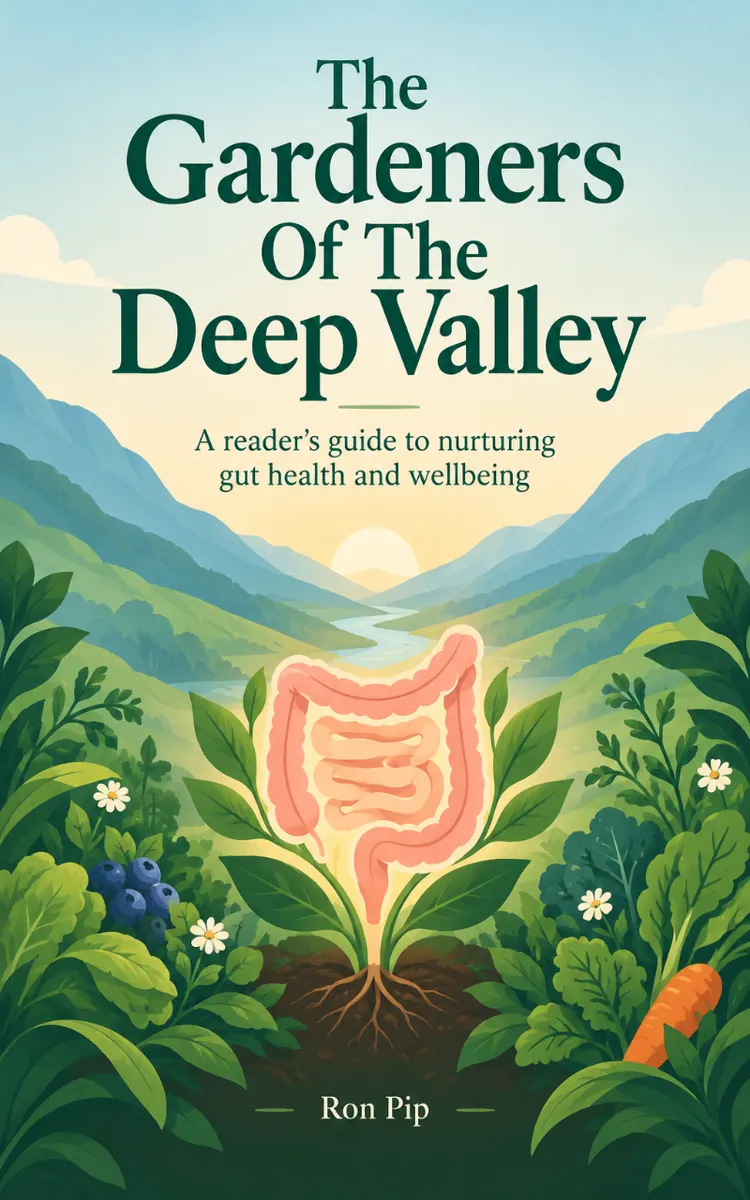
"The Gardeners Of The Deep Valley" is a health & wellness book by Ron Pip with 8 chapters and approximately 13,885 words. Gut microbiome, probiotics, dietary fiber, and the gut-brain axis.
This book was created using Inkfluence AI, an AI-powered book generation platform that helps authors write, design, and publish complete books. It was made with the AI Health Book Generator.
Frequently Asked Questions
What is "The Gardeners Of The Deep Valley" about?
Gut microbiome, probiotics, dietary fiber, and the gut-brain axis
How many chapters are in "The Gardeners Of The Deep Valley"?
The book contains 8 chapters and approximately 13,885 words. Topics covered include Meet the Gut Microbiome, Dietary Fiber Feeds the Gardeners, Probiotics and Fermented Foods, Sugar and Microbial Balance, and more.
Who wrote "The Gardeners Of The Deep Valley"?
This book was written by Ron Pip and created using Inkfluence AI, an AI book generation platform that helps authors write, design, and publish books.
How can I create a similar health & wellness book?
You can create your own health & wellness book using Inkfluence AI. Describe your idea, choose your style, and the AI writes the full book for you. It's free to start.
Write your own health & wellness book with AI
Describe your idea and Inkfluence writes the whole thing. Free to start.
Start writingCreated with Inkfluence AI


