
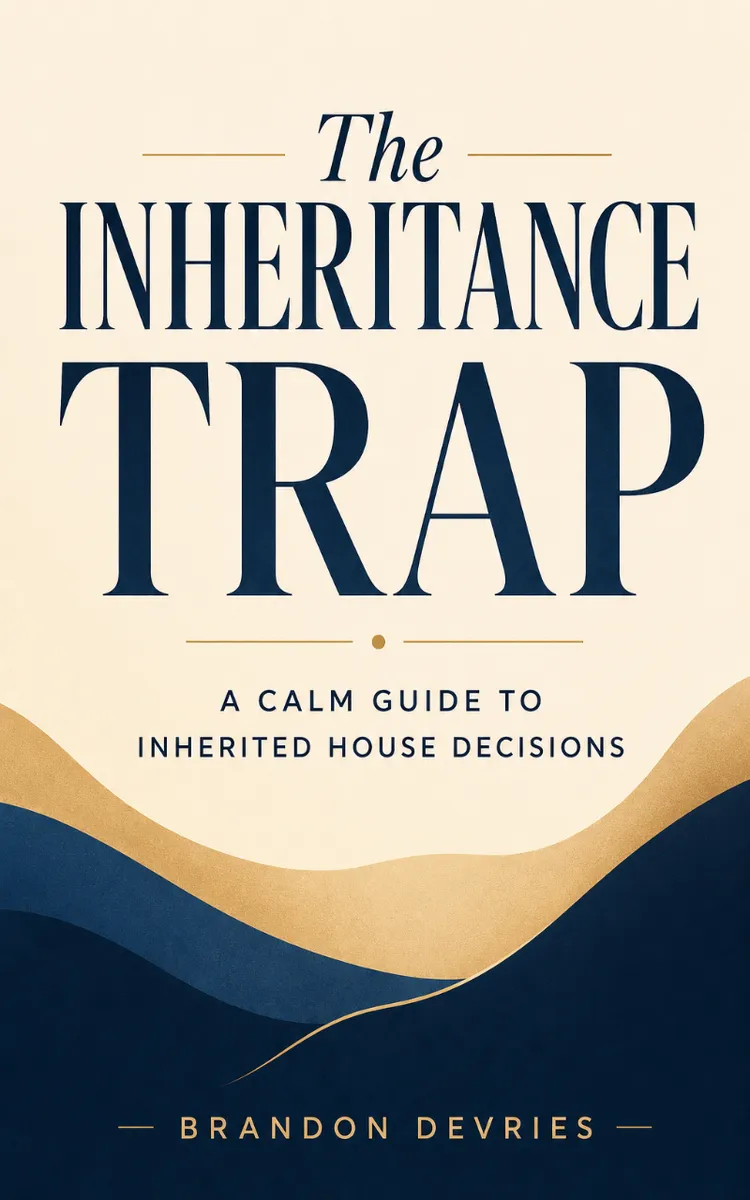

Financial and life-transition guidance for inherited property decisions
Table of Contents
- 1. Opening chapter
- 2. Chapter 2 - The Three Costly Mistakes
- 3. Chapter 3 - The Keep, Sell, or Rent Framework
- 4. Chapter 4 - The Practical Side Nobody Explains
Preview: Opening chapter
A short excerpt from “Opening chapter”. The full book contains 4 chapters and 5,675 words.
You did not plan for this. One day you are grieving, and the next you are holding a set of choices that can feel heavier than the loss itself. Inherited property has a way of pulling practical questions right into the middle of your emotions: What do you do with it? What does it cost? What if you choose wrong?
If you feel shocked and overwhelmed, you are not “falling behind” or “being difficult.” Many people go through a similar spiral when they inherit a house, land, or a rental. You might be thinking about repairs while also trying to remember a loved one’s voice. You might be staring at paperwork because it is easier than deciding. None of that means you are incapable. It means you are human, and you are in a time of grief and transition.
It also helps to name a quiet truth: there is usually no single right answer. People inherit property for different reasons, and families have different constraints. Sometimes keeping makes sense. Sometimes selling makes sense. Sometimes renting makes sense. Often, the “right” option depends on how quickly you need cash, how much you can handle day to day, and what kind of life you want to build next. Your job is not to predict the future perfectly. Your job is to make a series of decisions you can live with.
What Shock and Overwhelm Look Like (and Why They’re Common)
Overwhelm often shows up as mental static. You read the same line of paperwork three times. You start a spreadsheet and then freeze. You keep thinking, “I should already know what to do.” Another common pattern is avoidance that feels like self-protection. You tell yourself you will handle it later, even though later carries costs. Neither pattern is a character flaw. It is your mind trying to cope while you do something unfamiliar.
Ask yourself a simple question: “What part feels the heaviest right now?” Is it the emotional weight of the place? The fear of costs? The worry that the property will fall apart? The uncertainty about who should be involved? When you can point to the specific weight, it becomes easier to carry.
The Myth of One Right Choice
The biggest trap is believing you must find the perfect answer before you move. In reality, decisions get clearer when you gather the right information in the right order. The same property can be a burden or a tool depending on your timing, your support, and your comfort with ongoing responsibilities.
You might be tempted to anchor on one outcome because it feels decisive. But rushing toward “keep” or “sell” without a plan can create regret later. A calmer approach is to treat your situation like a set of filters: What must be true for each option to work? What costs are you already facing? What risks are you willing to hold?
A Gentle First Step That Doesn’t Require Legal Jargon
You do not have to become a property expert overnight. You also do not need to drown in legal language or tax talk to take a useful first step. Start by separating “questions you can answer now” from “questions you need help with later.” For example, you can often learn basic facts about the property and your current costs without turning it into a legal project. You can also notice what you can realistically handle while you are grieving.
If you already feel stuck, try this practical reframe: your next decision is not “sell or keep forever.” Your next decision is “what information do I need to make the next reasonable choice?”
How This Book Helps You Find Your Next Reasonable Choice
This book is built for your reality. You will not be pushed into one path. You will learn a clear way to look at inherited property options, including the tradeoffs that matter when you are balancing money, time, and emotional bandwidth. You will also get evidence-aware health guidance for the stress that comes with major life change, with safety boundaries and concrete steps you can actually follow.
You are allowed to move slowly. You are allowed to feel uncertain. You are not alone in this, even if it feels lonely right now. As you read, you will figure out what matters most in your situation and how to turn that into a plan you can live with.
About this book
"The Inheritance Trap" is a health & wellness book by Brandon DeVries with 4 chapters and approximately 5,675 words. Financial and life-transition guidance for inherited property decisions.
This book was created using Inkfluence AI, an AI-powered book generation platform that helps authors write, design, and publish complete books. It was made with the AI Health Book Generator.
Frequently Asked Questions
What is "The Inheritance Trap" about?
Financial and life-transition guidance for inherited property decisions
How many chapters are in "The Inheritance Trap"?
The book contains 4 chapters and approximately 5,675 words. Topics covered include Opening chapter, Chapter 2 - The Three Costly Mistakes, Chapter 3 - The Keep, Sell, or Rent Framework, Chapter 4 - The Practical Side Nobody Explains.
Who wrote "The Inheritance Trap"?
This book was written by Brandon DeVries and created using Inkfluence AI, an AI book generation platform that helps authors write, design, and publish books.
How can I create a similar health & wellness book?
You can create your own health & wellness book using Inkfluence AI. Describe your idea, choose your style, and the AI writes the full book for you. It's free to start.
Write your own health & wellness book with AI
Describe your idea and Inkfluence writes the whole thing. Free to start.
Start writingCreated with Inkfluence AI


