

Read the first chapter
The whole of chapter one, free. About 4 min. Turn the pages with the arrows, your keyboard, or a swipe.
Chapter 1
The Shock of Grace
Scripture Focus
Romans 11:6 > “And if by grace, then it is no longer on the basis of works; otherwise grace would no longer be grace.”
Grace feels “unfair” when we keep trying to treat it like wages instead of gift.
If you’ve ever heard the gospel and thought, “That sounds nice, but I don’t know if it’s for me,” you’re not the only one. Grace has a way of bumping into our instincts. We want to measure, repay, balance the books, and earn our way into peace. But Romans 11:6 pulls the rug gently out from under that habit: grace is grace only when it doesn’t depend on work.
Reflection
Here’s the emotional truth we don’t like to say out loud: God’s grace can feel “unfair” because it’s given freely, not earned. That word “freely” makes our hearts squirm. We know what it costs to be treated fairly - time, effort, consistency, proof. We live in systems where performance gets rewarded. So when the gospel comes along and says God gives mercy to the undeserving, our first reaction is often confusion or resistance. Not always anger - sometimes it’s quieter than that. Sometimes it’s fear. “If it’s not earned, what does that mean about me?” “If it’s free, then am I just… getting away with something?”
But grace isn’t God ignoring truth. Grace is God refusing to let the truth about us end in condemnation. The Bible doesn’t teach that sin doesn’t matter. It teaches that sin doesn’t get the final word when God moves in mercy. That’s why grace feels like unfairness: because judgment would be fair to our sense of justice, and grace is not bound to our sense of justice. If God judged fairly in the way we expect - straight down the line, according to what we deserve - then none of us would stand. Yet God, in Christ, gives what we cannot produce.
Think about the moment you’re most tempted to “fix” yourself before you come to God. Maybe it’s after you’ve snapped at someone, or after you’ve spent the day pretending you’re fine, or after you’ve kept quiet when you knew you should speak up. You feel the weight of it, and you want to do something - anything - to make up for it. You might even try to “pray harder” or “try better” like God is waiting for your improved performance. But Romans 11:6 keeps pressing the point: if grace depends on works, it stops being grace. The gift must be freely given, or it’s not gift - it’s paycheck.
And that’s the key takeaway phrase I want to stick in your mind: Grace is not God paying you back; grace is God giving you what you cannot earn. When you hold onto that, the “unfairness” shifts from accusation to invitation. The gospel doesn’t ask you to become a better customer. It asks you to come as you are - honest about what you cannot do - and receive what God gives.
This is also where judgment and mercy stop being opposites and start being companions. Judgment is real. God does not call evil good. But mercy is also real, and it arrives before we finish negotiating with our own guilt. In daily life, that means you don’t have to wait until you feel worthy to seek forgiveness. You don’t have to earn permission to be restored. You can bring the truth of your heart - without dressing it up - and God’s grace will meet you there. That’s why the gospel is often shocking. It doesn’t just change what you do; it changes how you relate to God.
So if grace feels unfair, don’t treat that feeling like a problem to solve with more effort. Treat it like a signal that your heart is learning a new kind of justice - God’s justice, which is not simply “getting what you deserve,” but making a way for the undeserving to be brought home.
Practice for Today
1. Tell the truth on paper (5 minutes). Grab a notebook or open your phone notes app. Write one sentence answering: “What do I keep trying to earn from God?” Then write a second sentence: “What part of the gospel feels ‘unfair’ to me - so I can’t hide from it?” If you need an example, try this: “I keep trying to earn God’s approval by being productive,” or “I feel unfairly judged when I remember how free mercy is.”
2. Pray Romans 11:6 like it’s personal (set a 3-minute timer). Start the timer and pray only about this one line: “If by grace… it is no longer on the basis of works.” Ask God for clarity - not for permission to keep bargaining, but for the courage to stop bargaining. Keep it simple. One request. One confession. One surrender. (When the timer ends, stop. No extra performance.)
3. Do one mercy-shaped act without keeping score (today). Choose a small, real-world step - something you can do in the next 24 hours. It could be texting someone you’ve been avoiding, returning something you borrowed, or offering practical help to someone who can’t repay you. The point isn’t to “earn” forgiveness. The point is to train your heart to live from grace instead of trying to purchase peace.
Closing Prayer
Father, I admit it feels unfair when You give freely. Teach me to stop treating Your mercy like wages. I bring my honesty to You, not my achievements. Thank You that grace is grace - gift, not payment. Hold me close today, and let my heart rest in what Christ has done, not what I can manage. Amen.
End of chapter one. 16 more chapters in the full book.
Swipe or use the arrows to turn the page


What's inside: 17 chapters
- 1. The Shock of Grace
- 2. If God Were Fair, We’d Be Condemned
- 3. Grace That Rewrites the Score
- 4. Trusting the Unseen Gift
- 5. Prayer from the Place of Need
- 6. Surrendering the Demand for Control
- 7. Living Beautifully Because Grace Is Unfair
- 8. Not a result of works- No one can boast
- 9. Grace That Holds Us Steady
- 10. Christ's love reached you before your best behavior
- 11. God's random generosity and intentional grace
- 12. God’s irrevocable gifts today
- 13. Nothing can separate you from the love of God
- 14. Never apologize for your God's blessings
- 15. The Gift Before the Good
- 16. Your worth is not the sum of your fixes
- 17. Key Takeaways
About this book
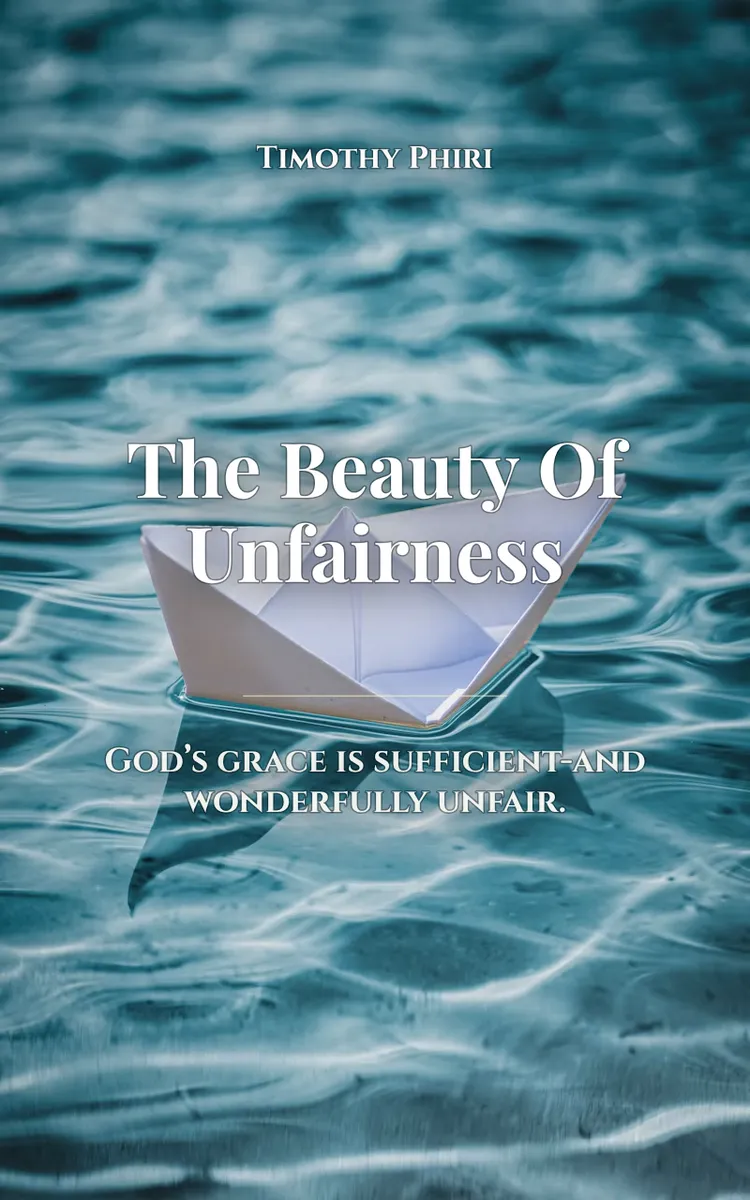
"The Beauty Of Unfairness" is a religious devotional book by Timothy Phiri with 17 chapters and approximately 13,845 words. Christian reflection on grace, judgment, and mercy.
This book was created using Inkfluence AI, an AI-powered book generation platform that helps authors write, design, and publish complete books.
Frequently Asked Questions
What is "The Beauty Of Unfairness" about?
Christian reflection on grace, judgment, and mercy
How many chapters are in "The Beauty Of Unfairness"?
The book contains 17 chapters and approximately 13,845 words. Topics covered include The Shock of Grace, If God Were Fair, We’d Be Condemned, Grace That Rewrites the Score, Trusting the Unseen Gift, and more.
Who wrote "The Beauty Of Unfairness"?
This book was written by Timothy Phiri and created using Inkfluence AI, an AI book generation platform that helps authors write, design, and publish books.
Write your own religious devotional book with AI
Describe your idea and Inkfluence writes the whole thing. Free to start.
Start writingCreated with Inkfluence AI


