
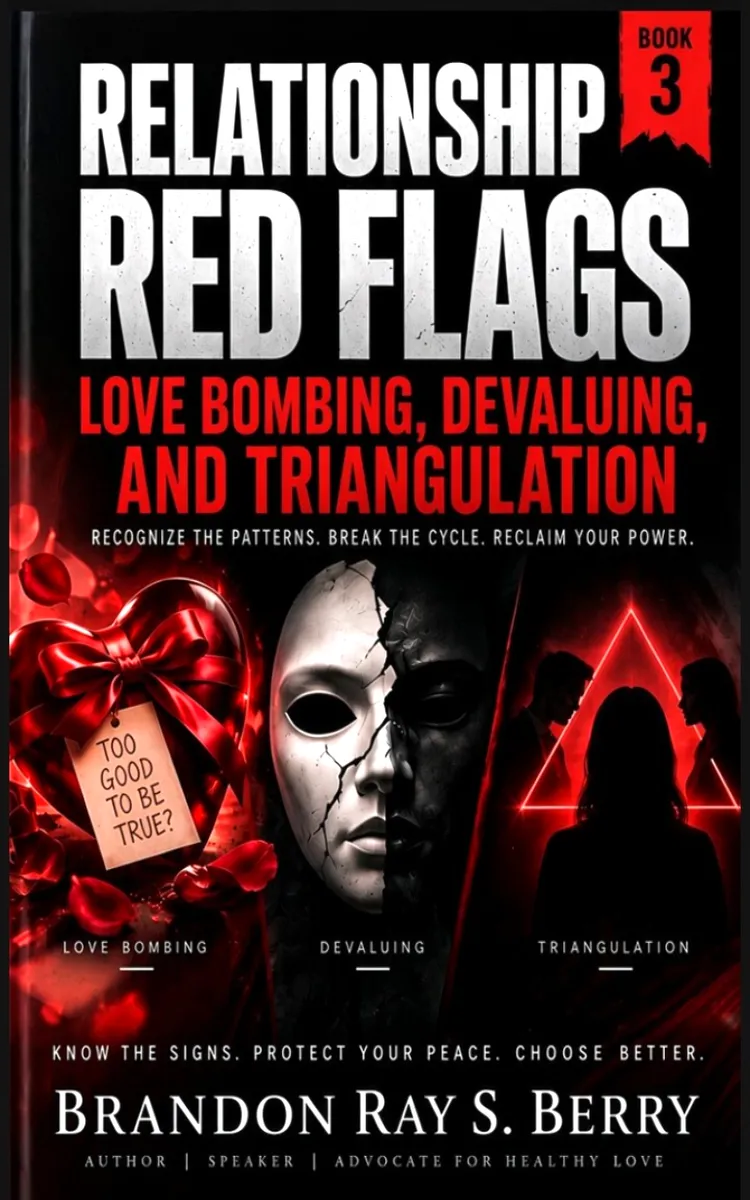

Read the first chapter
The whole of chapter one, free. About 6 min. Turn the pages with the arrows, your keyboard, or a swipe.
Chapter 1
Rebuilding Trust in Your Inner Signals
When Intensity Starts Feeling Like Safety
The message arrived at 11:47 p.m.: I’ve never felt this connected to anyone. You’re different. You’d known this person for nine days, yet the words landed with the force of a promise. Your phone became the first thing you checked in the morning and the last thing you held at night. When they pulled back two weeks later, you didn’t just miss them. You questioned your value, your memory, and your ability to tell what had happened.
That confusion can feel especially powerful when attention has been scarce in your past. Maybe affection came and went without warning. Maybe you learned to work hard for approval, stay agreeable to keep peace, or treat someone else’s mood as a weather report for your own safety. So when a person arrives with constant praise, fast closeness, and dramatic reassurance, your nervous system may read the rush as relief.
If intensity feels like proof of love, how can you trust your signals when the pattern changes?
The Shift From Chasing Certainty to Reading Consistency
Old Belief: If someone makes me feel deeply wanted, the connection must be meaningful.
New Reality: Feeling wanted matters, but steady behavior tells you more than emotional intensity.
This shift doesn’t ask you to become suspicious of affection. It asks you to widen the lens. Attachment needs - your need for closeness, reassurance, belonging, and emotional safety - can make certain forms of attention feel especially powerful. When those needs have been neglected, sudden warmth may feel like finally being chosen. The feeling is real. The conclusion may still need time.
Past experiences shape the meaning you give to present behavior. If love once depended on earning approval, you might mistake over-giving for closeness. If someone important was unpredictable, you may become highly alert to every change in tone. A delayed message can feel like rejection, while a flood of praise can feel like rescue. Neither reaction makes you foolish. Your mind is using old information to interpret new circumstances.
Try comparing two connections. In one, a person says, “You’re everything I’ve been looking for,” after a few intense conversations, then becomes irritated when you need space. In another, a person shows interest while respecting your pace, follows through on plans, and remains kind during an ordinary disagreement. The first may create a bigger emotional high. The second gives your inner compass better evidence.
How the Inner Compass Gets Clouded
The Inner Compass Method begins with three questions: What am I feeling? What history might be amplifying this feeling? What is the person consistently doing? The first question honors your experience. The second adds context without blaming you. The third brings you back to observable behavior.
Self-doubt often enters when someone challenges your perception. You may hear, “You’re too sensitive,” or, “That never happened,” after noticing a sharp change in treatment. Over time, you start looking outward for permission to trust yourself. The problem isn’t that you care too much. It’s that repeated confusion can train you to abandon your own evidence.
Signs this pattern is running your life:
• You treat emotional relief as proof of compatibility. After a tense period, a loving message feels so calming that you overlook what caused the tension.
• You explain away inconsistency before naming it. You blame work, stress, family, or your own expectations, even when the same cycle repeats.
• You monitor yourself more than you observe the relationship. You spend hours asking whether you sounded needy instead of asking whether the other person is dependable.
• You feel compelled to earn the earlier version of the connection. You become more flexible, available, or forgiving in hopes of getting the intensity back.
Your inner compass becomes steadier when feelings, history, and repeated behavior are considered together - not when any one of them is ignored.
Questions That Separate Need From Evidence
• What part of the other person’s attention felt most powerful: being understood, being pursued, being praised, or finally feeling chosen?
Your answer may reveal an attachment need asking for care. If being pursued mattered most, notice whether the relationship still feels safe when pursuit slows into ordinary consistency.
• When have I mistaken uncertainty for chemistry?
Think about a specific moment, such as waiting six hours for a reply after receiving intense messages the night before. An honest answer might be, “The unpredictability kept me focused on them, and I called that excitement.”
• What did I learn about love in my earliest close relationships?
You don’t need a perfect childhood summary. Write one sentence, such as, “I learned to stay quiet when someone was upset,” or, “I learned affection could disappear if I disappointed someone.” Then ask whether that lesson is directing your current choices.
• What facts would I record if I stopped arguing with my feelings?
List dates, actions, and changes in behavior without adding excuses. “They canceled twice and became affectionate when I considered stepping back” is clearer than “They’re probably just overwhelmed.”
• What would I advise a friend who described this same pattern?
Distance often makes the pattern easier to see. If you’d tell your friend to slow down, ask direct questions, or protect their boundaries, consider why you deserve less care from yourself.
The Seven-Day Inner Compass Check
Challenge: Track the Pattern, Not the Promise
For the next seven days, use a five-minute note on your phone after meaningful interactions.
• Write three short lines: Feeling, Old Story, and Observed Behavior.
• Under “Feeling,” name the strongest emotion and rate it from 1 to 10.
• Under “Old Story,” write the fear or hope attached to it, such as “If they’re quiet, I’m being abandoned.”
• Under “Observed Behavior,” record only what happened. Avoid guesses about motives.
• At the end of each day, circle any gap between what was promised and what was done.
• On day seven, review the notes before making a major emotional decision.
Difficulty: Medium
You’ll know it’s working when...
• You can describe a change in behavior without immediately blaming yourself.
• You notice that reassurance calms you, but consistency builds trust.
• You pause before over-explaining, chasing, or offering more than feels healthy.
• You can name both your attachment need and the evidence in front of you.
The point isn’t to turn connection into paperwork. It’s to give your mind a stable record when strong feelings make everything blurry. A written pattern can interrupt the urge to treat one beautiful message as proof that all concerns have disappeared.
Trusting the Signal Beneath the Doubt
Your feelings are signals, not verdicts; your history is context, not destiny; and consistent behavior is the evidence that helps you choose wisely.
You learned how attachment needs can make certain attention feel like safety.
• You saw how past experiences can shape what you expect from love and how quickly you react to distance.
• You explored how self-doubt grows when someone repeatedly challenges your perception.
• You practiced the Inner Compass Method: feeling, history, and observable behavior.
• You created a seven-day record to separate promises, emotional reactions, and patterns.
You don’t have to prove that a connection is bad before you’re allowed to slow down. You can be grateful for the tenderness you felt and still ask whether the relationship supports your well-being. That question becomes even more important as you learn how overwhelming early attention can create attachment before trust has had time to grow.
Love may arrive intensely, but trust is built by what remains steady after the intensity fades.
End of chapter one. 7 more chapters and about 11,542 words in the full book.
Swipe or use the arrows to turn the page


What's inside: 8 chapters
- 1. Rebuilding Trust in Your Inner Signals
- 2. Recognizing Love Bombing’s Intensity
- 3. Understanding the Devaluation Cycle
- 4. Seeing Through Triangulation
- 5. Spotting Manipulative Habits in Yourself
- 6. Setting Boundaries and Responding Safely
- 7. Tracing the Impact on Your Mind
- 8. Breaking the Cycle and Reclaiming Choice
About this book
"Relationship Red Flags: Love-Bombing, Devaluing and Triangulation" is a self-help book by Brandon Ray S. Berry with 8 chapters and approximately 11,542 words. Understanding love bombing, devaluation, triangulation, and their effects.
This book was created using Inkfluence AI, an AI-powered book generation platform that helps authors write, design, and publish complete books. It was made with the AI Self-Help Book Writer.
Frequently Asked Questions
What is "Relationship Red Flags: Love-Bombing, Devaluing and Triangulation" about?
Understanding love bombing, devaluation, triangulation, and their effects
How many chapters are in "Relationship Red Flags: Love-Bombing, Devaluing and Triangulation"?
The book contains 8 chapters and approximately 11,542 words. Topics covered include Rebuilding Trust in Your Inner Signals, Recognizing Love Bombing’s Intensity, Understanding the Devaluation Cycle, Seeing Through Triangulation, and more.
Who wrote "Relationship Red Flags: Love-Bombing, Devaluing and Triangulation"?
This book was written by Brandon Ray S. Berry and created using Inkfluence AI, an AI book generation platform that helps authors write, design, and publish books.
How can I create a similar self-help book?
You can create your own self-help book using Inkfluence AI. Describe your idea, choose your style, and the AI writes the full book for you. It's free to start.
Write your own self-help book with AI
Describe your idea and Inkfluence writes the whole thing. Free to start.
Start writingCreated with Inkfluence AI


