

Read the first chapter
The whole of chapter one, free. About 6 min. Turn the pages with the arrows, your keyboard, or a swipe.
Chapter 1
Understanding Emotional Pain
When Pain Shows Up Before You Have Words
You’re standing in the kitchen, staring at a message you’ve read three times. It wasn’t cruel. It was brief. Still, your chest tightens, your stomach knots, and your mind starts building a case: I’ve disappointed them. I’m failing. Something is wrong with me. You tell yourself to pray harder, pull yourself together, and get on with the evening.
Later, you snap at someone you love. Then shame arrives. You wonder why a small moment has taken so much out of you. The tears feel embarrassing, the fatigue feels inconvenient, and the tension in your shoulders seems unrelated - until you notice how long you’ve been carrying it.
What if your distress isn’t proof that you’re failing, but a signal that something in you needs care?
From Moral Failure to Whole-Person Signals
Old Belief: If I’m anxious, angry, exhausted, or deeply sad, my faith must be weak.
New Reality: Emotional pain is a God-given signal from the whole person - spirit, soul, and body - pointing toward needs that deserve wise attention.
This shift doesn’t excuse harmful choices. Anger can still lead us to speak harshly. Fear can still make us avoid responsibilities. But the emotion itself isn’t automatically sinful. It’s information. Pain tells you that something matters, something has been threatened, or something needs repair.
Scripture doesn’t present human beings as detached souls floating above physical life. Paul prayed that believers would be kept sound in spirit, soul, and body (1 Thessalonians 5:23). Jesus wept at Lazarus’s tomb, even though He knew resurrection was coming. His tears weren’t a failure of trust. They showed love, loss, and compassion moving through a real human body.
Consider a small-business owner who begins waking at 3 a.m. with a racing heart. He tells himself he should simply trust God. Yet his body may be signaling prolonged stress, his soul may be carrying fear about responsibility, and his spirit may be longing for honest dependence rather than private pressure. Prayer matters here. So do rest, conversation, practical planning, and perhaps professional support. The Whole-Person Signal Map helps us listen to all three areas instead of blaming one.
When we call every painful feeling a spiritual problem, we often add shame to suffering. Shame makes the signal harder to understand. Compassion creates enough safety to ask, What is happening in me, and what kind of care is needed?
Reading the Whole-Person Signal Map
Emotional pain often travels through three connected channels. The spirit concerns your relationship with God, your sense of meaning, hope, and belonging. The soul includes your thoughts, emotions, memories, choices, and relationships. The body carries the physical effects: tight muscles, shallow breathing, fatigue, headaches, stomach distress, or a nervous system stuck on alert.
These parts aren’t separate compartments. A frightening conversation may produce racing thoughts, a clenched jaw, and questions about whether God is near. A week of poor sleep may make ordinary problems feel unbearable. A season of grief may weaken your appetite and make prayer feel distant. The signal is whole-person, even when it first appears in one place.
Stress can move the body into fight, flight, or freeze. You may become irritable, restless, numb, or unable to think clearly. That response is not a character verdict. It’s your protective system trying to keep you safe. Sometimes it misreads the present through the lens of earlier pain, but it still needs patient attention rather than contempt.
Signs the signal map is being ignored
1. You spiritualize every symptom. You call constant exhaustion laziness or label anxiety as unbelief without considering sleep, pressure, grief, or unresolved fear.
2. You explain feelings without actually feeling them. You can give a polished answer about God’s goodness, yet your body remains tense and your sadness has nowhere to go.
3. You react more strongly than the moment seems to require. A delayed reply feels like abandonment, or a minor correction feels like rejection.
4. You keep pushing until your body forces a stop. Headaches, stomach problems, tears, or numbness become the only language strong enough to get your attention.
Pain becomes easier to respond to when you listen for the need beneath the signal instead of judging the signal itself.
A simple check can help: What is happening in my spirit? What is happening in my soul? What is happening in my body? You don’t need a perfect answer. You’re learning to notice.
Questions That Make Room for Honest Attention
1. When emotional pain rises, which part of you do you notice first: your thoughts, your body, or your relationship with God? Perhaps your first clue is a tight throat, or perhaps you immediately assume God is disappointed. Naming your starting point helps you notice what may be overlooked.
2. What physical signal has been repeating lately? It might be waking at 3 a.m., clenching your teeth, losing your appetite, or feeling drained after ordinary tasks. Instead of asking, “What’s wrong with me?” try asking, “What might my body be trying to tell me?”
3. What emotion have you been calling unacceptable? You may admit, “I’m angry that this happened,” or “I’m grieving what I hoped family life would be.” Honest naming doesn’t give the emotion control; it gives you a truthful place to begin.
4. Where have you confused trust in God with refusing help? Faith may include prayer, but it can also include a doctor’s appointment, a counselor, a wise friend, a meal, or a night of sleep. Receiving care isn’t turning away from God.
5. What would compassionate responsibility look like today? Maybe it means apologizing for sharp words while also acknowledging the exhaustion underneath them. Both truths can fit: your behavior may need repair, and your pain may need care.
The Seven-Day Whole-Person Check-In
For the next seven days, pause once each evening for five minutes and complete a Whole-Person Signal Map.
• Write one sentence about your spirit: “Today I felt close to God,” “I felt spiritually numb,” or “I’m carrying questions I haven’t voiced.” - Write one sentence about your soul: name the strongest emotion and the situation connected to it. - Write one sentence about your body: note your energy, breathing, sleep, appetite, or physical tension. - Add one small response: a brief prayer, a glass of water, ten slow breaths, a boundary, a conversation, or an appointment you’ve been postponing. - End with: “My pain is a signal, not a verdict.”
Expected difficulty: Easy to Medium
You’ll know it’s working when...
• You can name an emotion without immediately condemning yourself. - You notice body signals earlier in the day. - Your prayers become more honest and specific. - You choose one wise response instead of reacting automatically. - You begin to see patterns across spirit, soul, and body.
If the check-in reveals intense distress, persistent physical symptoms, thoughts of self-harm, or an inability to function, please reach out to a qualified mental-health professional or medical provider. Seeking skilled care is not a failure of faith. It’s one way of honoring the life God has entrusted to you.
A Kinder Way to Hear Your Pain
Emotional pain is not a moral verdict; it is a whole-person signal inviting wise, compassionate care.
• You learned that spirit, soul, and body are connected in emotional distress. - You saw why anxiety, grief, anger, and exhaustion aren’t automatically signs of weak faith. - You learned to notice fight, flight, and freeze as protective stress responses rather than character judgments. - You practiced using the Whole-Person Signal Map to identify a need and choose a grounded response.
God is not intimidated by what your pain reveals. He meets people in truth, not performance. As you become more honest about the signals within you, you’ll be better prepared to name the grief, anxiety, and shame that often hide beneath them. That honest naming is where deeper healing begins.
End of chapter one. 19 more chapters and about 29,248 words in the full book.
Swipe or use the arrows to turn the page


What's inside: 20 chapters
- 1. Understanding Emotional Pain
- 2. Naming the Feelings Beneath the Mask
- 3. Listening to Your Body’s Stress Signals
- 4. Praying Through Grief with Lament
- 5. Grounding Yourself During Emotional Overwhelm
- 6. Finding Safety in Trusted Community
- 7. Replacing Distorted Thoughts with Truth
- 8. Breaking Free from Toxic Shame
- 9. Setting Boundaries Without Guilt
- 10. Forgiving Without Restoring Unsafe Trust
- 11. Rebuilding Trust After Relational Harm
- 12. Untangling Your Story from Trauma
- 13. Finding Meaning Without Excusing Harm
- 14. Practicing Self-Compassion in Christ
- 15. Restoring Connection Through Honest Communication
- 16. Creating Rhythms That Protect Your Wellbeing
- 17. Preparing for Emotional Triggers
- 18. Choosing Courageous Steps After Healing
- 19. Serving Others Without Losing Yourself
- 20. Sustaining Hope Through Lifelong Growth
About this book
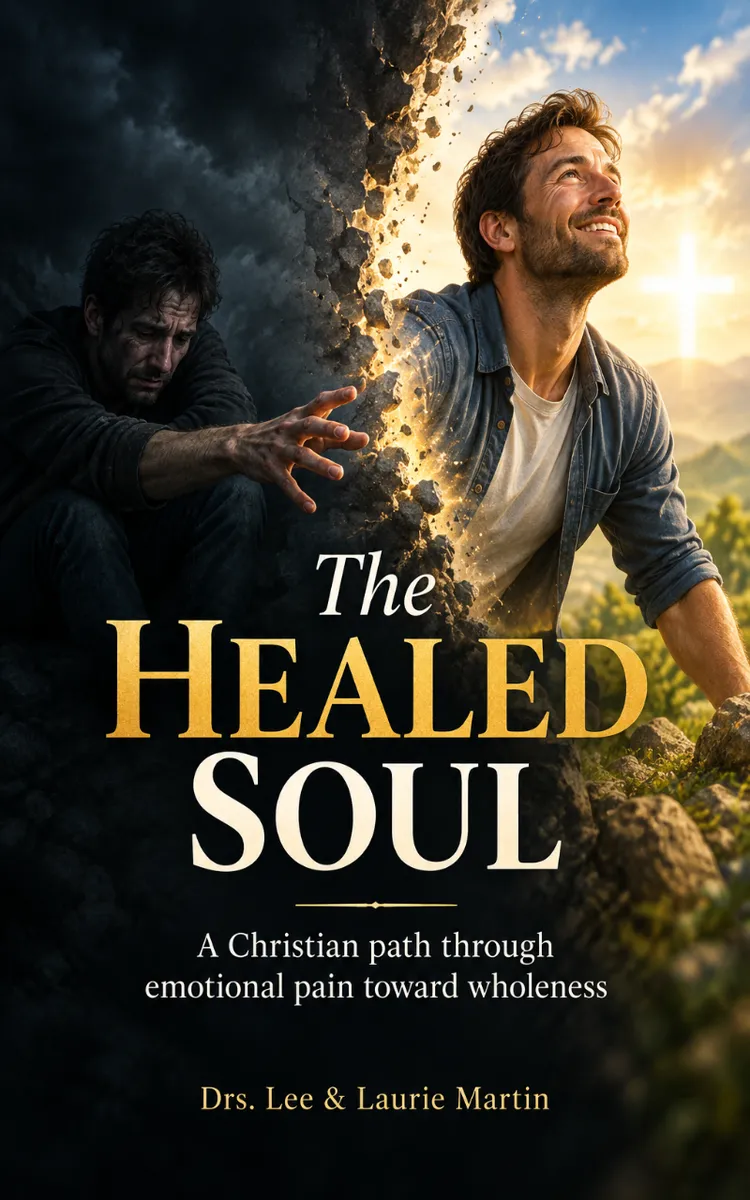
"The Healed Soul" is a self-help book by Drs. Lee & Laurie Martin with 20 chapters and approximately 29,248 words. Integrating Christian faith and psychology to heal emotional pain and build resilience.
This book was created using Inkfluence AI, an AI-powered book generation platform that helps authors write, design, and publish complete books. It was made with the AI Self-Help Book Writer.
Frequently Asked Questions
What is "The Healed Soul" about?
Integrating Christian faith and psychology to heal emotional pain and build resilience
How many chapters are in "The Healed Soul"?
The book contains 20 chapters and approximately 29,248 words. Topics covered include Understanding Emotional Pain, Naming the Feelings Beneath the Mask, Listening to Your Body’s Stress Signals, Praying Through Grief with Lament, and more.
Who wrote "The Healed Soul"?
This book was written by Drs. Lee & Laurie Martin and created using Inkfluence AI, an AI book generation platform that helps authors write, design, and publish books.
How can I create a similar self-help book?
You can create your own self-help book using Inkfluence AI. Describe your idea, choose your style, and the AI writes the full book for you. It's free to start.
Write your own self-help book with AI
Describe your idea and Inkfluence writes the whole thing. Free to start.
Start writingCreated with Inkfluence AI


