
Read the first chapter
The whole of chapter one, free. About 6 min. Turn the pages with the arrows, your keyboard, or a swipe.
Chapter 1
Trusting Your Uneasy Signals
When Your Body Says “Something’s Off”
You’re sitting across from your partner at dinner, nodding while they explain why they checked your phone. Their reason sounds almost reasonable. They were worried. They care about you. You have nothing to hide, right?
Still, your shoulders are tight. Your stomach feels heavy. You’re choosing each word carefully because you already know how the conversation might turn if you disagree. By the time you leave the table, you’re wondering whether you’re upset about what happened - or upset because you’re “too sensitive.”
That question can keep you stuck for a long time. How do you take your discomfort seriously when you can’t yet prove something is wrong?
The Shift From Needing Proof to Noticing Patterns
Old Belief: If I can’t explain my discomfort or prove harm, I should ignore it.
New Reality: Discomfort is information, not a verdict - and I’m allowed to investigate what it’s telling me.
A troubling feeling doesn’t automatically mean your partner is dangerous, dishonest, or incapable of change. Feelings can come from old wounds, stress, insecurity, or a painful past relationship. But that doesn’t make them meaningless. Your unease may be pointing toward a present-day pattern that deserves your attention.
Think of the Inner Signal Compass as a way to orient yourself. It doesn’t announce, “Leave now,” or hand down a final judgment. It helps you notice three things: what happened, what your body felt, and what happened when you tried to address it.
For example, your partner makes a joke about your appearance. You laugh along, but your chest tightens. When you say it hurt, they apologize and ask what would feel better next time. That response gives you useful information. Compare it with, “You’re impossible to joke with,” followed by more comments about your body. The original joke matters, but their response to your concern tells you even more.
Taking your concerns seriously doesn’t mean treating every uneasy feeling as proof. It means refusing to treat yourself as unreliable by default. You can stay curious without becoming dismissive. You can pause before making a major decision while still admitting, “That didn’t feel okay.”
Reading the Inner Signal Compass
Some people learn to distrust their own reactions because speaking up once led to ridicule, anger, or punishment. Others grew up believing that being “easygoing” meant swallowing discomfort. Over time, the mind starts editing the message before it reaches awareness: It’s not a big deal. They’re tired. I’m being dramatic.
The Inner Signal Compass interrupts that automatic editing. First, name the observable event without adding a conclusion. Then notice your response. Finally, watch the pattern that follows when you communicate. This keeps you grounded in what you know while leaving room for what you don’t know yet.
When discomfort repeatedly gets explained away, your life starts being organized around someone else’s comfort.
Signs this pattern is running your life
1. You rehearse ordinary conversations. You spend ten minutes planning how to ask for a basic need because you’re bracing for defensiveness, blame, or silence.
2. You need outside permission to trust yourself. You send screenshots to friends and ask, “Am I crazy?” before allowing yourself to admit that a message felt cruel or controlling.
3. You feel relief when plans are canceled. You may care about your partner and still notice that your body relaxes when you get a night away from them.
4. You keep moving the finish line for concern. You tell yourself you’ll take your discomfort seriously only if the behavior gets worse, happens three more times, or becomes impossible to explain.
The goal isn’t to become suspicious of every awkward moment. Healthy relationships include misunderstandings, clumsy comments, and imperfect reactions. The difference is whether there’s room for repair. A partner who can hear your concern may not respond perfectly, but they show interest in your experience. A repeated pattern of minimizing, punishing, or twisting your words deserves a closer look.
Questions That Bring the Signal Into Focus
1. What exactly happened, without the story I’m adding to it? Write one plain sentence, such as, “They read my messages while I was asleep,” rather than, “They don’t respect me.” The conclusion may matter, but starting with the event helps you stay clear.
2. What did I notice in my body during and after the interaction? Look for specific details: a racing heart, clenched jaw, nausea, numbness, or the urge to become very agreeable. Your body may be reacting to an old experience, a current threat, or both. Either way, it’s worth listening to.
3. What happens when I bring up the concern calmly? Do they ask questions, take responsibility, and make a genuine effort? Or do they call you dramatic, change the subject, threaten to leave, or make you comfort them? Their response is part of the evidence.
4. Would I accept this behavior if I weren’t afraid of losing the relationship? Be honest, not heroic. You might write, “I’m staying quiet because I fear being alone,” or, “I’m not sure yet, but I know I don’t want this to continue.”
5. What would I tell someone I love if they described this exact situation? Don’t rush to give them a command. Notice whether you’d encourage them to set a boundary, gather support, create distance, or simply stop dismissing themselves. That same compassion belongs to you.
These questions help separate intuition from fear without forcing a perfect answer. Fear often shouts in broad predictions: This will end terribly. No one can be trusted. Intuition is usually quieter and more specific: I felt pressured when I said no. Their explanation doesn’t match what I observed. I don’t feel safe raising ordinary concerns.
A Seven-Day Inner Signal Compass Check-In
Challenge: Record the Signal Before You Explain It
For the next seven days, keep a private note on your phone or use a small notebook. After any interaction that leaves you uneasy, complete the following before asking someone else what they think:
• Write what happened in one factual sentence. - Name your immediate body response. - Rate the discomfort from 0 to 10. - Record what you did next - agreed, apologized, went quiet, left, or spoke up. - If you raised the issue, write down your partner’s response as accurately as you can. - At the end of each day, look for repetition rather than judging a single incident.
Expected difficulty: Medium
You don’t need to confront anyone during this exercise. The point is to rebuild your ability to notice yourself before you explain yourself away. If writing feels unsafe because someone checks your phone, use a protected method or speak with a trusted person in a private setting.
You’ll know it’s working when...
• You can describe an event without immediately blaming yourself. - You notice the difference between a one-time awkward moment and a repeated pattern. - You can name what your body felt without calling it silly. - You pay attention to how concerns are received. - You make one small choice based on your information, such as pausing a conversation or setting a clear boundary.
By the end of the week, you may not have a final answer. That’s okay. Clarity often begins as better questions and more honest observations.
Your Unease Deserves a Place at the Table
You don’t need courtroom proof to honor the feeling that something isn’t right.
• Discomfort is information to explore, not a verdict to obey or dismiss. - The Inner Signal Compass helps you track the event, your body’s response, and the pattern that follows. - Intuition tends to be specific and grounded, while fear often arrives as sweeping predictions. - A partner’s response to your concern can reveal more than the original incident. - Recording signals over time can help you recognize patterns without rushing into conclusions.
You’re allowed to move slowly. You’re also allowed to stop arguing with yourself about whether your experience is valid. As you continue noticing what happens in the relationship - and what happens inside you - you’ll have a steadier foundation for recognizing the red flags that deserve your attention.
End of chapter one. 9 more chapters and about 14,612 words in the full book.
Swipe or use the arrows to turn the page

What's inside: 10 chapters
- 1. Trusting Your Uneasy Signals
- 2. Spotting Patterns Behind Red Flags
- 3. Setting Boundaries Without Guilt
- 4. Talking Through Difficult Concerns
- 5. Choosing Safety and Moving Forward
- 6. Recognizing Emotional Red Flags
- 7. Seeing How Control Starts Small
- 8. Responding to Control Calmly
- 9. Planning a Safer Exit
- 10. Rebuilding After Emotional Control
About this book
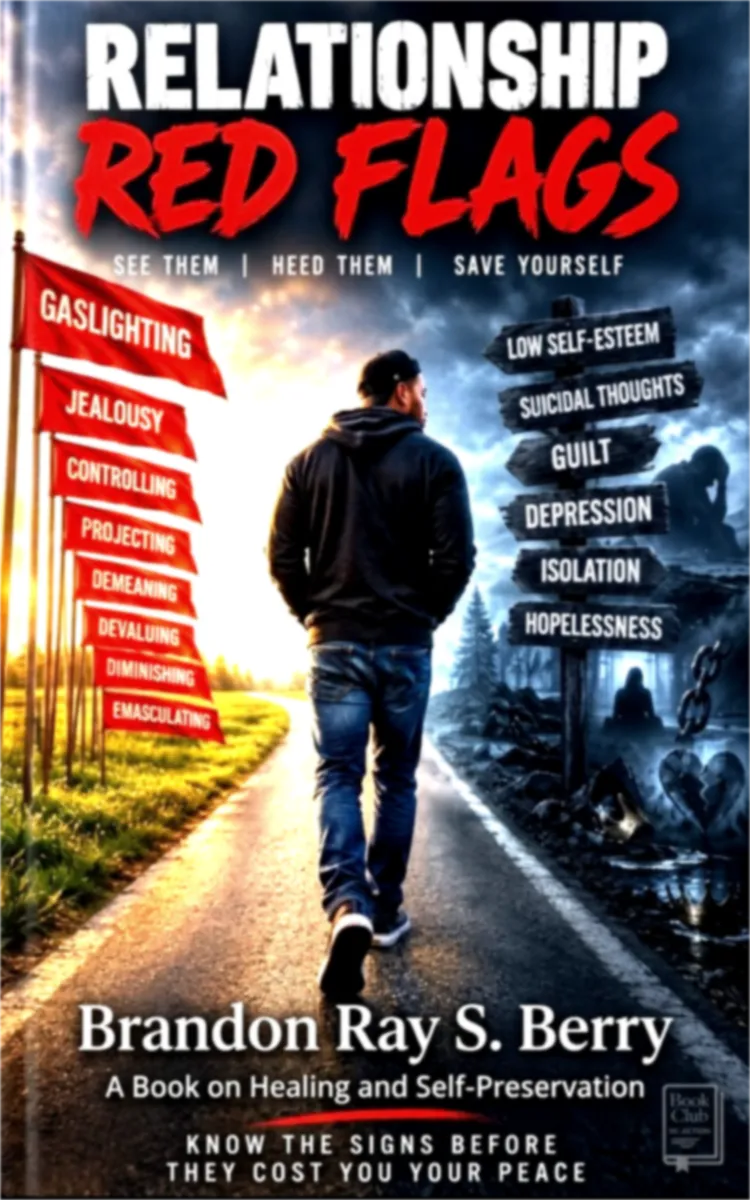
"Relationship Red Flags" is a self-help book by Brandon Ray S. Berry with 10 chapters and approximately 14,612 words. Learn to take your discomfort seriously without treating every uneasy feeling as proof that something is wrong. Relationship Red Flags gives you a way to compare incidents and spot the pattern behind them.
This book was created using Inkfluence AI, an AI-powered book generation platform that helps authors write, design, and publish complete books. It was made with the AI Self-Help Book Writer.
Frequently Asked Questions
What is "Relationship Red Flags" about?
Learn to take your discomfort seriously without treating every uneasy feeling as proof that something is wrong. Relationship Red Flags gives you a way to compare incidents and spot the pattern behind them. You’ll learn to distinguish one bad moment from recurring control, contempt, and dishonesty, and to notice when apologies leave the behavior unchanged. The Inner Signal Compass helps you investigate what your unease may be telling you, while leaving room for stress, old wounds, and other explanations. You’ll also learn to set boundaries as decisions about your own participation, rather than limits that need your partner’s approval. See how a boundary can mean leaving at nine, ending a conversation when yelling starts, or keeping your messages private. In 10 focused chapters, this book helps you name what is happening and respond with more clarity. Your discomfort can be a place to begin paying attention.
How many chapters are in "Relationship Red Flags"?
The book contains 10 chapters and approximately 14,612 words. Topics covered include Trusting Your Uneasy Signals, Spotting Patterns Behind Red Flags, Setting Boundaries Without Guilt, Talking Through Difficult Concerns, and more.
Who wrote "Relationship Red Flags"?
This book was written by Brandon Ray S. Berry and created using Inkfluence AI, an AI book generation platform that helps authors write, design, and publish books.
How can I create a similar self-help book?
You can create your own self-help book using Inkfluence AI. Describe your idea, choose your style, and the AI writes the full book for you. It's free to start.
Write your own self-help book with AI
Describe your idea and Inkfluence writes the whole thing. Free to start.
Start writingCreated with Inkfluence AI


