

Read the first chapter
The whole of chapter one, free. About 8 min. Turn the pages with the arrows, your keyboard, or a swipe.
Chapter 1
Recognizing the Adapted Personality
The Moment You Stop Hearing Yourself
Mara is sitting in the meeting room when she hears her name. Her proposal is on the table: a clear change to the process, long overdue and well thought out. The department head asks, “What do you think?” For a brief moment, Mara feels what she really wants to say. Then she sees the skeptical faces of her colleagues. She smiles, makes her voice smaller, and says, “It was just an idea. Maybe it’s not that important.”
Later, on her way home, she’s annoyed with herself. Not because anyone rejected her proposal. But because she never really stood up for it. She wanted to be seen as easygoing, sensible, and pleasant. To achieve that, she held back some of her clarity.
The crucial question isn’t just whether other people like you - but what you take away from yourself in order to be liked.
The Many Faces of Approval
The dependable helper: Nico almost always says yes when someone needs support. He takes extra shifts, listens to long complaints, and steps in even when his own day is already full. If he ever says no, he immediately feels selfish. His willingness to help is genuine. But it has taken on a second purpose: it’s meant to reassure him that he’s needed.
The agreeable partner: Leonie realizes that she actually wants a quiet weekend. But her partner suggests visiting friends. She smiles and says, “Sure, I’d love to.” As the evening goes on, she grows quieter and more irritable. Her tiredness, her boundary, and her desire to withdraw disappear behind the role of the easygoing partner.
The unassuming professional: Tarek knows his field well. Even so, he rarely speaks first in meetings. When someone praises his idea, he waves it away: “It was nothing special.” He doesn’t want to seem arrogant. So he prefers to show only a small part of what he can do. Recognition would be nice, but attention feels dangerous to him.
What all these people have in common:
• They shape their behavior strongly around how others might react. - They confuse belonging with constantly adapting. - They set aside their own needs before anyone has even asked about them. - They sometimes receive recognition - but still don’t truly feel seen inside.
The desire for recognition isn’t wrong. We humans need connection. A kind look, genuine interest, or the feeling of being welcome can strengthen us. It becomes harder when recognition turns into the inner standard for every decision. Then a protective role takes shape: the helper, the harmless one, the strong one, the sensible one, the entertainer, or the unassuming one.
This role usually doesn’t come from vanity. It arises because some part of us has learned: I’m safer this way. If I’m useful, I won’t be abandoned. If I don’t make a fuss, I won’t be criticized. If I shine, no one will notice how insecure I feel. The adapted personality is therefore, at first, a clever form of protection. It tries to preserve relationships and avoid pain.
But it often stays active long after the original danger has passed. At some point, it no longer protects you only from rejection. It also keeps spontaneity, anger, neediness, creativity, and clear desires at a distance. That’s exactly where the shadow begins to show itself.
When Approval Takes the Wheel
The Role Compass Model helps you recognize this process more clearly. It looks at four directions: adaptation, approval, repression, and authenticity. The first three show how you protect yourself. The fourth reminds you that you are more than your protective role.
Adaptation asks: “What’s expected of me?” Approval asks: “How do I need to be to be accepted?” Repression asks: “What am I not allowed to show of myself?” Authenticity, by contrast, asks: “What is truly alive in me right now?” None of these questions automatically makes you a good or bad person. But they lead to different decisions.
When you constantly orient yourself toward the outside world, an inner split develops. On the outside, you seem friendly, competent, or composed. Inside, tiredness, anger, longing, and sometimes envy build up. Not because you’re ungrateful. But because your own signals are hardly given any space. The body often notices this split before the mind does: pressure in your chest, shallow breathing, tense shoulders, or the need to spend a long time alone after a social gathering.
You might recognize yourself here if you:
1. check other people’s faces before answering, instead of noticing your own opinion; 2. immediately justify yourself after saying “no,” or take back your boundary; 3. hear praise but internally play it down or find it hard to believe; 4. often seem friendly while frustration and exhaustion pile up inside you.
The role that’s meant to secure approval for you can also make invisible exactly what you truly want to be seen for.
This doesn’t mean you have to stop being considerate from now on. Being authentic doesn’t mean expressing every impulse without a filter. It means no longer automatically trading away your decision in anticipation of other people’s reactions. You can remain kind and still disagree. You can help and still be tired. You can let yourself be seen without apologizing for it.
Where You Make Yourself Smaller Than You Are
Take a sheet of paper and answer the following questions. Don’t write the especially clever answer. Write the first one that sounds a little uncomfortable. Often, that’s where you’ll find something that has been waiting a long time for recognition.
1. With whom do I play the role of the agreeable person most strongly? Describe a specific situation from the past seven days. What did you say or do even though you actually wanted something else? Maybe you agreed to meet up even though your body was asking for rest.
2. What reaction do I fear if I speak my mind openly? Write down the feared sentence as precisely as you can: “Then they’ll think I’m difficult,” “Then I won’t be invited anymore,” or “Then they’ll see I have no idea what I’m talking about.” Then ask yourself whether this danger really exists today or whether it comes from an older experience.
3. What part of myself do I hold back so that I’ll be approved of? It might be your anger, your ambition, your playfulness, your need for closeness, or your wish not to be strong for once. Formulate an honest sentence: “I rarely show that I …”
4. What kind of recognition do I regularly receive - and what kind do I still miss? Maybe others praise you for being reliable, but hardly anyone asks how you’re really doing. Maybe you’re valued for your performance while your gentle or creative side remains invisible.
5. What would I decide differently today if rejection weren’t allowed to dictate my behavior? Don’t choose a major life decision. Pick something observable: a message, a request, a boundary, or a sentence in your next conversation. Authenticity often begins not with a dramatic break, but with a sentence you no longer swallow.
Afterward, read through your answers slowly. Don’t look for solutions right away. Just mark the places where you surprise yourself. They’re clues to the direction in which your inner compass has so far been led away from approval.
The Seven-Day Journey Back to Your Own Point of View
Challenge: “One Week Without Unspoken Agreement”
The goal isn’t to deliberately rub people the wrong way. Instead, you’re observing when you automatically agree, make yourself smaller, or take on a role. Then you practice a small, honest adjustment. One a day is enough.
• Day 1: Write down three situations in which you react today to what you think others expect. Next to each one, write what you actually wanted. - Day 2: Ask for time to think about a small matter. Say: “Let me check whether that works for me, and I’ll get back to you later.” This creates a pause between the request and an automatic yes. - Day 3: Express an opinion of your own without immediately softening it. For this one sentence, leave out “Maybe,” “It’s just an idea,” or “But it’s not that important.” - Day 4: Say no to a manageable request. Explain yourself in no more than one short sentence. A no doesn’t need a long speech to be credible. - Day 5: Accept a compliment without returning it or playing it down. A simple “Thank you, that makes me happy” is enough. - Day 6: Do something that belongs to a part of yourself you’ve been holding back: make music, speak your mind, ask for quiet, show your sense of humor, or start something of your own. - Day 7: Read your notes. Answer in writing: “When did I feel more like myself, despite the possibility of rejection?”
Difficulty level: 3 out of 5 - emotionally challenging, but manageable in everyday life.
Don’t wait to celebrate yourself until everyone else is delighted. Celebrate the inner movement you can notice for yourself.
Celebrate when …
• you don’t answer right away just to seem agreeable; - you express a desire of your own without apologizing for it; - you can let a compliment stand; - you feel a little discomfort after setting a boundary and still don’t immediately back down.
Parts of this week may feel unfamiliar. That doesn’t prove you’re becoming selfish. It may mean that your old protective role no longer controls every decision. Shame and nervousness often show up precisely where personal freedom is beginning to make itself felt.
Your Compass Points Back to You
You don’t have to lose other people’s approval to find yourself again - but you do have to stop abandoning yourself for it.
• The desire for approval can shape a protective role that promises safety and belonging. - This role often pushes your own desires, boundaries, anger, neediness, and creativity into the background. - The Role Compass Model makes it visible whether you’re acting from adaptation or authenticity. - Small, concrete departures from an automatic yes help you feel your own point of view again.
Your shadow doesn’t show that something is wrong with you. It shows where you’ve held yourself back for too long. In the next step, we’ll meet the feelings that lie beneath this adaptation - not to get rid of them, but to understand what truth they’re preserving.
End of chapter one. 7 more chapters and about 11,406 words in the full book.
Swipe or use the arrows to turn the page

What's inside: 8 chapters
- 1. Recognizing the Adapted Personality
- 2. Uncover the Beliefs Behind the Fear
- 3. Notice feelings without judgment
- 4. Use shame as an indicator of freedom
- 5. Transform confusion into clear boundaries
- 6. Gently loosen protective mechanisms
- 7. Acting authentically despite fear of rejection
- 8. Integrate the shadow as a guide.
About this book
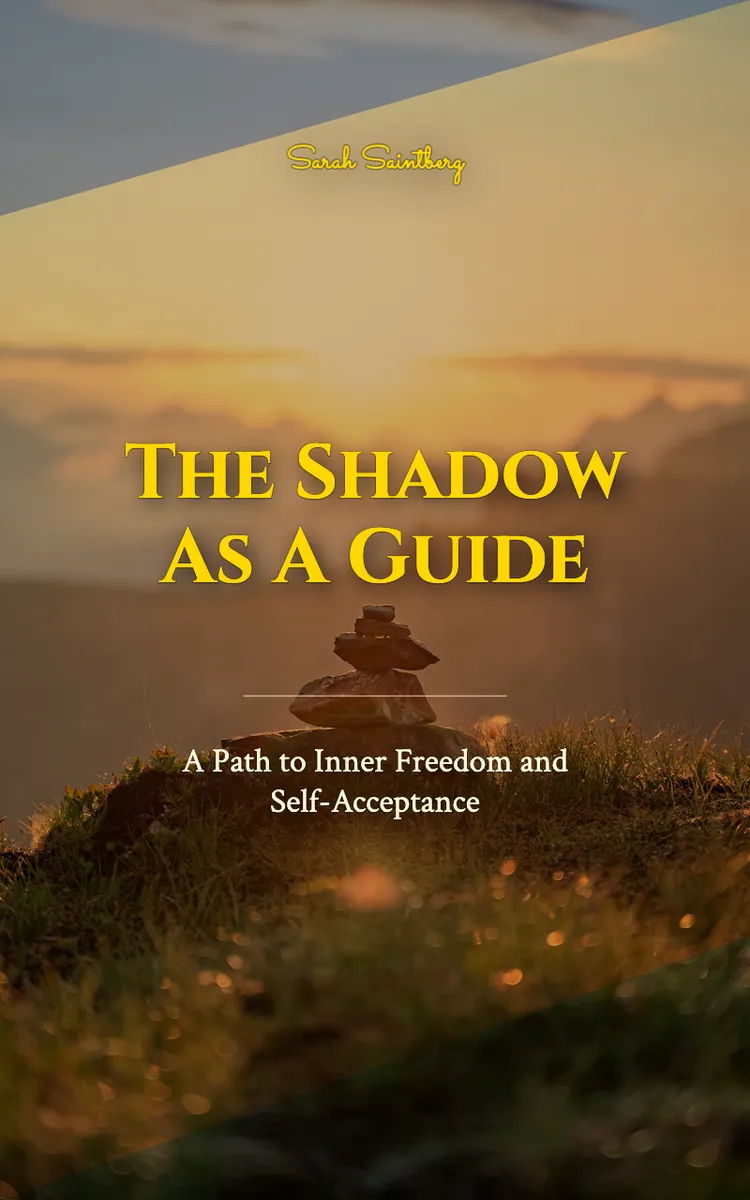
"The Shadow as a Guide" is a self-help book by Sarah Saintberg with 8 chapters and approximately 11,406 words. Shadow Work, Repressed Emotions, and Personal Freedom.
This book was created using Inkfluence AI, an AI-powered book generation platform that helps authors write, design, and publish complete books. It was made with the AI Self-Help Book Writer.
Frequently Asked Questions
What is "The Shadow as a Guide" about?
Shadow Work, Repressed Emotions, and Personal Freedom
How many chapters are in "The Shadow as a Guide"?
The book contains 8 chapters and approximately 11,406 words. Topics covered include Recognizing the Adapted Personality, Uncover the Beliefs Behind the Fear, Notice feelings without judgment, Use shame as an indicator of freedom, and more.
Who wrote "The Shadow as a Guide"?
This book was written by Sarah Saintberg and created using Inkfluence AI, an AI book generation platform that helps authors write, design, and publish books.
How can I create a similar self-help book?
You can create your own self-help book using Inkfluence AI. Describe your idea, choose your style, and the AI writes the full book for you. It's free to start.
Write your own self-help book with AI
Describe your idea and Inkfluence writes the whole thing. Free to start.
Start writingCreated with Inkfluence AI


