
Read the first chapter
The whole of chapter one, free. About 6 min. Turn the pages with the arrows, your keyboard, or a swipe.
Chapter 1
Recognizing Communication Red Flags
When the conversation keeps shifting beneath you
After a tense conversation, you open your notes and read the message you saved: “You said you’d tell me before making plans.” The reply came quickly: “That’s not what happened. You’re always twisting things.” By the end of the exchange, you’re apologizing for bringing it up. The original question - why the agreement changed - has vanished.
Later, the story shifts again. Yesterday, your partner said they forgot. Today, they say they never agreed. When you ask for a clear answer, they go quiet, change the subject, or accuse you of being controlling. You’re left doing detective work over ordinary conversations, wondering whether the problem is the behavior - or your reaction to it.
When communication repeatedly makes you doubt reality, silence your needs, or carry all the repair, the signal deserves attention.
From Keeping the Peace to Reading the Pattern
Old Belief: If I explain myself clearly enough, a healthy conversation will eventually happen.
New Reality: Clear communication helps, but it can’t create honesty, accountability, or respect where someone is committed to avoiding them.
This shift matters because troubling communication often looks like a misunderstanding at first. One missed detail can be innocent. One defensive moment can happen to anyone. The clearer question is what happens after the concern is raised. Does the person become curious and work toward repair, or do they rewrite events, punish you for asking, and leave you responsible for restoring peace?
The Clear Signal Map helps you read that difference. Look at four parts of the exchange: what happened, how the person responded, whether the pattern repeats, and what the interaction requires from you. For example, a partner agrees to share a financial decision before it’s made. They later act alone. When you ask about it, they say, “You’re too sensitive,” then refuse to discuss the money. The signal isn’t only the decision. It’s the broken agreement, the dismissal, the avoidance, and the pressure on you to drop the subject.
That doesn’t mean every conflict proves bad intent. It means you stop judging the conversation by its most reassuring sentence. You read the whole pattern.
The Clear Signal Map in Everyday Conversations
Gaslighting is not simply someone remembering an event differently. It becomes concerning when denial, distortion, or blame repeatedly pushes you away from facts you can reasonably verify. Inconsistency can be a changing story, promises that don’t match actions, or warmth that appears only after you threaten to leave. Avoidance may sound like jokes, silence, sudden anger, or “Why are we still talking about this?” Manipulation often uses guilt, fear, urgency, or affection to steer you away from your own judgment.
Emotional withholding can be a deliberate withdrawal of attention, warmth, or communication to make you comply. A person needing an hour to cool down is different from someone refusing contact for days, then returning only when you surrender the issue. Accountability failure appears when there’s an explanation for everything but no ownership: “I did that because you made me,” “You should’ve known,” or “I’m sorry you felt hurt.”
Use these signs as observations, not labels:
• You leave conversations less certain about facts you were clear about before. You reread messages, check dates, or ask friends whether you’re “crazy” for noticing a contradiction.
• The stated issue keeps changing. You raise a broken promise, and the conversation becomes about your tone, your past, or your supposed lack of trust.
• Repair depends on your surrender. Peace returns only after you apologize, stop asking questions, accept a vague promise, or agree not to mention it again.
• The same behavior repeats after reassuring words. There may be regret, tears, gifts, or a beautiful conversation, but no specific change you can observe.
Read the Pattern, Not the Performance
A convincing apology can be part of a pattern if it brings relief without responsibility, changed behavior, or restitution. The most useful evidence is what happens next.
Questions That Bring the Signal Into Focus
• What exactly happened, and what part of the story can I verify?
Write the date, agreement, message, or action in plain language. “They said they would call by 8 p.m.; they did not, then denied making the promise” is stronger than “They always mess with my head.”
• When I raise a concern, do I receive clarity or a new accusation?
Notice whether the response answers the question. If you ask about a secretive message and hear, “You’re so insecure,” the accusation may be avoiding the subject.
• What do I have to do to make the tension stop?
An honest answer might be, “I apologize even when I’m still confused,” or “I agree not to ask again.” That cost tells you something about the communication pattern.
• Has there been specific change, or only temporary relief?
Specific change might include sharing relevant information, keeping an agreement, and discussing what will happen if the problem occurs again. Feeling calmer for one evening isn’t the same as repair.
• What boundary would protect my reality and choice right now?
You might say, “I’ll discuss the missed agreement, but I won’t continue while I’m being called names. I’m ending this conversation and will revisit it tomorrow.” A boundary is not a demand that controls another person. It’s a decision about your participation.
A Seven-Day Clear Signal Practice
Challenge: Track the Conversation, Not Just the Feeling
For the next seven days, record one troubling interaction each day. Keep the notes somewhere private and safe.
• Write the observable event in one or two sentences.
• Record the response: clarification, denial, blame, silence, apology, or changed behavior.
• Note what you were pressured to do next.
• Mark whether there was a concrete repair within 48 hours.
• At the end of the week, review the entries for repetition rather than isolated drama.
Difficulty: Medium
You’ll know it’s working when...
• You can describe the pattern without relying only on labels.
• You notice the difference between a pause and punishment through silence.
• You stop treating every apology as proof that the problem is solved.
• You can name one boundary that protects your time, facts, or emotional safety.
• You feel more grounded, even if the truth is uncomfortable.
If recording interactions could increase danger, don’t keep notes where they can be discovered. Use the Safe Next-Step Compass: check safety first, then reach toward trusted support before collecting more information.
Clearer Signals, Safer Choices
The truth of a communication pattern is found less in the apology than in whether responsibility becomes visible afterward.
• Gaslighting, inconsistency, avoidance, manipulation, emotional withholding, and accountability failures often become clear through repetition.
• This framework separates the event from the response, the pattern, and the cost placed on you.
• Repair requires more than regret; it needs specific ownership, changed behavior, and follow-through.
• A boundary protects your participation when a conversation becomes confusing, coercive, or disrespectful.
You don’t have to win an argument about what happened before you take your experience seriously. You can slow the exchange, write down what you know, seek support, and choose a safer next step. Once communication is clearer, the next question becomes harder and more important: can trust survive the secrecy, defensiveness, and broken agreements that clarity reveals?
End of chapter one. 9 more chapters and about 14,533 words in the full book.
Swipe or use the arrows to turn the page

What's inside: 10 chapters
- 1. Recognizing Communication Red Flags
- 2. Assessing Trust and Integrity
- 3. Repairing Trust Through Accountability
- 4. Practicing Respect and Ongoing Consent
- 5. Recognize the Rescue Trap
- 6. Test Plans Against Trajectory
- 7. Planning for Recovery and Safety
- 8. Judge Actions, Not Promises
- 9. Run the Six-Month Commitment Check
- 10. Choose Recovery, Leaving, or Safety
About this book
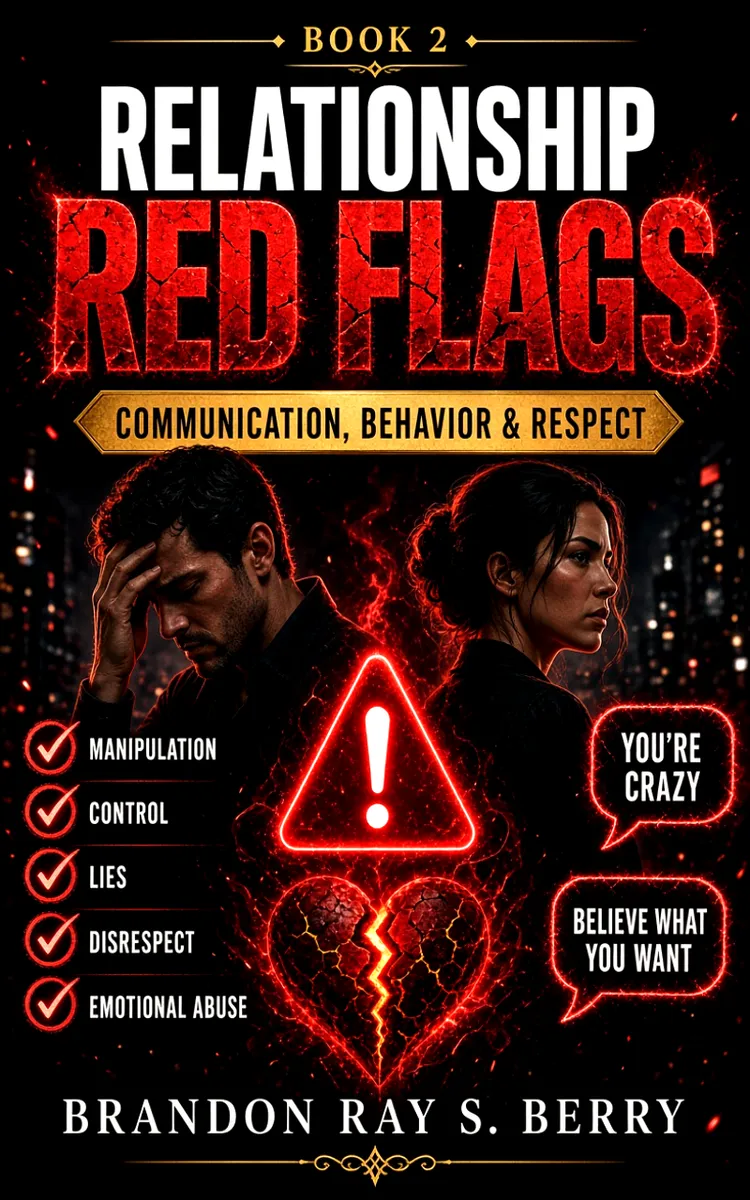
"Communication, Trust, and Respect" is a self-help book by Brandon Ray S. Berry with 10 chapters and approximately 14,533 words. Learn to assess troubling relationship behavior by looking beyond one argument, one lie, or one apology. Communication, Trust, and Respect helps you recognize when a conversation keeps changing until you doubt your own memory, and when a small lie points to a larger problem with honesty and accountability.
This book was created using Inkfluence AI, an AI-powered book generation platform that helps authors write, design, and publish complete books. It was made with the AI Self-Help Book Writer.
Frequently Asked Questions
What is "Communication, Trust, and Respect" about?
Learn to assess troubling relationship behavior by looking beyond one argument, one lie, or one apology. Communication, Trust, and Respect helps you recognize when a conversation keeps changing until you doubt your own memory, and when a small lie points to a larger problem with honesty and accountability. You’ll be able to separate a one-time misunderstanding from a repeated pattern, judge an apology by what follows, and use the Restitution-to-Repair Path to name what repair requires: a sincere apology, specific restitution, concrete action, and accountability over time. You’ll also find clearer ways to respond with boundaries and consider a safer plan when the behavior continues. The aim is not to explain yourself perfectly enough to make someone else honest. It is to see what is happening, decide what you need, and stop carrying all the repair alone.
How many chapters are in "Communication, Trust, and Respect"?
The book contains 10 chapters and approximately 14,533 words. Topics covered include Recognizing Communication Red Flags, Assessing Trust and Integrity, Repairing Trust Through Accountability, Practicing Respect and Ongoing Consent, and more.
Who wrote "Communication, Trust, and Respect"?
This book was written by Brandon Ray S. Berry and created using Inkfluence AI, an AI book generation platform that helps authors write, design, and publish books.
How can I create a similar self-help book?
You can create your own self-help book using Inkfluence AI. Describe your idea, choose your style, and the AI writes the full book for you. It's free to start.
Write your own self-help book with AI
Describe your idea and Inkfluence writes the whole thing. Free to start.
Start writingCreated with Inkfluence AI


