

Read the first chapter
The whole of chapter one, free. About 8 min. Turn the pages with the arrows, your keyboard, or a swipe.
Chapter 1
Covenant Language in Hebrew
Hearing Covenant Language in Hebrew
When Genesis says that God establishes a covenant with Noah, or when Exodus describes Israel entering covenant at Sinai, the key Hebrew word is berit. It is often translated “covenant,” but the English word can sound more general than the Hebrew term. Berit names a binding relationship established through words, obligations, signs, and sometimes a solemn ceremony. Reading it carefully helps us see not merely that two parties have an agreement, but how the relationship is formed and what kind of loyalty it requires.
The earlier study of covenant structure gives us a map: parties, promises, obligations, signs, witnesses, and consequences. Hebrew vocabulary helps us read the details on that map. We will examine berit and related terms, notice recurring covenant formulas, and compare biblical covenant texts with treaty patterns from the ancient Near East. These comparisons do not flatten the Bible into ordinary diplomacy. They help us recognize the literary tools biblical writers use while also seeing where God’s covenants differ from human treaties.
Learning Objectives
• Define berit and several related Hebrew covenant terms. - Identify common covenant formulas and treaty features in biblical passages. - Use vocabulary and structure to interpret a covenant text step by step.
A useful starting point is the phrase karat berit, usually translated “to cut a covenant.” The verb karat means “to cut.” The expression may preserve the memory of cutting an animal during a covenant ceremony, as in Genesis 15, where divided animals appear in the ritual. The language is not merely decorative. It suggests that covenant-making could involve a visible act that placed the parties under serious obligation.
Berit - a binding covenant relationship established by formal promises, obligations, or commitments.
The term does not always describe the same kind of relationship. God’s covenant with Noah includes a universal promise not to destroy the earth by flood again, marked by the sign of the rainbow. The Sinai covenant includes commands that Israel must obey. The Davidic covenant emphasizes God’s promise concerning David’s royal line. The word remains the same, but the covenant’s structure and emphasis change.
Several related words sharpen our reading.
Karat berit - literally, “to cut a covenant”; a standard Hebrew expression for making a covenant.
Heqim berit - “to establish” or “uphold a covenant.” This expression often emphasizes confirming an existing covenant rather than creating one from nothing. When God says he will establish his covenant with Abraham’s descendants, the wording can point to the continuing force of a promise already given.
Shamar - “to keep,” “guard,” or “observe.” In covenant contexts, it often describes faithful obedience. Israel is called to keep God’s covenant, meaning more than remembering it mentally. The people must guard its commands and live within its terms.
Hesed - steadfast love, loyal kindness, or covenant faithfulness. The word does not mean vague friendliness. It describes dependable action toward someone within a relationship of commitment. When David shows hesed to Jonathan’s son, or when God shows hesed to Israel, the focus is faithful loyalty expressed in concrete action.
Edut - testimony or witness. In some contexts, this word refers to the covenant testimony, especially the tablets associated with the covenant at Sinai. The written words function as a public witness to what God has commanded.
Oth - sign. A covenant sign identifies, remembers, or publicly confirms the covenant. The rainbow in Genesis 9, circumcision in Genesis 17, and the Sabbath in Exodus 31 each serve as signs, though they do not function in exactly the same way.
Covenant formulas also guide interpretation. A text may introduce the parties with a phrase such as “I am the Lord your God.” It may state what one party has done, as in the Sinai preamble: God brought Israel out of Egypt. It may then present obligations: “You shall have no other gods before me.” The order matters. Israel’s obedience is grounded in God’s prior act of deliverance.
Ancient Near Eastern treaties often contained a recognizable pattern: identification of the great king, a history of the king’s relationship with the lesser ruler, required loyalty, provisions for preserving the treaty, witnesses, blessings, and curses. Biblical covenant texts sometimes use similar features. Deuteronomy, for example, resembles treaty forms in its opening identification, historical review, covenant obligations, witnesses, and blessings and curses.
Yet similarity does not mean sameness. In a typical political treaty, a powerful king imposes terms on a dependent ruler. In the Sinai covenant, the Lord is the great King, but Israel is not merely a foreign court receiving administrative instructions. Israel is redeemed from slavery and formed as God’s treasured possession. The treaty pattern helps us notice structure; the biblical theology tells us what that structure means.
Ask yourself: when a passage includes a historical review before commands, what does that sequence teach? It may show that obligation grows out of relationship. “Because I have rescued you” comes before “therefore, live as my people.” This pattern keeps us from treating covenant commands as detached rules.
A practical reading habit is to mark every covenant passage with six questions: Who are the parties? What prior action or promise is remembered? What obligations are stated? What sign or witness is given? What benefits or consequences appear? How is the covenant maintained or broken? The answers will not always be equally explicit, but the questions expose the covenant’s architecture.
The main takeaway is simple: do not translate berit and stop there. Read the surrounding verbs, signs, formulas, and historical setting. Covenant meaning emerges from the whole arrangement.
A Worked Reading of Genesis 15
Genesis 15 provides a concentrated example because it combines promise, ceremony, covenant language, and a striking symbolic act. The passage follows God’s promise to Abram and addresses Abram’s concern that he has no heir. God promises descendants, Abram believes, and the covenant is then enacted through divided animals and a divine presence passing between them.
The following process shows how Hebrew terms and covenant patterns work together.
1. Identify the covenant concern. Abram’s problem is not simply personal anxiety. The future of God’s promise is at stake because Abram has no son. The covenant question is: how will God’s promised family come through Abram?
2. Locate the promise. God promises descendants as numerous as the stars. The outcome is not based on Abram’s ability to produce a political alliance or secure an heir through ordinary power. The promise rests on God’s word.
3. Observe the response. Genesis 15:6 says Abram believed the Lord, and it was counted to him as righteousness. The text presents trust before the ceremony. This matters because the covenant ritual confirms a relationship already grounded in God’s promise; it does not show Abram purchasing the promise.
4. Notice the covenant formula. Genesis 15:18 uses the expression “cut a covenant.” The Hebrew wording signals a formal covenant-making act. The passage is not merely reporting a private conversation.
5. Count the animals and note the arrangement. Abram takes a heifer, a goat, and a ram, each three years old, along with a turtledove and a young pigeon. The larger animals are divided, while the birds are not. The specific number three appears in the ages of the larger animals, but the text does not invite us to assign a hidden numerical code to every detail. The clear point is the solemn preparation of a covenant ceremony.
6. Interpret the passing between the pieces. A smoking fire pot and a flaming torch pass between the divided animals. These images represent God’s presence. The passage does not describe Abram and God walking together as equal negotiators. God alone passes through the pieces, which places the covenant promise especially on God’s own commitment.
7. Connect the ritual to its outcome. God promises the land from the river of Egypt to the Euphrates. The ceremony therefore confirms a specific territorial promise to Abram’s descendants. The covenant has a defined party, promise, sign-act, and promised outcome.
8. Compare the treaty pattern carefully. Like ancient treaties, Genesis 15 includes formal covenant action and a serious symbolic ceremony. Unlike a standard treaty between two rulers, the central human recipient does not impose terms on God. The passage emphasizes divine initiative and divine commitment.
Final result: Genesis 15 presents a covenant promise secured by God’s solemn self-commitment, with the ritual emphasizing the seriousness and certainty of the promised land and descendants.
This reading also shows why the phrase “cut a covenant” should not be treated as a simple idiom without force. The ceremony gives physical shape to the promise. It tells the reader that God’s word is not casual and that the future of Abram’s family rests on a commitment God himself undertakes.
A second observation follows. Genesis 15 should not be read as though every covenant has identical terms. There is no full list of national laws here, as at Sinai. The covenant’s center is promise: descendants and land. Later covenant texts build on this promise while adding new responsibilities and institutional forms.
The practical takeaway is to distinguish covenant type from covenant vocabulary. The same word, berit, can introduce a promise-centered covenant in Genesis 15 or an obligation-rich covenant at Sinai. Structure clarifies the difference.
Practice for Reading Covenant Texts
1. In Genesis 9:8-17, identify the covenant parties, the promise, and the sign. What makes this covenant broader than the covenant with Abram? Hint: Count the groups included in the covenant and focus on the rainbow’s stated purpose.
2. In Exodus 19-24, where does the historical foundation appear before the main commands? What does that sequence suggest about obedience? Hint: Look at God’s reminder of bringing Israel out of Egypt before the covenant stipulations.
3. In Deuteronomy 28, how do blessings and curses function within the covenant structure? Hint: Ask what happens when Israel keeps the covenant and what happens when Israel turns away.
4. Compare “cut a covenant” with “keep a covenant.” What different stages or responsibilities do the verbs express? Hint: One describes establishing the relationship; the other describes faithful life within it.
5. Why should ancient Near Eastern treaty parallels be used carefully when reading biblical covenants? Hint: Note both the shared literary pattern and the Bible’s distinctive presentation of God’s grace, kingship, and promises.
Answer Key: Genesis 9 includes God, Noah, his descendants, and living creatures; the rainbow is the sign of the flood promise. Exodus places redemption before obligation, so obedience responds to deliverance. Deuteronomy’s blessings and curses describe covenant outcomes tied to faithfulness or rebellion. “Cut” names covenant establishment, while “keep” names covenant loyalty. Treaty comparisons clarify form but cannot replace the Bible’s own theological claims.
A final reading habit is worth carrying forward: whenever you encounter berit, slow down before deciding what kind of covenant you are seeing. Check the verbs, the parties, the promises, the obligations, and the signs. Then compare the passage with treaty patterns without allowing the comparison to control the text. Hebrew covenant language is not a set of labels attached to a finished idea. It is the working vocabulary through which Scripture shows God forming, confirming, and sustaining covenant relationships.
End of chapter one. 7 more chapters and about 15,855 words in the full book.
Swipe or use the arrows to turn the page


What's inside: 8 chapters
- 1. Covenant Language in Hebrew
- 2. Creation, Adam, and Covenant
- 3. Noah’s Covenant and Creation’s Preservation
- 4. Abraham’s Promises and Covenant Sign
- 5. Sinai: Law, Nation, and Presence
- 6. David’s House and Royal Promise
- 7. Prophets, Exile, and Covenant Renewal
- 8. The New Covenant’s Fulfillment
About this book
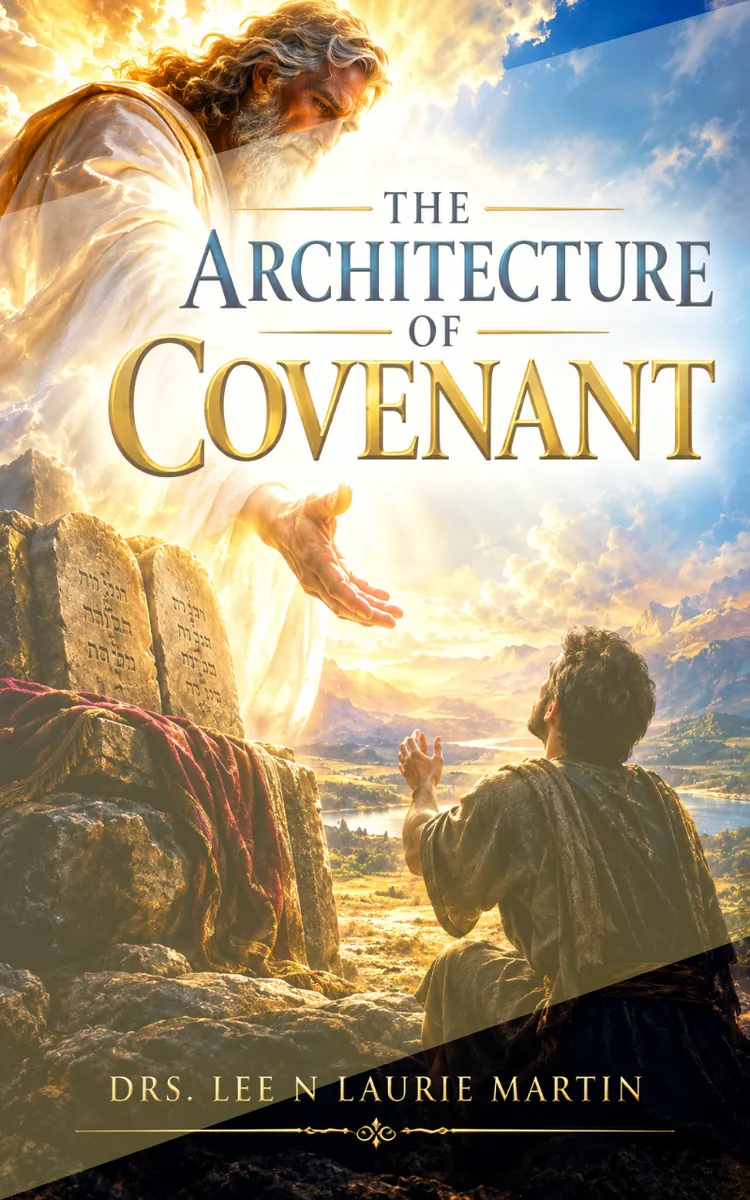
"The Architecture Of Covenant" is a education book by Drs. Lee & Laurie Martin with 8 chapters and approximately 15,855 words. Old Testament covenants, Hebrew terminology, ancient Near Eastern context, and New Covenant fulfillment.
This book was created using Inkfluence AI, an AI-powered book generation platform that helps authors write, design, and publish complete books. It was made with the AI Lesson Plan Generator.
Frequently Asked Questions
What is "The Architecture Of Covenant" about?
Old Testament covenants, Hebrew terminology, ancient Near Eastern context, and New Covenant fulfillment
How many chapters are in "The Architecture Of Covenant"?
The book contains 8 chapters and approximately 15,855 words. Topics covered include Covenant Language in Hebrew, Creation, Adam, and Covenant, Noah’s Covenant and Creation’s Preservation, Abraham’s Promises and Covenant Sign, and more.
Who wrote "The Architecture Of Covenant"?
This book was written by Drs. Lee & Laurie Martin and created using Inkfluence AI, an AI book generation platform that helps authors write, design, and publish books.
How can I create a similar education book?
You can create your own education book using Inkfluence AI. Describe your idea, choose your style, and the AI writes the full book for you. It's free to start.
Write your own education book with AI
Describe your idea and Inkfluence writes the whole thing. Free to start.
Start writingCreated with Inkfluence AI


