
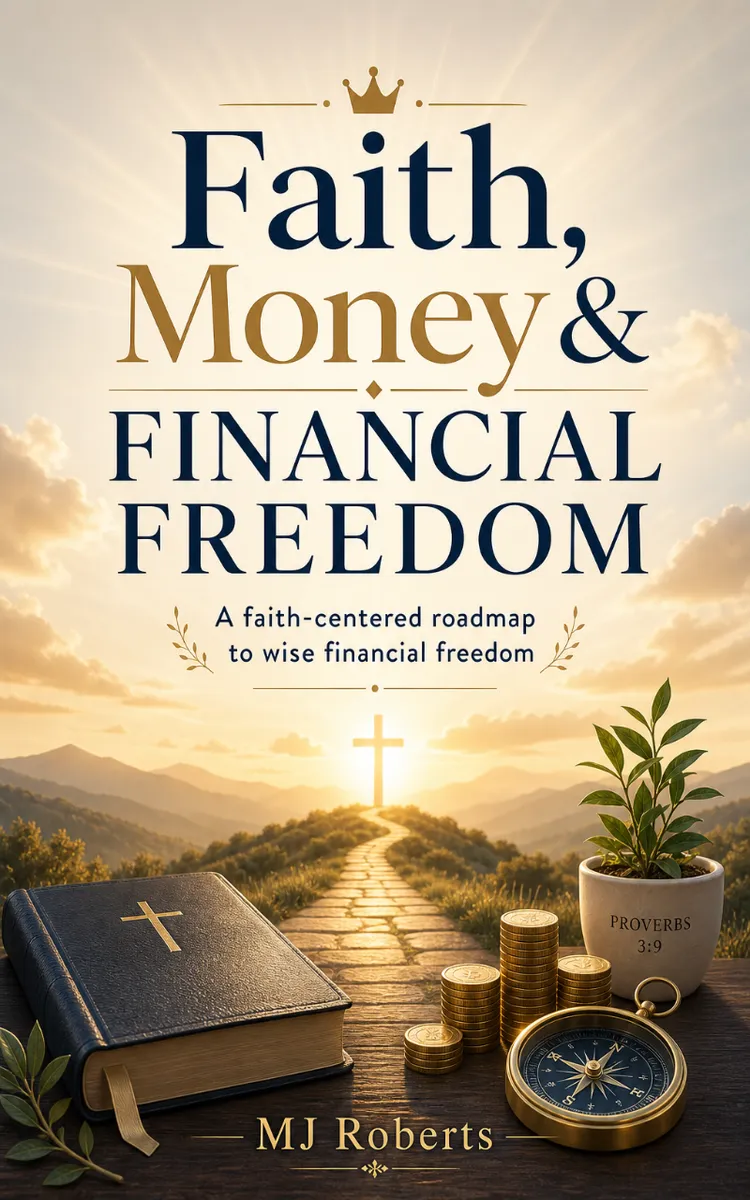
Read the first chapter
The whole of chapter one, free. About 4 min. Turn the pages with the arrows, your keyboard, or a swipe.
Chapter 1
Trust Over Anxiety: The First Step Toward Financial Freedom
Scripture Focus
Matthew 6:31-34
> “So do not worry, saying, ‘What shall we eat?’ or ‘What shall we drink?’ or ‘What shall we wear?’ … Your heavenly Father knows that you need them. But seek first his kingdom and his righteousness, and all these things will be given to you as well. Therefore do not worry about tomorrow, for tomorrow will worry about itself. Each day has enough trouble of its own.”
Jesus meets our financial fear with a reminder that God already sees the needs we’re carrying today.
A low bank balance can make your body tense before your feet even touch the floor. You may reach for your phone, check an account, remember an unpaid bill, and feel your thoughts sprint ahead: What if the car breaks down? What if work slows? What if I can’t catch up? Money stress often speaks in urgent, absolute sentences. Scripture doesn’t pretend those needs are imaginary. Jesus names food, clothing, and tomorrow - ordinary concerns that still occupy our minds.
Yet Jesus gives us a different way to read those concerns. He doesn’t say, “Your needs don’t matter.” He says, “Your heavenly Father knows.” That changes the starting point. We’re not planning from abandonment. We’re making decisions in the presence of a caring God.
Reflection
Fear tends to turn money into a measure of safety. When the numbers look good, we feel secure. When they don’t, we may assume God is distant or that we’ve been left to solve everything alone. But a bank balance can report your current resources; it cannot report God’s character. God’s care isn’t proven only by a sudden increase in income. It’s also seen in wisdom for the next decision, strength to make an honest call, help from the right person, and peace that keeps panic from running the budget.
This doesn’t mean faith replaces practical action. Trusting God can lead you to open the overdue notice instead of hiding it, list every bill instead of guessing, or ask a creditor about a payment plan. It may mean pausing before an anxious purchase or admitting that a lifestyle needs to change. Faith doesn’t deny the numbers; it helps you face them without letting fear become your master.
God’s timing can feel especially difficult when a payment is due Friday and the answer you’re praying for hasn’t arrived. We often want a complete five-year plan, while God gives enough light for today’s step. That step might be reviewing three months of spending, setting aside $20, calling an insurance provider, or asking a trusted Christian friend to pray with you. Small obedience still counts. God’s presence isn’t waiting at the finish line of financial freedom. He is with you while you sort receipts at the kitchen table.
Notice, too, the order in Jesus’ words. He points us first toward God’s kingdom, not because bills are unimportant, but because fear shrinks our vision. When anxiety takes over, we may grab quick loans, spend to feel better, avoid necessary conversations, or work without rest. Seeking God first brings our whole financial life back under His care. We can pursue wise stewardship without worshiping money. We can build savings without treating savings as our savior. We can reduce debt without believing our debt defines us.
God’s care, God’s timing, and God’s presence give us a steady spiritual lens. God’s care means your needs matter to Him. God’s timing means delay is not proof of neglect. God’s presence means you don’t have to take the next step alone. The goal today isn’t to feel no fear; it’s to bring fear into the presence of God before fear directs your money.
Practice for Today
1. Name the fear, then answer it with truth. Set a timer for five quiet minutes. Write the money concern exactly as it appears in your mind: “I’m afraid I won’t have enough for rent,” or “I’m afraid one unexpected repair will undo everything.” Underneath it, write three truths from Matthew 6: God knows what I need; today has a next step; I am not facing this alone. Don’t force yourself to feel cheerful. Let Scripture give your fear a more accurate voice.
2. Take one clear financial step for today only. Choose a task that takes no more than 20 minutes. You might check your actual account balance, gather upcoming bills, cancel one unused subscription, or transfer a small amount into an emergency fund. Before beginning, pray: “God, give me wisdom for this step and keep anxiety from making the decision for me.” Keep the task small on purpose. Trust grows through practiced obedience, not frantic overhauls.
3. End the day with a three-part journal entry. Complete these sentences: “Today I noticed God’s care when…”; “I’m waiting on God’s timing regarding…”; “Because God is present, my next wise step is….” Be specific. Perhaps you received an extra work opportunity, avoided an impulse purchase, or had the courage to ask for help. If the day felt hard, write that honestly too. Recognizing God’s presence doesn’t require pretending everything went well.
As you complete these practices, resist the urge to measure success by how calm you feel. A faithful day may still include concern. The difference is that concern has been carried to God and joined to a wise action. That is a very different posture from panic.
Closing Prayer
Father, You know what I need before I can explain it. When money fear rises, help me remember Your care, trust Your timing, and notice Your presence. Give me wisdom for today’s decision, courage to face the numbers honestly, and peace that doesn’t depend on a perfect balance. Teach me to handle money faithfully without allowing it to rule my heart. Amen.
End of chapter one. 6 more chapters in the full book.
Swipe or use the arrows to turn the page


What's inside: 7 chapters
- 1. Trust Over Anxiety: The First Step Toward Financial Freedom
- 2. Prayer That Aligns: Asking, Listening, and Acting
- 3. Hope in the Middle: Reframing Setbacks and Delays
- 4. Surrender Your Grip: Letting God Lead Your Money
- 5. Wisdom for Stewardship: Budgeting, Planning, and Integrity
- 6. Generosity as Freedom: Giving That Builds Trust
- 7. Living Free: Sustaining Faith, Money Peace, and Long-Term Hope
About this book
"Faith, Money & Financial Freedom" is a religious devotional book by MJ Roberts with 7 chapters and approximately 7,029 words. Integrating Christian faith with personal finance and freedom.
This book was created using Inkfluence AI, an AI-powered book generation platform that helps authors write, design, and publish complete books.
Frequently Asked Questions
What is "Faith, Money & Financial Freedom" about?
Integrating Christian faith with personal finance and freedom
How many chapters are in "Faith, Money & Financial Freedom"?
The book contains 7 chapters and approximately 7,029 words. Topics covered include Trust Over Anxiety: The First Step Toward Financial Freedom, Prayer That Aligns: Asking, Listening, and Acting, Hope in the Middle: Reframing Setbacks and Delays, Surrender Your Grip: Letting God Lead Your Money, and more.
Who wrote "Faith, Money & Financial Freedom"?
This book was written by MJ Roberts and created using Inkfluence AI, an AI book generation platform that helps authors write, design, and publish books.
Write your own religious devotional book with AI
Describe your idea and Inkfluence writes the whole thing. Free to start.
Start writingCreated with Inkfluence AI


