

Read the first chapter
The whole of chapter one, free. About 17 min. Turn the pages with the arrows, your keyboard, or a swipe.
Chapter 1
Foundations of Biblical Counseling & the Counselor’s Role
About This Topic
A counselor may sit across from a believer whose Bible is open, whose hands are trembling, and whose suffering has made prayer feel impossible. This chapter addresses how biblical counseling brings Scripture, prayer, wise assessment, responsibility, hope, and careful confidentiality into that room without reducing complex suffering to slogans.
These questions also clarify what biblical counseling is - and is not. The goal is not to choose between spiritual care and appropriate clinical help, but to minister faithfully under Christ’s authority while recognizing danger, medical concerns, trauma, sin, weakness, and the Spirit’s active work.
Questions and Answers
Q1: What is biblical counseling?
A: Biblical counseling is personal ministry that brings God’s truth to bear on a person’s worship, thoughts, desires, choices, relationships, suffering, and hope. It is counseling because it involves careful listening and wise guidance; it is biblical because Scripture governs its understanding of God, people, sin, suffering, redemption, and change.
Biblical counseling does not merely attach a verse to a problem. It asks, “How does this person’s life relate to God, and how does the gospel speak to this particular suffering or pattern of sin?” Scripture is “profitable for doctrine, for reproof, for correction, for instruction in righteousness” (2 Timothy 3:16-17). The counselor therefore listens carefully, interprets wisely, prays dependently, and points the counselee to Christ.
Practical takeaway: Keep the person - not merely the problem - before you, and keep Christ - not merely advice - at the center.
Related: See also Q2 about what biblical counseling is not | Q6 for using Scripture wisely
---
Q2: What is biblical counseling not?
A: Biblical counseling is not shallow advice, forced positivity, public confession, amateur diagnosis, or a substitute for every form of medical and mental-health care. It is also not a method for controlling people through Bible verses. Jesus never treated suffering people as interruptions, and Paul instructed believers to “admonish the disorderly, encourage the fainthearted, support the weak, be patient with all” (1 Thessalonians 5:14).
A counselor must not assume that every symptom has the same cause. Panic may involve fear, bodily illness, trauma, sinful avoidance, or several factors together. A careful counselor asks questions before making conclusions. Biblical authority should produce humility, not overconfidence.
Practical takeaway: Do not use Scripture as a weapon or a shortcut. Use it as living truth applied with patience, wisdom, and love.
Related: See also Q3 about Christian therapy | Q9 about assessment
---
Q3: What’s the difference between biblical counseling and Christian therapy?
A: The two may overlap substantially, but they can differ in training, methods, and stated authority. Biblical counseling begins with Scripture as the final authority for faith and godly living. Christian therapy may draw from psychological theories and clinical treatments while seeking to practice those methods consistently with Christian convictions.
A licensed Christian therapist may assess mental disorders, provide evidence-based treatment, and coordinate medical care. A biblical counselor may offer discipleship, pastoral care, and Scripture-centered counsel, often without clinical licensure. Neither title automatically guarantees faithfulness or competence. “The simple believeth every word: but the prudent man looketh well to his going” (Proverbs 14:15).
A strong referral relationship can serve the counselee well. Counselors should clarify training, scope of practice, confidentiality limits, and theological convictions before beginning care.
Practical takeaway: Honor both biblical authority and professional limits; refer when the need exceeds your training.
Related: See also Q4 about referral | Q10 about medical concerns
---
Q4: When should a biblical counselor refer someone to a licensed clinician or physician?
A: Refer when safety, medical complexity, severe impairment, or clinical needs exceed your competence. Referral is not a failure of faith. It can be an expression of love and stewardship, especially when combined care is appropriate.
Refer promptly when there is:
• Suicidal intent, a plan, or access to lethal means - Threat of harm to another person - Psychosis, severe mania, or profound confusion - Suspected medical causes for major changes in mood or behavior - Withdrawal risk from alcohol, benzodiazepines, or other substances - Serious eating-disorder symptoms or dangerous weight loss - Abuse, trafficking, or immediate domestic danger
Jesus taught wise stewardship, saying that a prudent person considers whether he can complete a task before beginning it (Luke 14:28). A counselor should explain the reason for referral, remain supportive, and - when permitted - coordinate care.
Practical takeaway: Never spiritualize an emergency. Protect life, involve qualified help, and continue appropriate pastoral support.
Related: See also Q9 about assessment | Q18 about confidentiality
---
Q5: Is it true that every problem is caused by personal sin?
A: No. Every human being lives in a fallen world, but not every suffering is the direct result of the sufferer’s personal sin. Job’s friends wrongly assumed that his calamity proved unusual guilt, and God rebuked them (Job 42:7). Jesus also rejected the assumption that a man’s blindness necessarily resulted from his or his parents’ sin (John 9:1-3).
Sin may contribute to some struggles, but suffering may also arise from another person’s wrongdoing, bodily weakness, loss, oppression, or the general brokenness of creation. At the same time, suffering can expose sinful responses such as bitterness, unbelief, or retaliation. The counselor must distinguish cause from response.
Practical takeaway: Ask both, “What has happened to you?” and “How are you responding before God?” Do not accuse where Scripture calls for compassion.
Related: See also Q7 about suffering | Q15 about responsibility
---
Q6: How should I use Scripture in a counseling session?
A: Use Scripture to reveal God, interpret the person’s situation, correct false worship, comfort the afflicted, and direct faithful action. Begin with the passage’s meaning in context, then apply it carefully to the counselee’s actual struggle.
A useful sequence is:
1. Listen for the central fear, desire, belief, or wound. 2. Identify passages that speak directly to that issue. 3. Explain the text rather than quoting it as a slogan. 4. Connect the passage to Christ’s work and the believer’s hope. 5. Give one or two concrete responses to practice.
For example, Philippians 4:6-9 does not mean that anxious people should feel ashamed for having anxiety. It calls them to bring concerns to God, receive His peace, practice disciplined thinking, and follow faithful patterns. Scripture is sufficient for knowing God and walking in righteousness, but wise application requires patience (2 Timothy 3:16-17; Proverbs 18:13).
Practical takeaway: Open the Bible with the counselee, not merely at the counselee.
Related: See also Q1 about biblical counseling | Q8 about difficult passages
---
Q7: How do I counsel someone who is suffering but has done nothing wrong?
A: Begin with presence, lament, compassion, and hope - not accusation. Scripture gives suffering people permission to cry out. The Psalms include questions, tears, protest, and confidence in God without treating grief as spiritual failure (Psalm 13; Psalm 42; Psalm 88).
Do not rush to explain God’s hidden purposes. Deuteronomy 29:29 reminds us that some things belong to the Lord. You can affirm what is known: God is righteous, Christ is compassionate, the Spirit helps the weak, and God will finally defeat death and injustice (Hebrews 4:15-16; Romans 8:26; Revelation 21:4).
Then help the person identify faithful next steps: receiving support, telling the truth, resting, praying honestly, seeking medical care, setting boundaries, or grieving with the church.
Practical takeaway: In deep suffering, faithful companionship may communicate Christ more powerfully than a quick explanation.
Related: See also Q5 about personal sin | Q12 about prayer
---
Q8: What if a counselee says a Bible verse makes the pain worse?
A: Believe the report and examine the application. A true verse can be used wrongly, and a counselee may have heard Scripture connected with shame, coercion, or spiritual neglect. “The words of the wise are as goads” (Ecclesiastes 12:11), but the counselor must not use truth carelessly.
Ask what the verse communicates to the person and what they believe God is saying through it. A verse about forgiveness may be misused to pressure a victim back into danger. A verse about joy may be used to silence grief. A verse about submission may be detached from the surrounding commands to love, sacrifice, and honor.
Reopen the text in context. Show the whole counsel of God, including lament, justice, protection, mercy, and restoration.
Practical takeaway: Do not defend your favorite application before listening to the wound created by its misuse.
Related: See also Q6 about Scripture | Q20 about abuse and safety
---
Q9: How do I perform a wise assessment without turning counseling into an interrogation?
A: Explain why you are asking questions, proceed calmly, and assess the whole person: body, history, relationships, beliefs, behavior, and spiritual life. Wise assessment is an act of love because it prevents premature conclusions.
A first-session review should usually include:
• Presenting concern and desired help - Immediate safety, including suicide and abuse - Medical conditions, medications, sleep, and substance use - Family, marital, church, and work context - Trauma and significant losses - Patterns of thought, emotion, desire, and behavior - Spiritual history, current faith, and church support
Proverbs 20:5 compares a person’s purposes to deep water and commends the discerning person who draws them out. Ask open questions, reflect what you hear, and summarize before offering direction. Record facts separately from interpretations.
Practical takeaway: Assessment should slow you down enough to love accurately.
Related: See also Q4 about referral | Q18 about confidentiality
---
Q10: Should a biblical counselor consider medical causes?
A: Yes. The body matters to God, and bodily conditions can affect mood, thinking, sleep, energy, and behavior. Scripture does not oppose responsible medical care. Paul recommended practical treatment for Timothy’s recurring stomach problems (1 Timothy 5:23), and Luke was a physician (Colossians 4:14).
Ask whether symptoms began after illness, medication changes, childbirth, head injury, substance use, sleep deprivation, or hormonal changes. Encourage appropriate medical evaluation without implying that a physician can solve every spiritual problem. Likewise, do not assume that prayer alone replaces medical care.
A whole-person approach may include prayer, Scripture, repentance, relational repair, medication, nutrition, sleep, trauma treatment, and medical testing.
Practical takeaway: Treat the body neither as the whole person nor as an irrelevant distraction.
Related: See also Q3 about Christian therapy | Q11 about prayer and treatment
---
Q11: Is prayer enough, or should counseling include other forms of help?
A: Prayer is essential, but prayer is not a reason to refuse every other legitimate means of care. God often answers prayer through Scripture, the church, wise counsel, physicians, practical provision, and trained clinicians. Paul prayed and also used ordinary means, companions, travel plans, and medical help.
Prayer should not be a closing ritual added after the “real work.” Pray for wisdom before assessment, for conviction without condemnation, for protection, and for the Spirit’s comfort. Invite the counselee to pray honestly rather than perform spiritually impressive words (Romans 8:26; Hebrews 4:16).
At the same time, do not promise that a particular prayer will produce immediate healing. God heals miraculously, progressively, medically, and finally in resurrection. “If we ask any thing according to his will, he heareth us” (1 John 5:14).
Practical takeaway: Pray boldly, use wise means, and leave the outcome in God’s hands.
Related: See also Q12 about prayer | Q14 about healing
---
Q12: How can I pray with someone whose faith feels weak?
A: Pray with honesty and simplicity, not pressure. The father in Mark 9:24 prayed, “Lord, I believe; help thou mine unbelief.” That short prayer models faith that brings weakness to Christ rather than hiding it.
You might pray through four movements:
1. Name the suffering truthfully. 2. Affirm what God has revealed about Himself. 3. Ask specifically for help, wisdom, protection, and endurance. 4. Entrust the outcome to God’s will.
Do not require emotional intensity as proof of faith. The Spirit helps our infirmities, including our inability to pray as we ought (Romans 8:26). If the person cannot pray aloud, read a psalm, sit quietly, or offer a brief sentence of trust.
Practical takeaway: A weak prayer directed toward a strong Savior is still a genuine act of faith.
Related: See also Q11 about prayer and treatment | Q13 about spiritual dryness
---
Q13: What should I do when a counselee says God feels far away?
A: Take the statement seriously without treating the feeling as the final truth. Many faithful believers have cried, “Why standest thou afar off?” (Psalm 10:1). Spiritual dryness may accompany grief, depression, trauma, exhaustion, sin, unanswered prayer, or no immediately identifiable cause.
Explore whether the person is avoiding known sin, but do not assume that distance feelings prove rebellion. Encourage simple practices: honest prayer, Scripture read slowly, gathered worship, receiving care from mature believers, and bodily rest. Focus on God’s promises rather than demanding a particular emotional experience. Christ promised, “I will never leave thee, nor forsake thee” (Hebrews 13:5).
Practical takeaway: Help the counselee distinguish God’s unchanging presence from changing emotional awareness.
Related: See also Q7 about suffering | Q12 about prayer
---
Q14: How should Pentecostal counselors address requests for healing?
A: Receive requests for healing with compassion and biblical faith, while refusing manipulation or false certainty. Scripture teaches that God heals, that believers may pray for the sick, and that spiritual gifts operate by the Spirit’s will (James 5:14-16; 1 Corinthians 12:9-11). It also shows faithful believers who remained weak or ill (2 Corinthians 12:7-10; 1 Timothy 5:23).
Anointing with oil and prayer may be appropriate according to church practice, with consent and pastoral wisdom. Never imply that lack of healing proves lack of faith, hidden sin, or spiritual inferiority. Do not tell someone to stop prescribed treatment. Ask God for healing while also seeking competent care and preparing the person for faithful endurance.
Practical takeaway: Expect God to act, but do not claim knowledge God has not given.
Related: See also Q10 about medical causes | Q11 about prayer and treatment
---
Q15: How do I balance hope with personal responsibility?
A: Hold both together: grace gives hope, and grace trains people to live responsibly. The counselee is not saved by performance, yet the redeemed person is called to repent, obey, repair harm, and pursue wisdom. Philippians 2:12-13 joins human action with God’s enabling work: believers work out salvation because God works in them.
Make responsibility concrete. A person may not control another’s abuse, a traumatic memory, or a bodily illness, but may need to tell the truth, seek safety, refuse retaliation, attend treatment, confess sinful responses, or ask for help. Responsibility is not blame for everything that happened; it is faithful stewardship of the choices available now.
Practical takeaway: Say, “This may not be your fault, but Christ will help you respond faithfully,” when that is the biblical distinction needed.
Related: See also Q5 about personal sin | Q16 about hope
---
Q16: What does biblical hope look like when circumstances may not change?
A: Biblical hope rests on God’s character and promised future, not on a guaranteed short-term outcome. Christian hope includes God’s present help, Christ’s intercession, the Spirit’s presence, resurrection, judgment, and the renewal of all things (Romans 8:18-25, 34; Revelation 21:1-5).
This hope does not forbid grief. Romans 8 describes groaning while waiting. A counselor can say, “We will ask God to change this,” and also, “If the circumstances remain, God will not abandon you, and your suffering will not have the final word.” Hope may look like surviving the night safely, telling the truth, taking medication, attending church, or refusing one destructive action.
Practical takeaway: Anchor hope in what God has promised, not in predictions about what He may do next.
Related: See also Q7 about suffering | Q24 about discouragement
---
Q17: How should I explain confidentiality to a counselee?
A: Explain confidentiality before the counselee shares sensitive details, including its limits. Tell the person what you will keep private, who may access records, whether supervision is used, and when disclosure may be required or ethically necessary.
Limits commonly involve imminent danger to the counselee or another person, suspected abuse or neglect of a child or vulnerable adult, court orders, or consultation needed for competent care. Laws vary by location, so know your legal obligations. Proverbs 11:13 warns against spreading secrets, while Proverbs 24:11-12 calls for intervention when lives are endangered.
Do not promise absolute secrecy if you cannot
explain the exceptions. A clear opening statement might be: “What you share is private within the boundaries of safety, law, and responsible care. If I believe you or someone else faces serious danger, or if a child or vulnerable person is being abused, I may need to involve appropriate help. I will discuss that with you whenever it is safe to do so.”
Confidentiality also requires secure records, careful conversations, and restraint in church settings. Do not use a counselee’s story as a sermon illustration without informed permission, even if names are removed. When consultation is needed, disclose only what is necessary and protect identifying details.
Practical takeaway: State the boundaries plainly at the beginning, document them, and treat every confidence as a stewardship before God.
Related: See also Q18 about danger assessment | Q22 for counselor ethics
---
Q18: When should a biblical counselor break confidentiality?
A: Break confidentiality when safety, law, or responsible care requires action - not because a story is interesting, uncomfortable, or useful for ministry. Immediate threats of suicide or homicide, abuse of a child or vulnerable adult, and situations requiring emergency intervention demand prompt attention. A serious threat should never be managed by keeping a promise of secrecy.
Assess the danger directly:
1. Ask what happened and what is happening now. 2. Ask about intent, plan, access to means, timing, and previous attempts. 3. Identify protective supports, but do not let them minimize an active threat. 4. Contact emergency services or qualified professionals when needed. 5. Document the facts, decisions, consultations, and follow-up plan.
If someone reports domestic abuse, do not confront the alleged abuser in a way that increases danger. If a counselee threatens another person, do not rely only on prayer or a private promise. Romans 13:1-4 recognizes civil authority’s role in restraining evil, and Proverbs 24:11 calls us to rescue those being led toward harm.
Practical takeaway: When danger is credible and immediate, protection takes priority over secrecy.
Related: See also Q17 about confidentiality | Q19 about suicide risk
---
Q19: How should I respond when a counselee says, “I want to die”?
A: Take the statement seriously, ask direct questions, and secure appropriate help. Do not answer with a rebuke such as “A Christian should never feel that way.” Scripture records faithful servants who expressed deep despair, including Elijah and Job (1 Kings 19:4; Job 3:11). Their words were not ignored; their bodies, safety, and spiritual condition were addressed.
Ask plainly:
• “Are you thinking about killing yourself?” - “Do you have a plan?” - “Do you have access to what you would use?” - “Have you chosen a time?” - “Have you attempted before?” - “Can you stay safe while we arrange help?”
Do not leave the person alone when immediate risk is present. Contact emergency services, a crisis team, a trusted support person, or a medical provider according to the level of danger and local requirements. Remove access to lethal means when this can be done safely. Pray with the person, but do not substitute prayer for protection. The Good Samaritan used compassion and practical resources (Luke 10:33-35).
Practical takeaway: Compassion listens, assessment clarifies, and safety action protects life.
Related: See also Q10 about assessment | Q20 about mental-health care
---
Q20: Is seeking psychological or medical care a failure to trust God?
A: No. Seeking competent care is not automatically unbelief; it can be an expression of wise stewardship. Luke, called “the beloved physician,” served among Paul’s coworkers (Colossians 4:14), and Paul advised Timothy to use a practical remedy for a physical condition (1 Timothy 5:23). God may heal instantly, gradually, through treatment, through community support, or through sustaining grace.
Biblical counselors should neither idolize professional treatment nor dismiss it. Ask whether the provider is competent, ethical, and respectful of the counselee’s Christian convictions. Coordinate care when consent allows. Encourage the person to report medication concerns to the prescriber rather than stopping abruptly. Watch for medical conditions that can resemble panic, depression, mania, trauma symptoms, or substance withdrawal.
The counselor’s role is not to diagnose beyond training. It is to bring Scripture, wise questions, prayer, safety planning, discipleship, and appropriate referral into a faithful care plan.
Practical takeaway: Trust God as the healer while receiving ordinary means of care with humility and discernment.
Related: See also Q14 about healing | Q21 about referral
---
Q21: When should a biblical counselor refer someone to another professional?
A: Refer when the counselee’s needs exceed your training, authority, or available support. Referral is not abandonment; it is love that refuses to pretend competence. Serious suicide risk, psychosis, severe substance withdrawal, eating-disorder medical danger, unmanaged mania, significant cognitive impairment, complex trauma, and suspected abuse often require coordinated professional care.
A useful referral process includes:
1. Name the concern without shaming the counselee. 2. Explain why added care is needed. 3. Offer specific options rather than saying only, “Find a therapist.” 4. Obtain consent for communication when possible. 5. Continue appropriate pastoral support if it is safe and clearly defined. 6. Follow up to confirm connection and reassess risk.
Exodus 18:17-23 shows Moses receiving correction about carrying more than one person should carry. Galatians 6:2 calls believers to bear burdens, but no passage commands one counselor to become the entire care system.
Practical takeaway: Refer early enough to protect the counselee, the counselor, and the integrity of the ministry.
Related: See also Q9 about the counselor’s role | Q20 about professional care
---
Q22: What ethical boundaries should a biblical counselor keep?
A: Maintain boundaries that protect truth, purity, safety, and the counselee’s freedom. Spiritual language does not excuse manipulation, secrecy, dual relationships, sexual misconduct, financial exploitation, or uncontrolled dependence. Jesus’ command to treat others as we would want to be treated (Matthew 7:12) applies directly to counseling practice.
End of chapter one. 9 more chapters in the full book.
Swipe or use the arrows to turn the page

Spirit-Led Whole-Person Renewal

ChurchBased Christian Biblical Counseling Ministry

Anxiety And Panic Counseling Desk Reference
What's inside: 10 chapters
- 1. Foundations of Biblical Counseling & the Counselor’s Role
- 2. God, Sin, Repentance, Forgiveness, and the Gospel in Counseling
- 3. Emotions, Anxiety, Fear, Panic, Anger, and Depression
- 4. Trauma, PTSD, Grief, Shame, and Guilt
- 5. Discipleship, Spiritual Growth, Prayer, Spiritual Warfare, and Hearing God
- 6. Marriage, Dating, Sexuality, Forgiveness in Relationships, and Relational Repair
- 7. Parent-Child, Family Systems, Blended Families, and Generational Strain
- 8. Substance Disorders, Behavioral Addictions, Sexual Compulsions, and Temptation Cycles
- 9. Body Image, Self-Worth, Weight Loss, Stress, and Co-occurring Disorders
- 10. Sickness, Disease, Domestic Conflict & Abuse, Boundaries, and Advanced Discernment
About this book
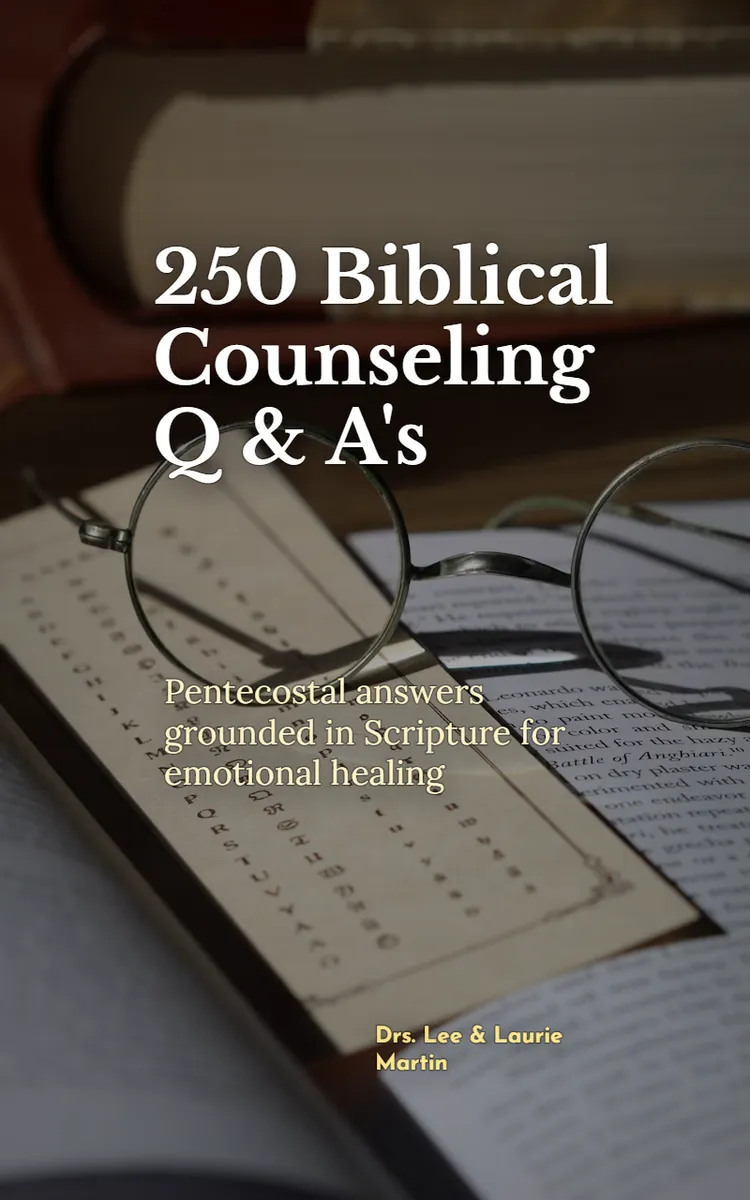
"250 Biblical Counseling Q&as" is a q&a book by Drs. Lee & Laurie Martin with 10 chapters and approximately 36,722 words. Question-and-answer biblical counseling for common client issues.
This book was created using Inkfluence AI, an AI-powered book generation platform that helps authors write, design, and publish complete books.
Frequently Asked Questions
What is "250 Biblical Counseling Q&as" about?
Question-and-answer biblical counseling for common client issues
How many chapters are in "250 Biblical Counseling Q&as"?
The book contains 10 chapters and approximately 36,722 words. Topics covered include Foundations of Biblical Counseling & the Counselor’s Role, God, Sin, Repentance, Forgiveness, and the Gospel in Counseling, Emotions, Anxiety, Fear, Panic, Anger, and Depression, Trauma, PTSD, Grief, Shame, and Guilt, and more.
Who wrote "250 Biblical Counseling Q&as"?
This book was written by Drs. Lee & Laurie Martin and created using Inkfluence AI, an AI book generation platform that helps authors write, design, and publish books.
Write your own q&a book with AI
Describe your idea and Inkfluence writes the whole thing. Free to start.
Start writingCreated with Inkfluence AI


