
Read the first chapter
The whole of chapter one, free. About 7 min. Turn the pages with the arrows, your keyboard, or a swipe.
Chapter 1
Getting Started: What Investing Really Is
About This Topic
A dollar sitting in a savings account, a dollar invested in a stock fund, and a dollar used to buy and sell shares today are all being handled differently. This chapter answers the basic questions that separate saving, investing, and trading - and clears up common confusion about risk, returns, and how long results usually take.
The goal is not to predict the next market move. It is to understand what your money is doing, what could go wrong, and what kind of timeline makes sense before you put money to work.
Questions and Answers
Q1: What is investing, really?
A: Investing means putting money into an asset with the goal of earning more money over time. That asset might be a company’s stock, a bond, a mutual fund, an exchange-traded fund (ETF), real estate, or another productive asset. Your return may come from growth in the asset’s value, income it pays, or both.
For example, when you buy shares of a broad stock fund, your money is spread across many companies. If those companies grow their sales and profits over the years, the value of the fund may rise. Some companies may also pay dividends, which are portions of profits paid to shareholders. You are not simply storing money; you are accepting some uncertainty in exchange for the possibility of growth.
Investing is different from saving:
Saving
Investing
Usually focuses on safety and easy access
Focuses on long-term growth
Often uses a bank account or certificate of deposit (CD)
Often uses stocks, bonds, funds, or real estate
Value usually changes very little
Value can rise and fall
Better suited to near-term needs
Better suited to goals several years away
Saving is useful for an emergency fund, a car repair, or a bill due soon. Investing is generally better for money you can leave alone through market ups and downs. A savings account may protect your balance, but its interest rate may not keep up with inflation - the gradual rise in prices. Investing gives you a better chance of outpacing inflation, but it does not guarantee a profit.
Ask yourself: “When will I need this money?” If the answer is within the next year or two, safety may matter more than growth. If the answer is ten, twenty, or thirty years from now, investing may make more sense.
Your practical takeaway: investing is long-term ownership of assets that may grow or produce income. It is not a promise of quick money, and it is not the same as leaving cash in the bank.
Related: See also Q2 about the difference between investing and trading | Q3 for how risk and time affect returns
Q2: What’s the difference between investing and trading?
A: Investing usually means buying an asset to hold for years, while trading means buying and selling more frequently to profit from shorter-term price changes. Both involve risk, but they rely on different approaches, time commitments, and expectations.
An investor may buy a low-cost ETF that tracks hundreds of companies and plan to hold it for decades. A trader may buy one company’s stock because they expect its price to move this week. The investor is mainly concerned with long-term business growth, diversification, fees, and staying invested. The trader is more focused on price patterns, news, timing, and managing quick losses.
Here is a simple comparison:
Investing
Trading
Usually measured in years
Often measured in days, weeks, or months
Based largely on long-term growth and income
Based largely on expected price movements
Often uses diversified funds
May focus on individual stocks or other assets
Requires patience
Requires frequent decisions and strict risk controls
Usually lower activity
Can involve many purchases and sales
Trading is not automatically wrong, but it is not a shortcut around the risks of investing. Frequent buying and selling can create higher fees, taxes, and mistakes. It can also be emotionally exhausting. A stock that falls 10% may be a temporary setback for a long-term investor, but a serious problem for someone who planned to sell it by Friday.
A common mistake is calling short-term speculation “investing” because the word sounds safer. If your main reason for buying is that you hope someone else will pay more very soon, you are taking a trading-like risk, even if you hold the asset for a few months.
If you are new, keep the roles separate:
• Use saving for money you need soon.
• Use long-term investing for future goals.
• Treat trading, if you choose to do it, as a separate activity with money you can afford to lose.
Your practical takeaway: investing gives your money time to grow; trading tries to benefit from shorter-term price changes. Know which activity you are actually doing before you choose an account, asset, or strategy.
Related: See also Q1 about what investing means | Q3 for why investing timelines matter
Q3: Is it true that investing is either a guaranteed way to get rich or just gambling?
A: Neither statement is accurate. Investing can build wealth over time, but returns are never guaranteed, and investing is not the same as gambling when you understand what you own and manage your risk.
A casino game is designed so the house has an advantage over time. With investing, you can own part of real businesses, lend money through bonds, or own property that produces income. Those assets can create value. However, their prices can still fall, sometimes sharply. A diversified stock portfolio can lose money during a market decline, even when the companies inside it remain profitable.
Three ideas help put risk and returns in the right order:
• Higher possible returns usually come with greater risk. Stocks have historically offered more long-term growth potential than cash, but stocks can fall 20%, 30%, or more during difficult periods. Cash is steadier, but its growth may be too slow to meet a long-term goal.
• A positive average return does not mean every year is positive. An investment might earn 8% over a long period while losing money in some years and gaining much more in others. “Average” describes a pattern over time, not a yearly promise.
• Time reduces some risks, but not all of them. Holding a diversified fund for twenty years gives your money more chances to recover from temporary declines. It does not make a poor investment, excessive fees, or a failed company safe.
Your timeline should shape your choices:
• Money needed within about three years: prioritize stability and access.
• Money needed in five to ten years: consider a mix of safer and growth-focused assets, depending on the goal.
• Money needed more than ten years from now: you may be able to accept more short-term market movement in pursuit of long-term growth.
These are starting points, not rigid rules. A house down payment due in six years may need more protection than retirement money you will not use for thirty years. Your comfort matters too. If a 15% drop would make you sell in panic, a less aggressive mix may be more suitable - even if it has lower growth potential.
Also, beware of promises that sound too certain:
• “You cannot lose.”
• “This return is guaranteed.”
• “Double your money in a month.”
• “Everyone is making money with this.”
Legitimate investments explain their risks. Check what you own, how it earns money, what it costs, and how easily you can sell it. Diversification - spreading money across different investments - can reduce the damage from one company or asset performing badly, though it cannot remove all market risk.
A useful reality check is compound growth. If you invested $200 each month for 30 years and earned an average annual return of 7%, you would contribute $72,000, while the account could grow to roughly $244,000 before taxes and fees. That result would not arrive smoothly, and 7% would not be guaranteed. The example shows the power of regular contributions and time - not a promise about what your account will earn.
Your practical takeaway: investing is a calculated trade-off. You accept uncertainty, diversify where appropriate, control costs, and give your money enough time to work. Do not expect guaranteed riches, but do not mistake normal market risk for pure gambling either.
Related: See also Q1 about saving versus investing | Q2 for how trading changes the risk and timeline
Key takeaways from this chapter:
• Saving protects money for near-term needs; investing aims to grow money for longer-term goals.
• Investing and trading are different activities with different timelines and demands.
• Returns are never guaranteed, and higher growth potential usually means accepting more risk.
• Time, diversification, regular contributions, and reasonable expectations matter more than trying to predict every market move.
End of chapter one. 34 more chapters in the full book.
Swipe or use the arrows to turn the page


What's inside: 35 chapters
- 1. Getting Started: What Investing Really Is
- 2. Your First Financial Snapshot
- 3. Risk, Volatility, and Return: The Core Trade-Off
- 4. Time Horizon: How Long Do You Have?
- 5. Diversification: Why Spreading Matters
- 6. Asset Allocation: The Decision That Drives Results
- 7. Choosing Investments: Stocks, Bonds, ETFs, and Funds
- 8. Indexing vs. Active Investing
- 9. Fees and Expenses: The Hidden Return Killer
- 10. Taxes for Beginners: The Basics
- 11. Retirement Accounts: Which One Fits You?
- 12. Brokerages and Accounts: Opening and Funding
- 13. How to Buy: Orders, Timing, and Execution
- 14. Dollar-Cost Averaging vs. Lump Sum
- 15. Rebalancing: Keeping Your Plan on Track
- 16. Staying Invested: Emotions and Behavioral Traps
- 17. Building Your First Portfolio (Step by Step)
- 18. Understanding Fund Holdings and Risk
- 19. Reading the Numbers: NAV, Yield, and Total Return
- 20. Bonds 101: Duration, Credit, and Interest Rate Risk
- 21. Stock Basics: Dividends, Growth, and Valuation
- 22. ETFs vs. Mutual Funds: Practical Differences
- 23. International Investing: Do You Need Global Exposure?
- 24. Inflation and Purchasing Power
- 25. Recession, Bear Markets, and Crashes
- 26. Interest Rates and the Market: What Matters?
- 27. How to Evaluate a Fund or ETF
- 28. Avoiding Scams, Bad Advice, and High-Risk Products
- 29. Taxes in Practice: Dividends, Gains, and Account Placement
- 30. Tax-Loss Harvesting and Tax Optimization
- 31. Risk Management: Position Sizing and Concentration
- 32. Using Leverage and Margin: When (Not) to
- 33. Retirement Planning: Withdrawal Strategies
- 34. Advanced Concepts Without the Confusion
- 35. Your Personal Investment Plan: A Final Checklist
About this book
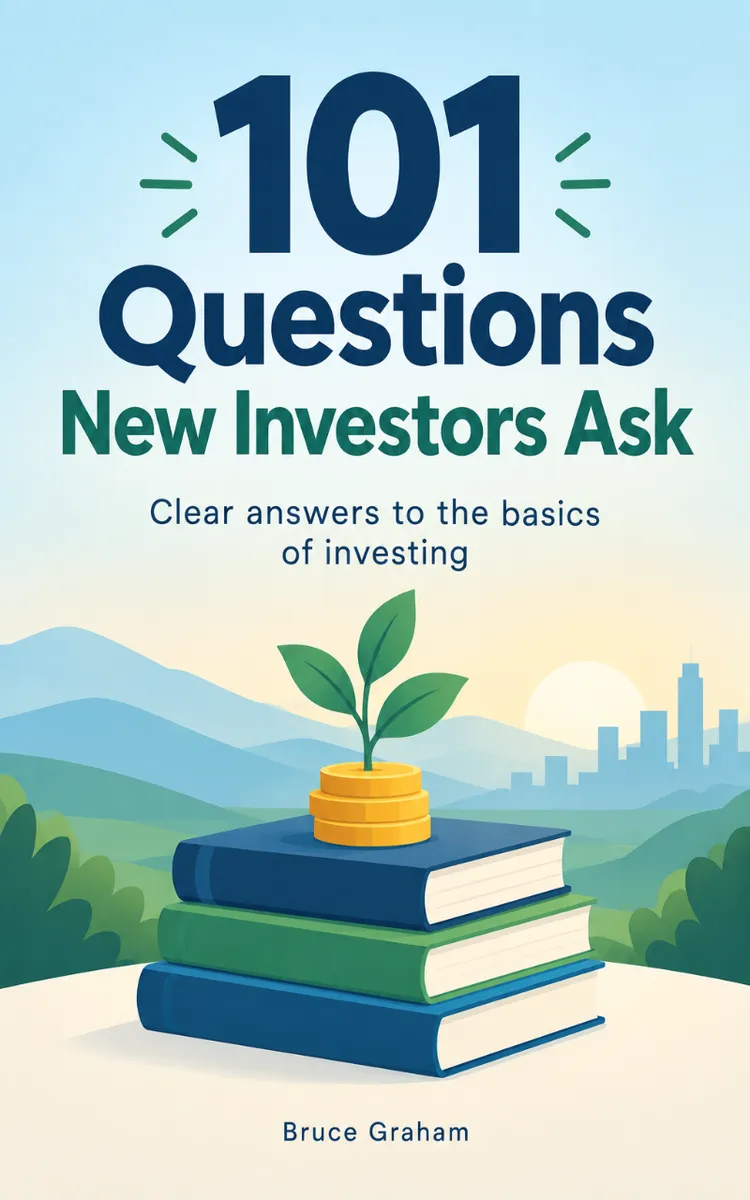
"101 Questions New Investors Ask" is a q&a book by Bruce Graham with 35 chapters and approximately 49,457 words. Frequently asked questions from new investors.
This book was created using Inkfluence AI, an AI-powered book generation platform that helps authors write, design, and publish complete books.
Frequently Asked Questions
What is "101 Questions New Investors Ask" about?
Frequently asked questions from new investors
How many chapters are in "101 Questions New Investors Ask"?
The book contains 35 chapters and approximately 49,457 words. Topics covered include Getting Started: What Investing Really Is, Your First Financial Snapshot, Risk, Volatility, and Return: The Core Trade-Off, Time Horizon: How Long Do You Have?, and more.
Who wrote "101 Questions New Investors Ask"?
This book was written by Bruce Graham and created using Inkfluence AI, an AI book generation platform that helps authors write, design, and publish books.
Write your own q&a book with AI
Describe your idea and Inkfluence writes the whole thing. Free to start.
Start writingCreated with Inkfluence AI


