
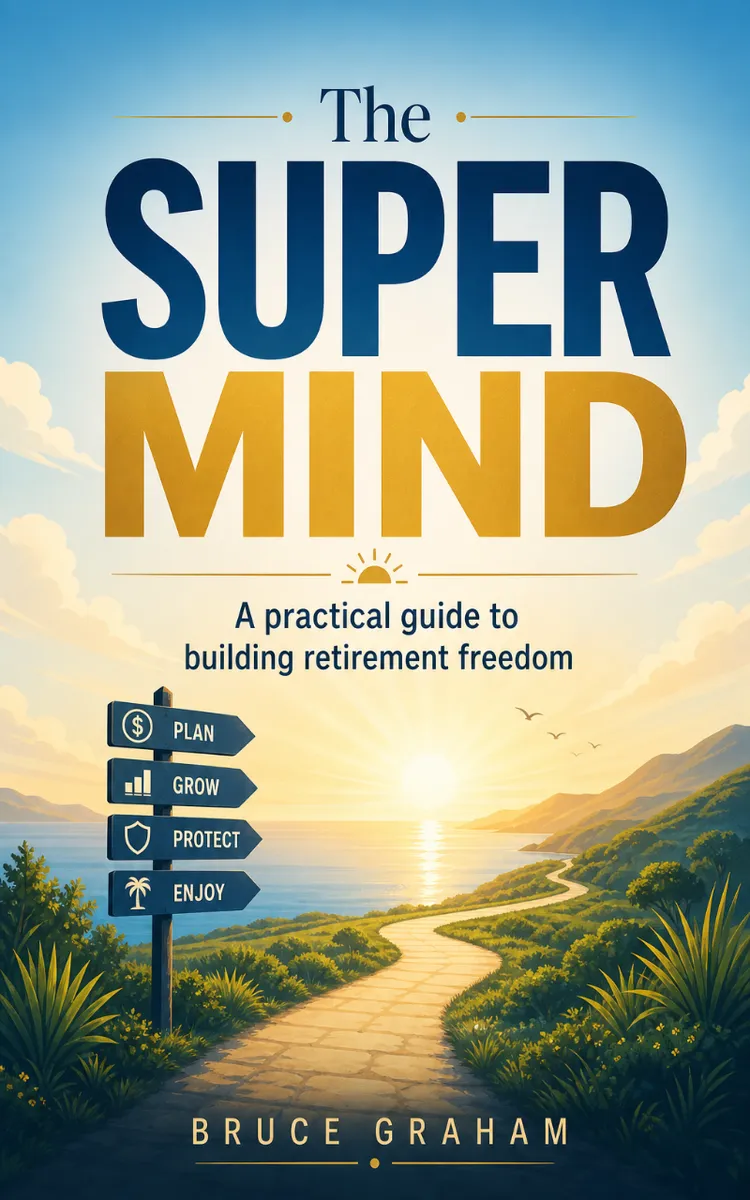
Read the first chapter
The whole of chapter one, free. About 8 min. Turn the pages with the arrows, your keyboard, or a swipe.
Chapter 1
Treat Super Like Freedom
The Day I Realised Super Was Really About Choice (and Not Just Retirement)
The first time I heard Tahlia say, “I’m just trying to get through the week,” it wasn’t about money in general. It was about super. She was 22, an apprentice barista, still learning how to steam milk without scorching it, and she told me she’d never really looked at her super because, honestly, it felt like “someone else’s problem”. She had the kind of super balance that can sit in the background while life takes the wheel - shifts, rent, the odd blowout coffee expense (no judgement), and the big question of whether she could save anything at all.
When I asked her what she thought super was for, she shrugged. “Retirement, I guess. Like… future me can deal with it.” I asked a simple follow-up: “If you could make one choice today that gives you more options at 60, would you want to know what it is?” She blinked like I’d asked her to solve a mystery using the espresso machine. Then she said, “More options… yeah. That sounds better than just waiting.” That’s when it clicked for me - super isn’t a distant retirement account. Super is a choice machine.
If super is only about retirement, why do the decisions you make today feel so personal?
---
Before vs After: From “Retirement Stuff” to “Freedom Choices”
Old Belief: Super is something you set and forget until you’re old enough to use it. New Reality: Super is a set of freedom choices - how you contribute, how you invest, and how you manage your future options - starting right now.
Here’s the moment the mindset shift matters. Before, Tahlia thought super was a ticket you buy for a far-off destination. After, she could see it like a series of doors: contributions can buy you a stronger position later, investment choices can change how those contributions grow, and understanding things like preservation and access rules helps you avoid nasty surprises. None of it is about magic. It’s about clarity.
I remember explaining it like this: if your super is just “retirement money”, it becomes passive. But if it’s “freedom money,” it becomes active. It changes how you talk to yourself. Instead of “I’ll never be able to afford salary sacrifice,” you start asking, “What would a small, consistent choice look like for me?” Instead of “I don’t understand my fund,” you start thinking, “What’s the simplest way to make sure my money’s working for the life I want?”
And for Tahlia, the first real win wasn’t that she instantly became a wealth wizard. It was that she stopped treating super like a locked box and started treating it like a tool. She asked better questions. She checked her account. She looked at the investment option her fund had defaulted to and wondered if it still matched her. That’s the real transformation: super stops being something you fear, and starts being something you steer.
---
The Freedom Lens: Why Choice Changes Every Super Decision You Make
Super feels confusing because it’s tied up with the life you’re living now. Your super balance might be small, your pay might be up and down, and your priorities might change week to week. So it’s easy to slide into “future me will sort it out.” But that mindset quietly steals your agency.
When you see super as choice, you stop asking “Is it worth it?” and start asking “What kind of person do I want future me to be able to be?” That’s a different question. It creates momentum. It also makes decisions less random. Instead of reacting to whatever you heard on social media that morning, you start building a consistent set of habits that support your long-term goals.
A concrete example: Tahlia later mentioned she was thinking about switching jobs. In the old mindset, she’d just worry about the paperwork and the pay packet. In the Freedom Lens mindset, she also asked, “What happens to my super contributions when I move?” She didn’t panic. She planned. She made sure her super didn’t get lost in the shuffle of life admin, and she took five minutes to check where her money was sitting and how it was being invested.
Signs This Pattern Is Running Your Life
1. You treat super like background noise - something you’ll look at “when life calms down,” even though your life doesn’t calm down. 2. You only engage when something goes wrong (like a job change or multiple accounts), instead of setting yourself up before trouble arrives. 3. You feel guilty or overwhelmed when you open your super page, so you close it quickly and return to “later”. 4. You make investment decisions based on vibes (“this seems risky”) rather than based on what you want your future options to look like.
Freedom Lens Summary When super becomes a choice, you stop waiting for retirement and start building your freedom - one sensible decision at a time.
---
Reflection & Self-Assessment: Where Your Mindset Is Steering Your Super
Let’s make this practical, not just “think positive” fluff. Grab a cuppa and answer these like you’re talking to a mate who’s genuinely trying to help.
1. What do you secretly believe super is for - money, punishment, or possibility? If your honest answer is “I don’t know” or “it’s just there,” that’s not failure. It’s data. The first job is getting your head around what super represents to you.
2. When was the last time you checked your super, and what emotion showed up when you opened it? If it was stress, that tells you you’ve linked super with uncertainty. Your next move is to choose one small action that reduces uncertainty (not 20 actions that overwhelm you).
3. Do you feel more in control when you read about super, or more trapped? Why? If you feel trapped, it might be because you’re thinking about rules you don’t understand. The Freedom Lens approach is to focus on what you can choose now - like contributions and investment options.
4. If you could design your “future options” list, what would you want it to include? “Retire comfortably” is a start, but try to get specific: flexibility, ability to help family, freedom to travel, or not having to worry about every bill. Your choices today should support those outcomes.
5. What’s one decision you’ve avoided because you thought it required being “good at finance”? A lot of people avoid super because they think it’s technical. Often, the next step isn’t technical - it’s simply checking what’s already there and asking one clear question.
Take your time. The point isn’t to produce a perfect answer. The point is to notice what your current mindset is protecting you from - usually discomfort.
---
Growth Challenge: Your 7-Day Freedom Check (No Overwhelm, Just Clarity)
This is the kind of challenge I wish more people did when they’re young, busy, and convinced they’ll “get around to it later.” You don’t need spreadsheets. You need a small dose of control - fast.
Challenge Title: The Freedom Check - Day 1: Open your super account (or accounts) and write down the fund name and your current balance. If you have more than one account, note that too. - Day 2: Find your investment option (what your money is currently invested in). Write the label exactly as it appears - don’t interpret it. - Day 3: Check your contributions section. Do you see recent employer contributions? If you’re not sure, write down what you can see. - Day 4: Ask yourself: “If super is freedom, what freedom do I want?” Write 3 short statements (one about money, one about time, one about choices). - Day 5: Make one tiny decision: either log into your account again or save the details somewhere safe (a note on your phone is fine). - Day 6: If you have multiple super accounts, pick one action to reduce future confusion: search for the account details you’re missing, or list what you’ll need to consolidate later. - Day 7: Do a 10-minute review using this question: “What’s one choice I can make in the next month that supports the freedom I wrote on Day 4?”
Difficulty Rating: Easy You’ll know it’s working when… - You can tell (without guessing) which super fund(s) you have. - You can name your current investment option in plain terms (even if you don’t fully understand it yet). - You’ve connected super to a personal outcome, not just a retirement label. - You feel more curious than confused when you think about your super.
---
Key Takeaway: Super Becomes Yours When You Stop Treating It Like a Locked Door
I used to think the biggest barrier I’d face with clients was money. Turns out it’s usually meaning. If you believe super is just a retirement account, you’ll avoid it. If you believe it’s freedom, you’ll engage with it - even if you start small.
For Tahlia, the shift wasn’t dramatic. She didn’t suddenly retire early because she did one thing. She did something better: she started moving from “waiting” to “choosing.” And once that mindset clicks, every part of super starts to feel less like a mystery and more like a steering wheel. The next steps - contributions, investment direction, sorting out multiple accounts, and understanding how access works - stop feeling scary and start feeling doable.
Super is the freedom you build before you need it.
• Super isn’t just retirement money - it’s a series of choices that shape your future options. - The Freedom Lens turns confusion into agency: you focus on what you can choose now. - Your emotions when you open your super account are clues, not character flaws. - A simple 7-day Freedom Check gives you clarity without overwhelm.
Next, we’ll zoom in on what “choice” actually looks like in super - starting with the easiest lever people can pull: how your money gets there and why “set and forget” can quietly work against you.
End of chapter one. 29 more chapters in the full book.
Swipe or use the arrows to turn the page


What's inside: 30 chapters
- 1. Treat Super Like Freedom
- 2. Stop Ignoring the Pay Slip
- 3. The Retirement Tree Analogy
- 4. Compound Growth Works While You Live
- 5. Build Your Super Mindset
- 6. Employer Contributions, Simply Explained
- 7. Concessional vs Non-Concessional
- 8. Contribution Caps Without the Headache
- 9. Salary Sacrificing That Actually Helps
- 10. The Co-Contribution Boost
- 11. MySuper: The Default You Can Trust
- 12. Choosing Investments Without Guessing
- 13. Growth vs Balanced: Pick Your Weather
- 14. Risk Is a Time Game
- 15. How to Handle Market Ups and Downs
- 16. Insurance Inside Super: Use It Wisely
- 17. Preservation Age and Your Real Options
- 18. Transition to Retirement Without Confusion
- 19. Retirement Income Streams That Make Sense
- 20. Age Pension: How It Fits, Not Replaces
- 21. Consolidate Multiple Accounts, Feel Lighter
- 22. Fees: The Tiny Leaks That Add Up
- 23. Ethical Investing Without the Myth
- 24. SMSF: When Control Is Worth It
- 25. Estate Planning Starts With Beneficiaries
- 26. The Five Costly Super Mistakes
- 27. Super Myths That Keep You Stuck
- 28. Stay Informed Without Losing Sleep
- 29. Super in Your Whole Financial Plan
- 30. Your 20-Minute Super Review Ritual
About this book
"The Super Mind" is a self-help book by Bruce Graham with 30 chapters and approximately 50,690 words. Australian superannuation explained for long-term retirement planning.
This book was created using Inkfluence AI, an AI-powered book generation platform that helps authors write, design, and publish complete books. It was made with the AI Self-Help Book Writer.
Frequently Asked Questions
What is "The Super Mind" about?
Australian superannuation explained for long-term retirement planning
How many chapters are in "The Super Mind"?
The book contains 30 chapters and approximately 50,690 words. Topics covered include Treat Super Like Freedom, Stop Ignoring the Pay Slip, The Retirement Tree Analogy, Compound Growth Works While You Live, and more.
Who wrote "The Super Mind"?
This book was written by Bruce Graham and created using Inkfluence AI, an AI book generation platform that helps authors write, design, and publish books.
How can I create a similar self-help book?
You can create your own self-help book using Inkfluence AI. Describe your idea, choose your style, and the AI writes the full book for you. It's free to start.
Write your own self-help book with AI
Describe your idea and Inkfluence writes the whole thing. Free to start.
Start writingCreated with Inkfluence AI


