
Read the first chapter
The whole of chapter one, free. About 8 min. Turn the pages with the arrows, your keyboard, or a swipe.
Chapter 1
The Property Mindset Rules
Why Long-Term Thinking Beats Property Hype (and How You’ll Use Time on Purpose)
The first time I saw hype wreck a deal, it wasn’t because the numbers were wrong. It was because the person looking at the deal couldn’t wait. They’d seen a few glossy posts, heard a mate “knows a guy” in real estate, and decided they needed to move before they missed out. They rushed the inspection, stretched the budget, and paid for it later with stress, delays, and a loan that didn’t fit their real life.
That’s why I coach Australians to think long-term. Not because I’m allergic to excitement, but because property rewards patience. The right mindset protects your decisions when the market gets noisy. It stops you from buying what feels hot today and buying what holds up when interest rates move, tenants change, and your life doesn’t follow a perfect script.
After you finish this chapter, you’ll know how to filter hype fast, set a long-term target for your next purchase, and build a simple routine that uses time to do the heavy lifting. You’ll also walk away with a practical way to pressure-test your plan before you sign anything.
---
The Patience-Discipline-Process Loop (Your Anti-Hype Decision System)
I use one framework with clients because it’s easy to remember and hard to cheat: the Patience-Discipline-Process Loop. It’s not about “thinking positive”. It’s about using a repeatable loop that forces you to slow down, check your work, and make decisions you can live with for years.
Here’s the core idea. Hype moves fast. Life moves slower. Property sits right in the middle. Your job is to move at the speed of due diligence, not the speed of social media.
When Dylan (34, a FIFO electrician) came to me, he told me he felt like he was always one step behind. He’d save hard, then see a “can’t miss” opportunity and panic-buy. His stress wasn’t just money stress. It was brain stress. He kept asking the same question: “Am I missing out, or am I just being pushed around?” We built his loop and gave him a routine that made the decision feel calmer and more controlled.
Use the loop like this:
1. Practice Patience (define your minimum hold time before you look) Decide how long you’ll keep the property before you even start shopping. Write a realistic minimum hold time on a sticky note: “I’m buying for at least X years.” This matters because your strategy changes when you’re planning for five years versus planning for ten. Example: Dylan set a minimum hold time of 7 years because his income pattern and roster life meant he needed stability, not quick flips.
2. Apply Discipline (set “no-deal” rules and stick to them) Make rules that stop you signing on emotion. You might say: “I won’t buy if the rent won’t cover the loan repayments after standard costs,” or “I won’t buy if I can’t afford the place if rates lift.” Example: Dylan refused any deal where his serviceability numbers only worked if interest rates stayed low forever. He treated that like a fantasy ending.
3. Run the Process (do the checks every time, in the same order) Follow a repeatable checklist so you don’t reinvent the wheel for each property. The point isn’t perfection; it’s consistency. Example: Dylan used the same due diligence order each time: rent reality check first, then costs, then location fundamentals, then the numbers with his bank.
4. Review Outcomes (measure what happened, not what you hoped would happen) After purchase, you track a few key things so you learn and adjust. This keeps you from repeating the same mistake under a new listing photo.
The loop works because it interrupts the “rush and regret” cycle. Hype thrives on urgency. Patience-Discipline-Process turns urgency into a boring, reliable routine.
---
How to Filter Hype and Let Time Do the Heavy Lifting
Let’s get practical. The fastest way to avoid hype is to stop treating each property like a one-off gamble and start treating it like a long-term plan you’re funding with borrowing.
Time does the heavy lifting in property in two main ways. First, you give the market room to move without you panicking. Second, you keep stacking progress through rent, debt reduction, and the slow grind of capital growth (even when it feels like nothing is happening). You don’t control the market’s mood. You control your process and your risk.
Here’s how I coach you to apply the loop to a real decision.
1. Write your “hold-time target” before you view properties Use a simple rule: if you wouldn’t keep it for your hold time, don’t buy it today. Dylan chose 7 years and stopped chasing “maybe I’ll sell later” deals.
2. Set your “rent reality bar” Hype often uses optimistic rent. You need a reality bar: what rent do you expect after you’ve checked the local market and vacancy risk? Dylan asked agents for the last few months of rentals in the area and compared them to what the ad said. He stopped listening to “it’ll rent easily” and started asking “what did it actually rent for recently?”
3. Build a “can I survive?” cashflow view Don’t only check whether you can afford the repayments right now. Check whether you can survive a worse scenario. Use a conservative buffer in your head: higher rates, a gap between tenants, higher maintenance, and a few boring costs that always show up. Dylan ran his plan assuming he’d cover the property even if rent came in a bit lower for a while.
4. Confirm the basics you can verify You don’t need a crystal ball. You need evidence on fundamentals: demand drivers, tenant appeal, and whether the property fits the area’s long-term pattern. Dylan focused on the “boring stuff” like local rental demand and services, not just the view from the balcony.
5. Only then compare deals Once you’ve applied the same filters, compare the candidates using the numbers and your risk tolerance. You can still pick the “best” option, but you won’t pick it because you felt pressured.
To make it easier, use this Quick checklist when you’re tempted by a hot listing:
Quick checklist - I will hold this for at least X years. - My rent estimate matches recent reality, not just the ad. - My repayments still work with a safety buffer for costs and rate movement. - I verified fundamentals I can check (not just “up-and-coming” talk). - I can say “no” without losing sleep.
That’s how you stop hype from driving the bus. You drive the process, and time does the rest.
---
A Real-World Walkthrough: Dylan’s FIFO Plan to Stop Buying on Rush
Dylan’s problem wasn’t that he lacked discipline. It was that FIFO life already had enough stress. When he flew home and saw a new listing, he’d feel behind. He’d think, “If I don’t act now, I’ll miss it.” That’s how hype sneaks in: it disguises itself as fear of missing out.
Here’s the routine we built for him using the Patience-Discipline-Process Loop.
Step 1: Set the hold-time target (Patience) Dylan wrote: “Minimum hold time: 7 years.” Expected outcome: He removed the pressure to “flip it” and stopped chasing short-term price moves.
Step 2: Create his no-deal rules (Discipline) He used three rules: - No deal if his cashflow only works under perfect conditions. - No deal if rent looks stretched compared to recent local rentals. - No deal if the property needs major work he hasn’t costed properly.
Expected outcome: He stopped wasting time on deals that would stress him later.
Step 3: Run the process in one order (Process) He used a repeatable order each time: - Rent reality check (based on actual rentals, not just asking prices) - Cost check (fees, maintenance, and likely repairs) - Loan fit check (what he can service with a buffer) - Location fundamentals check (tenant appeal and long-term demand drivers)
Expected outcome: He made decisions faster, but better, because he didn’t scramble for information at the last minute.
Step 4: Schedule decisions to match FIFO reality (Process) Dylan didn’t try to “decide” while he was exhausted. He booked time on his roster to review offers and documents properly. Expected outcome: He reduced emotional decisions during high-stress periods.
Step 5: Review after the purchase (Outcomes) After purchase, Dylan tracked: - Whether rent matched expectations - Whether costs came in as expected - Whether his buffer covered the gaps without panic
Expected outcome: He built confidence from evidence, not hope.
---
What to Watch For (Common Mistakes That Break the Loop)
Even with a good loop, a few traps show up again and again. Here are the main ones I see with Australians trying to invest long-term.
Mistake: Treating hype like “extra information” When you see a hot listing, your brain starts attaching reasons to it: “It’s undervalued,” “It’s about to pop,” “Everyone will want it.” Do this: Force yourself to run the rent reality bar and the cashflow survival view before you get excited. If the numbers don’t hold under a buffer, you walk away even if the story sounds good. Not this: Buying because the pitch feels confident or because you think you’ll figure out the gaps later.
Mistake: Changing your hold time after you sign People often start with a plan, then later decide they’ll sell earlier because “it’s going well.” That’s how long-term strategies quietly turn into short-term bets. Do this: Lock your minimum hold time before you buy, and treat any plan to sell early as a separate decision that needs its own justification. Not this: Signing up first, then renegotiating your strategy when the market gets noisy.
Mistake: Skipping the boring checks because “it’s close enough” A “close enough” approach to costs, repairs, or rent can ruin your cashflow and knock your confidence. Do this: Cost the likely repairs and maintenance properly, and include the costs you can’t avoid (insurance, fees, and the usual upkeep). Not this: Relying on a renovation dream without a proper budget and time plan.
---
The Property Mind Shift: Make calm decisions, then let time work
Here’s the shift I want you to make: you don’t need to predict the perfect moment. You need a decision process you can repeat, even when you feel tempted.
Patience gives you the right time horizon. Discipline keeps you from signing on emotion. Process makes sure you do the checks that protect your future cashflow and stress levels. Then time does the heavy lifting, because you’re no longer fighting yourself.
If you want wealth-building property outcomes, start by building a mind that doesn’t get bullied by hype. The market will always have something loud to say. Your job is to keep your loop steady, and your decisions boringly consistent. That’s where the real advantage lives.
End of chapter one. 29 more chapters in the full book.
Swipe or use the arrows to turn the page


What's inside: 30 chapters
- 1. The Property Mindset Rules
- 2. Home vs Investment Property
- 3. Setting Financial Goals That Stick
- 4. Building Your Property Budget
- 5. Borrowing Basics and Pre-Approval
- 6. Leverage Without the Panic
- 7. Good Debt vs Bad Debt
- 8. Cash Flow: The Real Test
- 9. Equity and Why It Matters
- 10. Capital Growth vs Yield
- 11. Rental Yield: Simple Calculation
- 12. Choosing Locations That Perform
- 13. Research Like a Professional
- 14. Due Diligence Before You Buy
- 15. Understanding Property Cycles
- 16. Interest Rates and Your Repayments
- 17. Risk Management That’s Actually Practical
- 18. Renovating Wisely for Value
- 19. Avoiding the Most Expensive Buying Mistakes
- 20. Negotiation Tactics That Save Money
- 21. Property Management: Don’t DIY Everything
- 22. Tax Basics for Property Investors
- 23. Negative Gearing: High-Level Guide
- 24. Capital Gains Tax: High-Level Guide
- 25. Building a Portfolio Step-by-Step
- 26. Diversification Without Overcomplication
- 27. Property and Super: Using the Link
- 28. Exit Strategies That Protect Your Future
- 29. Long-Term Wealth Planning Timeline
- 30. Your Property Mind Action Plan
About this book
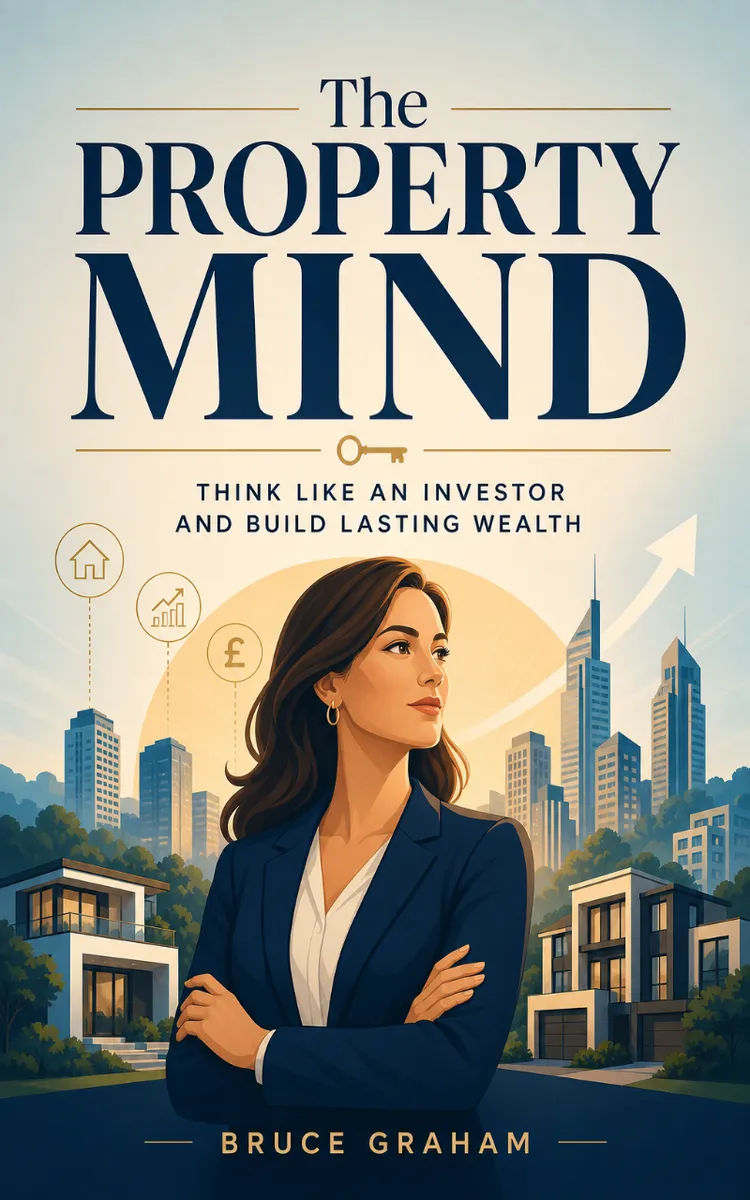
"The Property Mind" is a finance book by Bruce Graham with 30 chapters and approximately 55,135 words. Mindset and practical guidance for Australian property investing.
This book was created using Inkfluence AI, an AI-powered book generation platform that helps authors write, design, and publish complete books. It was made with the AI Ebook Generator.
Frequently Asked Questions
What is "The Property Mind" about?
Mindset and practical guidance for Australian property investing
How many chapters are in "The Property Mind"?
The book contains 30 chapters and approximately 55,135 words. Topics covered include The Property Mindset Rules, Home vs Investment Property, Setting Financial Goals That Stick, Building Your Property Budget, and more.
Who wrote "The Property Mind"?
This book was written by Bruce Graham and created using Inkfluence AI, an AI book generation platform that helps authors write, design, and publish books.
How can I create a similar finance book?
You can create your own finance book using Inkfluence AI. Describe your idea, choose your style, and the AI writes the full book for you. It's free to start.
Write your own finance book with AI
Describe your idea and Inkfluence writes the whole thing. Free to start.
Start writingCreated with Inkfluence AI


