
Read the first chapter
The whole of chapter one, free. About 7 min. Turn the pages with the arrows, your keyboard, or a swipe.
Chapter 1
Why Investing Feels Scary
The Fear Loop at 11:47pm (and the “maybe I’ll wait” plan)
Liam, 24, a graduate teacher, told me this over coffee one night after a long day. He’d been reading about ETFs, nodding along, then hitting the same brick wall every time: “What if it drops right after I buy?” He’d open his phone, check the market, and feel his stomach do that little elevator drop. Then he’d close everything and tell himself he’d “look again later” when he felt calmer.
He wasn’t lazy. He wasn’t reckless. He was cautious in the most exhausting way - because the fear didn’t just show up when the money was on the line. It showed up while he was still trying to decide. So he kept postponing the decision, and every day he waited, the fear got one more day to practise being loud.
If you feel scared before you even buy an ETF, your problem isn’t investing - it’s the fear loop.
The Fear-to-Freedom Compass: Where Your Fear Gets Its Fuel
Here’s the Before vs After that changed how I talk to people like Liam. It’s the difference between “I’m not ready” and “I’m caught in a loop.”
Old Belief: “Investing is risky, so I should wait until I feel confident.” New Reality: “Fear is a signal, not a stop sign - your job is to calm the loop before you press buy.”
When Liam finally explained what was really happening, it was painfully simple: he wasn’t scared of the ETF. He was scared of what his brain would do if the value went down. He pictured the drop like it was personal - like the market would be “punishing” him for choosing to invest. And because he couldn’t control the market, his brain tried to regain control by delaying the whole decision.
So instead of waiting for confidence to magically arrive, we worked on his fear loop itself. Not with fancy finance talk. With a compass - because fear behaves like a direction, not a diagnosis.
First, we named the loop: Trigger → Alarm → Decision to delay → Temporary relief → Fear gets a vote again next time. That relief is the sneaky part. It feels like you’re doing something smart (“I’m being careful”), but you’re actually training your brain to associate waiting with safety.
Concrete example: Liam set a reminder to buy an ETF the next morning. That night, he checked prices “just to see,” and the number looked lower than yesterday. Alarm bells. The next morning he cancelled. By the time he came back a week later, prices had moved again - and the same alarm fired, only louder. The loop had learned his pattern: delay = relief.
The Mindset Shift That Stops You From Treating Waiting Like Safety
The truth is, investing feels scary because you’re trying to make a long-term decision using short-term feelings. Your emotions want instant proof that you’re safe. But investing doesn’t work like that.
An ETF is basically a basket of investments. It goes up and down because markets are like Australian weather - sometimes sunny, sometimes wild gusts, and you don’t get to choose the season. But your brain doesn’t care about seasons. It cares about right now. If the basket dips after you buy, your brain interprets it as “danger,” even though it might just be normal movement.
That’s why calming your fear loop matters before you buy. Once money is invested, your brain will still look for danger - only now it has a shiny new target. You’ll be more likely to panic-sell, switch strategies mid-flight, or abandon the plan entirely. And none of those are “bad character” moments. They’re predictable behaviour. Your brain is doing what brains do: trying to protect you from loss.
Here’s the shift in plain English: you don’t need to remove fear - you need to stop fear from running the steering wheel. That’s what the Fear-to-Freedom Compass helps you do.
Signs This Pattern Is Running Your Life 1. You research for ages, then freeze when it’s time to actually click “buy.” Liam did this - he could explain ETFs, but he couldn’t complete the transaction without spiralling. 2. You check prices more when you’re unsure. Not because you’re “monitoring,” but because you’re hoping to catch a sign that it’s safe. 3. You only feel calm when you’re not exposed to the market yet. Waiting feels safer than investing, so your brain keeps choosing waiting. 4. You tell yourself you’re being sensible, but you keep moving the goalposts. “Next week I’ll do it.” Then “after payday.” Then “when I feel more certain.”
Fear isn’t the enemy - unmanaged fear is what turns investing into a stop-start habit.
Going Deeper: The Fear-to-Freedom Compass in Real Life
Let me make the compass practical. When your fear loop turns on, it usually pulls you in four directions. Think of them like compass points.
1) The “What if I buy at the wrong time?” needle This is the classic fear. Liam asked, “What if it drops right after I buy?” That question feels reasonable, but it’s a trap because markets don’t announce their next move to anxious brains.
2) The “I’ll wait until I’m sure” detour Waiting feels like wisdom. But if you only buy when you’re calm, you’ll often never buy. Confidence is unreliable. Calm is temporary. The market doesn’t care.
3) The “One bad outcome means I made a bad decision” story If the value drops, your brain turns it into a verdict on you, not a fluctuation. That’s how people end up quitting right as things are becoming more normal.
4) The “I need to control this” urge Checking prices, reading headlines, and refreshing the app gives a hit of control. It’s comforting… and it keeps your fear alive.
Once you can spot which needle you’re following, you can steer back. Not by pretending you don’t feel fear, but by giving fear a job: notice, label, and move forward with a plan you can stick to.
Try this in your own words: when fear shows up, you don’t argue with it. You acknowledge it like a nervous passenger. “Yep, you’re scared. Great. We’re still going to the destination.”
Reflection & Self-Assessment: Find Your Loop Before It Costs You
Answer these questions honestly. Don’t try to sound brave - bravery isn’t the goal. Clarity is.
1. What exactly are you afraid will happen after you buy? Be specific. “It could drop” is vague. “I’ll feel sick and sell” is closer to the truth. Liam’s real fear wasn’t the drop - it was what he’d do next.
2. What do you do when fear hits - what’s your usual move? Do you delay, check prices, read more, or ask for reassurance? Write the behaviour, not the intention. Intention is nice. Behaviour is what your money follows.
3. When you delay, what do you get out of it right away? That “instant relief” is the reward your brain is chasing. If you can name it, you can stop calling it safety.
4. If nothing bad happened after you bought - what would that change about how you feel? You’re not predicting the future here. You’re testing whether your fear is based on reality or on a story.
5. What would “calm enough” look like for you - practically? For Liam, calm enough wasn’t “no fear.” It was “I can go ahead even while I’m a bit nervous.”
Growth Challenge: Calm the Fear Loop Before You Press Buy
For the next 7 days, I want you to do something that feels almost too simple. You’re going to practice steering, not predicting.
The 7-Day Fear-to-Freedom Practice - Pick one ETF decision you’re avoiding. Not the whole world - just the next step you can take. (Example Liam used: completing his first purchase plan.) - Choose a “fear check time” once a day. Same time each day. For Liam it was 6:30pm. During the day, no checking. - When fear shows up, write one line only: “I’m feeling ____ because I’m afraid __, so I want to __.” Then write one line of action: “Instead, I will ____.” - Do one tiny action each day that moves the decision forward (not research for hours). Examples: log into your account, confirm your contribution amount, set up a reminder, or draft the exact purchase amount you’re comfortable with.
Expected difficulty: Medium (because your brain will try to “fix” fear by searching for certainty)
You’ll know it’s working when… - You can describe your fear in plain language without turning it into a disaster story. - You stop checking prices “just in case,” because you’ve learned the loop doesn’t need feeding. - You complete at least one small step toward buying - while still feeling some nervousness. That’s the point.
Key Takeaway: Your Next Step Isn’t About Removing Fear - It’s About Owning the Steering Wheel
When people ask me, “How do I know when I’m ready to invest?” I don’t give them a feeling-based answer. Feelings are slippery. Readiness is behaviour.
So here’s what I want you to carry from this chapter, straight into your next decision moment: you can be scared and still act wisely - because wise investing is built on habits, not perfect emotions.
• You’re not broken for feeling fear before buying. Fear is a normal response to uncertainty. - The fear loop usually survives on relief from delay and the comfort of price-checking. - The Fear-to-Freedom Compass helps you spot where the loop is steering you - so you can steer back. - Your goal isn’t “no fear.” Your goal is “fear doesn’t get final say.”
Next, we’ll talk about what actually makes investing work over time - so you have something stronger than hope to hold onto when the numbers wobble.
End of chapter one. 29 more chapters in the full book.
Swipe or use the arrows to turn the page


What's inside: 30 chapters
- 1. Why Investing Feels Scary
- 2. Saving Isn’t Investing
- 3. Inflation Steals Your Future
- 4. Risk Means More Than Volatility
- 5. Reward Comes From Time
- 6. Compounding Is Your Quiet Superpower
- 7. Time Beats Timing Every Time
- 8. Build Your Investor Identity First
- 9. The Behavioural Traps I’ve Seen
- 10. Fear vs Greed: Your Inner Weather
- 11. How to Respond to Market Crashes
- 12. Media Headlines Are Not Your Plan
- 13. Diversification: Don’t Bet the Farm
- 14. ETFs Explained Like a Coffee Order
- 15. Index Investing: The Boring Edge
- 16. Australian Shares vs International Shares
- 17. Bonds: The Portfolio Stabiliser
- 18. Property: Wealth Builder or Wealth Trap?
- 19. Superannuation: Your Long Game
- 20. Asset Allocation That You Can Stick To
- 21. Dollar-Cost Averaging Without the Myths
- 22. Rebalancing: The Buy-Low Discipline
- 23. Dividends vs Capital Growth
- 24. Tax Basics That Actually Matter
- 25. Active vs Passive: Choose Your Lane
- 26. Building a Scam-Resistant Mind
- 27. Crypto Belongs in the Speculation Box
- 28. Your Lifelong Investment Plan
- 29. Reviewing Without Overreacting
- 30. From First Buy to Financial Freedom
About this book
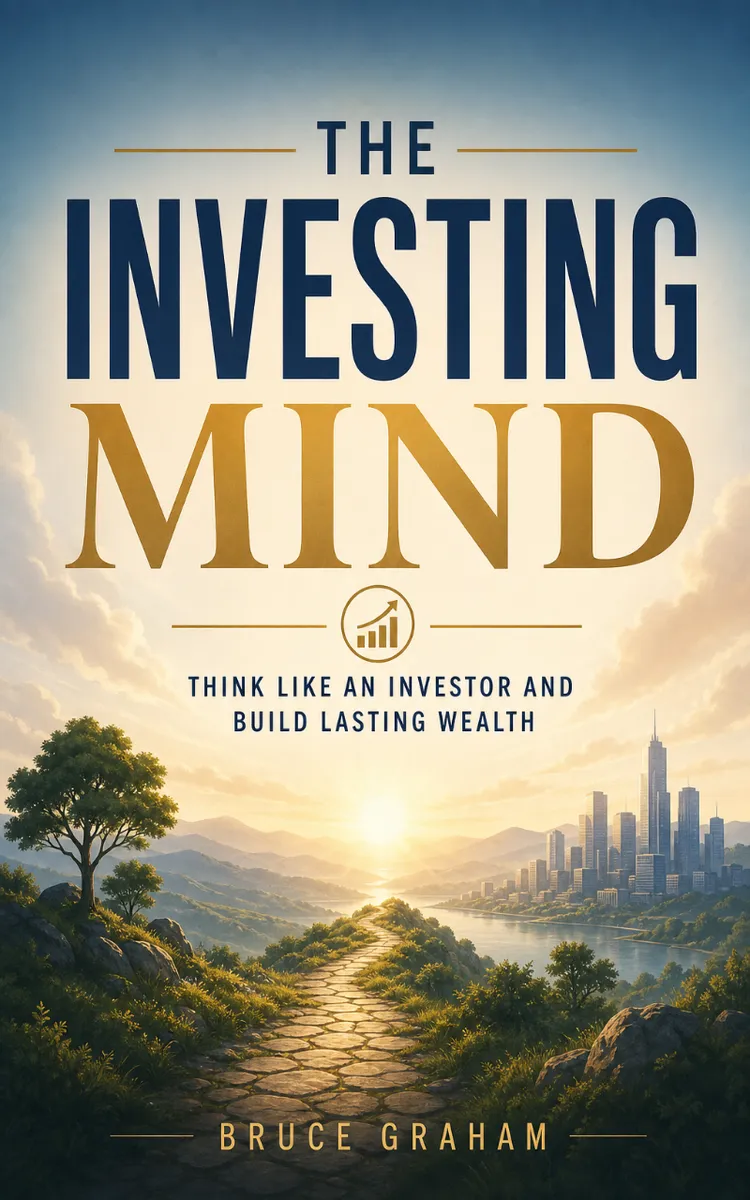
"The Investing Mind" is a self-help book by Bruce Graham with 30 chapters and approximately 50,472 words. Mindset and behavioral lessons for long-term investing and wealth building.
This book was created using Inkfluence AI, an AI-powered book generation platform that helps authors write, design, and publish complete books. It was made with the AI Self-Help Book Writer.
Frequently Asked Questions
What is "The Investing Mind" about?
Mindset and behavioral lessons for long-term investing and wealth building
How many chapters are in "The Investing Mind"?
The book contains 30 chapters and approximately 50,472 words. Topics covered include Why Investing Feels Scary, Saving Isn’t Investing, Inflation Steals Your Future, Risk Means More Than Volatility, and more.
Who wrote "The Investing Mind"?
This book was written by Bruce Graham and created using Inkfluence AI, an AI book generation platform that helps authors write, design, and publish books.
How can I create a similar self-help book?
You can create your own self-help book using Inkfluence AI. Describe your idea, choose your style, and the AI writes the full book for you. It's free to start.
Write your own self-help book with AI
Describe your idea and Inkfluence writes the whole thing. Free to start.
Start writingCreated with Inkfluence AI


