

Read the first chapter
The whole of chapter one, free. About 8 min. Turn the pages with the arrows, your keyboard, or a swipe.
Chapter 1
Warm-Up Phase (Week 1 Sessions 1-3)
Phase Overview
A calendar alert ends, your hands leave the keyboard, and the first movement of the workout begins before your shoulders and hips have had time to adjust. Week 1 uses the 3-2-1 Warm Start: three minutes to raise body temperature, two minutes to move the main joints, and one minute to slow and control your breathing. The goal is not to get tired; it is to make the first exercise feel smooth, steady, and ready.
Use this warm-up at the start of all three 10-minute sessions. No equipment is required, although a wall or the back of a stable chair can help with balance. Talia, a 34-year-old customer support coordinator, can complete the routine beside her desk without changing clothes or leaving the work area. By the end of the week, the sequence should feel familiar enough to begin without hesitation.
Workouts
Each session lasts 10 minutes: 6 minutes for the 3-2-1 Warm Start and 4 minutes for the session’s easy movement practice. The warm-up stays consistent so your body and attention can learn the pattern. The final 4 minutes gently introduce the movement demands that will appear later in the plan.
Keep the effort at about 3 or 4 on a 10-point effort scale. You should feel warmer and more mobile, but you should still be able to speak in full sentences. If a joint feels sharp, catches, or becomes unstable, stop that movement and use a smaller range. Mild stiffness is a reason to slow down, not to force the joint.
Session 1: Basic joint-and-breath warm-up
Begin standing with feet about hip-width apart. Keep your knees soft rather than locked. The first three minutes use simple, low-impact movements to increase circulation. The next two minutes move through the joints most affected by desk work: ankles, knees, hips, shoulders, and upper back. The final minute sets a calm breathing rhythm.
| Exercise | Sets × Reps | Load | Rest | | --- | --- | --- | --- | | March in place | 1 × 60 seconds | Bodyweight | None | | Step-touch with relaxed arm swing | 1 × 60 seconds | Bodyweight | None | | Heel raises | 1 × 30 seconds | Bodyweight | None | | Ankle circles | 1 × 5 each direction per ankle | Bodyweight | None | | Knee bends | 1 × 8 | Bodyweight | None | | Hip circles | 1 × 5 each direction | Bodyweight | None | | Shoulder rolls | 1 × 6 forward, 6 backward | Bodyweight | None | | Standing upper-back rotation | 1 × 5 each side | Bodyweight | None | | Controlled breathing: inhale through nose, exhale slowly | 1 × 6 breaths | Bodyweight | None | | Sit-to-stand from chair | 2 × 6 | Bodyweight | 30 seconds |
During the sit-to-stand, place the chair against a wall so it cannot slide. Touch the seat lightly, then stand without pushing off with your hands. This final movement connects the warm-up to a useful strength pattern while keeping the effort low. Ask yourself: Are your feet planted evenly, and can you stand without holding your breath?
Session 2: Add gentle range of motion
Session 2 keeps the same 3-2-1 structure but gives slightly more attention to the shoulders, spine, and hips. These areas often stay in one position during computer work. Move slowly enough to notice whether one side feels tighter than the other. The aim is even, comfortable movement rather than matching a large range.
| Exercise | Sets × Reps | Load | Rest | | --- | --- | --- | --- | | March in place with opposite-arm reach | 1 × 60 seconds | Bodyweight | None | | Step-touch with arm sweep to shoulder height | 1 × 60 seconds | Bodyweight | None | | Heel-toe rocking | 1 × 30 seconds | Bodyweight | None | | Ankle circles | 1 × 6 each direction per ankle | Bodyweight | None | | Supported knee bends | 1 × 8 | Bodyweight | None | | Hip circles with hands on hips | 1 × 5 each direction | Bodyweight | None | | Shoulder rolls with slow breathing | 1 × 6 forward, 6 backward | Bodyweight | None | | Standing upper-back rotation | 1 × 6 each side | Bodyweight | None | | Wall reach: slide arms up and down | 1 × 6 | Bodyweight | None | | Controlled breathing: four-count inhale, six-count exhale | 1 × 6 breaths | Bodyweight | None | | Supported split-stance weight shift | 2 × 6 each side | Bodyweight | 30 seconds |
For the supported split-stance weight shift, place one foot slightly forward and keep one hand on a wall or desk. Shift your weight toward the front foot, then return to the middle. Do not lunge deeply. Switch sides after six repetitions. The longer exhale helps reduce rushed movement; if a six-count exhale feels uncomfortable, use a natural, unforced exhale instead.
Session 3: Practice the complete warm start
Session 3 is a rehearsal of the full routine. The movements are still easy, but the transitions are more deliberate. Set a timer for one minute at a time, or use a clock with a second hand. The goal is to finish the six-minute warm-up with clear breathing and no need to shake out stiff hands, knees, or shoulders.
| Exercise | Sets × Reps | Load | Rest | | --- | --- | --- | --- | | March in place with easy arm drive | 1 × 60 seconds | Bodyweight | None | | Step-touch with arm sweep | 1 × 60 seconds | Bodyweight | None | | Heel raises to soft knee bend | 1 × 30 seconds | Bodyweight | None | | Ankle circles | 1 × 6 each direction per ankle | Bodyweight | None | | Knee bends with balanced weight | 1 × 8 | Bodyweight | None | | Hip circles | 1 × 6 each direction | Bodyweight | None | | Shoulder rolls | 1 × 6 forward, 6 backward | Bodyweight | None | | Standing upper-back rotation with reach | 1 × 6 each side | Bodyweight | None | | Wall reach with slow exhale | 1 × 6 | Bodyweight | None | | Controlled breathing: easy inhale, longer exhale | 1 × 6 breaths | Bodyweight | None | | Sit-to-stand with three-second lowering | 2 × 6 | Bodyweight | 30 seconds |
The three-second lowering in the sit-to-stand is the only progression in the final four minutes. Count “one, two, three” as you lower toward the chair, then stand at a normal pace. If your knees turn inward or your balance becomes uncertain, return to the regular sit-to-stand from Session 1. Progression means better control, not forcing a harder version.
For all three sessions, the load is bodyweight. Do not add a backpack, dumbbell, or resistance band during this phase. The warm-up is teaching joint control and breathing timing, and extra load can hide poor alignment or make a small stiffness problem worse. When the timer ends, take a quick check: your breathing should be controlled, your joints should feel warmer, and you should be ready to work rather than recover.
Training Notes
Use the 3-2-1 Warm Start in the same order every time: three minutes of easy circulation, two minutes of joint movement, and one minute of breathing. That order matters because it begins with the least demanding work and gradually prepares you for bending, reaching, and changing position. Keep movements quiet and controlled, especially on a hard office floor.
For marching and step-touching, place the whole foot down rather than staying on the toes. Let your arms swing naturally; do not raise them above shoulder height if that causes pinching. During ankle circles, move from the ankle instead of drawing large circles with the entire leg. Small circles are enough. During knee bends, keep the knees pointing in the same general direction as the toes and keep your weight spread across the feet.
The upper-back rotation should come from the ribs and upper spine, not from twisting the knees. Keep the hips facing forward and turn only as far as you can without strain. For shoulder rolls, lift the shoulders gently, move them back, then let them drop. Avoid shrugging hard toward the ears.
Breathing is the simplest quality check. Inhale quietly through the nose when comfortable, and let the exhale last a little longer. If you cannot speak a short sentence, reduce the pace of the marching or step-touching. If you feel light-headed, stop, sit, and return to normal breathing before continuing. A warm-up should improve readiness, not test your fitness.
A common mistake is turning the warm-up into the workout by moving too fast. Another is stretching aggressively before the joints are warm. Avoid bouncing, forcing a joint to its end range, or holding your breath during sit-to-stands. Keep one hand near a stable support when balance is uncertain, but do not grip so tightly that your shoulders tense.
Use this quick check before starting the main session:
• Your feet feel stable on the floor. - Your knees track comfortably over your feet. - Your shoulders can move without sharp pain. - Your breathing is steady enough for full sentences. - Your body feels warmer, not exhausted.
If all five statements are true, the 3-2-1 Warm Start has done its job. Repeat the same sequence for Sessions 1 through 3, making only the listed changes. By the end of Week 1, you will have a dependable six-minute entry point that helps turn a desk break into safe, focused movement.
End of chapter one. 9 more chapters in the full book.
Swipe or use the arrows to turn the page

AI Automation for Freelancers: Automate the Business Behind Your Work

Fit Behind the Wheel: Fitness for Truck Drivers

Fitness for Shift Workers: Staying Active on an Unusual Schedule
What's inside: 10 chapters
- 1. Warm-Up Phase (Week 1 Sessions 1-3)
- 2. Posture Reset Phase (Week 1 Sessions 4-6)
- 3. Core Activation Phase (Week 2 Sessions 1-3)
- 4. Strength Foundation Phase (Week 2 Sessions 4-6)
- 5. Cardio Intervals Phase (Week 3 Sessions 1-3)
- 6. Strength Volume Phase (Week 3 Sessions 4-6)
- 7. Power Prep Phase (Week 4 Sessions 1-3)
- 8. Intensity Builder Phase (Week 4 Sessions 4-6)
- 9. Metabolic Finisher Phase (Week 5 Sessions 1-3)
- 10. Consistency and Progress Phase (Week 5 Sessions 4-6)
About this book
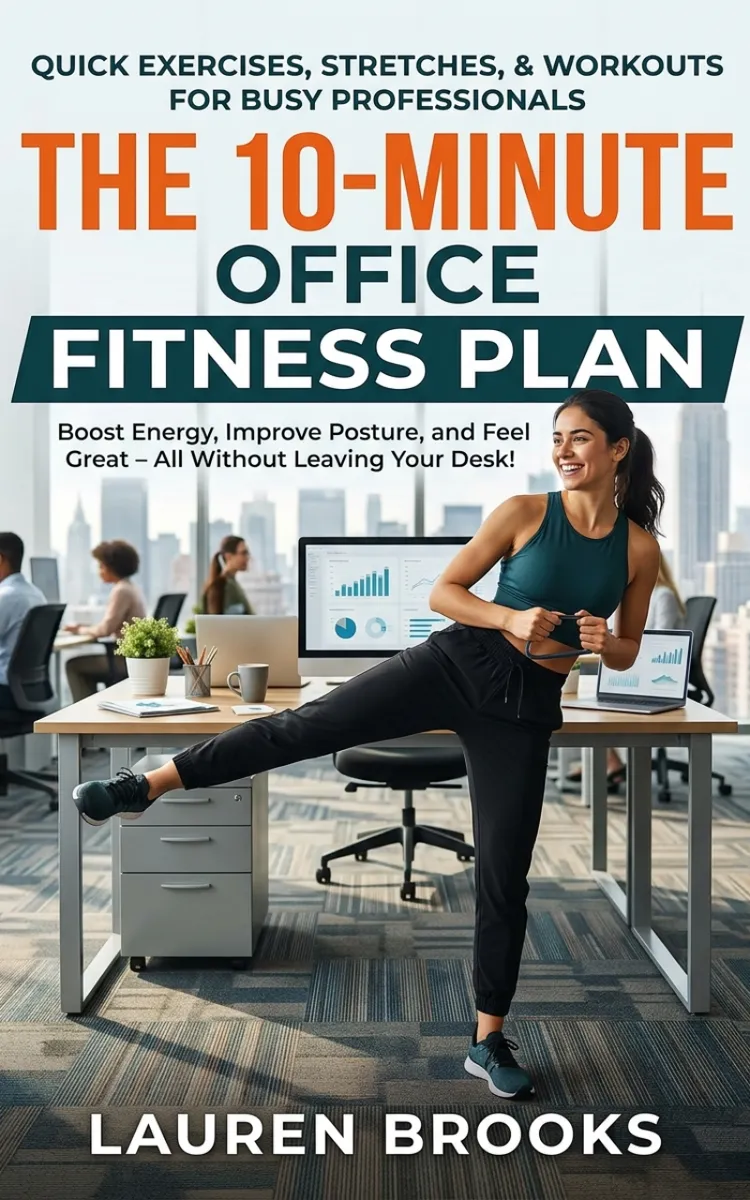
"The 10-Minute Office Fitness Plan" is a fitness book by Lauren Brooks with 10 chapters and approximately 17,089 words. Short office workouts for busy people.
This book was created using Inkfluence AI, an AI-powered book generation platform that helps authors write, design, and publish complete books. It was made with the AI Workout Plan Generator.
Frequently Asked Questions
What is "The 10-Minute Office Fitness Plan" about?
Short office workouts for busy people
How many chapters are in "The 10-Minute Office Fitness Plan"?
The book contains 10 chapters and approximately 17,089 words. Topics covered include Warm-Up Phase (Week 1 Sessions 1-3), Posture Reset Phase (Week 1 Sessions 4-6), Core Activation Phase (Week 2 Sessions 1-3), Strength Foundation Phase (Week 2 Sessions 4-6), and more.
Who wrote "The 10-Minute Office Fitness Plan"?
This book was written by Lauren Brooks and created using Inkfluence AI, an AI book generation platform that helps authors write, design, and publish books.
How can I create a similar fitness book?
You can create your own fitness book using Inkfluence AI. Describe your idea, choose your style, and the AI writes the full book for you. It's free to start.
Write your own fitness book with AI
Describe your idea and Inkfluence writes the whole thing. Free to start.
Start writingCreated with Inkfluence AI


