
AI vs Human Ebook Creation: The Honest 2026 Comparison
The real comparison between AI and human ebook writers in 2025. Workflow, cost, turnaround time, and quality - explored honestly for creators who need to make a practical decision.

Quick Answer
AI ebook creation is faster (minutes vs months), cheaper (free-to-low-cost vs $2,000-$15,000+), and best for lead magnets, guides, and structured non-fiction. Human ghostwriters are better for memoir, thought leadership, and voice-heavy narratives. Most creators get the best results by using an AI ebook generator for the first draft and adding personal expertise during editing.
The debate around AI-written ebooks has become strangely dramatic over the past year. On one side, you have traditional book-writing agencies describing AI as shallow, soulless, or incapable of real thought. On the other side, you have AI platforms promising you can create a masterpiece in ten minutes without ever touching a keyboard. As usual, the truth sits somewhere in the middle - and if you're a coach, creator, freelancer, or small business owner in 2025, the real question isn't "Which is better?" It's "Which is better for me, right now, with the goals I have and the time I actually have available?"
To answer that, you need to compare both approaches honestly. Not theoretically. Not with the inflated marketing language you see everywhere. But based on workflow, cost, turnaround time, consistency, and the type of ebook you're actually trying to produce.
Inkfluence AI sits on the AI side of this conversation - but it's built in a way that forces you to be realistic about the trade-offs. It doesn't claim to replace deep thought leadership. It doesn't pretend to be a ghostwriter who will interview you for six weeks. Instead, it exists for the huge category of creators who don't need a 90,000-word manifesto; they just need something publishable, structured, visually professional, and ready to launch without burning three months of their life.
This article digs into the truth behind both paths. And if you are considering adding audio to your ebook, check out our free AI audiobook generators comparison or our step-by-step ebook-to-audiobook conversion guide for the latest options.
The Traditional Human Ghostwriter Experience: High Quality, High Cost, High Time Commitment
There's a reason experienced book coaches and ghostwriters still exist: some books genuinely require human interpretation, nuance, and the ability to translate someone's vision into a long-form narrative that reads like a coherent argument rather than a stitched-together set of notes. If you're writing a thought-leadership book for corporate audiences, a book rooted in lived experience or personal storytelling, or a manuscript designed to position you as an industry expert on a global stage, a human collaborator brings depth that an AI tool can't fully replicate yet.
The process usually begins with long-form discovery sessions. You spend hours unpacking your ideas with someone who knows how to shape them. Then come the interviews, the drafts, the revisions, the rewrites, the structural passes, sensitivity checks, and fine-tuning. It works - but it works slowly. Weeks become months. Costs rise into the thousands, sometimes tens of thousands.
And to be fair, that investment might make sense for CEOs, keynote speakers, or authors aiming for industry awards and hardcover distribution. Human ghostwriters are at their best when the primary value of the book comes from the uniqueness of the author's voice, perspective, and reputation.
But if your goal is simpler - attract leads, build credibility, teach a process, compile expertise you already have, launch a digital product, or publish a useful guide your audience can download immediately - that level of complexity becomes a barrier rather than a benefit.
Most creators don't struggle because they lack depth. They struggle because the process is too slow, too technical, and too fragmented.
Which is exactly where AI closes the gap.
The AI Ebook Workflow: Fast, Consistent, Repeatable, and Surprisingly High Quality
The biggest misconception about AI-generated ebooks is that they're shallow by default. In reality, the quality isn't limited by the model - it's limited by the workflow the platform gives you. A raw chat interface tends to produce raw text, which is why so many AI ebooks on the internet feel flat or repetitive. But a structured writing system, especially one designed specifically for long-form nonfiction, produces a fundamentally different outcome.
Inkfluence AI works by breaking the writing process into stages: defining the purpose of the book, structuring the chapters, shaping the narrative arc, and then generating a draft that actually respects those decisions. Instead of handing you a wall of text, it produces something closer to what a professional formatter, editor, and writing assistant would create collaboratively. That means consistent voice, logical flow, clean transitions, and chapter-level cohesion.
But the biggest advantage isn't the writing - it's the speed. Human ghostwriters operate on calendar time. AI operates on compute time. You can go from idea to finished draft in the same afternoon. Not because the work is rushed, but because the model is already trained to handle structure, grammar, logic, and pacing instantly.
For creators who need to move fast, that changes everything.
Where AI Realistically Beats Humans in 2025
If you strip away the emotion, the turf-defending posts, and the marketing promises, AI beats human book writers in three very clear areas: turnaround time, cost, and scalability.
A human can write a great book - but not ten of them in a month. Most creators don't need one extraordinary book; they need multiple high-quality assets that support their business: lead magnets, niche ebooks, workbooks, mini-courses, guides, and educational resources. And they need them without blocking the rest of their work.
AI makes that possible.
Inkfluence AI specifically automates the parts of the process people find most painful: structuring ideas, writing clean first drafts, generating images, formatting the layout, designing covers, and exporting in multiple formats. You don't need to switch between Google Docs, Canva, Kindle Create, formatting plugins, and random PDF tools. You stay inside one workspace, which turns an overwhelming workflow into a linear one.
For most creators, that's enough to flip the comparison in favour of AI. If you want to see the full workflow in action, our complete ebook writing guide walks through every step.
Where Humans Still Win - and Why That's OK
Honesty matters: a human can create a deeply original manuscript with nuance, emotional resonance, and a narrative texture that even the best AI model can't fully replicate yet. If you're writing a memoir, a highly personal leadership book, or something intended for traditional publishing houses, a human ghostwriter is still the right choice. For a deeper comparison, see our complete AI ghostwriter guide.
But most people reading this aren't trying to create the next award-winning biography. They're trying to build businesses.
They need books that convert, not books that belong on a shelf at Waterstones. They need handbooks, frameworks, templates, guides, playbooks, and structured content that communicates value clearly. They need something readers can actually use - not something they'll spend a year overthinking.
In that context, AI isn't a compromise; it's a superior tool.
Choosing Between Human Writers and AI: The Real Decision Tree
When you stop thinking about the debate philosophically and look at the actual use cases, the decision becomes simple. If you want a bespoke, deeply personal, identity-defining book, hire a human. If you want to move faster, generate multiple digital products, or build a strategic content engine, use AI. Many creators choose human writers out of guilt - because they think a serious book must take months and cost thousands. But that belief is outdated.
Most ebooks today are functional assets. They exist to educate, convert, nurture, or position you as an authority. Readers care about clarity, structure, usefulness, and formatting more than they care about the romantic myth of the tortured writer.
Inkfluence AI produces books that meet those needs without the friction, the cost, or the delays. And because the platform also handles layout, design, typography, and professional export, the final result looks indistinguishable from a book produced by a designer-writer duo.
Why Inkfluence AI Is the Practical Winner for 95% of Modern Creators
This is the part people don't always admit: for most creators, "great writing" isn't the bottleneck. Getting started is. Finishing is. Formatting is. Maintaining a consistent tone is. Choosing the right colours, margins, spacing, and page designs is. Exporting is. Publishing is.
Inkfluence AI removes all of those obstacles in one place.
You don't just get an ebook. You get an ebook you can publish, sell, give away, reuse, repurpose, and scale. And because the platform is built around templates, brand settings, and reusable workflows, you can generate multiple books that actually feel cohesive - something human writers rarely optimise for.
It's not about replacing human creativity. It's about removing every barrier between your idea and a finished product your audience can actually use.
The Honest Conclusion: AI Isn't Trying to Win a Literary Prize - It's Trying to Help You Finish
The human vs AI argument is only difficult if you assume both sides are competing in the same category. They're not. Human writers specialise in depth, nuance, long-form storytelling, and multi-month collaborations. AI specialises in speed, consistency, structure, and efficiency.
The majority of creators today need the second category.
Inkfluence AI doesn't ask you to lower your standards. It just asks you to rethink what "quality" means in a world where digital publishing moves fast and attention spans move faster. A well-structured, well-formatted, well-written, and instantly publishable ebook will outperform a half-finished manuscript every single time.
That's the real comparison. And in that comparison, AI wins - not because it replaces human talent, but because it finally removes the friction that stopped so many creators from becoming authors in the first place.
Related Articles

Founder, Inkfluence AI
Sam is the founder of Inkfluence AI. He built the platform to make book creation accessible to everyone - from first-time authors to seasoned publishers.
Helpful links
Ready to Create Your Own Ebook?
Start writing with AI-powered tools, professional templates, and multi-format export.
Get Started FreeRelated Articles
 AI Writing
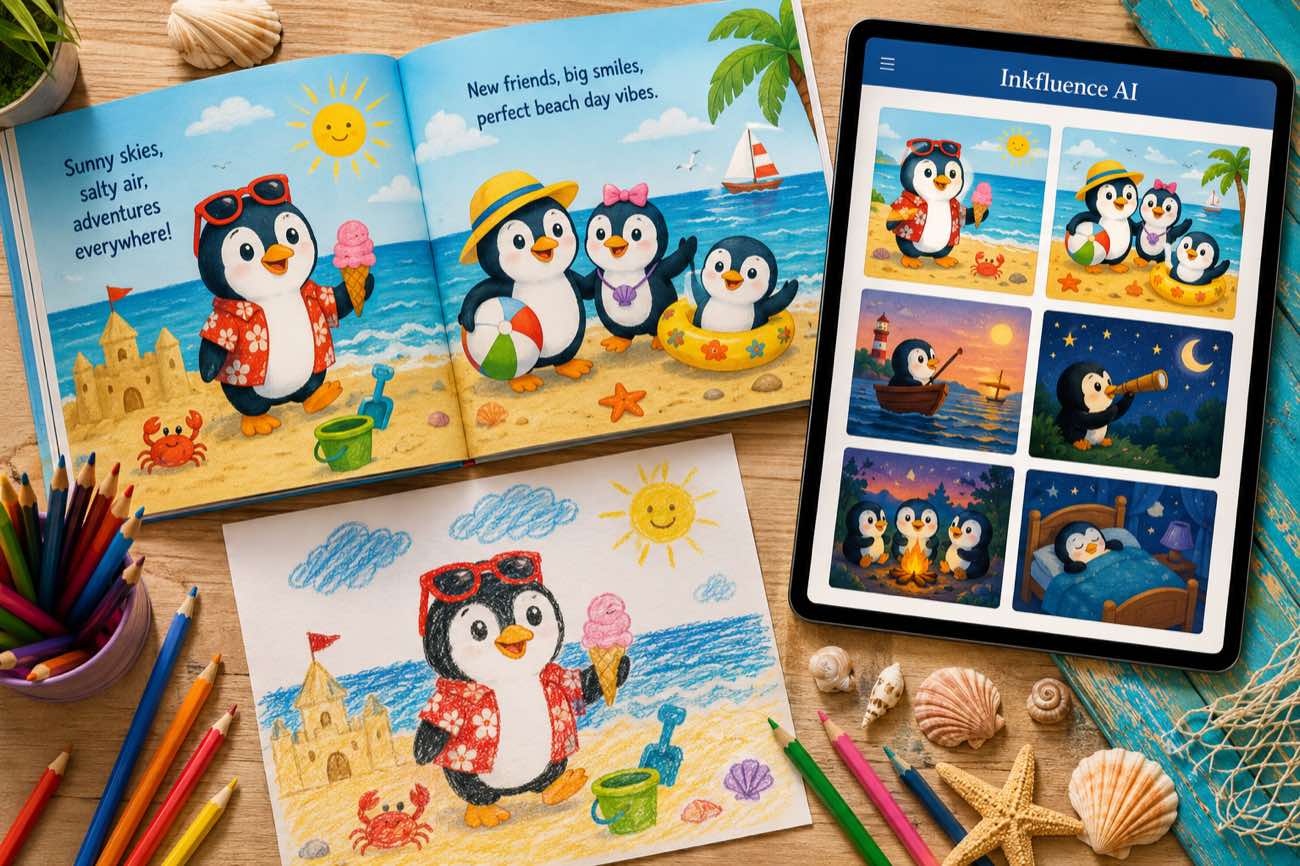
 How to Make a Children's Picture Book with AI: Idea to Printed Book in a Day
The complete 2026 workflow for making a fully illustrated children's picture book with AI: age-band word counts, page planning, consistent characters, cover design, and publishing it on Amazon KDP with the right disclosure.
 AI Writing
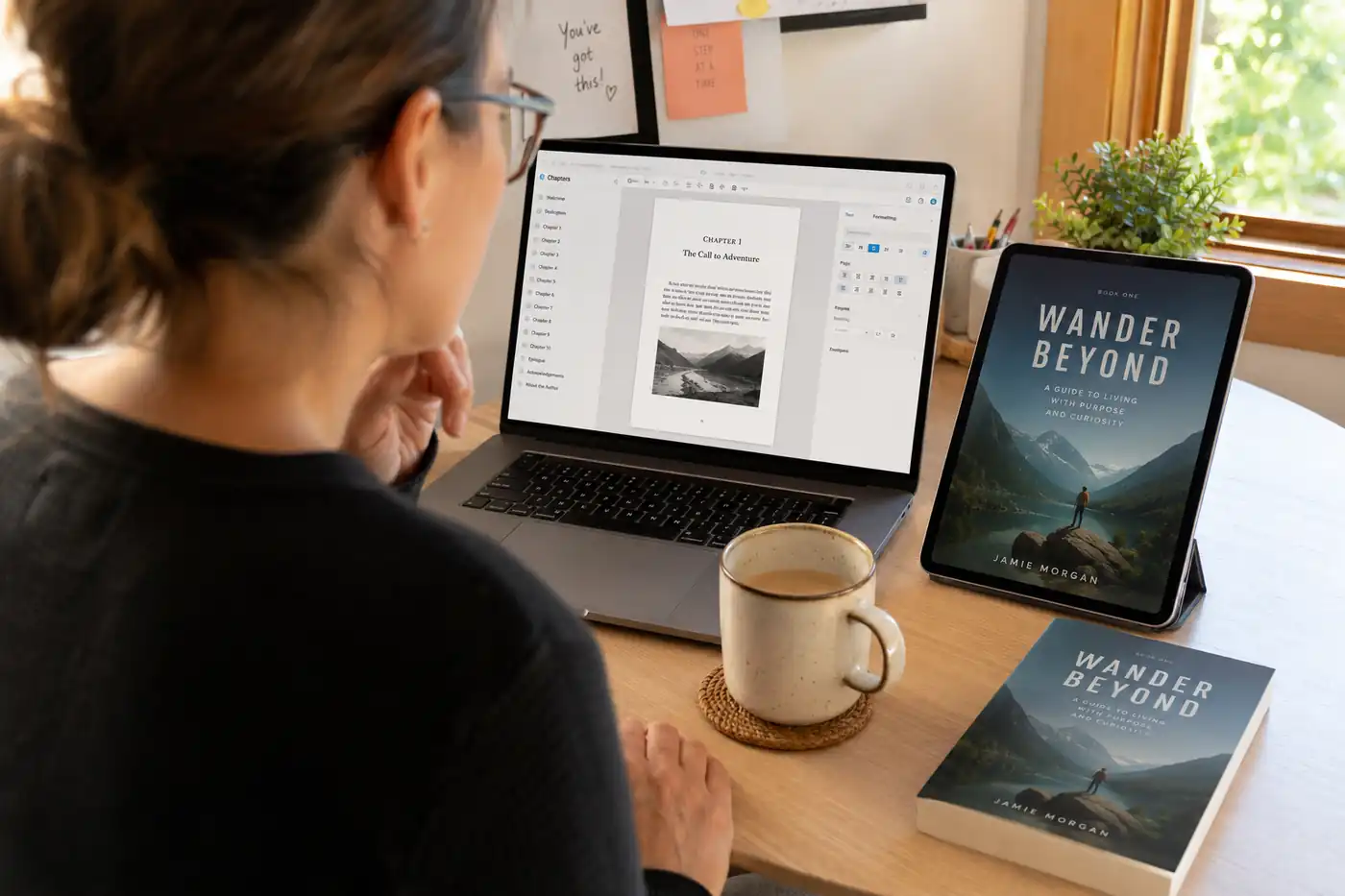
 The 9 Best Ebook Creators in 2026: AI, Formatting, and Design Tools Compared
Not every "ebook creator" does the same job. We compare the 9 best tools of 2026 across three categories: AI generators that write the book, formatting tools that typeset it, and design tools that make it beautiful, with verified pricing for each.
 AI Writing
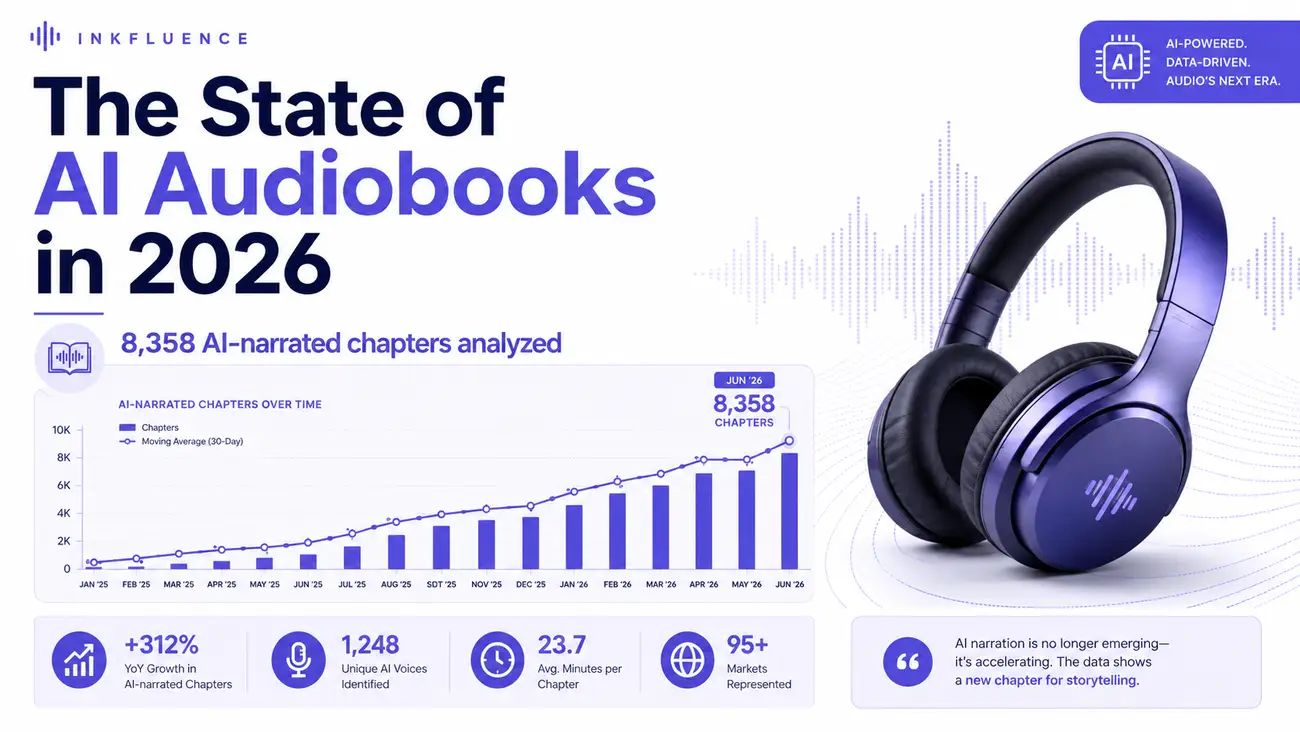
 The State of AI Audiobooks in 2026: What 8,358 AI-Narrated Chapters Reveal
We looked at 8,358 chapters our users narrated into audiobooks with AI. Monthly narration grew from a handful of chapters in late 2025 to nearly 3,000 a month by mid-2026, 99% of jobs finished cleanly, and listeners consistently pick natural, conversational voices over dramatic ones. Here is the first-party data and what it means for authors.
Get ebook tips in your inbox
Join creators getting weekly strategies for writing, marketing, and selling ebooks.