
Best Ebook Creation Tools (2026): The Complete Guide for Modern Creators
Ebook creation has transformed in the last two years. Discover the leading tools of 2026, from AI-powered platforms to design apps, and which workflows actually help creators publish faster.
Quick Answer
The best ebook creation tools in 2026 combine AI writing, formatting, and multi-format export in one platform. Inkfluence AI leads the category as an end-to-end solution: prompt-to-PDF in minutes with chapter structure, cover design, EPUB export, and audiobook generation. Canva excels at visual design but lacks writing features. Scrivener remains the choice for novelists who prefer manual control.
Ebook creation has changed more in the last two years than in the previous decade. What once required a messy combination of Google Docs, Canva templates, freelance designers, and endless formatting edits can now be achieved in a fraction of the time with the right tools. The rise of AI has accelerated everything. Creators today expect ebook platforms to do far more than hold text - they want full chapter structure, professional formatting, brand consistency, multi-format exporting, and even audiobook narration.
But not all tools are built with the same philosophy, and the "best" option depends heavily on whether you prioritise writing, design, automation, or publishing.
In this guide, we explore the leading ebook creation tools of 2025 and what actually makes them different. Instead of the usual shallow comparisons, this is a practical look at how each tool handles the real workflow of modern publishing: ideation, writing, structure, editing, design, exporting, marketing, and distribution. And most importantly, which platforms are genuinely built for creators who want to produce ebooks at scale - whether for lead generation, digital products, or full-length books.
The Tools That Defined 2025 - And the New Generation Replacing Them
For years, ebook creation meant stitching together multiple tools. Docs for writing. Canva for design. Calibre or random converters for EPUB. Dropbox for sharing. Fiverr when something inevitably broke. The process wasn't just slow; it was unreliable, especially for creators trying to release ebooks consistently.
2026 marks the year where that fragmented workflow has fully collapsed. AI-powered platforms now combine writing, structuring, formatting, and exporting in one place. The best tools aren't necessarily the most complex - they're the ones that remove friction. They give creators an environment built around long-form content rather than treating text as decorative elements students drag around a canvas.
This shift is why so many creators are moving away from general-purpose design tools and toward publishing-native systems.
Inkfluence AI - The Writing-First Publishing Platform
Inkfluence AI represents a very different approach to ebook creation. Instead of treating an ebook as a graphic design project, it treats it as a structured manuscript that deserves its own ecosystem. You begin with an idea or even a vague concept, and the platform builds a complete table of contents and writes full chapters automatically. The writing isn't scattered paragraph generation - it's structured long-form content designed to flow from section to section.
The real strength of Inkfluence lies in how it handles the entire lifecycle of a book. Chapters can be rewritten, expanded, reorganised, branded, and exported without ever leaving the editor. A creator can go from idea to publish-ready PDF or EPUB in minutes, without touching a single text box or manual layout grid. And with audiobook generation built in, the same content becomes a second digital product instantly.
Inkfluence focuses on the parts of ebook creation that traditionally slow creators down: messy formatting, layout inconsistencies, chapter organisation, and the constant switching between tools. Where other platforms provide features, Inkfluence provides momentum. You write faster, finish faster, and publish faster - which is why so many coaches, course creators, and agencies gravitate toward it.
If your priority is long-form writing, structured content, professional formatting, Kindle-ready exports, and the ability to generate an entire manuscript with AI, Inkfluence is the most complete solution available in 2025.
Canva - A Design Powerhouse That Isn't Built for Books
Canva remains one of the most-loved creative tools online, and for good reason. It's unmatched when it comes to producing visual assets, branded graphics, workbooks, and promotional materials. If your ebook relies heavily on images, diagrams, infographics, or magazine-style layouts, Canva is still a strong option.
However, its workflow reveals its limitations for actual book creation. Writing a 20-page ebook in Canva means manually adding text boxes, resizing elements, duplicating pages, managing spacing, realigning layouts, and endlessly nudging objects so that everything looks symmetrical. Writing is treated as just another design element, which becomes exhausting when producing multi-chapter content.
The lack of true EPUB exporting also limits creators who want to publish to marketplaces like Kindle, Kobo, or Apple Books. Converters exist, but they often break layouts or strip formatting. Canva is best when you need a beautifully designed PDF and have the time to manually build each page. It's less ideal when your goal is to write quickly, publish widely, or maintain consistent chapter structure.
In 2025, Canva is still essential - just not for writing books. For a detailed comparison, see our Inkfluence AI vs Canva breakdown.
Google Docs & Microsoft Word - Reliable but Outdated for Modern Publishing
Docs and Word remain the default writing tools for most creators because they are familiar, simple, and reliable. They're perfect for drafting text, collaborating with editors, and storing thoughts. But they lack the structural awareness needed for modern ebook production.
As soon as you try to format a long ebook in either tool, the cracks appear: inconsistent spacing, styles that break, headers that refuse to behave, table-of-contents issues, and the constant fear that the document will glitch at the worst moment. Exporting is similarly limited, with PDF quality depending on unpredictable styling rules and no native EPUB support.
These tools aren't bad. They're simply general-purpose word processors in a world where ebook creation now demands specialised exporting, branding, AI assistance, and integrated chapter organisation. Many creators still start here, but very few finish here.
Notion - A Brilliant Thinking Tool, But Not a Publishing Tool
Notion is excellent for organising ideas, outlining books, storing research, or writing modular content. Many authors keep their notes, frameworks, and chapter plans inside Notion before moving to a dedicated writing environment. But when it comes time to turn ideas into a formatted ebook, Notion's exporting limitations become clear.
PDF exports often break layouts, shift spacing, or strip styling entirely. Notion is a powerful planning environment, but it's not designed for publication-grade documents. It excels at ideation, but creators eventually need to migrate their work to platforms built for writing, editing, and exporting long-form content.
Notion remains a fantastic companion tool, but not a primary publishing system.
Scrivener - A Classic for Novelists, Less Ideal for Modern Digital Creators
Scrivener has been a favourite of fiction writers for years. Its binder-style organisation, character notes, and research tools make it ideal for complex narrative projects. But its learning curve and outdated interface make it less appealing for creators producing ebooks as part of their business.
Scrivener exports clean manuscripts for print, but not stylised PDFs or modern branded ebooks. It also lacks AI assistance, which slows down content-driven creators who want to ideate and publish faster. For some authors, Scrivener still has a place - especially those writing long fictional works. But for coaches, consultants, agencies, and digital entrepreneurs, the workflow feels increasingly out of sync with modern needs.
Jasper AI - Strong for Marketing Copy, Limited for Long-Form Books
Jasper built its reputation on AI marketing copy and remains strong in that category. It produces decent short-form writing, hooks, captions, and promotional material. But it struggles with long-form ebook structure. Jasper writes in chunks, with no awareness of chapter continuity, narrative flow, or overall manuscript direction.
This makes it useful as a brainstorming companion but unreliable as a book-building system. Writers who try to build an entire ebook with Jasper often find themselves reorganising text manually or importing content into other tools for editing and structure. It's an assistant, not a publishing solution.
Apple Pages, Vellum, Adobe Express - Niche Tools With Specific Strengths
Pages and Vellum are popular among Mac users and novelists. Pages is simple and beautifully designed, while Vellum produces high-quality print layouts for fiction. Adobe Express offers professional-looking templates similar to Canva but requires more design experience.
All of these tools have merit, but none address the full workflow modern creators need: ideation, AI generation, structure, branding, exporting, and audiobook creation under one roof.
Why the Best Ebook Tool in 2025 Isn't Just a "Tool" - It's a Workflow
What separates the standout platforms of 2025 from older solutions isn't just features. It's philosophy. Creators no longer want six different apps for idea capture, writing, layout, image sourcing, formatting, and exporting. They want an environment that understands the entire journey.
The best tools recognise that writing a book isn't just typing words. It's structuring ideas. Managing chapters. Eliminating layout friction. Creating consistent formatting. Publishing in multiple formats. Generating additional assets like audiobooks or lead magnets. And doing all of it without stopping momentum.
This is precisely why a platform built around publishing, not general creativity, is becoming the default choice for authors, coaches, digital marketers, and content-focused businesses.
The Verdict: The Best Ebook Creation Tool of 2025
If your goal is to design a visually rich PDF with complex graphics, Canva remains unbeatable. If your goal is to write in a simple, distraction-free space, Google Docs and Notion are still comfortable starting places. If you're a novelist, Scrivener continues to be an excellent companion.
But if your goal is to actually create a complete ebook - planned, written, structured, formatted, branded, exported, and even narrated - Inkfluence AI is the most comprehensive solution available today.
It's no longer enough for a tool to generate text or offer templates. Modern creators need a publishing system that accelerates the entire pipeline. Inkfluence is built for exactly that. From AI-generated chapter structure to Kindle-ready EPUB exporting and audiobook generation, it covers the full spectrum of what creators expect in 2025.
The era of stitching together multiple apps is ending. The era of writing once and publishing everywhere has arrived. And Inkfluence AI is leading that shift.
Ready to experience the difference? Try Inkfluence AI free or explore our complete feature overview to see how the platform simplifies every step of ebook creation.

Founder, Inkfluence AI
Sam is the founder of Inkfluence AI. He built the platform to make book creation accessible to everyone - from first-time authors to seasoned publishers.
Helpful links
Ready to Create Your Own Ebook?
Start writing with AI-powered tools, professional templates, and multi-format export.
Get Started FreeRelated Articles
 AI Writing
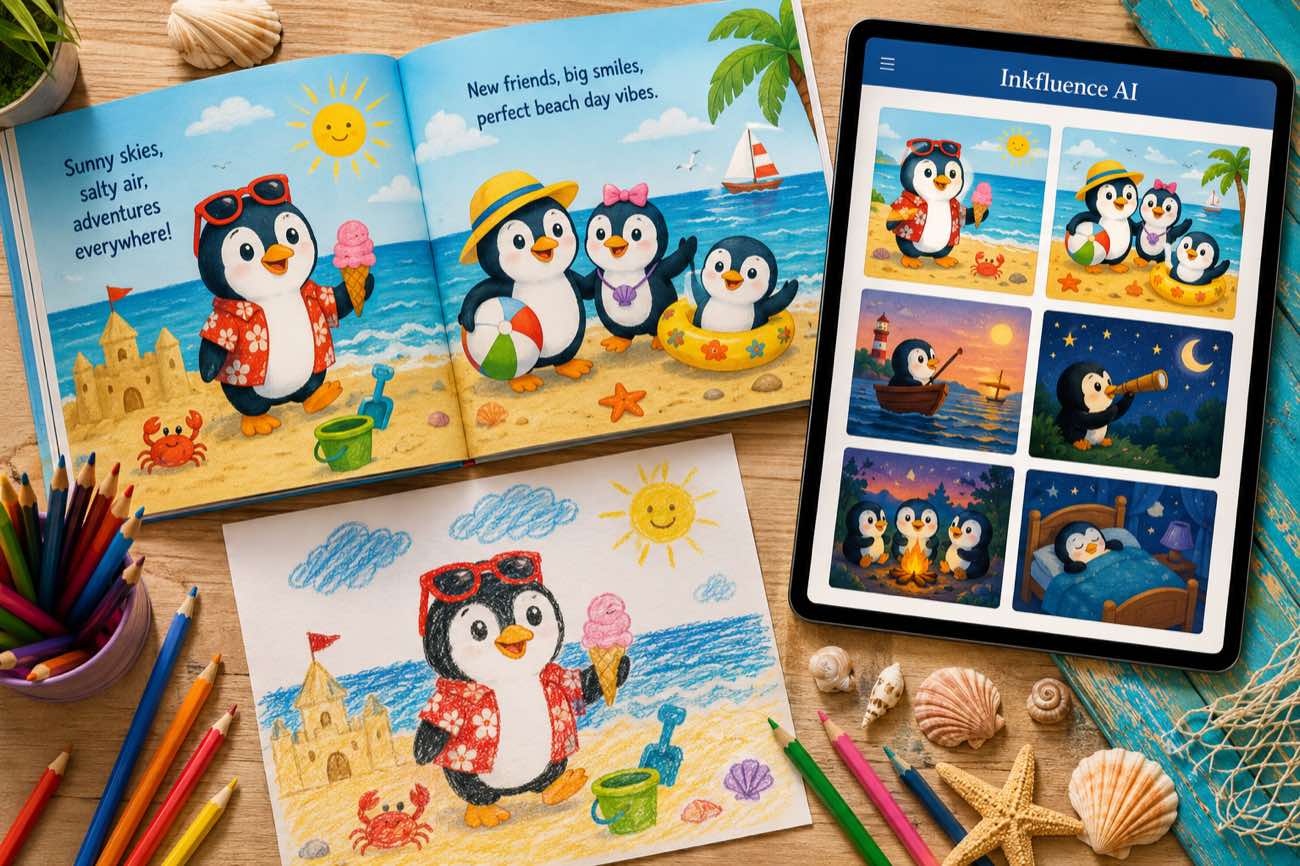
 How to Make a Children's Picture Book with AI: Idea to Printed Book in a Day
The complete 2026 workflow for making a fully illustrated children's picture book with AI: age-band word counts, page planning, consistent characters, cover design, and publishing it on Amazon KDP with the right disclosure.
 AI Writing
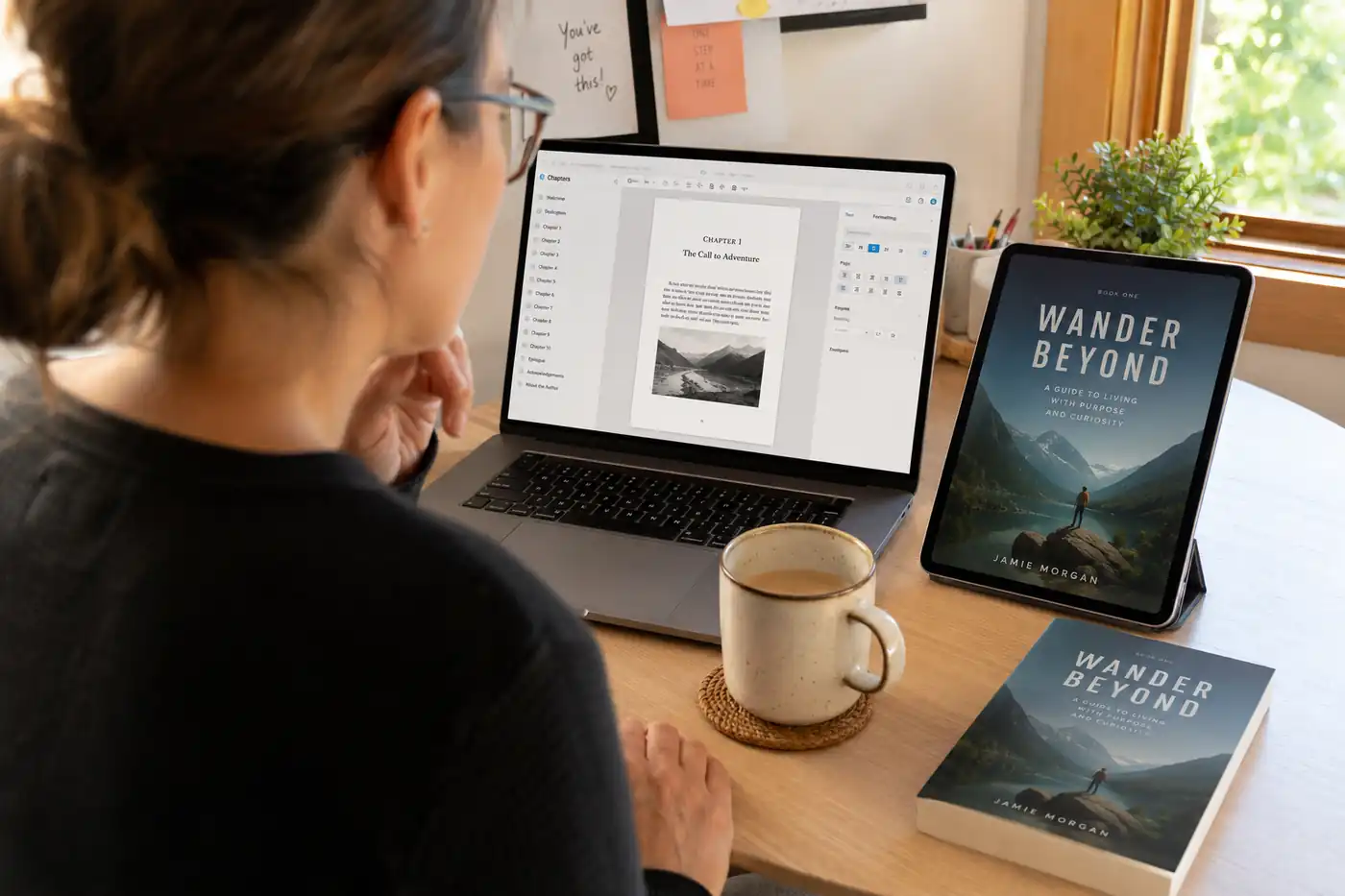
 The 9 Best Ebook Creators in 2026: AI, Formatting, and Design Tools Compared
Not every "ebook creator" does the same job. We compare the 9 best tools of 2026 across three categories: AI generators that write the book, formatting tools that typeset it, and design tools that make it beautiful, with verified pricing for each.
 AI Writing
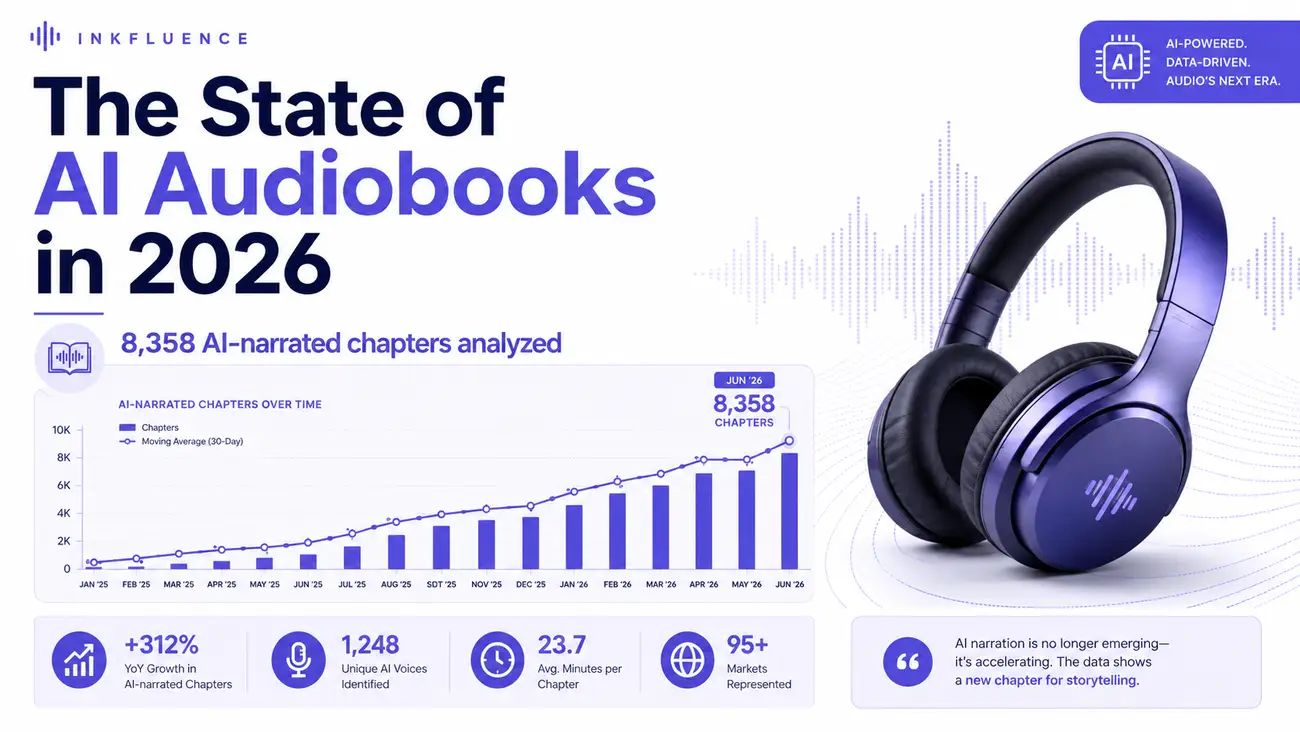
 The State of AI Audiobooks in 2026: What 8,358 AI-Narrated Chapters Reveal
We looked at 8,358 chapters our users narrated into audiobooks with AI. Monthly narration grew from a handful of chapters in late 2025 to nearly 3,000 a month by mid-2026, 99% of jobs finished cleanly, and listeners consistently pick natural, conversational voices over dramatic ones. Here is the first-party data and what it means for authors.
Get ebook tips in your inbox
Join creators getting weekly strategies for writing, marketing, and selling ebooks.