
The Complete Guide to AI-Powered Ebook Writing in 2026
Discover how artificial intelligence is revolutionizing ebook creation. Learn the best practices, tools, and techniques to create professional ebooks 10x faster.

Quick Answer
AI-powered ebook writing in 2026 is 5-10x faster than traditional methods. Modern AI tools generate structured outlines, write full chapters with tone consistency, apply professional formatting, and export to PDF and EPUB. The key is using a purpose-built AI ebook generator rather than a generic chatbot - dedicated tools maintain chapter continuity and handle the full publishing pipeline from idea to export-ready file.
Introduction to AI-Powered Ebook Writing
The publishing industry is experiencing a revolutionary transformation that's fundamentally changing how content creators, marketers, and entrepreneurs approach ebook creation. Artificial Intelligence has emerged as a powerful ally for anyone looking to produce high-quality ebooks efficiently, dramatically reducing the time from concept to publication.
In 2026, AI writing tools have evolved far beyond simple text generators. Today's AI platforms understand context, maintain consistent tone, and can help create compelling narratives that engage readers. Whether you're a seasoned author, a business owner creating coaching lead magnets, or a course creator developing educational resources, AI-powered ebook writing tools are transforming what's possible.
This comprehensive guide will walk you through everything you need to know about leveraging AI for ebook creation, from initial planning to final publication. You'll discover proven strategies, learn best practices, and understand how to maintain quality while dramatically accelerating your content production.
Why AI for Ebook Writing? The Compelling Case
Traditional ebook writing can take months of dedicated work. Between research, writing, editing, and revisions, creating a comprehensive ebook often requires 200-300 hours or more. AI-powered tools like Inkfluence AI are changing this paradigm entirely - generating complete multi-chapter books in just 2-3 minutes.
Speed Without Sacrificing Quality
AI can generate well-structured draft content in minutes rather than hours. This doesn't mean the content is lower quality - it means you can focus your expertise on refining, personalizing, and enhancing rather than staring at a blank page. Writers using AI tools report completing ebooks 5-10x faster than traditional methods.
Overcoming Writer's Block
Every writer faces the dreaded blank page syndrome. AI serves as an always-available brainstorming partner, generating ideas, suggesting transitions, and helping you push through creative obstacles. When you're stuck on how to explain a concept, AI can provide multiple approaches to choose from.
Maintaining Consistency
One of the biggest challenges in ebook writing is maintaining consistent tone, style, and voice throughout hundreds of pages. AI excels at consistency, ensuring your chapter 10 sounds like it was written by the same person who wrote chapter 1 - because it understands and maintains your established patterns.
Research and Fact-Finding
Modern AI tools can assist with research, helping you find relevant statistics, examples, and supporting information for your arguments. This dramatically reduces the time spent in the research phase of ebook creation.
Understanding AI Ebook Writing Tools in 2025
Not all AI writing tools are created equal. Understanding the landscape helps you choose the right solution for your needs.
Types of AI Writing Tools
General-Purpose AI Writers: Tools like ChatGPT, Claude, and others provide broad writing capabilities but require significant prompt engineering and aren't optimized for long-form ebook creation.
Specialized Ebook Platforms: Tools like Inkfluence AI are purpose-built for ebook creation, offering features like chapter management, consistent formatting, brand customization, and multi-format export. These platforms understand the unique requirements of ebook publishing.
AI-Enhanced Editors: Some tools focus primarily on improving existing content rather than generating new content, offering suggestions for clarity, grammar, and style.
Key Features to Look For
- Long-form content generation - Can it maintain context across thousands of words?
- Chapter and section management - Does it understand ebook structure?
- Consistent tone and style - Can it maintain your voice throughout?
- Customization options - Can you train it on your brand and audience?
- Export formats - Does it support PDF, EPUB, DOCX, and other formats?
- Editing and revision tools - Can you easily refine AI-generated content?
- Collaboration features - Can team members work together?
- SEO optimization - Does it help with keywords and searchability?
Best Practices for AI Ebook Writing
Success with AI ebook writing requires understanding how to work effectively with these tools. Here are proven strategies from successful AI-powered authors:
1. Start with a Comprehensive Outline
AI works best when given clear direction and structure. Before generating any content, create a detailed outline that includes:
- Chapter titles and main themes
- Key points to cover in each section
- Your target audience and their pain points
- Desired outcomes for each chapter
- Examples, case studies, or data points to include
Think of your outline as a roadmap. The more detailed it is, the better AI can help you reach your destination.
2. Master the Art of Prompting
Generic prompts produce generic content. Your prompts should be specific about:
- Tone: Professional, conversational, academic, friendly, authoritative
- Audience: Their knowledge level, interests, and goals
- Purpose: Educate, persuade, entertain, inspire
- Length: Specific word count expectations
- Structure: Bullet points, numbered lists, narrative flow
Example of a good prompt: "Write a 500-word section explaining the benefits of AI writing for small business owners who are skeptical of technology. Use a friendly, reassuring tone with specific examples. Include 3-5 practical benefits they can implement immediately."
3. Generate, Then Refine
AI generates drafts - your expertise makes them exceptional. Always follow this process:
- Generate: Let AI create the initial draft
- Review: Read critically for accuracy, tone, and relevance
- Enhance: Add your unique insights, experiences, and examples
- Personalize: Inject your personality and brand voice
- Verify: Fact-check all claims and statistics
- Polish: Final editing for flow and readability
4. Leverage AI for Multiple Phases
Don't just use AI for writing. It can assist throughout the entire ebook creation process:
- Ideation: Brainstorm topics and angles
- Research: Find relevant data and examples
- Outlining: Structure your content logically
- Writing: Generate draft content
- Editing: Improve clarity and flow
- Formatting: Ensure consistent styling
- Metadata: Create titles, descriptions, and keywords
5. Maintain Your Unique Voice
Your readers connect with your unique perspective and voice. Use AI as a tool to amplify your message, not replace it. Share personal stories, controversial opinions, and unique frameworks that only you can provide. AI handles the heavy lifting of structure and drafting - you provide the magic that makes content memorable.
See AI ebook writing in action
Create your first chapter in under 5 minutes. No credit card required.
Try the AI Book Writer →Step-by-Step: Creating Your First AI-Powered Ebook
Phase 1: Planning (Week 1)
Define Your Purpose: What problem does your ebook solve? Who needs this solution? What transformation will readers experience?
Research Your Audience: Use AI to analyze competitor content, identify gaps, and understand what your audience is searching for.
Create Your Outline: Develop a comprehensive chapter-by-chapter outline with key points and desired outcomes.
Phase 2: Content Generation (Week 2-3)
Set Up Your AI Tool: Configure tone, audience, and style preferences. If using Inkfluence AI, customize your brand settings.
Generate Chapter Drafts: Work through your outline, generating 2-3 chapters per day. Focus on getting ideas down, not perfection.
Daily Review: Spend time each day reviewing and refining what AI generated, ensuring it aligns with your vision.
Phase 3: Enhancement (Week 4)
Add Personal Elements: Inject stories, examples, and insights that only you can provide.
Verify Information: Fact-check all claims, statistics, and technical information.
Enhance Transitions: Ensure smooth flow between chapters and sections.
Phase 4: Polish and Publish (Week 5)
Professional Editing: Use AI editing tools and/or human editors for final polish.
Design and Formatting: Create an attractive layout, add images, and ensure consistent formatting. For best results, follow ebook design best practices to maximize reader engagement.
Create Marketing Materials: Use AI to generate descriptions, social media posts, and promotional content.
Common Pitfalls to Avoid
1. Over-Reliance on AI
AI is a powerful tool, not a replacement for expertise. Readers can often detect when content is purely AI-generated without human refinement. Always add your knowledge, experiences, and unique perspective.
2. Ignoring Fact-Checking
AI can occasionally generate plausible-sounding but incorrect information. Always verify facts, statistics, and technical claims, especially in specialized fields.
Important
AI-generated statistics and dates can be wrong. Always verify numbers, research citations, and factual claims before publishing.
3. Accepting Generic Content
If your ebook reads like every other ebook on the topic, it won't stand out. Push AI to be specific, use examples, and then enhance it with your unique insights.
4. Skipping the Human Touch
Professional ebooks require thorough editing. AI generates excellent drafts, but human expertise is essential for creating truly exceptional content that resonates with readers.
5. Neglecting Structure and Flow
AI might generate great individual sections, but ensuring they flow together logically requires human oversight. Pay special attention to transitions and narrative arc.
Advanced Techniques for AI Ebook Creation
Training AI on Your Style
Many advanced AI tools allow you to provide examples of your writing style. Feed it samples of your blog posts, articles, or previous books to help it match your voice more accurately.
Iterative Refinement
Don't accept the first output. Ask AI to revise sections with specific guidance: "Make this more conversational," "Add more concrete examples," or "Simplify the language for beginners."
Combining Multiple AI Tools
Use different AI tools for different strengths: one for initial drafting, another for editing, a third for SEO optimization. Inkfluence AI integrates multiple AI capabilities in one platform for seamless workflow.
The Future of AI Ebook Writing
As AI technology continues advancing, we can expect even more sophisticated capabilities:
- Advanced personalization - AI that adapts content to individual reader preferences
- Real-time collaboration - Seamless co-creation between multiple authors and AI
- Automated design - AI-powered layout and visual design suggestions
- Multi-language support - Instant translation and localization
- Interactive elements - Dynamic content that adapts based on reader interaction
- Voice integration - Natural dictation and voice-to-text for faster content creation
Getting Started with Inkfluence AI
Ready to create your first AI-powered ebook? Inkfluence AI is specifically designed for ebook creators, offering:
- GPT-4 powered content generation optimized for long-form ebook writing
- Chapter-by-chapter organization with easy navigation and management
- Brand customization to match your visual identity
- Multi-format export (PDF, EPUB, DOCX) for any publishing platform
- Voice-to-text dictation for natural writing flow
- Collaboration tools for team projects
- Professional templates to jumpstart your project
Want to compare Inkfluence AI to other options? Check out the fastest way to create an ebook comparing the top tools available today.
Conclusion: Embrace the AI Writing Revolution
AI-powered ebook writing isn't about replacing human creativity - it's about amplifying it. By handling the mechanical aspects of writing and providing a strong foundation, AI frees you to focus on what you do best: sharing your unique knowledge, insights, and perspective.
The authors and content creators who thrive in 2025 and beyond will be those who embrace AI as a powerful tool in their creative arsenal. They'll produce more content, maintain higher quality, and reach audiences faster than ever before possible.
Your ebook journey starts today. With AI as your writing partner and your expertise as the guide, there's no limit to what you can create.

Founder, Inkfluence AI
Sam is the founder of Inkfluence AI. He built the platform to make book creation accessible to everyone - from first-time authors to seasoned publishers.
Helpful links
Ready to Create Your Own Ebook?
Start writing with AI-powered tools, professional templates, and multi-format export.
Get Started FreeRelated Articles
 AI Writing
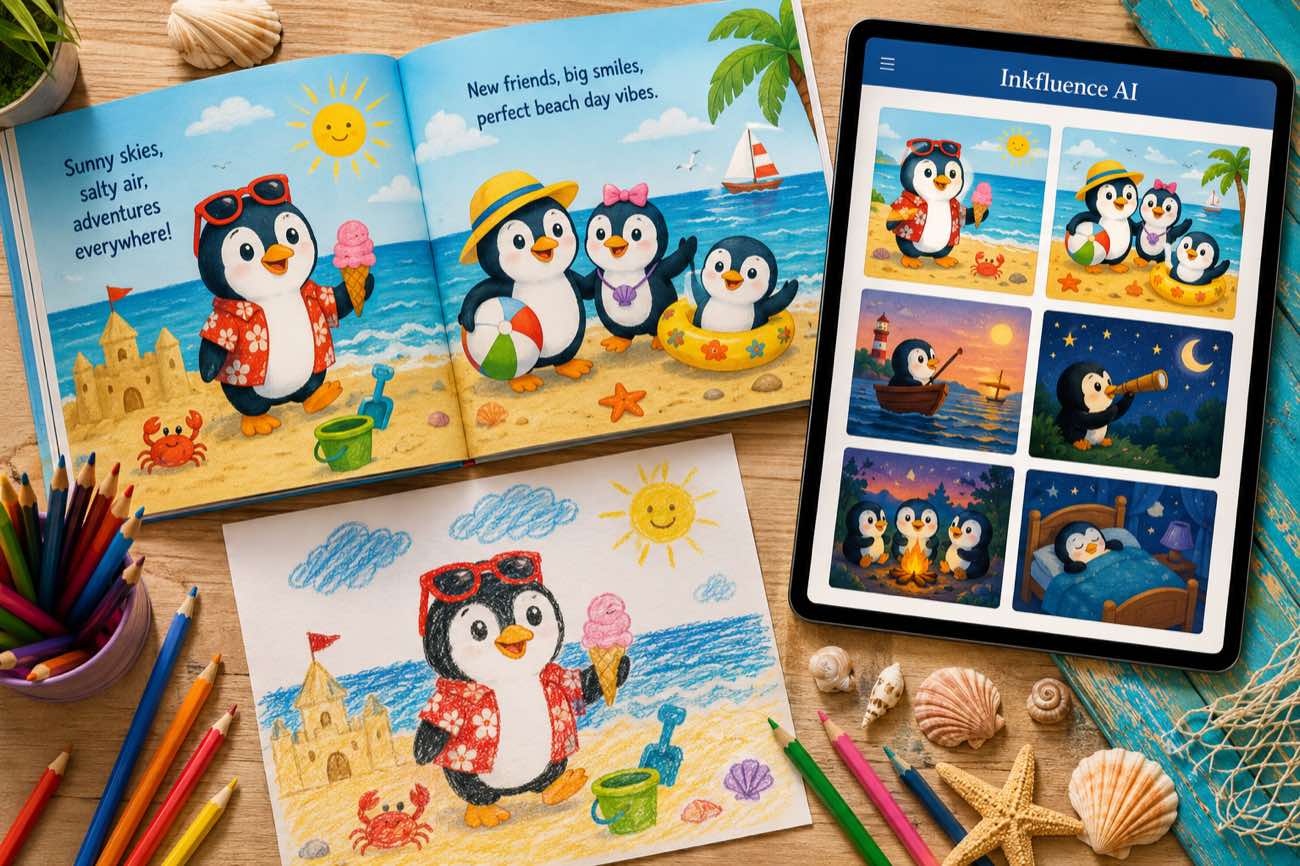
 How to Make a Children's Picture Book with AI: Idea to Printed Book in a Day
The complete 2026 workflow for making a fully illustrated children's picture book with AI: age-band word counts, page planning, consistent characters, cover design, and publishing it on Amazon KDP with the right disclosure.
 AI Writing
 The 9 Best Ebook Creators in 2026: AI, Formatting, and Design Tools Compared
Not every "ebook creator" does the same job. We compare the 9 best tools of 2026 across three categories: AI generators that write the book, formatting tools that typeset it, and design tools that make it beautiful, with verified pricing for each.
 AI Writing
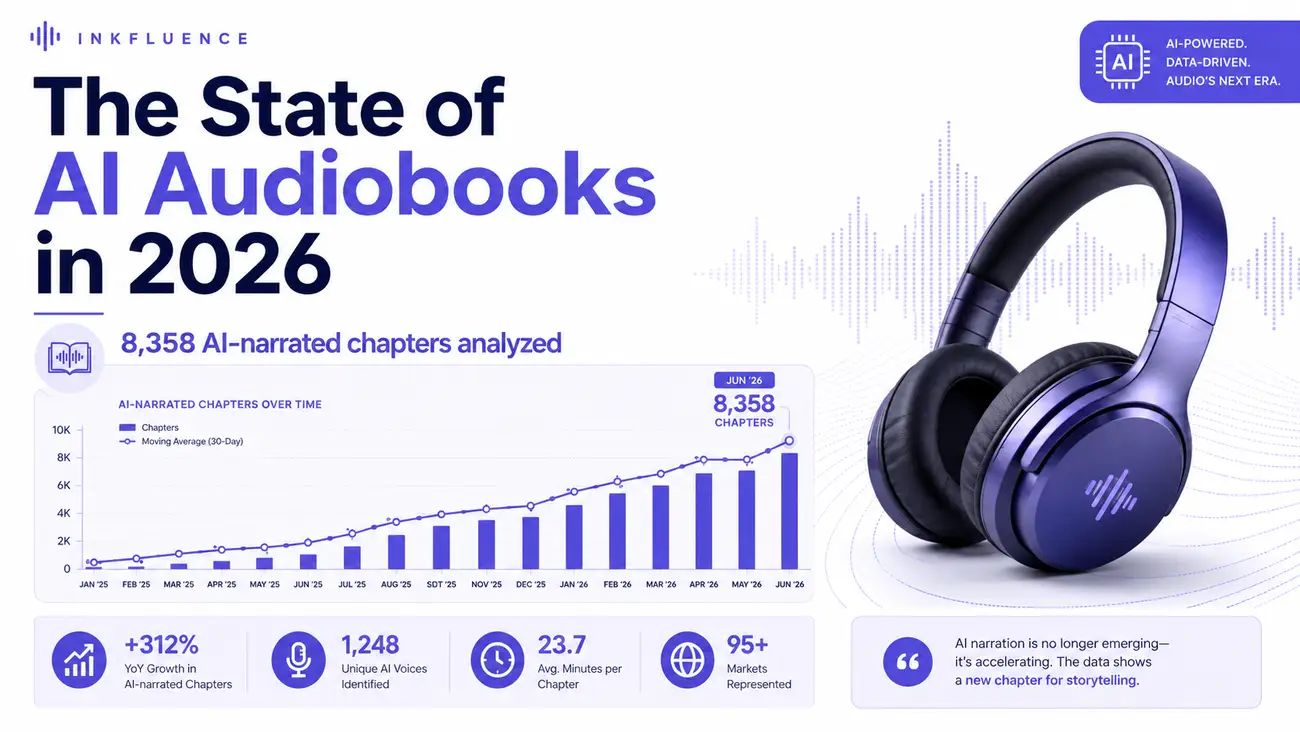
 The State of AI Audiobooks in 2026: What 8,358 AI-Narrated Chapters Reveal
We looked at 8,358 chapters our users narrated into audiobooks with AI. Monthly narration grew from a handful of chapters in late 2025 to nearly 3,000 a month by mid-2026, 99% of jobs finished cleanly, and listeners consistently pick natural, conversational voices over dramatic ones. Here is the first-party data and what it means for authors.
Get ebook tips in your inbox
Join creators getting weekly strategies for writing, marketing, and selling ebooks.