
AI Ebook Generator vs AI PDF Generator vs AI Book Writer - Why They're All the Same Tool
Understand the confusion around AI writing tools and discover why Inkfluence AI unifies ebook generation, PDF creation, and book writing into one powerful platform instead of forcing you to juggle multiple subscriptions.

Quick Answer
AI ebook generators, AI PDF generators, and AI book writers are different names for the same core technology - a text generation engine that produces structured long-form content. The difference is the output format, not the tool. Inkfluence AI unifies all three into one workflow: write once, then export as PDF, EPUB, or DOCX depending on where you plan to publish.
The AI writing space in 2025 is full of confusing terminology. Every platform seems to use a different label for what is, more often than not, the same underlying feature. One product advertises itself as an "AI ebook generator." Another calls itself as an "AI PDF creator." A third claims to be an "AI book writer." But open each of them and you quickly realise that the core engine is identical - a text generator wrapped in three different marketing pages.
If you’re comparing tools and want to judge by results, see real ebook output examples (plus PDF lead magnets) before you decide.
This fragmentation is why creators, coaches, authors, and small business owners often end up paying for multiple subscriptions just to produce one finished ebook. They write in one app. Format in another. Add structure in a third. Export somewhere else. And none of these tools agree on what they're actually called.
The biggest misunderstanding is this: These aren't different tools. They're different outputs. And the only reason they're sold separately is because most platforms can't unify the workflow.
Inkfluence AI takes the opposite approach. Instead of splitting features into artificial product lines, Inkfluence AI is built as a single engine that expands or contracts depending on what you're trying to create - a full book, a branded PDF, a long-form manuscript, a workbook, a lead magnet, or even an audiobook.
So the real question isn't "which tool do I need?" It's much simpler: "What do I want the final product to look like?" Once you understand that, the differences become clear.
The Writing Engine Is the Same - the Output Is What Changes
When you begin a new project inside Inkfluence AI, nothing about your process changes based on whether you plan to export an EPUB, a PDF, or a DOCX file. You aren't forced to choose between "ebook mode" or "PDF mode" upfront. You simply enter your idea, let the AI build the outline, and watch as full chapters generate with structure, flow, and clean formatting.
This is the heart of Inkfluence AI: one writing system capable of producing any type of long-form content. Once the manuscript exists, then you choose how you want it presented. That's where the "three tools" people confuse with separate products actually come in. They are simply output layers - three ways of packaging the same content depending on where you plan to publish it.
Other platforms separate them because their writing engine isn't built for multi-format export. Inkfluence is.
What "AI Ebook Generator" Really Means Inside Inkfluence AI
When users talk about an "AI ebook generator," they're usually referring to the ability to produce a digital book that is instantly recognisable as an ebook: consistent chapter flow, proper spacing, clean typography, and export options that work across Kindle, Kobo, Apple Books, and online readers.
Inside Inkfluence AI's ebook generator, you don't have to switch tools or modules to get this. You simply choose EPUB or PDF at export, and the system takes your structured manuscript and converts it into a publish-ready ebook automatically.
Nothing changes about the writing process. Only the packaging does. This is why coaches, authors, bloggers, and course creators use Inkfluence AI to produce lead magnets, educational ebooks, branded guides, short and long nonfiction books, fiction chapters, niche reports, and client deliverables.
The "ebook generator" label is just shorthand for the finished product: a structured ebook exported in EPUB or PDF format.
What "AI PDF Generator" Actually Refers To
The phrase "AI PDF generator" became popular because most AI tools can write, but very few can design. When creators asked for polished layouts, visual hierarchy, or print-ready formatting, most platforms had nothing to offer. So entire categories of "AI PDF tools" appeared to compensate.
Inkfluence AI doesn't need a separate PDF tool, because the formatting engine is built into the core product. When you want a PDF, you simply export as one - with spacing, typography, page structure, and branding applied automatically. The content is identical to your ebook or DOCX version. The difference is purely visual. For a full walkthrough, see our AI PDF creation guide.
PDF becomes the ideal format when you want something that looks designed: lead magnets, reports, workbooks, frameworks, printable guides, authority assets, client onboarding materials, and training manuals.
Most platforms treat this as a standalone product. Inkfluence treats it as an export option.
What "AI Book Writer" Means - And Why It's Not a Separate Tool
This is where the industry gets misleading. "AI book writer" sounds like something entirely different - a deep writing tool, a long-form drafting companion, a novel generator, or a nonfiction structuring system. And while others split that into a different product... Inkfluence doesn't.
Inside Inkfluence AI's book writer, the "book writer" is simply the writing engine itself - the same one you use whether you're generating a 3-page lead magnet or a 200-page nonfiction book. What changes is not the tool. What changes is your scope.
If you want a full book, you generate more chapters, add depth, refine tone, and expand the manuscript. The system doesn't switch. The UI doesn't change. There are no different interfaces for different types of books. The "book writer" is the engine that handles outlining, chapter generation, section structure, consistency, pacing, tone, narrative flow, and research-backed nonfiction writing.
It's not a separate feature. It's simply the way Inkfluence writes.
Where the Confusion Comes From (And Why Inkfluence Avoids It)
Creators often bounce between three or more apps because each one traditionally only excelled at one part of the pipeline: one tool writes, one tool designs PDFs, one tool formats EPUBs, one tool manages chapters, one tool exports manuscripts.
That's why users assume "ebook generator," "PDF generator," and "book writer" must be three separate products. Inkfluence AI collapses that entire ecosystem into one creation platform that writes, organizes, designs, formats, exports, brands, and narrates (via audiobooks) all in one place, without switching tools.
The Real Answer: They're Three Views of the Same System
So what's the difference between an AI ebook generator, an AI PDF generator, and an AI book writer?
Nothing - unless you're using a platform that forces them to be separate. In Inkfluence AI: The AI Book Writer is the writing engine. The AI Ebook Generator is simply exporting your manuscript as an ebook. The AI PDF Generator is the same manuscript exported visually for PDF.
Three labels. One tool. One workflow. And that's exactly why people switch to Inkfluence - not because it has more tools, but because it finally unifies what no one else did.
Ready to simplify your ebook creation workflow?
Stop juggling multiple tools. Try Inkfluence AI's unified platform and create professional ebooks, PDFs, and books from one powerful interface.

Founder, Inkfluence AI
Sam is the founder of Inkfluence AI. He built the platform to make book creation accessible to everyone - from first-time authors to seasoned publishers.
Helpful links
Ready to Create Your Own Ebook?
Start writing with AI-powered tools, professional templates, and multi-format export.
Get Started FreeRelated Articles
 AI Writing
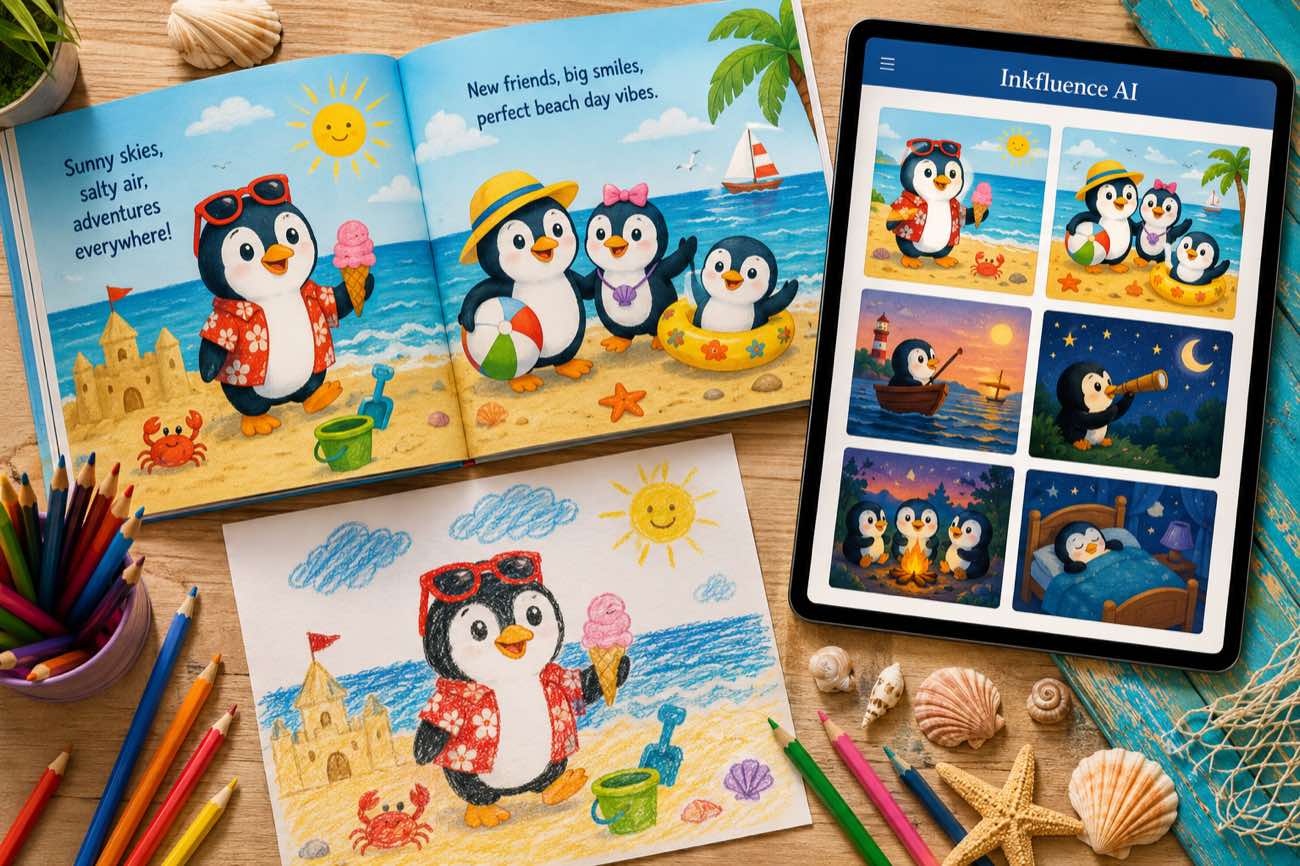
 How to Make a Children's Picture Book with AI: Idea to Printed Book in a Day
The complete 2026 workflow for making a fully illustrated children's picture book with AI: age-band word counts, page planning, consistent characters, cover design, and publishing it on Amazon KDP with the right disclosure.
 AI Writing
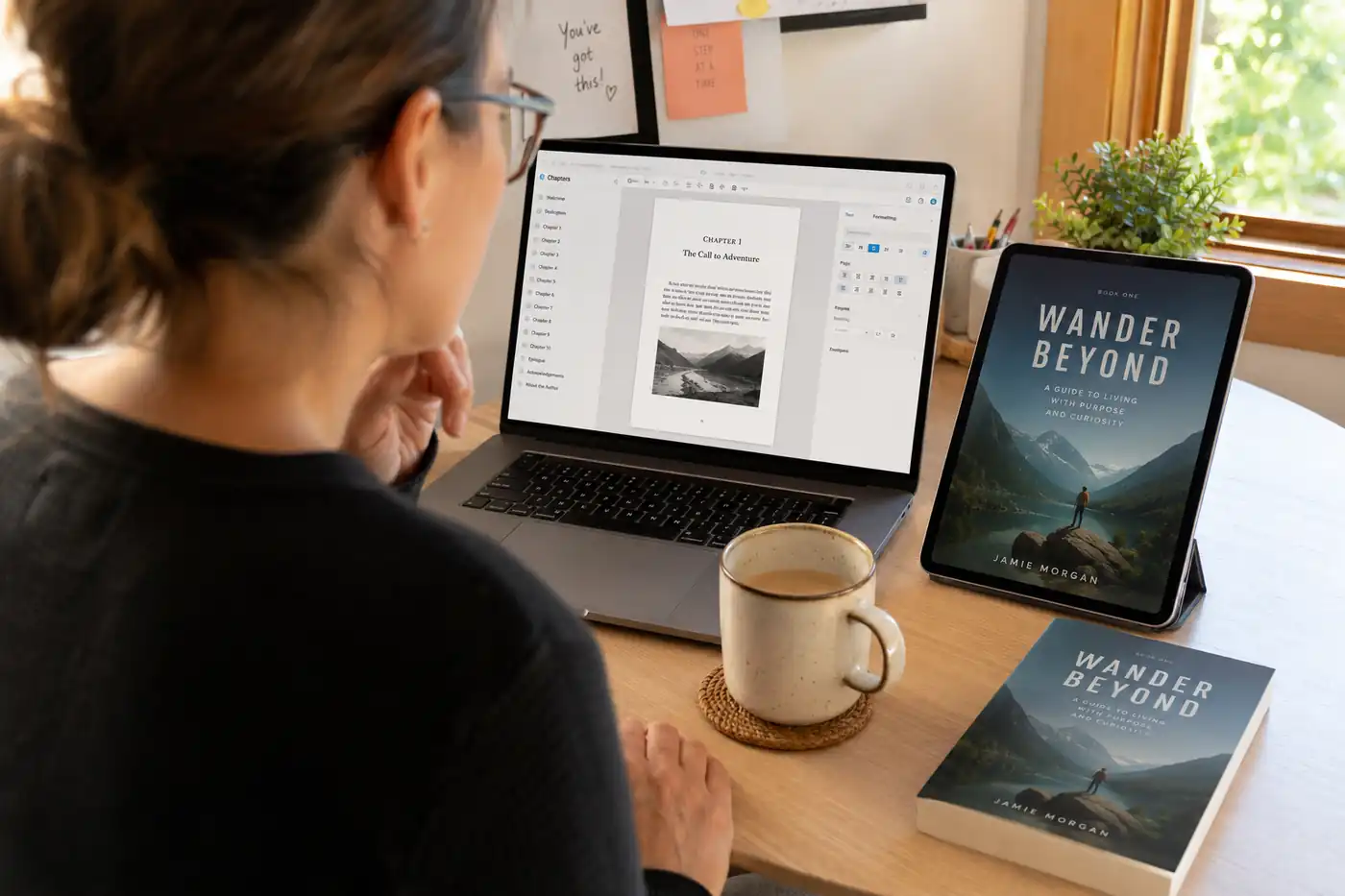
 The 9 Best Ebook Creators in 2026: AI, Formatting, and Design Tools Compared
Not every "ebook creator" does the same job. We compare the 9 best tools of 2026 across three categories: AI generators that write the book, formatting tools that typeset it, and design tools that make it beautiful, with verified pricing for each.
 AI Writing
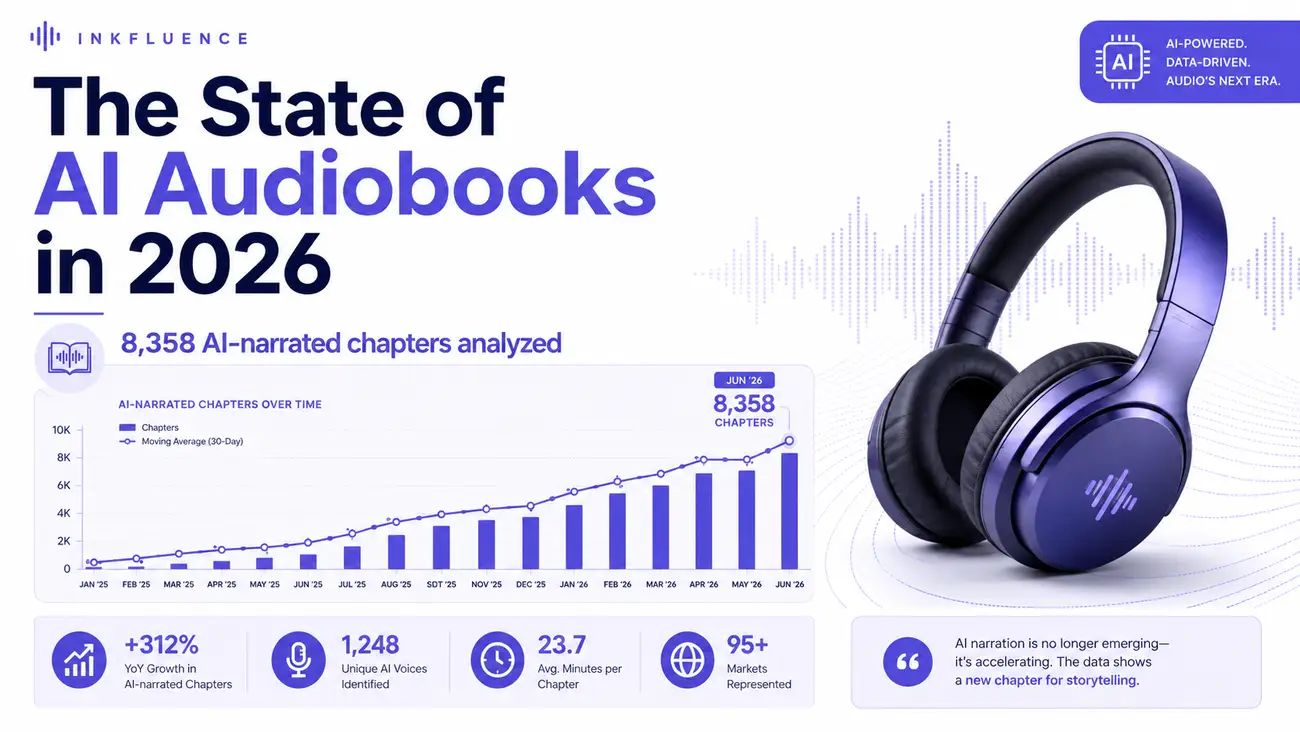
 The State of AI Audiobooks in 2026: What 8,358 AI-Narrated Chapters Reveal
We looked at 8,358 chapters our users narrated into audiobooks with AI. Monthly narration grew from a handful of chapters in late 2025 to nearly 3,000 a month by mid-2026, 99% of jobs finished cleanly, and listeners consistently pick natural, conversational voices over dramatic ones. Here is the first-party data and what it means for authors.
Get ebook tips in your inbox
Join creators getting weekly strategies for writing, marketing, and selling ebooks.