
Read the first chapter
The whole of chapter one, free. About 6 min. Turn the pages with the arrows, your keyboard, or a swipe.
Chapter 1
Reclaiming Your Beach Identity
The Poolside Moment You Keep Replaying
The towel is still around your waist when someone calls, “Come on in.” You laugh it off, check the angle of your body, and pull the towel a little higher. Then comes the group photo. You volunteer to take it, because standing in front of the camera feels worse than missing the picture.
You may have started calling yourself “the guy with the gut.” Maybe you say it first, before anyone else can. Maybe you avoid the beach, pool parties, changing rooms, or any shirt that fits too closely. The hard, protruding stomach isn’t only changing how you look. It’s changing where you go, how you stand, and how much of yourself you allow people to see.
The real problem isn’t only the protruding gut - it’s the shame-based identity you’ve built around it.
From “The Guy With the Gut” to a Body-Neutral Story
Old Belief: My stomach decides how I’m allowed to look, dress, socialize, and feel.
New Reality: My stomach is one part of my body, not the headline of my identity.
That shift matters because shame turns a physical feature into a personal verdict. A protruding gut becomes “proof” that you’ve let yourself go, that you don’t belong at the pool, or that every person nearby is judging you. Once your mind accepts that story, it starts protecting you from situations that might expose it.
The protection can look sensible at first. You wear a loose shirt. You stand behind someone in a photo. You skip the swim. You keep conversations short because you’re busy thinking about your stomach. Each choice lowers discomfort for a moment, but it also teaches your brain, “That situation was dangerous. Avoid it again.”
The Identity Reframe Ladder gives you a way out without pretending you love every part of your body. You move from an attack, to a fact, to a fuller story. Instead of saying, “I look pregnant and I’m disgusting,” you say, “My abdomen protrudes right now, and I’m still a man who can enjoy the afternoon, speak confidently, and be in the photo.”
That isn’t empty positivity. It’s accurate. Picture yourself at a pool gathering. You may still notice your stomach when you remove your shirt. The difference is that you don’t turn that observation into a command to hide. You put your towel down, greet people, and choose where you want to stand. Your body is present, but it isn’t running the entire event.
Catching the Shame Story Before It Takes Over
Shame usually doesn’t announce itself with a dramatic speech. It slips into ordinary moments. You see your reflection in a window, tug your shirt down, and suddenly the whole day feels smaller. The Identity Reframe Ladder helps you catch the first rung before you slide all the way into avoidance.
Start by separating what you can observe from what you’re adding. “My stomach is visible in this shirt” is an observation. “Everybody thinks I’m pathetic” is a prediction. “I shouldn’t be here” is a verdict. Those thoughts may feel connected, but they aren’t the same thing.
Look for these signs that the pattern is running your life:
1. You plan around hiding rather than enjoying. You choose the seat, shirt, towel, or camera position mainly to cover your abdomen.
2. You reject photos before seeing them. You step away from the group because you’ve already decided the image will be humiliating.
3. You use self-insults as armor. You joke about looking pregnant or being out of shape so nobody else can surprise you with the subject.
4. You treat discomfort as a stop sign. The moment you feel exposed, you leave, cover up, or become quiet instead of staying connected.
Your body can be visible without becoming your identity.
The practical move is to name the ladder rung you’re on. Are you attacking yourself? Predicting other people’s thoughts? Avoiding the moment? Once you name it, climb one rung upward with a more honest sentence.
Try this today in front of a mirror: “My abdomen protrudes. That’s what I’m working on. It doesn’t decide whether I deserve to be seen.” Say it without forcing a smile. The goal isn’t to perform confidence. The goal is to stop adding cruelty to a problem you’re already addressing.
Questions That Change the Story You Carry
1. What do you believe your protruding gut says about you as a man? Write the first answer, even if it sounds harsh. Then ask whether it describes your whole character or only your current frustration with one area of your body.
2. Which situations have you stopped attending because you might be seen without a shirt? Name one specific event, such as a pool day, beach trip, or holiday photo. Notice what you lost by avoiding it - not to punish yourself, but to see the real cost of the shame story.
3. What do you say about yourself before someone else gets the chance? If your usual line is, “I look pregnant,” replace it with a factual statement: “My stomach is noticeable today, and I’m still joining the conversation.”
4. If your closest friend had your exact body concern, would you speak to him the way you speak to yourself? You don’t need to pretend his gut isn’t there. You’d probably tell him to stop hiding from his own life while he works on it. Give yourself that same fair standard.
5. What would you do at the pool if your stomach were not allowed to make decisions for you? Be precise. Maybe you’d take the group photo, swim for ten minutes, or sit without keeping a towel pressed against your middle. Choose one action you can actually complete.
Honest answers may feel uncomfortable because they expose how much energy has gone into managing appearances. That discomfort is useful. It shows you where the old identity has been collecting rent.
The Seven-Day Beach Identity Challenge
Challenge: Take Back One Visible Moment
For the next 7 days, practice carrying a body-neutral self-story into one ordinary situation each day.
• Choose one moment where you usually hide your abdomen: a mirror check, a fitted shirt, a photo, a changing room, or a conversation near a pool. - Before entering that moment, use the three-part Identity Reframe Ladder: name the fact, reject the insult, choose the action. For example: “My stomach protrudes. I’m not going to insult myself. I’m staying for the photo.” - Keep your body in a normal position. Don’t suck in, twist away, or cover yourself as a reflex. - Stay in the situation for at least five minutes before deciding whether you truly want to leave. - At night, write one sentence: “I was visible today, and I still…”
Expected difficulty: Medium
You’ll know it’s working when:
• You catch the insult before repeating it. - You remain in a photo instead of automatically stepping away. - You notice your stomach without immediately changing your posture. - You take part in a conversation while your body is visible. - You finish the day remembering what you did, not only how your stomach looked.
Some days will feel awkward. That doesn’t mean you’re failing. Your brain has practiced hiding, so being visible may feel unfamiliar. The challenge is not to feel perfectly confident for seven straight days. It’s to prove, through repeated action, that visibility and safety can exist together.
Carrying a Different Identity Forward
You don’t need to call your body perfect. You don’t need to love your reflection every morning. You don’t even need to feel confident before you act. You need a story that is true enough to live by.
• A protruding gut is a physical condition you can work on, not a complete description of who you are. - Shame grows when you avoid photos, pools, beaches, and conversations; confidence grows when you stay present in them. - Body-neutral language lets you acknowledge what you see without turning it into an attack. - The Identity Reframe Ladder moves you from self-insult, to fact, to chosen action.
Your stomach may be part of your current story, but it does not get to write the ending.
Start carrying that truth today, especially in the moments where you used to disappear. As you build a steadier identity, the next step is to turn that confidence into visible change - without letting urgency, shame, or punishment take control.
End of chapter one. 7 more chapters in the full book.
Swipe or use the arrows to turn the page

The Ghosting Recovery and Reply Blueprint Expanded

Finding The Perfect Wife

Better Conversation Skills
What's inside: 8 chapters
- 1. Reclaiming Your Beach Identity
- 2. Defusing the Protrusion Trigger
- 3. Building Posture That Flatters
- 4. Training Your Core Without Bracing
- 5. Designing a Tonight-Ready Habit System
- 6. Saying No to Camera Avoidance
- 7. Managing Food, Bloat, and Timing
- 8. Staying Resilient After Setbacks
About this book
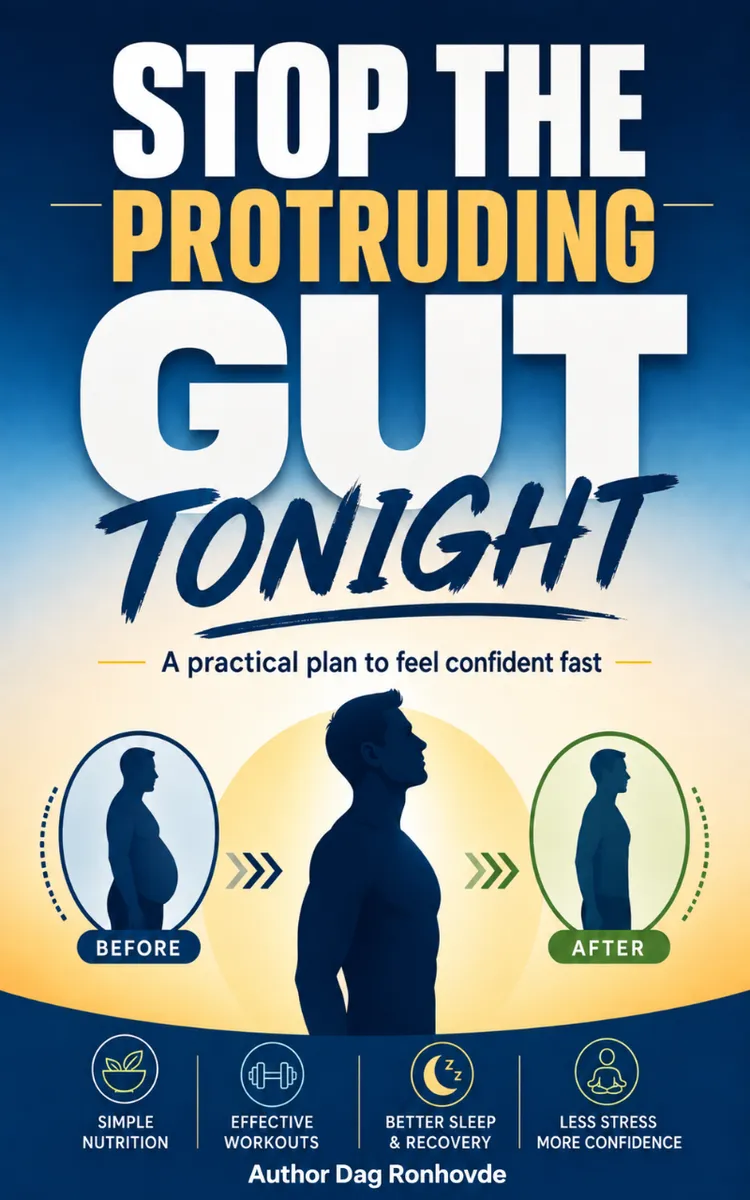
"Stop The Protruding Gut Tonight" is a self-help book by Dag Ronhovde with 8 chapters and approximately 11,532 words. Reducing abdominal protrusion and improving body confidence.
This book was created using Inkfluence AI, an AI-powered book generation platform that helps authors write, design, and publish complete books. It was made with the AI Self-Help Book Writer.
Frequently Asked Questions
What is "Stop The Protruding Gut Tonight" about?
Reducing abdominal protrusion and improving body confidence
How many chapters are in "Stop The Protruding Gut Tonight"?
The book contains 8 chapters and approximately 11,532 words. Topics covered include Reclaiming Your Beach Identity, Defusing the Protrusion Trigger, Building Posture That Flatters, Training Your Core Without Bracing, and more.
Who wrote "Stop The Protruding Gut Tonight"?
This book was written by Dag Ronhovde and created using Inkfluence AI, an AI book generation platform that helps authors write, design, and publish books.
How can I create a similar self-help book?
You can create your own self-help book using Inkfluence AI. Describe your idea, choose your style, and the AI writes the full book for you. It's free to start.
Write your own self-help book with AI
Describe your idea and Inkfluence writes the whole thing. Free to start.
Start writingCreated with Inkfluence AI


