

Read the first chapter
The whole of chapter one, free. About 5 min. Turn the pages with the arrows, your keyboard, or a swipe.
Chapter 1
Choosing Courage Over Avoidance
Chapter 1: Choosing Courage Over Avoidance
Powerful Insight!
Last Tuesday, a man stood in his driveway with his phone in his hand, staring at a two-word message from his brother: "We good?"
He had been dodging the real conversation for three weeks. He answered with thumbs-up emojis, changed the subject, and stayed busy enough to feel justified.
That is how avoidance usually looks. It rarely looks like slamming doors or dramatic walkouts. Most of the time, it looks completely respectable. You still go to work, pay your bills, serve at church, answer emails, and laugh at the right moments. Meanwhile, you replay the same unfinished conversation in your head every night, type out texts you delete, and tell yourself you will bring it up "when things calm down."
You call it keeping the peace. Sometimes you call it wisdom. Occasionally you dress it up as patience.
Let's call it what it actually is: fear of discomfort—and every day you postpone it, the distance grows.
2. Core Lesson: How Avoidance Builds a Debt
Avoidance never removes discomfort. It simply borrows comfort from the future and charges heavy interest.
When tension shows up in a marriage, a friendship, a workplace, or a church community, your nervous system looks for immediate relief. Instead of letting your values lead, you let your anxiety negotiate. You minimize the issue, distract yourself with busyness, or send a vague message that leaves the real problem untouched.
Here is the hidden cost of that habit:
• Silence does not keep things neutral. When you refuse to name an issue honestly, assumptions fill the gap. The other person senses the withdrawal, and small misunderstandings harden into quiet resentment.
• Rehearsing is not resolving. Replaying an argument in your head twenty times does not prepare you for it; it just forces you to pay the emotional tax privately without gaining an ounce of clarity.
• Control is an illusion. You cannot control how another person responds to the truth, whether they get defensive, or whether the relationship repairs overnight. You can only control whether you choose integrity over hiding.
From a biblical standpoint, Scripture never equates love with passive silence—it calls us to speak the truth in love (Ephesians 4:15) and pursue genuine peace rather than a polite truce (Romans 12:18). Whether you measure your life by faith or personal character, the principle holds: real trust cannot survive in a room full of unspoken truths.
3. The Reality Check
Stop disguising self-protection as maturity.
There is a massive difference between preparing wisely for a hard conversation and hiding indefinitely behind excuses. Preparation has a calendar date and a clear next step. Avoidance just has another reason why today isn't the right time.
What if avoiding that conversation isn't protecting the other person at all? What if it is protecting you from admitting where you were wrong, hearing feedback you don't want to hear, or discovering what the relationship actually requires of you?
Think about the difference between two responses:
• The Avoidance Response: Your adult son pulls back after you criticize his spending. Instead of owning your overstep, you send casual texts about the weather and pretend nothing happened. The house feels quiet for a few days, until every unanswered call feels heavier and bitterness sets in on both sides.
• The Ownership Response: You drop your pride, own your part first, and say directly: "I've been thinking about what I said. I spoke as if I knew better than you, and I understand why you pulled back. I'd like to listen if you're willing."
That sentence does not guarantee a warm reception. Courage is not a magic trick that forces someone else to cooperate. It does something far more important: it puts your character, honesty, and responsibility back in your own hands.
4. Actionable Strategies: The Honest First-Step Method
You do not need a three-page script or a courtroom closing argument to break a pattern of avoidance. Execute these four steps:
• Name the issue in one factual sentence. Strip away exaggeration, old grievances, and mind-reading. Write down the exact truth on paper: "I haven't told my business partner that missed deadlines are hurting our clients," or "I pulled away after our last argument instead of telling you I felt dismissed."
• Own your part before mentioning theirs. Identify where your silence, tone, pride, or passivity contributed to the strain. Leading with ownership lowers defensiveness and proves you are seeking resolution rather than a victory.
• Make one clear, private request for a conversation. Never ambush someone by text, group chat, or in passing. Say directly: "I've avoided bringing this up, and that hasn't helped. Can we sit down for twenty minutes tonight at 6:30 to talk about it?"
• Listen for ten full minutes before defending yourself. Once the conversation starts, ask: "What has this felt like from your side?" Resist the urge to interrupt, correct their memory, or build your rebuttal while they talk. (Note: If a conversation crosses into verbal abuse or unsafe hostility, step away immediately and seek wise support. Courage is never permission for harm.)
5. Personal Reflection
Answer these four questions honestly—no performing, no spiritualizing, and no rationalizing:
• Where in my life right now am I calling my silence "peace" when I am actually afraid of conflict or rejection?
• Which specific conversation have I rehearsed in my head at least three times this month without taking a single real-world step to have it?
• When I finally bring up a hard topic, do I lead by owning my part, or do I build a case against the other person first?
• What is my avoidance currently costing my credibility, my peace of mind, and the people closest to me?
6. The Growth Challenge
Do not choose the biggest, most explosive conflict in your life for your first rep—courage is built through honest practice.
Within the next 24 hours, pick one real conversation you have been postponing. Write down your one-sentence summary of the issue, pray or pause for five minutes to check your motives, and send the message or ask in person to schedule a 20-minute conversation within the next 48 hours. Do not wait until you feel fearless. Send the request while your hands are still a little unsteady.
7. Closing Takeaway
Avoidance can keep a room quiet while leaving a relationship wounded. Real peace is never built on what you refuse to say—it is built on the courage to face what is true.
Closing Prayer: God, expose every place where I have used "keeping the peace" as an excuse to hide from hard conversations. Strip away my pride, my need to be right, and my fear of uncomfortable reactions. Give me the humility to own my part first, the wisdom to speak with clarity and grace, and the courage to take the first honest step today. Amen.
End of chapter one. 4 more chapters and about 5,943 words in the full book.
Swipe or use the arrows to turn the page
What's inside: 5 chapters
- 1. Choosing Courage Over Avoidance
- 2. Practicing Daily Sacrifice
- 3. Setting Boundaries Without Guilt
- 4. Having Hard Conversations With Grace
- 5. Turning Discomfort Into Lasting Change
About this book
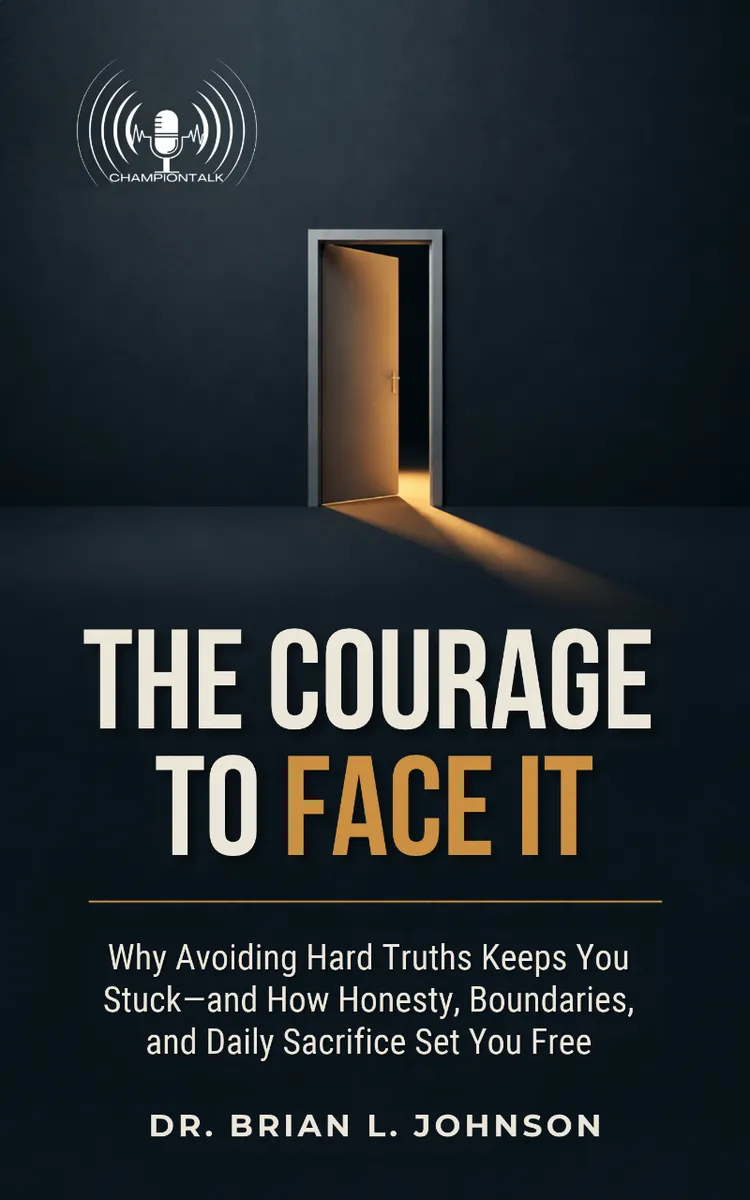
"The Courage To Face It" is a self-help book by Dr. Brian Johnson with 5 chapters and approximately 5,943 words. FREE TOOL BEFORE YOU BUY: Grab my 5-Minute Hard Conversation Prep Sheet (free PDF worksheet) at thechampionzone.org (https://thechampionzone.
This book was created using Inkfluence AI, an AI-powered book generation platform that helps authors write, design, and publish complete books. It was made with the AI Self-Help Book Writer.
Frequently Asked Questions
What is "The Courage To Face It" about?
FREE TOOL BEFORE YOU BUY: Grab my 5-Minute Hard Conversation Prep Sheet (free PDF worksheet) at thechampionzone.org (https://thechampionzone.org/hard-conversation-prep-sheet) Embracing discomfort through hard conversations, accountability, and daily sacrifice
How many chapters are in "The Courage To Face It"?
The book contains 5 chapters and approximately 5,943 words. Topics covered include Choosing Courage Over Avoidance, Practicing Daily Sacrifice, Setting Boundaries Without Guilt, Having Hard Conversations With Grace, and more.
Who wrote "The Courage To Face It"?
This book was written by Dr. Brian Johnson and created using Inkfluence AI, an AI book generation platform that helps authors write, design, and publish books.
How can I create a similar self-help book?
You can create your own self-help book using Inkfluence AI. Describe your idea, choose your style, and the AI writes the full book for you. It's free to start.
Write your own self-help book with AI
Describe your idea and Inkfluence writes the whole thing. Free to start.
Start writingCreated with Inkfluence AI


